Are college application consultants worth it? Here's what actually works

Every year, parents and students spend thousands on college application consultants. Some walk away with acceptances to Ivy League schools. Others feel like they wasted money on someone who just rewrote their essays. So what’s the real value? Is hiring a college application consultant worth it-or is it just another expensive band-aid for a system that’s already broken?
You’re not paying for magic. You’re paying for time, experience, and clarity.
Most college consultants don’t promise to get your kid into Harvard. They promise to help you cut through the noise. The truth? The college admissions process has become a maze. Deadlines shift. Requirements change. Essays are expected to sound like poetry written by a 16-year-old who’s read every Pulitzer winner. And most high school counselors? They’re juggling 400+ students. One advisor in North Carolina told me she spends less than 15 minutes per senior on applications. That’s not enough to help someone write a compelling personal statement.
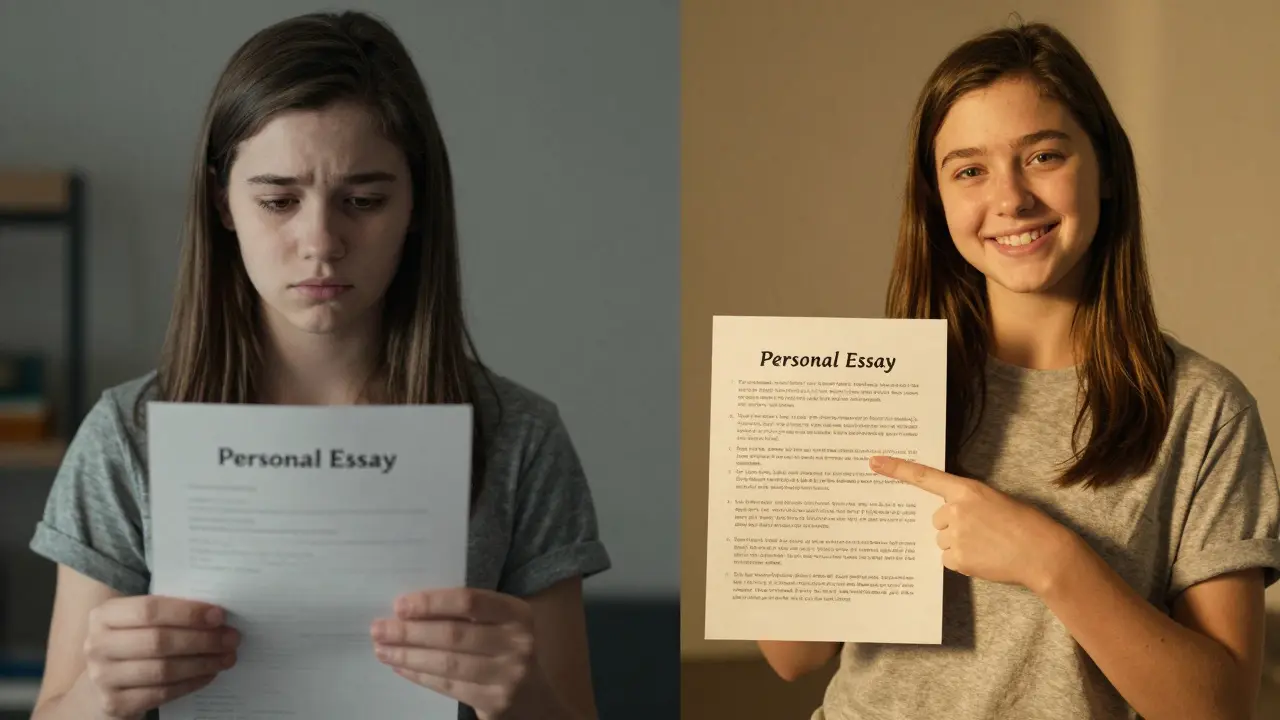
A good consultant doesn’t write your essay. They ask the right questions. They help you find the story only you can tell. They spot inconsistencies in your application before it’s submitted. They know which schools care about community service and which ones care about research. They’ve seen what works-and what gets tossed in the first round.
What do college consultants actually do?
Not all consultants are the same. Here’s what you’re actually paying for:
- Application strategy: Which schools to apply to-safety, target, reach-and why. They use data like acceptance rates, yield rates, and test-optional trends to build a realistic list.
- Essay coaching: They don’t rewrite your work. They help you dig deeper. Did you mention your part-time job? Great. Now tell them what you learned about responsibility, not just that you worked 20 hours a week.
- Interview prep: They simulate real admissions interviews. Not the scripted, perfect answers. The messy, real ones where you stumble and recover.
- Timeline management: They keep you from missing deadlines. Not just the big ones-like Early Decision-but the small ones too: supplemental essays, portfolio uploads, teacher recommendation follow-ups.
- Context for your achievements: If you’re from a school with no AP courses, they know how to frame that. If you led a club that raised $5,000 for a local shelter, they help you show impact, not just participation.
One parent in Ohio told me her daughter got into Stanford after the consultant helped reframe her volunteer work. Instead of saying she tutored kids in math, they highlighted how she created a weekly Zoom study group that helped 12 students pass their algebra finals. That’s the difference between a bullet point and a story.
How much does it cost-and is it worth the price?
Prices vary wildly. Some charge $50 an hour. Others offer full packages for $10,000 or more. The average? Around $3,000 to $7,000 for comprehensive help.
Is that a lot? Yes. But compare it to the cost of one year of college. If a consultant helps you get into a school that gives you a $20,000 scholarship? That’s a 300% return on investment right there.
Here’s what most packages include:
| Package Tier | Price Range | What’s Included |
|---|---|---|
| Basic (Essay Review Only) | $500-$1,500 | 2-3 essay edits, feedback on activity list |
| Standard (Full Application Support) | $3,000-$5,000 | Application list, essay coaching, interview prep, timeline management |
| Premium (Comprehensive + School Visits) | $6,000-$10,000+ | All of the above, plus campus visits, alumni outreach, financial aid strategy |
Some consultants offer sliding scales or payment plans. A few even work with nonprofits to help low-income students. Don’t assume it’s only for the wealthy.
Who benefits most from a consultant?
Not everyone needs one. But these students see the biggest returns:
- Students from under-resourced schools: If your counselor has 500 students and no college application software, a consultant fills the gap.
- Students with unique backgrounds: Immigrants, first-generation applicants, athletes, artists, or those with gaps in their transcript-they need help framing their story.
- High achievers aiming for top schools: At schools like Stanford or MIT, everyone has a 4.0 and perfect SAT scores. The consultant helps you stand out not by being perfect, but by being memorable.
- Students applying to specialized programs: Engineering, dance, film, pre-med-each has its own expectations. Consultants know what admissions officers in those departments look for.
On the flip side? If you’re a student with a solid GPA, clear interests, and a supportive counselor who knows your goals, you might not need one. But if you’re unsure what to write about, or you’re terrified of making a mistake, that’s when the value kicks in.
Red flags to watch out for
Not all consultants are ethical. Watch for these warning signs:
- They promise admission to a specific school. No one can guarantee that. If they do, walk away.
- They write your essays for you. That’s plagiarism. Colleges use AI detectors now. Even if they don’t catch it, you’ll feel guilty-and you won’t be prepared for interviews.
- They pressure you into applying to 15+ schools. Quality over quantity. Applying to 8-10 schools with thoughtful applications beats 15 rushed ones.
- They don’t let you speak directly to them. If you’re always talking to an assistant, you’re not getting personalized help.
Ask for references. Talk to past clients. Ask: "What was the one thing your consultant helped you realize about yourself?" The best ones don’t just help you get in-they help you understand who you are.

Alternatives to hiring a consultant
Not everyone can afford one. Here are free or low-cost alternatives:
- College admissions workshops: Many public libraries, community centers, and nonprofits offer free sessions. Some are run by retired admissions officers.
- Online tools: Common App guides, College Board’s BigFuture, and Khan Academy’s college prep tools are solid starting points.
- Alumni mentors: Reach out to alumni from your school who went to colleges you’re targeting. Most are happy to help.
- High school teachers: Ask your English or history teacher to review your essays. They’ve read hundreds of them.
But here’s the catch: these resources don’t give you the one-on-one attention a consultant does. They’re great for general advice. But when you’re stuck on a personal statement that’s supposed to reveal your soul? That’s when you need someone who’s seen it all.
What happens if you don’t hire one?
Many students get into great schools without consultants. But many others miss out-not because they weren’t qualified, but because they didn’t know how to present themselves.
One student in Texas applied to 12 schools. She had a 3.9 GPA and scored a 1520 on the SAT. But her essays were generic: "I love helping people." She got waitlisted everywhere. After hiring a consultant, she rewrote her essay around her experience caring for her younger siblings while her mom worked two jobs. She got into her top-choice school-and a $30,000 scholarship.
The difference wasn’t her grades. It was her story.
Final verdict: Is it worth it?
If you’re asking this question, you’re already thinking the right way. Hiring a college application consultant isn’t about buying your way in. It’s about leveling the playing field.
For students who don’t have access to experienced guidance, it’s a lifeline. For those who are unsure how to stand out, it’s a map. For families who are overwhelmed by the process, it’s peace of mind.
It’s not magic. It’s not a guarantee. But if you’re serious about getting into the right school-and not just any school-it’s one of the smartest investments you can make in your future.
How do I find a reputable college application consultant?
Look for consultants certified by the Independent Educational Consultants Association (IECA) or the National Association for College Admission Counseling (NACAC). Check their website for client testimonials and ask for references. Avoid anyone who promises guaranteed admission or writes your essays. A good consultant will let you speak first and ask questions before giving advice.
Can a consultant help with financial aid and scholarships?
Yes-many top consultants include financial aid strategy in their packages. They know which schools are generous with need-based aid, which offer merit scholarships, and how to position your application to maximize funding. They can also help you complete the FAFSA and CSS Profile correctly, which many families mess up.
Is it too late to hire a consultant if I’m applying in December?
Not at all. Many students hire consultants in the fall, especially for Early Decision or Early Action deadlines. Even if you’re applying in January, a consultant can still help you polish your essays, organize your activities list, and prepare for interviews. The key is to start as soon as possible-even if it’s just for one or two sessions.
Do consultants help with international students?
Absolutely. Consultants who specialize in international applications understand visa requirements, English proficiency expectations, and cultural differences in how achievements are presented. They know how to frame experiences from non-U.S. school systems in a way that U.S. admissions officers understand.
What if my child is a strong student but shy and doesn’t know how to talk about themselves?
That’s exactly when a consultant is most helpful. Many students struggle to articulate their strengths because they’ve never been asked to. A good consultant doesn’t push them to be someone else-they help them find the confidence to tell their own story. It’s not about being loud or flashy. It’s about being honest and specific.
Kirk Doherty
December 21, 2025 AT 04:51Been there. My sister used a consultant and got into UBC with a full ride. Didn’t change her essay much, just helped her stop writing like a textbook.
Dmitriy Fedoseff
December 22, 2025 AT 03:27It’s not about buying admission-it’s about buying time. In a system where your counselor has 15 minutes per student, paying someone who’s seen 5000 applications isn’t奢侈-it’s survival. The real crime is how little public schools invest in this.
Meghan O'Connor
December 23, 2025 AT 00:16"They help you find the story only you can tell"-yeah right. Most consultants just reword "I helped my grandma" into "I cultivated intergenerational resilience through familial caregiving." It’s the same thing, just with more commas.
Morgan ODonnell
December 24, 2025 AT 02:08I get what you're saying. My cousin didn't have a consultant, but her teacher spent hours helping her rewrite her essay. She got into McGill. Sometimes it's not about the price tag-it's about who's willing to listen.
Liam Hesmondhalgh
December 24, 2025 AT 08:03Why are we even talking about this like it’s a real service? It’s just fancy ghostwriting with a 300% markup. And don’t get me started on the "I helped my grandma" essays. We’ve all read them. They’re all the same.
Patrick Tiernan
December 25, 2025 AT 06:54lol at people paying 10k to get into ivies. My brother got into Harvard with a 3.7 and a half-written essay on his phone during lunch. The system’s rigged anyway. Might as well spend the cash on a vacation.
Patrick Bass
December 27, 2025 AT 02:55One thing I’ve noticed: the best consultants don’t fix your writing. They make you stop writing like you’re trying to impress someone. That’s worth more than any package.
Tyler Springall
December 28, 2025 AT 06:07Let’s be honest-this is just another way for the rich to lock out everyone else. You think a kid from rural Kansas has access to a $7,000 consultant? The whole system is designed to preserve privilege under the guise of "merit."
Colby Havard
December 30, 2025 AT 04:25It is imperative to note, with the utmost clarity, that the commodification of collegiate admissions counseling represents a profound moral failure in the American educational infrastructure. The notion that access to higher education should be contingent upon familial financial capacity is not merely inequitable-it is antithetical to the foundational tenets of democratic society.
Furthermore, the assertion that consultants "level the playing field" is a rhetorical fallacy, predicated upon the assumption that the field was ever level to begin with. In truth, it is a mechanism of stratification, masquerading as assistance.
One must also consider the psychological toll on students who internalize the belief that their inherent worth is insufficient without external curation. The act of rewriting one’s lived experience into a marketable narrative is not empowerment-it is erasure.
And yet, the most disturbing element lies not in the consultants themselves, but in the institutions that permit, and indeed incentivize, this ecosystem. The Ivy League, in particular, thrives on this asymmetry, as it ensures a steady influx of applicants who have been pre-vetted, pre-polished, and pre-conditioned to conform.
Until we dismantle the myth of meritocracy, and redirect resources toward public school counseling infrastructure, this will remain not a service-but a symptom.
Amy P
December 30, 2025 AT 22:58OMG I just cried reading the Texas student story. I’m a first-gen kid and my counselor told me to just "write about something you like"-so I wrote about my love for baking sourdough. I got rejected from everywhere. Then my aunt connected me with a free workshop run by a retired admissions officer from Northwestern. She asked me: "What did you feel when your bread didn’t rise?" I broke down and told her about my mom working two shifts and me being the one who had to fix dinner every night. I didn’t write about baking-I wrote about survival. Got into my dream school. And yes, I cried again when I opened the email.
Ashley Kuehnel
December 31, 2025 AT 12:43Just wanted to add-my cousin used a consultant for $2k and it changed everything. She’s from a tiny town with no AP classes. The consultant helped her write about teaching herself calculus from YouTube videos and tutoring neighbors. That’s not a bullet point-that’s a whole person. And she got into Duke with a scholarship. Don’t let anyone tell you it’s just for rich kids. Some consultants even do pro bono work. Just ask around!
adam smith
January 1, 2026 AT 02:06It is a fact that the utilization of professional application consultants represents an economic disparity that is both quantifiable and ethically indefensible. The cost of such services is disproportionate to the value delivered, and the resultant outcomes are not indicative of merit, but of access.
Furthermore, the notion that a student from an under-resourced school requires such assistance is not a commentary on the student, but on the systemic failure of public education.
It is recommended that educational policymakers prioritize funding for high school counseling departments prior to permitting private entities to monetize the admissions process.
Mongezi Mkhwanazi
January 1, 2026 AT 23:00Let me be perfectly clear: this entire industry is a predatory, capitalistic exploitation of parental anxiety and institutional neglect. The fact that a 16-year-old must hire a professional to articulate her identity-because her school has zero resources-is not a flaw in the system, it is the system. And the consultants? They are the hired mercenaries of a broken machine. They don’t fix it-they profit from its decay. And the worst part? They make you believe you’re being helped, when in reality, you’re just paying to be told what you already know: your story matters. But only if you can afford to say it right.
And yes, I’ve seen it firsthand. My niece got into Oxford after her consultant helped her reframe her experience working in her uncle’s auto shop as "applied mechanical innovation in a low-resource environment." It was the same story. Just dressed up. And she cried when she got in-not because she was proud, but because she realized she had to become a different person to be accepted.
That’s not coaching. That’s assimilation.
And now? She’s terrified to speak up in class because she’s afraid she’ll sound "unpolished."
The consultant didn’t give her confidence. She gave her a mask.
And we call this progress?
Mark Nitka
January 3, 2026 AT 23:00I’ve worked in admissions for 15 years. I’ve read tens of thousands of essays. The ones that stand out? The ones that feel real. Not the ones with fancy words. Not the ones that sound like they were written by a TED Talk. The ones where you can hear the kid breathing. A consultant can’t give you that. But they can help you find it. If you’re lucky.