Are Study Halls Effective for High School Students?
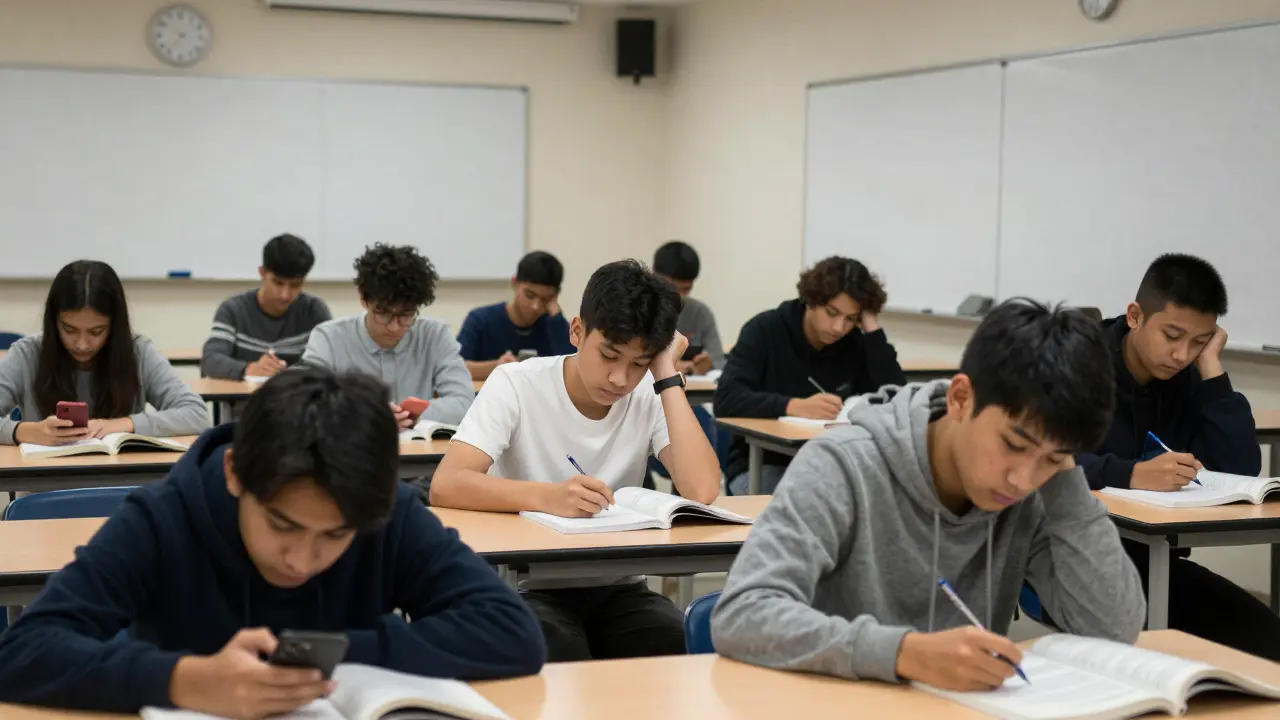
When you walk into a high school study hall, what do you see? Rows of students staring at laptops, some doodling in notebooks, others scrolling through their phones. A few are actually reading. The silence feels heavy-not the quiet of focus, but the quiet of boredom. You wonder: is this even helping?
Study halls were designed to give students time to work on homework, prep for tests, or get help from teachers. But in practice, they’ve become a catch-all for empty periods. Schools use them to fill schedules, avoid hiring more staff, or manage overcrowded classrooms. And students? They’re left to figure it out themselves.
So, are study halls effective? The answer isn’t yes or no. It depends on how they’re run, who’s in them, and what the student actually needs.
What Study Halls Are Supposed to Do
Originally, study halls were meant to be a structured break from classes-not a free pass to zone out. The idea was simple: give students a dedicated block to finish assignments, review notes, or ask teachers quick questions. Some schools even assigned study hall to students who were falling behind, making it a support tool, not a luxury.
Teachers might rotate through the hall to offer help. Librarians or academic coaches could be available. Quiet zones, supply stations, and even timers to keep students on track were part of the plan. But those features? They’re rare now.
Most study halls today have none of that. No supervision. No structure. Just a room, a clock, and a bunch of teenagers with too much time and too little direction.
When Study Halls Actually Work
There are exceptions. In schools where study halls are intentional, they make a real difference.
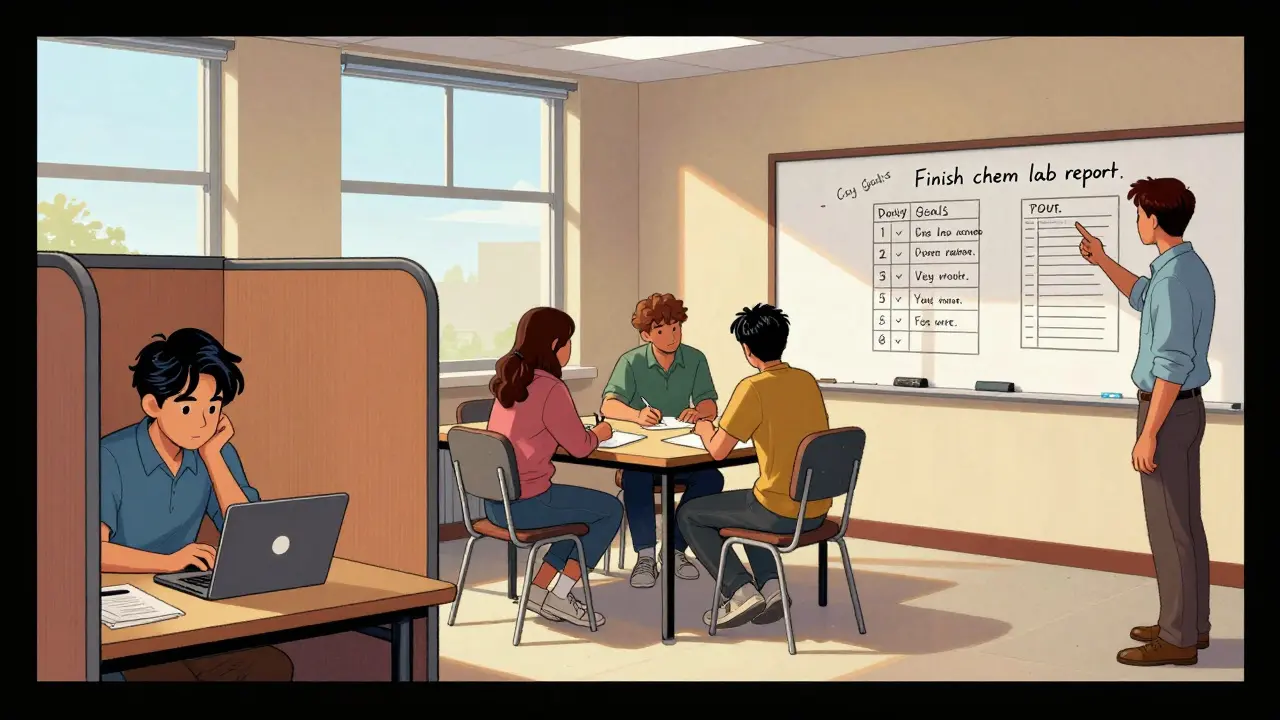
At Northridge High in Flagstaff, the study hall is called "Academic Reset." It’s not just a period-it’s a program. Students sign up for a 30-minute tutoring slot with a peer mentor. They can reserve a quiet pod for focused work. There’s a whiteboard with daily goals: "Finish chem lab report," "Review algebra quiz mistakes," "Email teacher with questions."
Results? A 22% drop in incomplete assignments over two years. Students who used it regularly saw their GPAs rise by an average of 0.4 points. Why? Because it wasn’t just time. It was structure with accountability.
Another example: Lincoln Middle College in California lets students choose their study hall type-quiet work, group collaboration, or teacher-led review. They track usage and adjust based on what students actually need. When they noticed most kids were using it to cram for tests, they added weekly test-prep workshops during study hall.
These aren’t magic fixes. They’re small, smart changes that turn wasted time into productive time.
Why Most Study Halls Fail
Here’s the truth: if you don’t tell students what to do, they won’t do anything meaningful.
A 2023 study by the National Center for Education Statistics tracked over 12,000 high school students across 150 schools. It found that in study halls with no clear expectations, 68% of students spent most of their time on non-academic activities-social media, chatting, sleeping, or just staring into space.
And it’s not just distraction. There’s a psychological effect. When students know no one’s watching, they lower their standards. They treat study hall like recess with desks. That habit spills over into other areas-homework gets delayed, deadlines are ignored, and the idea of self-discipline fades.
Some schools blame students. But that’s backward. You wouldn’t hand someone a gym membership and expect them to get fit without a plan. Why treat studying differently?
The Real Problem: Lack of Training
Most students never learn how to study effectively. They’re told to "go to study hall and get your work done," but no one shows them how.
They don’t know how to break down a big project. They don’t know how to use a planner. They don’t know how to ask for help. And when they sit in a study hall with no guidance, they feel lost-and then they give up.
One student at Mesa High told me: "I go to study hall because I have to. But I just sit there until the bell rings. I don’t even know where to start." That’s not laziness. That’s helplessness.
Study halls should be teaching spaces, not detention for boredom. They need to include mini-lessons: how to prioritize tasks, how to use flashcards, how to spot what you don’t understand. Even five minutes of that per session changes everything.
Who Benefits Most From Study Halls?
Not everyone needs them. Some students thrive without them. They’re self-starters. They finish homework during lunch. They use the library after school. For them, study hall is just another hour to kill.
But for others, it’s the only chance they get. Students with learning differences. Those with part-time jobs after school. Kids who don’t have a quiet place at home. Students who are overwhelmed by multiple AP classes.
For these students, a well-run study hall isn’t optional-it’s essential. It’s the difference between falling behind and staying on track.
That’s why the best study halls don’t treat everyone the same. They offer tiers: basic quiet time for those who just need space, guided support for those who need help, and skill-building workshops for those who need tools.

What Schools Can Do Right Now
You don’t need a big budget to fix study halls. You just need intention.
- Start with a daily goal board. Write three academic tasks students should aim to complete. Keep it simple: "Finish math worksheet," "Review biology terms," "Email teacher about missing assignment."
- Assign a rotating teacher. One teacher per day stays in the hall for 20 minutes to answer quick questions. No need for full-time staff-just presence.
- Offer 10-minute skill drills. Once a week, pause study hall for a quick lesson: "How to take notes from a textbook," "How to use Google Calendar for deadlines."
- Let students choose their zone. Quiet zone. Collaboration zone. Tech zone (for digital assignments). Let them pick based on what they’re doing.
- Track usage. Ask students anonymously: "Did you use study hall to get work done?" Use the data to improve it.
These steps cost nothing. But they change everything.
What Students Can Do
If your school’s study hall is still a wasteland, don’t wait for them to fix it. Take control.
- Bring a checklist. Write down three things you need to do before the bell. Stick to it.
- Use the Pomodoro method. 25 minutes of work. 5 minutes of break. Set a timer on your phone. No scrolling during work time.
- Find a study buddy. Pair up with someone who’s also trying to get work done. You keep each other honest.
- Ask for help. If a teacher is in the hall, go to them. Even if it’s just one question. Most teachers will say yes.
- Don’t wait for perfect. Even 20 minutes of focused work is better than zero.
Study halls aren’t broken because students are lazy. They’re broken because no one bothered to make them useful.
But they don’t have to stay that way.
Are study halls good for improving grades?
Study halls can improve grades-but only if they’re used intentionally. Students who use study hall to complete assignments, review material, or ask questions tend to see better grades. But if it’s just free time with no structure, there’s little to no academic benefit. The key is active use, not just presence.
Do study halls help students with ADHD or learning differences?
Yes, when they’re designed with support in mind. Students with ADHD often struggle with self-direction. A study hall with clear tasks, timers, quiet zones, and access to a teacher or mentor can be a lifeline. It provides structure they may not get at home or during chaotic class periods. Without that structure, study halls can make things worse by increasing frustration.
Is it better to study at home or in school during study hall?
It depends. If you have a quiet space at home, good lighting, and no distractions, then studying at home can be more effective. But if you don’t have a reliable place to work-or if you’re too tired after school-then school study halls offer structure, access to teachers, and fewer distractions than your bedroom. For many students, especially those with unstable home environments, school is the only place they can get work done.
Why do some teachers say study halls are a waste of time?
Because too often, they are. When study halls have no supervision, no goals, and no support, students don’t use them for learning. Teachers see students scrolling, sleeping, or chatting-and they assume the whole system is broken. But the problem isn’t the time-it’s the lack of design. A well-run study hall gives teachers a chance to reach students who don’t ask for help during class.
Can study halls replace tutoring or after-school help?
Not fully. Tutoring offers one-on-one, targeted support. Study halls are group time with limited teacher access. But study halls can act as a first line of support-helping students get started, identify what they don’t understand, and know when to seek out tutoring. Used together, they’re more powerful than either alone.
Final Thought: It’s Not About Time. It’s About Purpose.
Study halls aren’t inherently good or bad. They’re just time. And time, without direction, goes to waste.
The real question isn’t whether study halls work. It’s whether your school is willing to make them work. Because the students who need them the most aren’t asking for a break. They’re asking for a chance.
Sara Escanciano
January 19, 2026 AT 16:32Study halls are a joke. Schools use them as a cheap way to avoid hiring tutors or counselors. Kids aren't lazy-they're just tired of being handed empty time and expected to magically self-regulate. This isn't about discipline. It's about systemic neglect.
Elmer Burgos
January 21, 2026 AT 10:30i get what you're saying but honestly i think it's more about how we're teaching kids to manage time than the study hall itself. my little sister used to zone out too until she started using a simple checklist and a timer. now she finishes her work in 20 mins and goes to the library after. small changes matter.
Jason Townsend
January 23, 2026 AT 01:12study halls are government control 101. they want you to think you're being productive but really they're training you to sit still and obey. no structure means no freedom. they don't want you to think for yourself they want you to wait for instructions
Antwan Holder
January 23, 2026 AT 10:39we are all just ghosts in the machine of public education. study halls are the hollow echo of what learning used to be. students don't need more rules-they need to be reminded they're still alive. that silence you hear? that's the sound of potential rotting from the inside out.
Angelina Jefary
January 24, 2026 AT 23:15you wrote "they’re left to figure it out themselves" but it should be "they are left" not "they’re". also "its" not "it's" in "its only chance". grammar matters. if you can't write correctly how can you expect students to learn?
Jennifer Kaiser
January 25, 2026 AT 13:58the real tragedy isn't that study halls are broken-it's that we've stopped seeing students as people who need guidance, not punishment. the ones who suffer most aren't the ones scrolling-they're the ones who want to do better but don't know how. that’s not laziness. that’s grief.
TIARA SUKMA UTAMA
January 26, 2026 AT 20:17my cousin goes to study hall and just sleeps. no one cares. why should they? it's not like anyone checks.
Jasmine Oey
January 27, 2026 AT 03:25OMG I’m literally crying right now. this post is SO deep. like… i’ve been in study halls since freshman year and no one ever taught me how to study. it’s like they hand you a blank canvas and say "go be picasso" but don’t even give you paint. i’m so emotional. thank you for saying this.
Marissa Martin
January 28, 2026 AT 00:08i don't think anyone's really thought about how exhausting it is to be expected to self-motivate in an environment designed to make you feel invisible. it's not that students don't care-it's that no one ever showed them how to care without being watched.
James Winter
January 28, 2026 AT 07:51canadians dont have this problem. our schools are better. we don't waste time on study halls. we just have homework. end of story.
Aimee Quenneville
January 30, 2026 AT 01:36so… you're saying the solution is… to give teens more structure? wow. revolutionary. next you'll tell us water is wet and gravity exists. also i'm still waiting for the teacher who remembers my name during study hall. still waiting.
Cynthia Lamont
January 31, 2026 AT 03:25you think a whiteboard with goals fixes everything? please. the real problem is funding. schools are underfunded because politicians don't care. adding a 10-minute lesson doesn't fix decades of neglect. you're treating symptoms not the disease.
Kirk Doherty
January 31, 2026 AT 22:03my high school had study hall with a rotating teacher and it was actually decent. not perfect but better than nothing. i used to do my chem homework there. no one bothered me. that's all i needed.
Dmitriy Fedoseff
February 1, 2026 AT 08:14in my home country, we don't have study halls. we have mentorship hours. older students guide younger ones. it's not about time-it's about connection. maybe we're missing the human part, not the structure.
Meghan O'Connor
February 2, 2026 AT 15:53the 2023 study you cited? it's flawed. sample bias. schools with worse resources had worse study halls. correlation ≠ causation. also you misspelled "statistics" in the footnote.