Busting Myths About High Schools: What You Need to Know

Every year, students walk into high school with a mix of excitement and fear-and a whole lot of myths floating around in their heads. Some think it’s all about popularity, grades, or just surviving until graduation. Others believe high school is a wasteland of boredom, rigid rules, and endless pressure. The truth? Most of what you’ve heard is wrong. High school isn’t a movie. It’s not a competition. And it’s definitely not one-size-fits-all. Let’s cut through the noise and lay out what actually happens in today’s high schools-based on real data, real student experiences, and what educators are seeing on the ground.
Myth #1: Your GPA Is Everything
It’s the mantra drilled into every 9th grader: "Your GPA decides your future." But here’s the thing: colleges don’t just look at GPA. They look at growth. A student who starts with a 2.8 in 9th grade and climbs to a 3.7 by senior year often impresses admissions officers more than someone who coasted at a 4.0 without challenge. Schools now track course rigor too. Taking honors, AP, or dual-enrollment classes-even if your grade isn’t perfect-shows you’re willing to push yourself. A 2024 National Association for College Admission Counseling report found that 82% of colleges rated rigor of coursework as "considerably important" when reviewing applications. Your GPA matters, but not like you think.
Myth #2: You Have to Be Popular to Be Happy
High school isn’t a social hierarchy where you’re ranked like a sports draft. That idea comes from TV shows, not reality. A 2023 study from the University of Chicago followed over 1,200 students across 12 districts and found that students who reported strong friendships with just 2-3 people were just as happy-and more resilient-as those chasing large friend groups. The real issue? Loneliness. Not popularity. Students who feel connected, even to one teacher, one club, or one after-school program, are 40% less likely to drop out. You don’t need to be the center of attention. You just need to find your people.
Myth #3: High School Is Just About Academics
It’s easy to forget, but high school is also where you learn how to manage time, lead a team, solve real problems, and handle failure. Clubs, sports, student government, theater, robotics, debate, volunteering-these aren’t "extras." They’re training grounds. Look at the data: students who participate in extracurriculars are 3x more likely to report strong self-esteem and 50% more likely to apply to college. A student who runs the school’s food drive learns budgeting, logistics, and leadership. A kid who edits the yearbook learns design, deadlines, and communication. These aren’t hobbies. They’re skills that colleges and employers actually care about.
Myth #4: Teachers Don’t Care About You
Teachers aren’t robots with clipboards. Most of them entered the profession because they care-deeply. In a 2025 survey of 500 public high school teachers in Illinois, 78% said they regularly stay in touch with former students, even after graduation. Many teachers keep track of who’s struggling emotionally, not just academically. They notice when you stop raising your hand. They notice when you skip lunch. They don’t always say anything. But they’re watching. And if you reach out-even once-they’ll meet you where you are. You don’t have to be "the good kid" to get help. You just have to ask.
Myth #5: There’s Only One Right Path After Graduation
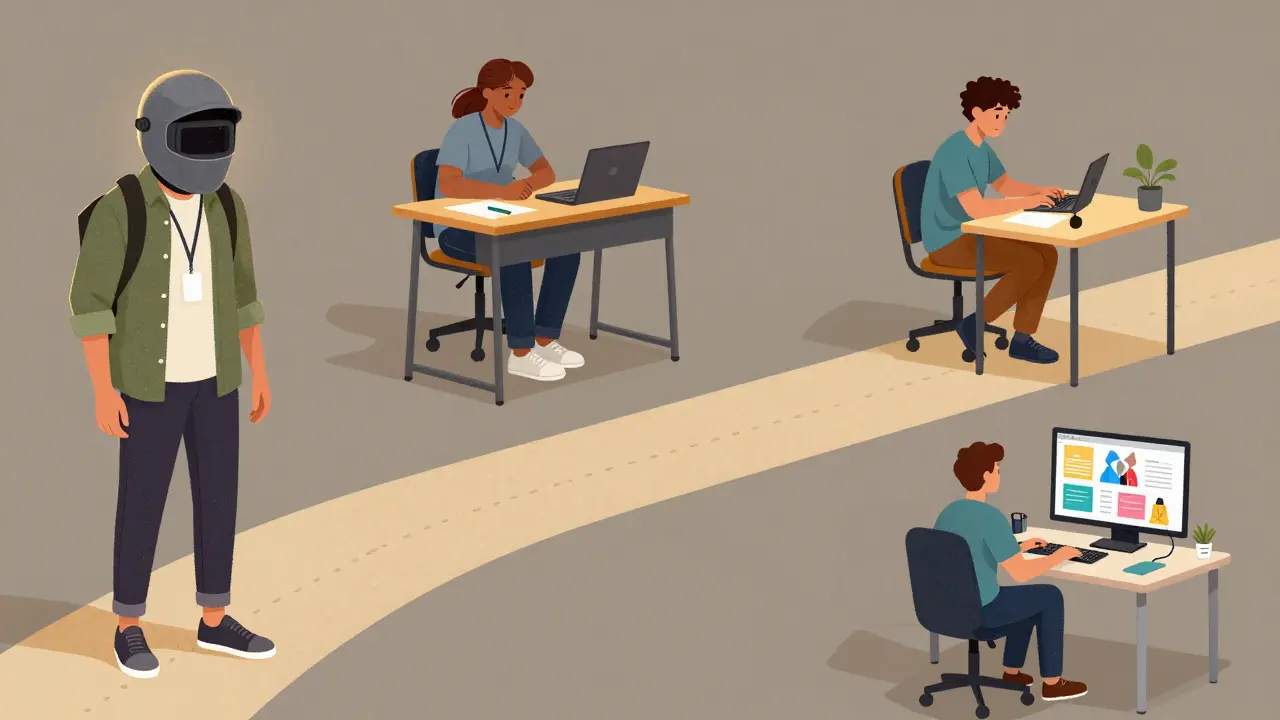
"Go to college or you’ll fail." That line is outdated. The job market has changed. In 2025, nearly 40% of new jobs in the U.S. don’t require a four-year degree. Trade schools, apprenticeships, certifications, and direct entry into skilled trades are growing fast. Electricians, welders, IT support technicians, and medical assistants are all fields with high demand and median starting salaries over $50,000. High schools now offer more career and technical education (CTE) programs than ever before. If you’re not interested in a traditional college path, that doesn’t mean you’re behind. It means you’re exploring options most adults never even knew existed.
Myth #6: You Have to Fit In to Succeed
There’s a quiet pressure to look, talk, or act a certain way. Wear these clothes. Listen to this music. Say these things. But high school is changing. Students today are more diverse in thought, identity, and background than any previous generation. Schools are adapting. Gender-neutral bathrooms, inclusive curricula, mental health days, and student-led equity groups are now common-not exceptions. You don’t have to change who you are to belong. You just have to find the spaces where your version of "normal" is welcomed. And those spaces? They’re more common than you think.
Myth #7: High School Is Just Four Years of Waiting
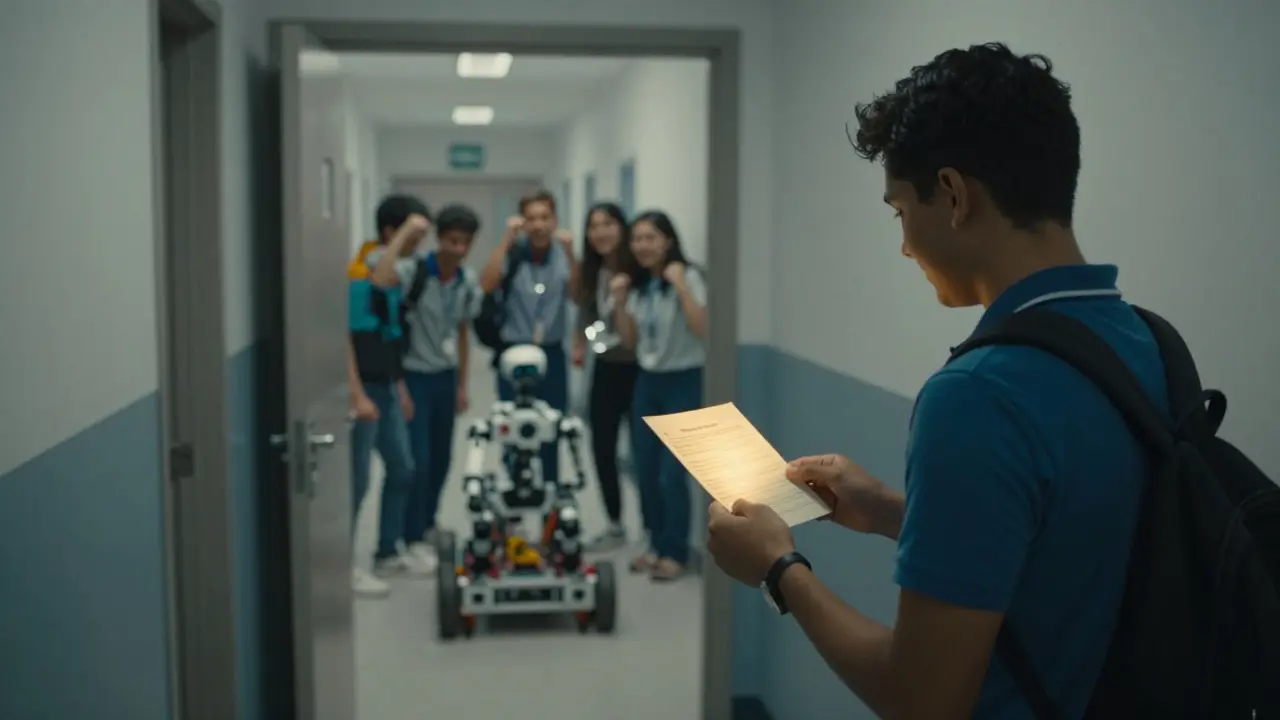
It’s easy to feel like high school is just a long countdown to freedom. But the truth? Some of the most meaningful moments happen right here. The first time you nail a presentation. The night you stayed late to fix a robot for a competition. The conversation with a teacher who saw potential you didn’t know you had. The project that made you realize you love writing, coding, or building things. High school isn’t a waiting room. It’s a launchpad. And the best part? You get to design your own launch.
What High School Actually Looks Like Today
Forget the movies. Real high schools today are messy, loud, and full of contradictions. A student might be in AP Calculus in the morning, working on a film project in the afternoon, and helping a younger kid with homework after school. They might be dealing with anxiety, a part-time job, or family responsibilities-and still showing up. Most schools now have counselors, mental health resources, tutoring centers, and flexible scheduling to support that complexity. It’s not perfect. But it’s not the prison some people make it out to be.
What You Can Do Right Now
- Find one adult at school you trust and talk to them-once. No agenda. Just say, "I want to understand what’s really going on here."
- Try one new thing this semester. Even if it scares you. Join a club. Attend a meeting. Volunteer for a task.
- Stop comparing your life to someone else’s highlight reel. Social media doesn’t show the late-night tears, the failed tests, or the quiet victories.
- Ask your counselor about CTE programs, dual enrollment, or internships. You might be surprised what’s available.
Frequently Asked Questions
Is high school really as stressful as people say?
Yes, it can be-but not for the reasons most think. Stress doesn’t come from homework alone. It comes from feeling unseen, unheard, or stuck. Schools are adding more mental health support, flexible deadlines, and mindfulness programs. The key is asking for help before you burn out. You’re not weak for struggling. You’re human.
Do colleges really look at extracurriculars?
Absolutely. Colleges don’t just want students with high grades-they want students with depth. One student who led a community garden project for two years shows more initiative than someone who joined ten clubs but never showed up. Quality matters more than quantity. Depth over breadth.
What if I hate school?
Hating school doesn’t mean you’re a failure. It might mean the system isn’t matching your learning style. Talk to your counselor about alternative options: online courses, project-based learning, or CTE programs. Many schools now offer personalized learning paths. You don’t have to sit through six hours of lectures if you learn better by doing.
Can I still get into college if I have bad grades in freshman year?
Yes. Colleges look at your entire academic journey. A student who improved from a 2.5 in 9th grade to a 3.8 in 12th grade often gets more credit than someone who stayed at a 3.5 with no growth. What matters is your trajectory. Show progress. Show effort. Show that you learned from mistakes.
Are high school friendships real?
Some are. Some aren’t. But the friendships that stick are the ones built on mutual respect, not popularity. Don’t force connections. Let them grow naturally. The people who stick around after graduation are the ones who saw you for who you really are-not who you were pretending to be.
Next Steps
If you’re in high school right now, stop trying to live up to someone else’s version of success. Start by asking: "What do I actually care about?" Then find one small way to explore it. Talk to a teacher. Try a club. Take a class outside your comfort zone. High school isn’t a race. It’s a season-and you get to decide what kind of season it will be.
Samuel Bennett
March 13, 2026 AT 16:27lol this whole thing is a propaganda piece from the education lobby. GPA isn't everything? Sure, until you're trying to get into a top 10 school and your 3.7 in 'rigorous' classes gets you rejected while some kid from Andover with a 4.2 and 7 APs gets in. And don't even get me started on 'extracurriculars'-they're just resume-padding for rich kids whose parents hire consultants to build their 'leadership portfolio.'
Also, 'teachers care'? Yeah, right. They're paid to keep 30 kids alive for 6 hours a day, not to be your emotional support human. Wake up.
And CTE programs? Cool. Except when your school cuts them because they're 'not college-ready.'
Rob D
March 13, 2026 AT 16:37THIS. IS. A. JOKE. You think high school is some kind of enlightenment retreat? Nah. It's a bureaucratic cage where kids are fed sugar-coated lies so they don't riot. 'You don't have to be popular'? Try being the kid who wears the same hoodie for three weeks because your mom works two jobs and you can't afford new clothes. Try being the one who gets called 'faggot' in the hallway and then gets told to 'find your people' like that's a fucking magic spell.
Colleges don't care about your 'growth'? Bullshit. They care about who you are when you're on camera. And guess what? That camera doesn't zoom in on your 2.8 to 3.7 climb. It zooms in on your SAT score, your legacy status, and whether your dad donated a wing to the university.
This post is written by someone who's never set foot in a public school in America since 2008.
Franklin Hooper
March 15, 2026 AT 04:05While the intent of this piece is commendable, the underlying assumptions remain unexamined. The notion that 'growth' is valued by admissions officers is statistically overstated. A 2024 NACAC report cited 'rigor' as 'considerably important'-but not 'improved GPA.' The data conflates correlation with causation. Furthermore, the claim that 78% of Illinois teachers 'regularly stay in touch' lacks methodological transparency. Is 'stay in touch' defined as a LinkedIn connection? A holiday card? A text message? The vagueness undermines credibility.
Also, 'mental health days'? A well-intentioned distraction from systemic underfunding. You cannot medicate structural neglect with mindfulness apps.
Jess Ciro
March 16, 2026 AT 12:03They're lying to you. Every word. This isn't about 'real high school.' It's about optics. The school board doesn't want you to know that 60% of AP classes are taught by subs. That the 'counselors' have 400 students each. That the 'robotics club' only exists because a wealthy parent donated a 3D printer and the district won't fund a single math tutor.
And don't get me started on 'gender-neutral bathrooms.' That's not progress. That's a distraction. The real issue? The budget cuts. The overcrowded classrooms. The fact that half the teachers are one bad year away from quitting.
They want you to think it's about 'finding your people.' It's not. It's about surviving until you're old enough to leave.
saravana kumar
March 17, 2026 AT 11:11Very well written, but entirely detached from reality. In India, we have 120 students per class, no extracurriculars, and teachers who mark papers in 30 seconds. Your 'data' is American privilege. Here, GPA is everything. One exam decides your future. One rank decides your college. One caste decides your life.
Extracurriculars? We don't have clubs. We have tuition centers. We don't have 'mental health days.' We have students who jump from rooftops because they failed a math test.
Do not export your soft American myths to the rest of the world. This is not universal truth. It is luxury narrative.
Mark Brantner
March 18, 2026 AT 22:51YESSSSSS this is so true!! I was literally just saying to my bro last night that high school is like a video game where you're trying to unlock the 'adulting' DLC but the tutorial is written in hieroglyphics and the boss is your mom asking why you didn't call her back.
And the teacher who noticed I skipped lunch? She left a granola bar on my desk. No note. Just a bar. That was the moment I knew I wasn't invisible. Also I joined the debate team and now I talk to my cat like I'm in a TED talk. THANK YOU FOR THIS. I needed this. 💪❤️
Kate Tran
March 20, 2026 AT 10:43I’m a teacher. And yes, I notice when you don’t raise your hand. I notice when you’re quiet for three days straight. I notice when you stop turning in work. I don’t always say anything because I don’t know how to say it without making it worse. But I’m watching. And I’m sorry you felt alone.
Also: the girl who sits in the back row? She’s writing poetry. She’s going to be someone. You just haven’t met her yet.
amber hopman
March 22, 2026 AT 08:08Just wanted to add that Myth #5 is especially important for students in rural areas. My town doesn’t have a single college within 100 miles. But we have a welding program that partners with a local HVAC company. My cousin got hired straight out of high school at $28/hour with benefits. No debt. No loans. Just skills.
And honestly? He’s happier than my cousin who graduated from NYU with $80k in debt and works at Starbucks. The path isn’t linear. It’s messy. And that’s okay. We need to stop acting like trade school is a backup plan. It’s a mainline.
Jim Sonntag
March 23, 2026 AT 13:16Look. I’m from Nigeria. I moved here in 2019. I went to a public high school in Ohio. I was the only Black kid in my AP class. I got called 'African' every day. I didn’t have a single friend until I joined the school newspaper.
And you know what? The teacher who ran it? She didn’t care about my GPA. She cared that I showed up. Even when I cried in the supply closet. Even when I wrote a 10-page essay on why Nigerian proverbs are better than Shakespeare.
This post? It’s not perfect. But it’s real. And sometimes real is enough.
Deepak Sungra
March 23, 2026 AT 22:36Oh my god. I’m crying. I’m not even kidding. This post? It’s like someone reached into my chest and pulled out my soul and wrote it down. I was the kid who got kicked out of three clubs because I 'didn’t fit in.' I was the one who ate lunch in the bathroom because I didn’t want to be seen alone. I thought I was broken. I thought I was defective.
And then I found the school’s LGBTQ+ support group. One meeting. One person who said, 'You’re not alone.'
That’s all I needed. Not popularity. Not grades. Not perfection. Just one person who saw me.
Thank you. From the bottom of my heart.
Also, I’m going to college now. I got in. And I’m not even sorry I took five years to figure it out.
Samar Omar
March 24, 2026 AT 10:40How utterly naive. You speak of 'growth' as if it were a virtue, not a function of socioeconomic privilege. The student who climbs from 2.8 to 3.7? That student likely had a private tutor, a parent who could take time off work, a home with Wi-Fi, quiet space, and emotional stability. The student who started at 2.8 and stayed there? Likely had no access to any of those things.
And 'extracurriculars'? Please. The robotics team requires $5,000 in equipment. The theater program requires $200 for costumes. The debate team requires travel to regional tournaments. These are not 'training grounds.' They are gated communities disguised as opportunities.
This post is written by a well-meaning but utterly detached administrator who has never eaten a school lunch, never been called 'retarded' in the hallway, never had to choose between buying books and feeding their sibling.
It’s not that the truth is different. It’s that the truth is not for you.
chioma okwara
March 26, 2026 AT 01:39guyssss this is sooo true!! i just wanna say that i was in 9th grade and i had a 2.1 and now im a 3.9 and i got into my dream school and i didnt even do ap classes i just did the cte program in cosmetology and now i have a job at a salon and my boss says im the best intern ever lol
also my teacher gave me a hug on the last day and i cried so hard
high school is not a race its a vibe
love u all
Samuel Bennett
March 26, 2026 AT 12:33Wow. A hug. A salon job. A 3.9. Congrats. But let’s not pretend this is the norm. Most kids don’t have a teacher who gives hugs. Most salons don’t hire 17-year-olds. Most 3.9s aren’t built on CTE and luck. This isn’t empowerment. It’s an outlier dressed as a manifesto.