High Schools: Preparing Your Child for the Next Big Step

When your child enters high school, everything changes. The homework piles up. The expectations rise. And suddenly, you’re not just helping with math problems-you’re guiding them toward a future they can’t yet see. Many parents feel like they’re flying blind. But preparing your child for what comes after high school isn’t about pushing them harder. It’s about building the right habits, mindset, and support system now-before the pressure hits.
High school isn’t just harder. It’s different.
Most kids who struggle in high school don’t fail because they’re not smart. They fail because they never learned how to manage time, ask for help, or stay motivated without someone watching over them. Middle school was structured: bells rang, teachers checked in, parents reminded them to do their homework. High school? No one checks. No one reminds. If your child doesn’t learn how to organize themselves, they’ll fall behind-fast.
Take Sarah, a student from Asheville. She aced every test in 8th grade. By 10th grade, she was failing two classes. Why? She never learned how to break down big projects. She waited until the night before to start essays. She didn’t know how to talk to a teacher when she was lost. Her grades didn’t drop because she was lazy. They dropped because she was unprepared for the independence high school demands.
Build systems, not schedules
Forget color-coded planners. Forget apps that look pretty but don’t get used. What works? Simple, repeatable systems.
- Every Sunday night, sit down with your child and review the week ahead. Not to micromanage. Just to ask: What’s due? Where do you need help?
- Teach them to use a single notebook or digital doc to track assignments, deadlines, and teacher contact info. No apps. No fancy tools. Just one place.
- Set a 15-minute daily check-in. Not a lecture. Just: What went well today? What’s tough tomorrow?
These aren’t tricks. They’re habits. And habits stick when they’re small, consistent, and tied to real life-not perfection.
Let them fail-safely
Parents often jump in too soon. They call the teacher. They rewrite the essay. They fix the project. But that doesn’t help. It hurts.
One parent I know kept emailing her son’s history teacher every time he missed a deadline. He turned 16, and still couldn’t turn in an assignment on time without her stepping in. By senior year, he was overwhelmed. He didn’t know how to handle responsibility. He didn’t know how to apologize, ask for an extension, or recover from a mistake.
Letting your child face consequences-like a low grade, a missed opportunity, or a conversation with a teacher-isn’t cruel. It’s essential. The goal isn’t to protect them from failure. It’s to teach them how to bounce back.

Start talking about college early-really early
Most families wait until junior year to talk about college. That’s too late.
By freshman year, your child should already know:
- What classes they need to take to meet college requirements (like Algebra II, lab sciences, foreign language)
- How GPA works-why it’s not just about getting A’s, but about consistency
- That extracurriculars aren’t about stacking up trophies, but about depth: one real club, one sport, one passion project matters more than five half-hearted tries
Don’t say, “You need to get into a good college.” Say, “What kind of school feels right for you?” Ask about majors. Ask about campus size. Ask if they’d rather study in a big city or a quiet town. These conversations open doors. They don’t close them.
Get them talking to adults outside the family
Most teens don’t know how to talk to teachers, counselors, or mentors. They’re scared. They think adults will judge them. Or worse-they think adults won’t care.
Help them practice. Role-play asking a teacher for help. Write out an email together. Go to a college fair and have them ask one question to a rep. Start small. A 30-second conversation counts.
By sophomore year, every student should have at least one adult they can go to-not a parent, not a coach, but someone outside the home-who knows their name and their goals. That person becomes their safety net.
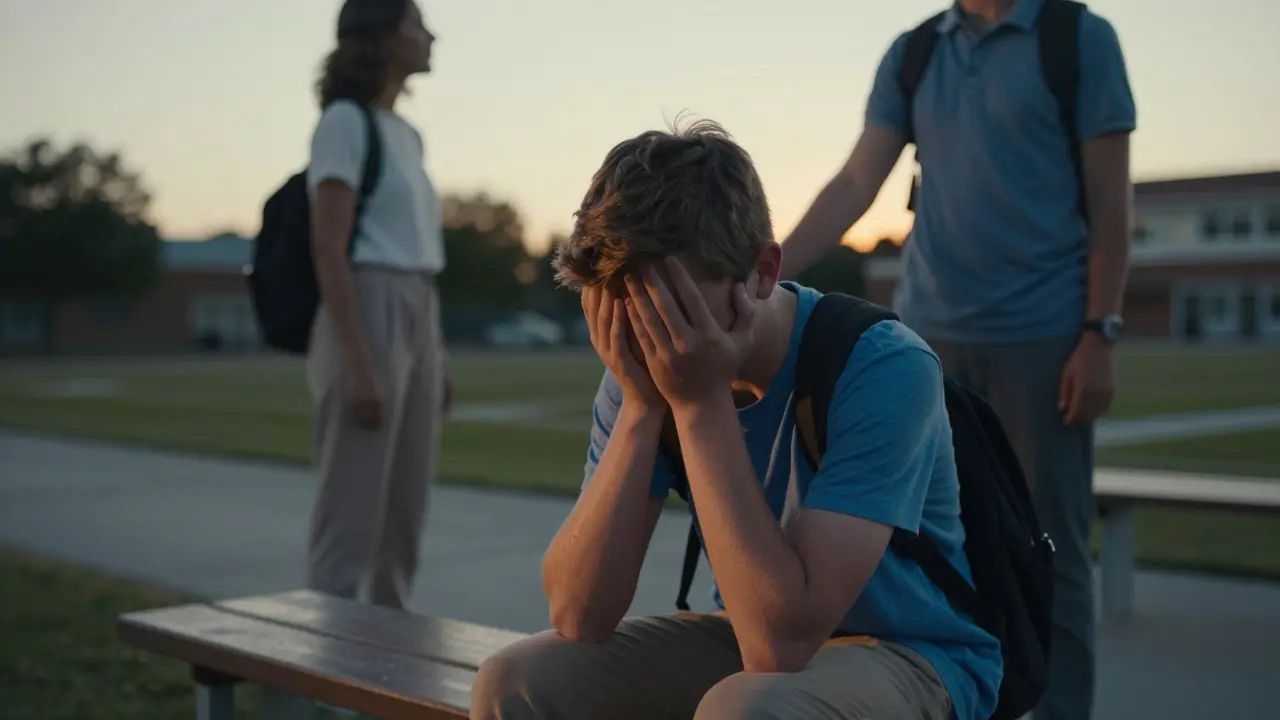
Focus on mental health, not just grades
One in three high school students reports feeling persistently sad or hopeless. That’s not normal. That’s a warning sign.
Grades matter. But sleep, stress, and self-worth matter more. If your child is pulling all-nighters, skipping meals, or shutting down after school, you’re not helping them succeed. You’re burning them out.
Look for these red flags:
- They stop talking about friends or activities they used to love
- They say things like, “It doesn’t matter what I do.”
- They’re constantly tired, irritable, or sick
Don’t wait for a crisis. Talk to them. Ask if they’re okay. Suggest a counselor. Push for a doctor’s visit. Mental health isn’t a side issue. It’s the foundation.
They don’t need to be perfect. They need to be prepared.
High school isn’t a race to the top. It’s a training ground. The goal isn’t to get into the most selective college. The goal is to leave high school with:
- Self-awareness: They know how they learn best
- Resilience: They’ve bounced back from failure
- Agency: They can ask for help, set goals, and follow through
These aren’t soft skills. They’re survival skills. And they’re the ones colleges and employers actually look for.
So stop obsessing over SAT scores. Stop comparing your child to others. Focus on the quiet wins: the day they asked a teacher for help. The week they turned in every assignment. The moment they said, “I need to change how I’m doing this.”
That’s the real measure of success.
When should we start talking about college with our child?
Start as early as freshman year. By then, your child should understand what classes they need to take, how GPA works, and that extracurriculars are about depth, not quantity. You don’t need to pressure them about rankings-just help them explore what kind of school feels right. Early conversations reduce panic later.
Is it okay if my child isn’t involved in lots of clubs?
Absolutely. Colleges care more about commitment than quantity. One leadership role in a club, consistent volunteering, or even a personal project like starting a blog or learning guitar seriously means more than five half-hearted attempts. Depth shows character. Quantity just shows busyness.
How do I help my child manage time without micromanaging?
Use a simple system: one notebook or digital doc for tracking assignments, a 15-minute weekly check-in to review what’s due, and no nagging. Let them organize it themselves. Your job isn’t to control their schedule-it’s to help them build the habit of checking it. If they miss a deadline, let them face the consequence. That’s how they learn.
What if my child is failing a class? Should I intervene?
Don’t fix it for them. Do this instead: Help them make a plan. Write out what went wrong. Practice how to ask the teacher for help. Set up a meeting. Encourage them to show up. You’re teaching problem-solving, not taking over. A single failed class isn’t the end-it’s a chance to learn how to recover.
How do I know if my child is overwhelmed?
Watch for changes: constant tiredness, loss of interest in hobbies, irritability, skipping meals, or saying things like, “It doesn’t matter what I do.” These aren’t just stress-they’re signs your child needs support. Talk to them. Talk to a school counselor. Don’t wait for a breakdown. Mental health is as important as grades.
Do we need to hire a college counselor?
Not necessarily. Most public high schools have counselors who can help with course planning, college applications, and financial aid. If your child is on track and you’re comfortable guiding them, you can do it yourself. Save money for college, not consultants. But if your child has special needs, a learning difference, or you’re unsure where to start, a counselor can be worth it.
What comes next?
High school doesn’t end with graduation. It ends with readiness. The best preparation isn’t a perfect transcript. It’s a kid who knows how to learn, how to ask for help, and how to keep going-even when things get hard.
So keep showing up. Keep listening. Keep trusting them-even when they mess up. That’s what they’ll remember long after the grades fade.
Krzysztof Lasocki
March 23, 2026 AT 16:58Bro, this is the most solid piece of advice I've read all year. Seriously. I used to be that parent calling the teacher every time my kid missed a deadline. Turns out, I was just training him to be a professional excuse-maker.
Now I just ask, 'What's your plan?' and let him figure it out. He bombed a chem quiz last month. Got a D. Didn't cry. Didn't panic. Went to the teacher, asked for a retake, and passed the next one. That's the win.
Stop fixing. Start facilitating. Your kid's gonna thank you when they're 22 and not crying in their dorm room over a missed assignment.
Henry Kelley
March 25, 2026 AT 14:38honestly this is the first time i’ve read something about high school prep that didn’t feel like a corporate ad for college prep services. the ‘one notebook’ thing? genius. no apps, no overcomplicating. just write it down and check it. my 15yo does it now. no nagging. just a nod and ‘you good?’
also the ‘let them fail safely’ part? yeah. my sister’s kid got a 58 on a paper. i almost called the teacher. stopped myself. kid cried. then wrote a better one. learned more than if i’d fixed it.
Victoria Kingsbury
March 26, 2026 AT 18:22Let me just say-this is the most clinically accurate breakdown of adolescent transition I’ve seen since the 2017 APA guidelines on executive function development.
The systemic approach to autonomy scaffolding? Textbook. The emphasis on internal locus of control over external validation? Chef’s kiss.
Also, the ‘one notebook’ heuristic is a low-friction, high-impact intervention. Minimal cognitive load. Maximal retention. Perfect for neurodivergent learners too. If you’re not using a single source of truth for task tracking, you’re operating in legacy mode.
Tonya Trottman
March 28, 2026 AT 15:26Oh please. ‘One notebook’? That’s what you call a system? My niece uses Notion with color-coded tags, time-blocking, and auto-reminders synced to Google Calendar. And she’s 14.
You’re romanticizing chaos. The ‘no apps’ thing is just nostalgia dressed as wisdom. Kids today don’t live in a world where paper notebooks survive three weeks of backpack abuse.
Also, ‘let them fail’? Sure. But don’t be the parent who waits until they’re failing two classes to ‘let them learn.’ That’s not resilience. That’s negligence.
And ‘college at freshman year’? Please. My cousin’s kid started talking about majors in 7th grade. She’s now at Stanford. Coincidence? I think not.
Rocky Wyatt
March 30, 2026 AT 13:08Look, I’ve seen this before. Parents think they’re being ‘supportive’ by not pushing. But kids don’t want to be left alone. They want structure. They want you to care enough to enforce.
My son’s school had a kid who ‘learned from failure’-got kicked out of three AP classes. Now he’s 19, living in his mom’s basement, binge-watching TikTok. ‘Let them fail’? Nah. That’s just letting them quit.
Real talk: you don’t raise adults by stepping back. You raise them by showing up. Even when it’s uncomfortable. Especially then.
Santhosh Santhosh
March 31, 2026 AT 17:04As someone who grew up in a small town in India where high school was the first time we had to manage our own time, I can say this piece hits deep. There was no one checking on us, no apps, no color-coded planners-just a notebook, a pencil, and the quiet dread of failing. But that isolation forced us to build systems from scratch. We learned to ask for help by watching older students. We learned resilience by surviving the silence. This isn’t just advice for American parents. It’s universal. The fear of being unprepared? That doesn’t care about borders. The need to be heard by an adult outside the family? That’s a human need. I wish I’d had someone say this to my mother. She would’ve understood.
And yes-mental health isn’t a side note. It’s the whole house. If the foundation cracks, the roof doesn’t matter.
Veera Mavalwala
April 1, 2026 AT 15:32Oh honey, you’re preaching to the choir. I’ve been screaming this from the rooftops since my daughter started 9th grade. ‘No one checks?’ NO ONE CHECKS. And you know what? The school system doesn’t care. They’re just churning out numbers. You think they care if your kid is sobbing in the bathroom at 11 PM? Nope. They’re too busy counting AP credits.
I made my kid start writing down every assignment in a notebook. No apps. No distractions. Just pen and paper. She hated it. Now she won’t go to school without it. She’s got a 3.9. And she sleeps. Like, actually sleeps. Not like the kids who are ‘grinding’ and have caffeine IVs.
And the ‘one adult outside the family’? That’s the secret weapon. My daughter’s science teacher? He’s her person. He texts her when she’s stressed. Not me. Not my husband. Him. That’s power. That’s safety. That’s what you build when you stop being the helicopter and start being the anchor.
Ray Htoo
April 2, 2026 AT 21:19This is beautiful. I’m a teacher. And I’ve seen this play out a hundred times. The kids who succeed aren’t the ones with the highest SAT scores. They’re the ones who know how to say, ‘I don’t get this.’
One kid in my class, 10th grade, failed the first quarter. He came to me after school and said, ‘I don’t know how to study.’ We sat down. We made a plan. He started writing one thing he learned every day. Just one. No pressure. Just reflection.
By spring, he was tutoring others. He didn’t get an A in everything. But he got something better-he got confidence. He got agency.
Stop chasing perfection. Chase the moment they say, ‘I need to change how I’m doing this.’ That’s the real A+.
Natasha Madison
April 4, 2026 AT 03:13Oh, so now we’re just supposed to ‘trust’ our kids? While the government pushes Critical Race Theory in history class and gender ideology in health? While colleges are filled with woke indoctrination? You think letting your kid ‘figure it out’ is safe? They’re being groomed for collapse.
My daughter was told to ‘question her gender’ in 8th grade. Now you want me to stop micromanaging? No. I’m taking control. I’m homeschooling. I’m not letting them ‘fail safely’-I’m preventing them from being destroyed.
This isn’t about habits. It’s about survival. And you’re giving advice that’s gonna get kids brainwashed.
Patrick Sieber
April 4, 2026 AT 06:41Love this. I’m Irish. We don’t have the same pressure-cooker system as the US, but the core truth is the same: kids need space to stumble, not a safety net. My nephew failed his first math test. I didn’t call the teacher. I made him sit down, figure out why, and write a plan. He did. Got an A next time.
The ‘one notebook’ thing? Brilliant. We used to use a small A5 notebook for everything-homework, appointments, even grocery lists. Simple. Human. Doesn’t need Wi-Fi.
And the ‘adult outside the family’? My nephew’s soccer coach is that person. He’s not a parent. Not a counselor. Just a guy who asks, ‘You good?’ and listens. That’s all it takes.
OONAGH Ffrench
April 4, 2026 AT 18:51Systems over schedules. Depth over quantity. Agency over perfection.
These are not just parenting tips. They are life principles.
I have taught high school for seventeen years. I have seen the brightest students crumble under the weight of parental expectation. I have seen the quiet ones thrive because someone trusted them to carry their own weight.
It is not about what you do. It is about what you stop doing.
Let them be responsible. Let them be messy. Let them be human.
That is the only preparation they will ever truly need.
poonam upadhyay
April 5, 2026 AT 08:29Ugh. This is so... naive. You think a notebook is enough? You think letting them fail is ‘safe’? Have you seen what the world is like now? College admissions are a bloodsport. The SAT is rigged. The AP exams are biased. And you’re telling parents to chill? That’s not parenting-that’s surrender.
My daughter’s school has a 92% college acceptance rate. How? Because we don’t ‘let them fail.’ We drill. We schedule. We hire tutors. We track every single grade. We know the names of every teacher. We know the deadlines before they do. We don’t wait for the ‘quiet wins.’ We create them.
And if you think ‘one adult outside the family’ is enough? You’ve never seen what happens when a kid gets rejected from five schools. It’s not a ‘learning moment.’ It’s a trauma. And it’s preventable.
Stop romanticizing struggle. This isn’t a TED Talk. This is real life. And real life doesn’t care about your ‘systems.’ It cares about results.
So if you want your kid to survive? Don’t just ‘listen.’ Fight for them. Every. Single. Day.
Krzysztof Lasocki
April 6, 2026 AT 19:30Wow. So you think forcing your kid into 18 AP classes and 6 tutors is ‘survival’? That’s not parenting. That’s burnout with a spreadsheet.
My kid’s not in college yet. But she’s sleeping 8 hours. She’s got friends. She asked her teacher for help last week. And she didn’t cry.
You’re scared. I get it. But your kid isn’t a product. They’re a person. And they’re gonna be fine. Even if they don’t go to Stanford.
Try trusting them. Just once.