High Schools: The Crucial Link Between Childhood and Adulthood
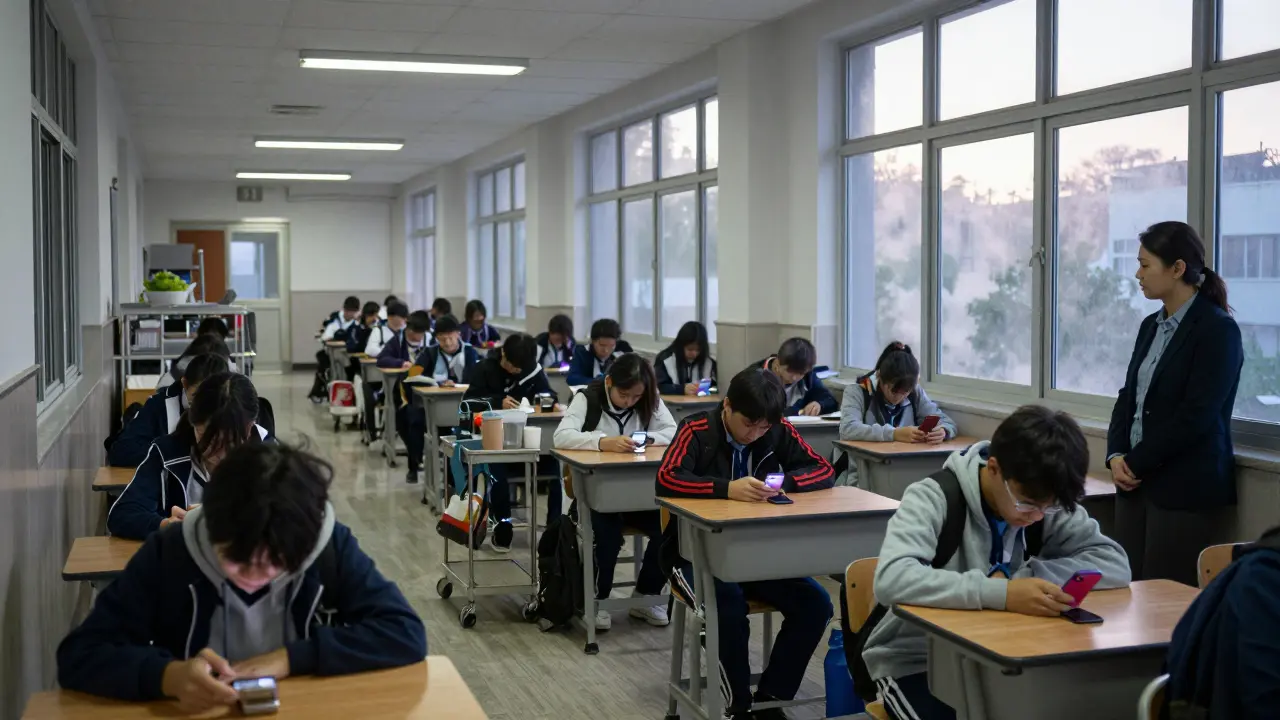
High school isn’t just another step on the school ladder. It’s the place where kids start becoming adults - not by magic, but by pressure, choice, and consequence. By age 14, most teens are making decisions that shape their next decade: what classes to take, who to hang out with, whether to care about grades or not. These aren’t small choices. They’re the first real test of who they’ll become.
The Daily Reality of High School Life
Think about a typical high school day. It starts with an alarm that doesn’t let you sleep in, even though you stayed up till 2 a.m. finishing a history paper. Then comes the bus, the hallways buzzing with noise, the smell of cafeteria food, the constant buzz of phones under desks. Teachers aren’t just lecturing - they’re watching. Watching who’s slipping, who’s hiding, who’s trying too hard.
At this age, social status isn’t just about who sits with whom at lunch. It’s about identity. Are you the athlete? The artist? The quiet one who reads in the corner? The one who jokes to hide how lost they feel? These labels stick. And they matter more than most adults realize.
By junior year, the pressure kicks in. College applications loom. SAT scores pile up. Parents start asking, "What are you going to do after graduation?" But no one asks, "What do you want?" That’s the gap. High school forces kids to act like adults before they’re ready - but rarely gives them the tools to handle it.
Academics Aren’t the Only Thing That Matters
Yes, grades count. But so do the things schools don’t grade. The student who stays after school to help a friend with math isn’t getting credit for it. The kid who skips lunch to work part-time so their sibling can buy shoes? No report card reflects that. The teenager who speaks up in class despite anxiety? That’s courage, not a GPA.
Studies from the University of Chicago show that students who feel connected to their school - even just one teacher who remembers their name - are 40% more likely to graduate and pursue higher education. That connection isn’t about perfect test scores. It’s about being seen.
High schools that focus only on test prep and college admissions miss the point. The real curriculum is emotional. It’s learning how to fail and get back up. How to say no to peer pressure. How to ask for help without shame. These aren’t optional skills. They’re survival tools.
The Role of Teachers - Beyond the Lesson Plan
Teachers in high school aren’t just content deliverers. They’re the first adult mentors many students ever have. I’ve seen math teachers notice a student who’s always tired and quietly ask if they’re okay. I’ve seen counselors spend hours helping a kid fill out FAFSA forms because their parents didn’t understand the process.
One teacher in Asheville told me about a student who came in every day at 7 a.m. just to be in a quiet space. No one knew she was sleeping in her car. The teacher didn’t confront her. Just started leaving a granola bar and coffee on the desk. That small act? It kept her in school.
High school teachers don’t get paid enough to do this. But they do it anyway. Because they know: for some kids, this classroom is the only stable place they have.

Extracurriculars: Where Identity Gets Built
Band practice. Debate club. Robotics team. Football. Theater. These aren’t hobbies. They’re training grounds for adulthood.
On a robotics team, a 16-year-old learns how to lead a project, manage conflict, and meet deadlines. In theater, they learn vulnerability - standing on stage, risking embarrassment, and still showing up. In student government, they learn how to negotiate, compromise, and speak up for people who can’t.
These aren’t resume boosters. They’re life rehearsals. A student who runs the school newspaper learns how to fact-check, handle criticism, and meet a deadline under pressure. That’s not "extracurricular." That’s professional training.
And here’s the truth: students who don’t have access to these activities - because their school cuts funding, or they have to work after school, or they live in a district that doesn’t offer them - are being left behind. Not in math. In agency. In confidence. In the belief that they can shape their own future.
The Transition Isn’t Smooth - And That’s Okay
There’s this myth that once you graduate, you suddenly become an adult. Like flipping a switch. But it doesn’t work that way.
Most 18-year-olds still don’t know how to budget, cook a meal, or call a doctor. But in high school, they’re expected to start figuring it out. That’s why dropout rates spike in 11th grade. Not because kids are lazy. Because they’re overwhelmed. They’re being asked to grow up too fast, without enough support.
But here’s the good news: the ones who make it through? They’re stronger than we think. I talked to a former student last year who graduated from a rural high school with no college prep program. She worked two jobs, took online classes, and got into a state university. Now she’s studying social work. She didn’t have a perfect GPA. But she had grit. And someone who believed in her.
High school doesn’t create adulthood. But it gives kids the space to start building it - with all the mess, mistakes, and moments of quiet courage that come with it.
What Schools Can Do Differently
Change doesn’t need a billion-dollar budget. It needs small, intentional shifts.
- Start advisory periods where students meet weekly with one adult who knows their whole story - not just their grades.
- Replace some standardized tests with project-based assessments. Let students show what they’ve learned by building something real.
- Train teachers in trauma-informed practices. Many kids come to school carrying heavy loads no one talks about.
- Expand access to mental health counselors. One counselor for every 250 students isn’t enough. It should be 1:100.
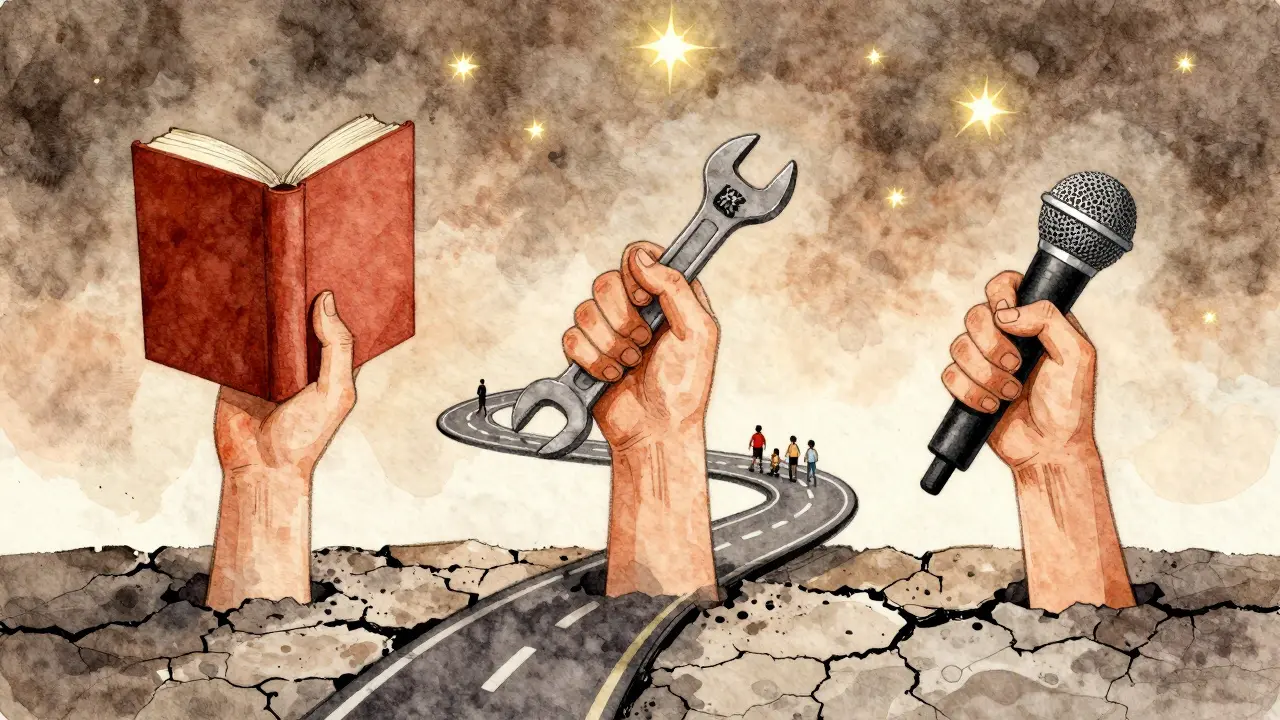
- Let students design their own electives. If they want to learn how to fix cars, start a course. If they want to run a podcast, help them.
High schools don’t need to become colleges. They need to become safe places where kids can stumble, grow, and find their voice - without being punished for not having it figured out yet.
The Real Measure of Success
Success in high school isn’t measured by how many kids get into Ivy League schools. It’s measured by how many leave feeling like they matter.
It’s the kid who finally raised their hand in class after two years of silence. The one who got their first job and learned how to show up on time. The student who started a peer support group because they realized no one else was talking about their struggles.
These aren’t footnotes. They’re the real outcomes. And they’re happening every day - in classrooms, hallways, and quiet corners - when adults remember that high school isn’t just about preparing kids for the future.
It’s about helping them survive the present.
Why is high school so stressful for teens?
High school is stressful because teens are being asked to handle adult responsibilities - like college applications, part-time jobs, and social pressures - without the emotional tools or support systems to manage them. Schools often focus on grades and test scores, ignoring mental health, identity development, and real-world skills. Many students feel unseen, overwhelmed, and unsure if they’re good enough.
Can high school shape a person’s future career?
Absolutely. While grades matter, it’s often the non-academic experiences that stick: joining a club, working a job, leading a project, or overcoming a personal challenge. These build skills like resilience, communication, and problem-solving - the same traits employers value. A student who runs the school newspaper learns deadlines and critical thinking. One who volunteers at a shelter learns empathy and responsibility. These aren’t extras - they’re career foundations.
Do all high schools provide equal opportunities?
No. Schools in wealthier districts often have better funding, more counselors, advanced courses, and extracurriculars. Schools in under-resourced areas may lack basic supplies, have overcrowded classrooms, and no access to college counseling. This gap isn’t about student effort - it’s about systemic inequality. A student’s zip code still heavily influences their chances of thriving in high school and beyond.
How can parents help their teens through high school?
Parents can help by listening more than fixing. Instead of asking "What’s your GPA?" ask "What made you proud this week?" Support their interests, even if they’re not academic. Help them find mentors - a teacher, coach, or community leader. And don’t panic over one bad grade. What matters most is whether your teen feels safe, seen, and supported.
What’s the biggest mistake schools make about high school students?
The biggest mistake is treating teens like unfinished products - something to be molded into college material. Students aren’t problems to solve or data points to improve. They’re people navigating a confusing, high-stakes transition. Schools that focus only on outcomes - graduation rates, test scores, college admissions - miss the deeper purpose: helping young people become capable, compassionate adults.
Teja kumar Baliga
February 3, 2026 AT 06:59High school in India is wild-kids juggle tuition fees, family expectations, and still manage to ace exams. No one asks if they’re okay, but they smile anyway. I remember my cousin working two part-time jobs while studying for boards. He didn’t have a robotics team, but he built a radio from scrap parts. That’s grit.
k arnold
February 4, 2026 AT 11:38Oh wow, another ‘high school is hard’ manifesto. Did you get paid by the Department of Education to write this? Next you’ll tell me kids need more granola bars and less standardized testing. Groundbreaking.
Tiffany Ho
February 6, 2026 AT 08:54i just think teachers should be more patient like really some of us are just trying to get through the day and not get yelled at for forgetting our homework
michael Melanson
February 6, 2026 AT 16:22The part about the teacher leaving granola bars and coffee? That’s the real curriculum right there. No test score captures that kind of human connection. Schools measure output, not presence.
lucia burton
February 8, 2026 AT 11:30Let’s reframe this holistically: the structural deficit in adolescent emotional scaffolding is systemic and exacerbated by neoliberal education policy frameworks that prioritize quantifiable outcomes over qualitative development. We’re not just teaching algebra-we’re cultivating agency in the face of precarity.
Denise Young
February 9, 2026 AT 21:44Oh please, let’s not pretend every kid needs a counselor and a podcast studio. Some of us just needed to learn how to show up. My high school didn’t have a drama club, but we had a principal who didn’t let anyone skip class without a damn good reason. That’s discipline, not trauma-informed jargon.
Sam Rittenhouse
February 10, 2026 AT 17:06I had a teacher who noticed I stopped talking in class. She didn’t say anything. Just handed me a notebook one day and said, ‘Write what you can’t say.’ I wrote for three years straight. That notebook is still on my shelf. High school didn’t fix me. But she gave me a place to fall apart quietly.
Peter Reynolds
February 11, 2026 AT 00:10some schools do more than others but the system is broken and no one wants to fix it
Fred Edwords
February 11, 2026 AT 20:33While the sentiment expressed herein is laudable, the lack of empirical citations for the ‘40% more likely to graduate’ statistic undermines the credibility of the entire argument. Furthermore, the phrase ‘quiet corner’ is semantically vague and lacks operational definition.
Sarah McWhirter
February 13, 2026 AT 10:05Did you know the whole ‘high school is a safe space’ thing is a government psyop? They want you to think kids need emotional support so they’ll stop asking why their lunch is always cold and their textbooks are from 2003. The real agenda? Control the narrative before they start asking about student debt.
Ananya Sharma
February 14, 2026 AT 11:47You romanticize suffering. In my school, kids didn’t need ‘granola bars’-they needed discipline. My father told me if I didn’t pass math, I wouldn’t eat dinner. I passed. Now I run a company. No one held my hand. No one asked if I was okay. I learned to be okay on my own. Stop treating teens like fragile flowers. They need steel, not empathy.
kelvin kind
February 15, 2026 AT 02:26my high school didn’t have a counselor, but the janitor knew everyone’s name. he’d ask how your dog was. that counted.
Ian Cassidy
February 16, 2026 AT 07:03extracurriculars are the real curriculum. you learn how to show up, even when you’re tired. that’s the skill that matters in the real world.
Zach Beggs
February 17, 2026 AT 10:27my kid got into a good college without a single AP class. she just had a teacher who believed in her. that’s all it took.
Kenny Stockman
February 18, 2026 AT 08:54you know what’s better than a counselor? a coach who shows up early and stays late. doesn’t need a title. just needs to care. that’s what changed everything for me.