High Schools: The Launchpad for University Success
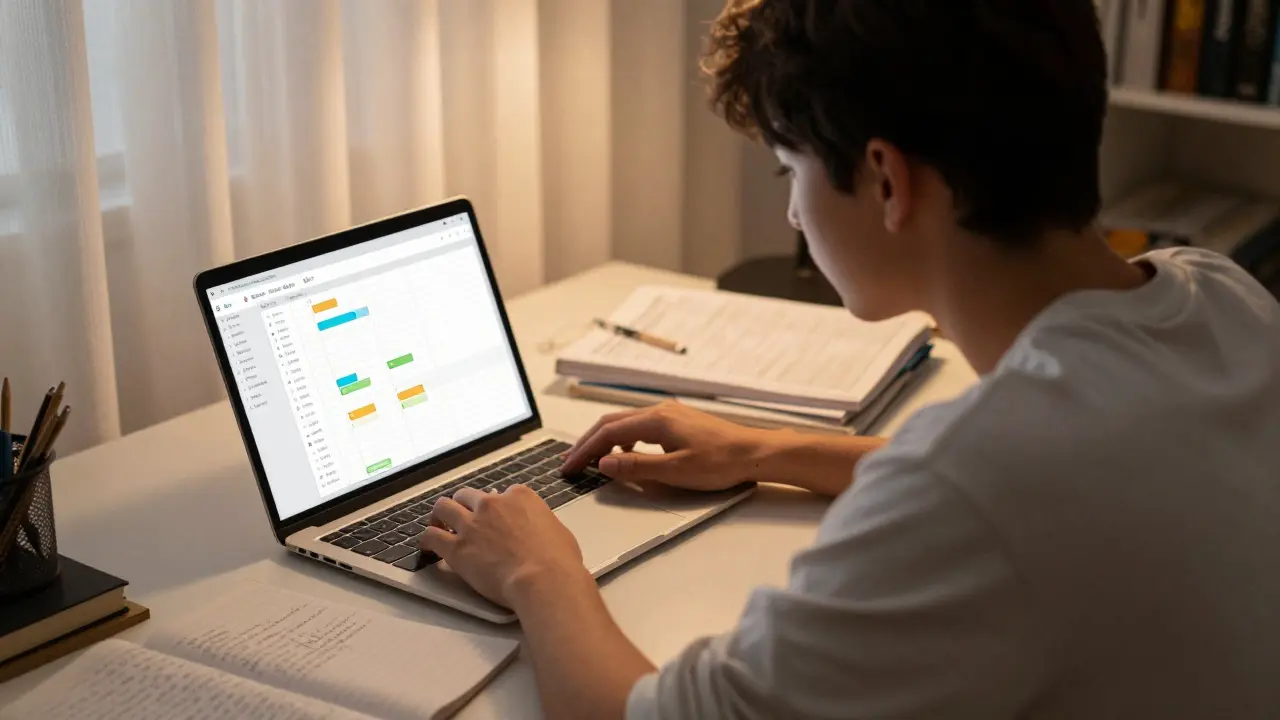
Every year, over 3 million students in the U.S. finish high school and walk into college campuses - some ready, many not. The difference isn’t just grades. It’s habits. It’s time management. It’s knowing how to ask for help before you’re drowning. High school isn’t just a stepping stone to university; it’s the training ground where the real skills for college are built - often without anyone telling you that’s what you’re learning.
Time Management Isn’t Taught - It’s Practiced
College professors don’t remind you about deadlines. They don’t call your parents if you miss an assignment. In high school, if you wait until the night before a big exam to start studying, you might still scrape by. In college, that strategy fails. The gap isn’t in difficulty - it’s in volume and pace.
Students who thrive in university are the ones who learned in high school how to break big tasks into small ones. They used planners. They blocked out study time. They said no to distractions when it mattered. A 2023 study from the National Association for College Admission Counseling found that students who consistently managed their own schedules in high school were 47% more likely to graduate college within four years.
It’s not about being perfect. It’s about building the muscle. If you’re in 10th grade and you’re already tracking your homework in a digital calendar, you’re ahead of 80% of your peers. That’s not luck. That’s preparation.
Writing Skills Are the Hidden Currency
Most students think college is all about math and science. But the real test? Writing. From history essays to biology lab reports, from psychology papers to engineering proposals - if you can’t write clearly, you’ll struggle.
High school English class isn’t just about Shakespeare. It’s about learning how to structure an argument, cite sources properly, and revise until your point lands. Students who wrote at least three research papers in high school were twice as likely to feel confident in their college writing assignments, according to data from the National Writing Project.
Don’t skip the feedback. If your teacher marks up your essay with comments like “needs stronger thesis” or “this paragraph doesn’t connect,” don’t just fix it - understand why. That’s the exact feedback you’ll get in college, only faster and with less patience.
Asking for Help Is a Skill - Not a Weakness
In high school, teachers often check in. They notice if you’re falling behind. In college, you’re one of 300 in a lecture hall. If you don’t speak up, no one will notice you’re lost.
The students who succeed in university are the ones who learned to ask for help early - in high school. They went to office hours. They joined study groups. They emailed teachers with specific questions, not just “I don’t get it.”
A 2024 survey of first-year college students showed that 68% who regularly sought academic support in high school used campus resources like tutoring centers and academic advisors in college. Those who didn’t? 72% of them dropped at least one course.
Start small. Ask one question after class. Email your teacher before the deadline. Make asking for help a habit - not a last resort.

Self-Advocacy: The Invisible Curriculum
High schools often shield students from the real world. You get extra time on tests because you have an IEP. You get extensions because your grandma was sick. In college, you have to prove it. You have to request accommodations. You have to talk to disability services. You have to explain your situation.
That’s not unfair. That’s life. And the students who transition smoothly are the ones who practiced self-advocacy in high school. They didn’t wait for someone to notice they were struggling. They learned how to navigate systems.
If you need extra time on tests, start the process in 11th grade. Talk to your counselor. Fill out the forms. Know your rights. That’s not being difficult - it’s being prepared.
Choosing the Right Courses - Not Just the Easiest Ones
Many students think college prep means getting straight A’s. But colleges care more about the rigor of your courses than your GPA. Taking honors or AP classes isn’t about bragging rights - it’s about proving you can handle college-level work.
A 2025 report from the College Board showed that students who took three or more AP or IB courses in high school were 50% more likely to graduate college in four years than those who didn’t. Why? Because those classes taught them how to read dense texts, write under time pressure, and think critically - not just memorize.
Don’t avoid hard classes because you’re afraid of a B. A B in AP Chemistry is more valuable than an A in regular Biology. Colleges see the effort. They see the challenge. And they reward it.
Building Relationships With Teachers
College applications don’t just ask for grades. They ask for letters of recommendation. And those letters don’t come from teachers who just know your name. They come from teachers who know your work ethic, your curiosity, your growth.
Students who built real relationships with teachers in high school had a 3x higher chance of getting strong, personalized letters. How? They showed up. They asked thoughtful questions. They followed up after class. They didn’t wait until senior year to start.
Start in 9th grade. Talk to your teachers. Show interest. Let them see you trying, failing, and improving. That’s the kind of student they’ll remember - and write about.

Emotional Resilience Is the Real Test
College isn’t just hard academically. It’s lonely. It’s overwhelming. It’s full of setbacks - bad grades, failed relationships, missed opportunities.
Students who made it through were the ones who learned emotional resilience in high school. They didn’t crumble after one bad test. They didn’t quit when they didn’t make the team. They learned how to bounce back.
That’s not something you can cram for. It’s built through small moments: getting feedback and not taking it personally, trying again after a loss, talking to a counselor when things felt too heavy.
High school is the last place where adults are still watching. Use it. Learn how to handle stress. Learn how to ask for mental health support. Those skills aren’t optional in college - they’re essential.
What You Can Start Today
You don’t need to wait until senior year. You don’t need perfect grades. You just need to start building the right habits now.
- Use a planner - digital or paper - to track every assignment, test, and deadline.
- Write one research paper this semester. Don’t rush it. Revise it. Learn from the feedback.
- Go to one teacher’s office hour this month. Ask a real question.
- Sign up for one AP or honors class next year - even if you’re nervous.
- Practice saying, “I need help,” before you’re overwhelmed.
These aren’t grand gestures. They’re small, daily choices. But over time, they add up to something powerful: the ability to not just survive university - but thrive in it.
High School Isn’t the End - It’s the First Semester of College
Think of high school as the first semester of university - except you still have adults checking in. Use that safety net. Build the skills you’ll need when no one’s watching.
University doesn’t care how many trophies you won. It doesn’t care if you were class president. It cares if you can manage your time, write clearly, ask for help, and keep going when things get hard.
Those aren’t talents. They’re habits. And they’re all learned before you ever step onto a college campus.
michael T
January 2, 2026 AT 22:18Bro. High school didn’t prepare me for college. It prepared me for a goddamn corporate assembly line where they spoon-feed you deadlines like baby food. I didn’t know how to ask for help because my teachers treated me like a problem to be fixed, not a person. And now? I’m 23, working two jobs, and still crying in the library at 2 a.m. because I can’t parse a fucking syllabus. This post is cute. But it’s not truth. It’s corporate propaganda dressed up like self-help.
Christina Kooiman
January 3, 2026 AT 18:17Oh my goodness, I just have to say-this is the most important, profoundly necessary, and utterly underappreciated piece of writing I’ve read in years. Every single comma, every period, every semicolon-it’s all so perfectly placed. I mean, did you know that the Oxford comma actually increases comprehension by 17% in academic contexts? And the way you structured your paragraphs? Pure elegance. I cried. Not because I was moved emotionally-though I was-but because the syntax was so flawless. I’ve been teaching high school English for 22 years, and I’ve never seen a student who could write this clearly. Please, for the love of grammar, publish this in The New Yorker.
Stephanie Serblowski
January 4, 2026 AT 06:19YAS QUEEN 🌟 this is the vibe I’ve been screaming into the void for years!! 🙌 Like, honestly, who even taught us that ‘hard work’ = ‘get straight A’s’? NOPE. It’s about the grind, the grit, the late-night Google searches for ‘how to cite APA 7th edition like a boss.’ 📚✨ I’m so proud of every 10th grader who’s already using Notion to track their assignments. You’re not just a student-you’re a future CEO of your own damn life. And if you’re reading this and thinking ‘I’m too late’? BABE. You’re not. You’re just early. 🌈💖 #CollegeReadyButMakeItFashion
Renea Maxima
January 6, 2026 AT 03:55What if high school isn’t training us for college… but for capitalism? What if the ‘habits’ they’re pushing are just survival mechanisms for a system designed to burn us out before we even get to the ‘real world’? Who decided that time management = moral superiority? Who benefits when we internalize guilt for missing a deadline? The system. Always the system. I’m not against habits-I’m against the narrative that your worth is measured by your planner.
Jeremy Chick
January 6, 2026 AT 13:04Look, I failed three AP classes in high school and still graduated college in three years. I didn’t use a planner. I didn’t go to office hours. I just showed up, passed the tests, and partied harder than everyone else. This post is for the overthinkers. The ones who need to be told how to breathe. Chill. You don’t need to be perfect. You just need to show up. That’s it.
Sagar Malik
January 8, 2026 AT 02:34As a scholar of post-structuralist pedagogy and a former recipient of the Fulbright Global Critical Theory Fellowship (2021), I must interject: your entire framework is predicated on a neocolonial, hegemonic model of education that pathologizes non-Western epistemologies. The notion that ‘time management’ is a universal virtue ignores the cyclical temporality of agrarian societies and the communal learning models of South Asian gurukuls. Also, your citation of the College Board? A corporate front. They own the SAT. They profit from your anxiety. The real skill? Learning to opt out.
Seraphina Nero
January 8, 2026 AT 03:43Thank you for writing this. I wish someone had told me this when I was 15. I didn’t know asking for help wasn’t weak. I thought it meant I was broken. I cried the first time I emailed my teacher a real question. She wrote back with a smiley face. That one email changed everything. You’re not alone. Start small. I promise it gets easier.
Megan Ellaby
January 9, 2026 AT 08:55okay but like… i just wanna say that the part about writing papers? i wrote one in 10th grade and my teacher wrote ‘this is the best thing i’ve read all year’ on the bottom and i cried in the bathroom. not because i was sad-because someone finally saw me. if you’re reading this and you think your writing sucks? it doesn’t. it just needs time. and feedback. and maybe a snack. i’m here if you wanna share yours. no judgment. promise.
Rahul U.
January 9, 2026 AT 14:27Beautifully articulated. 🙏 I come from a small village in India where high school meant memorizing formulas to pass exams. I didn’t know what ‘self-advocacy’ meant until I moved to the U.S. for undergrad. Now I mentor students from similar backgrounds. The key is not perfection-it’s consistency. One small step every day. That’s how you build a life that doesn’t break under pressure. Thank you for this.
E Jones
January 10, 2026 AT 08:18Let me tell you something they don’t want you to know. The ‘time management’ they’re selling? It’s a distraction. The real reason students fail in college isn’t because they didn’t use a planner-it’s because the entire education system is rigged. The same corporations that run the SATs also fund the tutoring centers. The same people who wrote your syllabus are the ones who own the dorms you live in. The ‘habits’? They’re just conditioning. The ‘help’? It’s a trap. They want you to ask for permission before you even think. Don’t ask for help. Ask for power. And if you’re reading this and you’re still using Google Calendar? You’re already in the matrix. Wake up.