High Schools vs. Home Schooling: The Pros and Cons
Every year, more families in the U.S. choose to pull their kids out of traditional high schools and teach them at home. In 2025, about 3.7 million students were being homeschooled, up from 2.5 million just five years ago. That’s not a fluke. It’s a shift. And it’s forcing parents to ask: Is the local high school still the best path for my child? Or is home schooling the real upgrade?
What High Schools Actually Offer
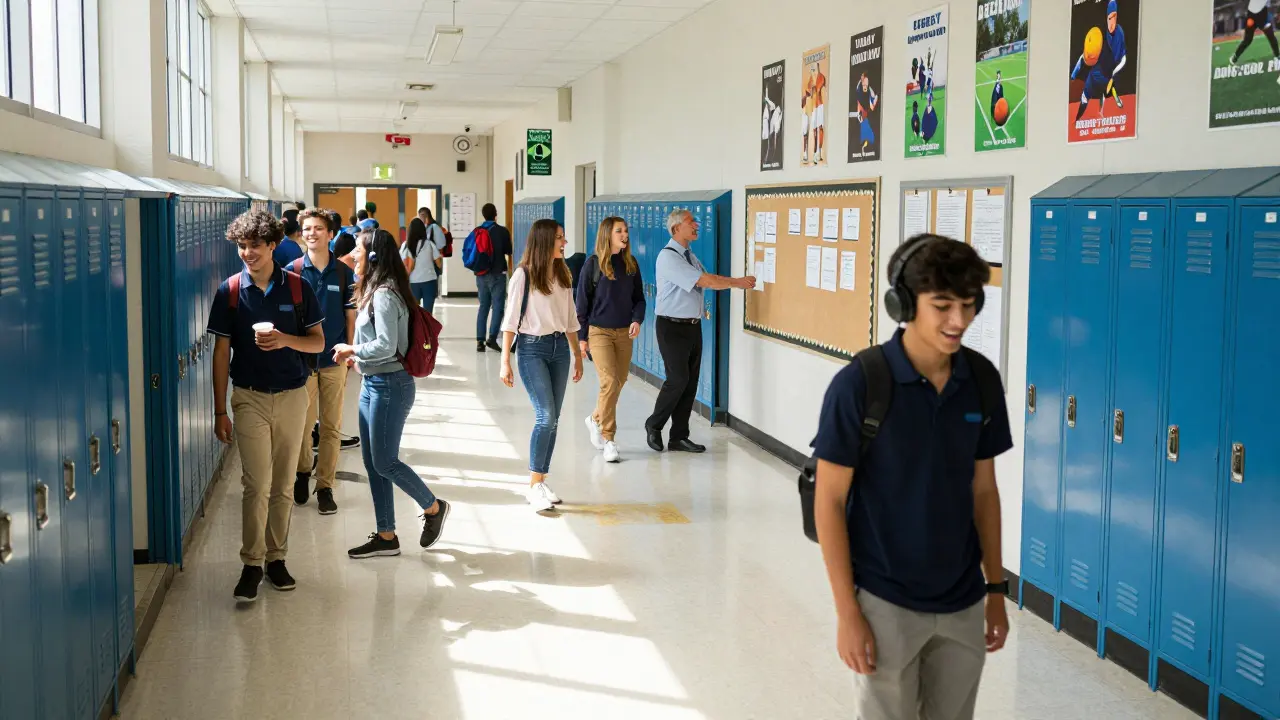
Public high schools aren’t just buildings with lockers and bells. They’re ecosystems. Your kid walks in and immediately interacts with 300+ peers, 15+ teachers, cafeteria staff, counselors, coaches, and janitors. That’s not noise-that’s social training. Real life doesn’t happen in isolation. It happens in crowds, in conflicts, in group projects, and in hallway gossip.
High schools also offer structure. Class starts at 7:30 a.m. and ends at 2:45 p.m. Every day. No arguing. No negotiating. That routine builds discipline. It teaches time management before college even comes into the picture. And let’s not forget the resources: science labs with working Bunsen burners, gymnasiums with regulation courts, music rooms with real pianos, and libraries with librarians who actually know where to find obscure books.
Extracurriculars matter too. A kid who joins debate club, varsity soccer, or the school newspaper isn’t just filling time-they’re building a resume. Colleges look for that. Employers notice it. These aren’t hobbies. They’re proof of commitment, leadership, and teamwork.
What Home Schooling Actually Offers
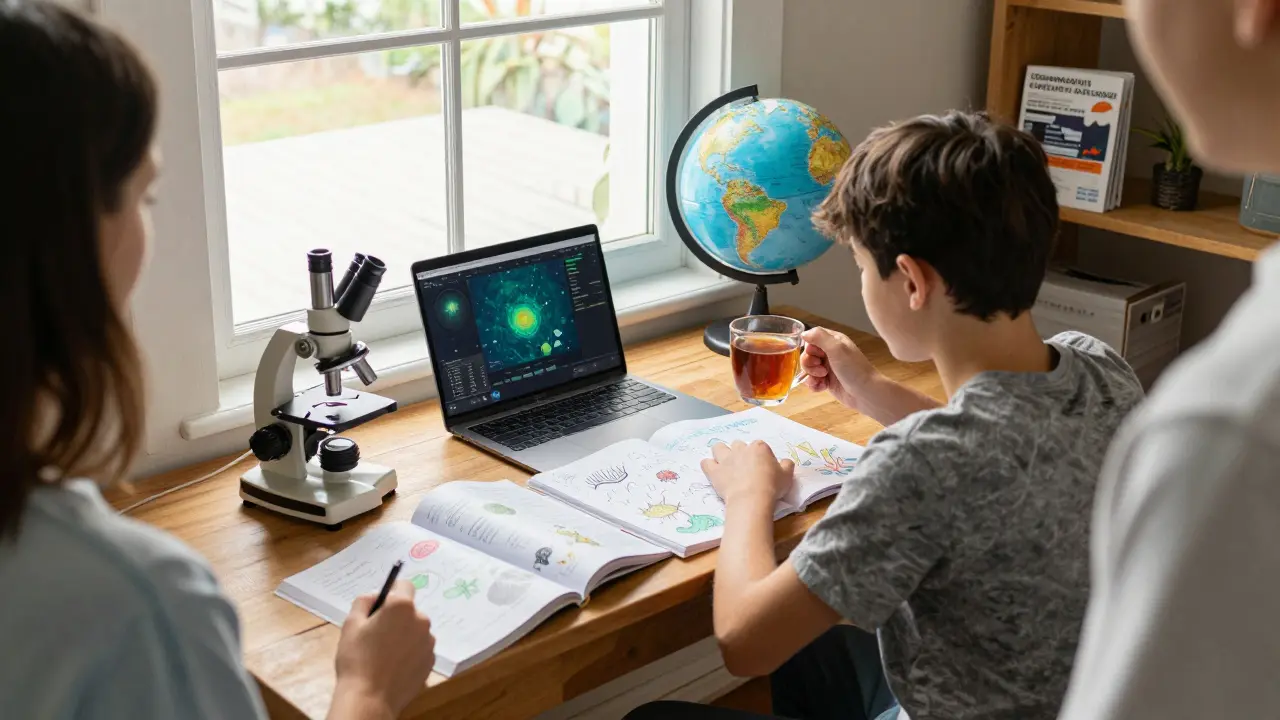
Home schooling doesn’t mean sitting at the kitchen table with a textbook. It means customizing every single day. If your child is obsessed with marine biology, you can spend three weeks on ocean ecosystems instead of rushing through a chapter. If they hate math, you can slow down, use games, videos, or real-world budgeting to teach it. No standardized pacing. No pressure to keep up with the class.
There’s also safety. Not just physical safety, but emotional safety. Bullying? It’s still real. In 2024, over 18% of U.S. high school students reported being bullied on school property. That’s one in five. Home schooling removes that daily stress. For kids with anxiety, autism, or trauma, that’s not a luxury-it’s survival.
Flexibility is huge. Need to travel for a family emergency? No problem. Want to take a three-month road trip and study geography as you go? Done. Homeschoolers can learn at night, on weekends, or during the quiet hours when their brain works best. That kind of autonomy builds self-direction-something colleges and employers say they desperately want.
The Hidden Costs of Each Option
High schools cost taxpayers money, but parents pay in other ways. Time. Transportation. Pressure. You’re expected to attend parent-teacher conferences, chaperone field trips, and sign off on endless forms. And if your kid is struggling? You’re often told to wait until the next progress report. Intervention can take months.
Home schooling costs money too. A lot more than most people realize. You’re buying curriculum, lab kits, art supplies, online courses, and sometimes tutors. A full-year homeschool package for high school can run $800-$2,000. Add in extracurricular fees, sports club dues, or community college classes for dual enrollment, and you’re looking at $3,000-$5,000 a year. That’s not cheap.
And then there’s the social gap. Yes, homeschoolers can join co-ops, sports teams, or church groups. But those aren’t the same as daily, unstructured peer interaction. A 2023 study from the National Home Education Research Institute found that homeschooled teens had fewer friendships outside the family than their public school peers. Not because they’re lonely-because they’re not around the same people every day.
Who Thrives in Each System?
High school works best for kids who:
- Need structure to stay on track
- Enjoy group learning and peer competition
- Want access to advanced courses like AP Physics or IB Chemistry
- Are socially confident and thrive in crowds
- Plan to attend college and want a traditional transcript
Home schooling works best for kids who:
- Learn at a different pace-either faster or slower
- Have sensory sensitivities or mental health challenges
- Have a deep passion that doesn’t fit in a standard curriculum
- Need to work part-time or pursue creative projects
- Have parents who are willing to invest serious time and effort
There’s no right answer. But there are wrong assumptions. Like thinking home schooling means no testing. It doesn’t. Most states require annual assessments. Or assuming public schools are all the same. They’re not. Some have robotics labs. Others don’t have enough textbooks.
The Middle Ground: Hybrid Models
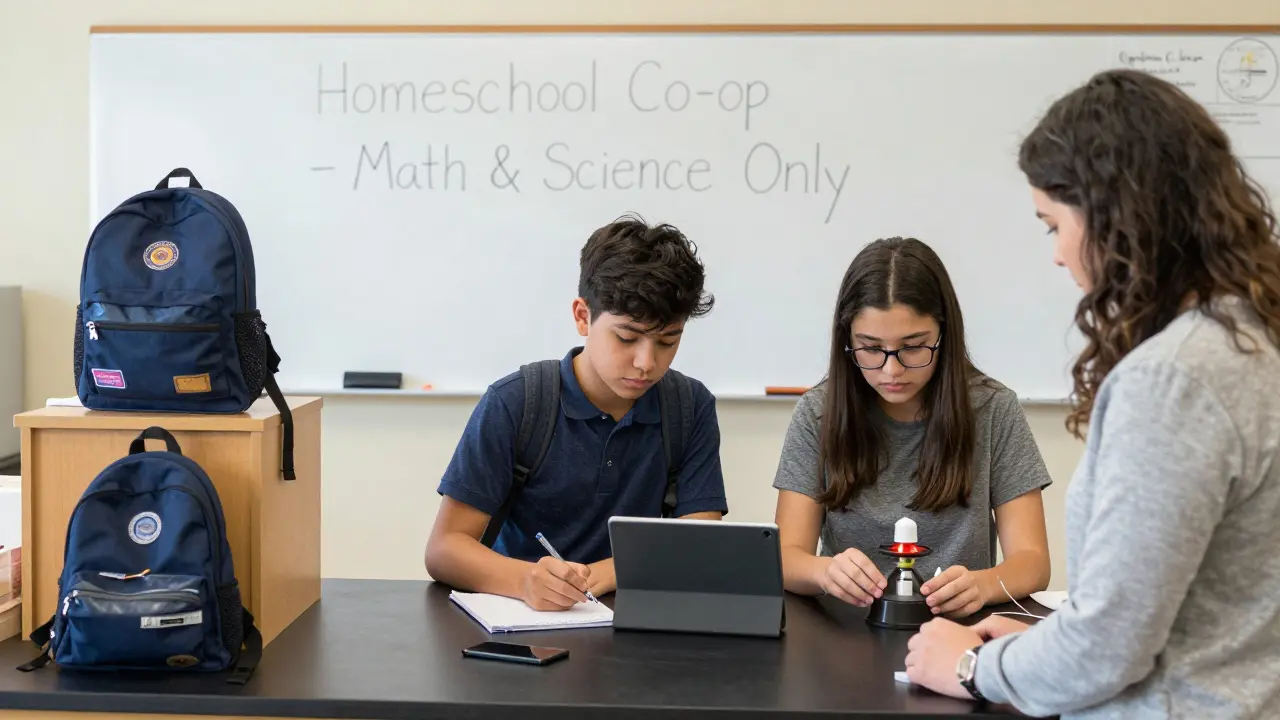
More families are blending the two. In Asheville, over 12% of homeschoolers now enroll in part-time public school classes-usually math, science, or foreign language. They take the core subjects at school, then do the rest at home. It’s a smart compromise. Your kid gets lab access and certified teachers, but still has control over their schedule.
Online public charter schools are another option. They’re tuition-free, state-funded, and let families choose the pace. Some even send out curriculum boxes, provide tutors, and host weekly in-person meetups. It’s not full homeschooling. But it’s not traditional school either. It’s something new.
What Colleges Think
Colleges don’t reject homeschoolers. In fact, many actively recruit them. Harvard, MIT, and Stanford all have admissions teams that review homeschool portfolios. They look for evidence of depth: research projects, internships, published work, or independent study. A homeschooler who built a solar-powered water filter for their town community project? That’s more impressive than a 4.0 GPA with no context.
But colleges still prefer transcripts. That’s why many homeschoolers take the SAT/ACT, enroll in community college courses, or use accredited online programs like Johns Hopkins CTY or Stanford Online High School. These give colleges something familiar to compare.
Bottom line: Colleges don’t care if you went to public school or learned at home. They care if you can think, write, and solve problems.
Final Decision: What Should You Do?
Don’t pick based on ideology. Pick based on your kid. Ask these questions:
- Does your child get overwhelmed in large groups or thrive in them?
- Are they self-motivated, or do they need external deadlines?
- Can you commit 15-25 hours a week to teaching and organizing?
- Do they have access to mentors, labs, or experts outside the home?
- Are you okay with them potentially missing out on prom, sports, or school plays?
If you answer yes to most of the first three, home schooling might work. If you answer yes to the last two, public school might be better.
And remember: You can change your mind. A lot of families start with public school, then switch after 9th grade. Others begin at home, then enroll in 11th grade for AP classes. Flexibility is the one thing both systems can offer-if you’re willing to use it.
Can homeschoolers get a real high school diploma?
Yes. Most states allow parents to issue a diploma if they follow state homeschooling laws. Many families also use accredited online programs or dual enrollment at community colleges to earn a transcript that colleges recognize. Some states even have state-issued homeschool diplomas.
Do homeschoolers struggle socially in college?
Not if they’ve had consistent social exposure. Many homeschoolers join clubs, volunteer, work part-time, or participate in co-ops. The key isn’t the setting-it’s the opportunity. A homeschooler who’s been in a debate league for four years and interned at a local museum will adapt faster than a public school student who only hung out in the cafeteria.
Is home schooling cheaper than public school?
It depends. Public school is free, but families still pay for supplies, transportation, activities, and tutoring. Home schooling costs $3,000-$5,000 a year on average, but some families spend under $500 using free online resources, library materials, and community programs. It’s not about price-it’s about value.
Can you switch from homeschooling to public school mid-year?
Yes, but it’s not always smooth. Schools may require placement tests, especially in math and science. Some districts won’t accept homeschool credits without transcripts or standardized test scores. Talk to your local school counselor before making the switch.
What’s the biggest mistake parents make when choosing?
Assuming one size fits all. Some parents choose homeschooling because they hated school. Others choose public school because they’re afraid of being "the homeschool mom." Neither is a good reason. The best choice is based on your child’s needs-not your past, your fears, or your politics.
Renea Maxima
February 21, 2026 AT 09:31Public school is just social conditioning with extra steps. 🤷♀️
They don't teach you how to think-they teach you how to sit still while someone else thinks for you.
Home schooling isn't about avoiding the world-it's about building your own version of it.
And honestly? The 'social training' argument is just nostalgia dressed up as logic.
Remember when you were 16 and the cool kids made you feel like trash? Yeah.
That's not 'real life'-that's trauma with a bell schedule.
I didn't miss prom, I missed the pressure to be someone I wasn't.
My kid reads Nietzsche at breakfast and codes AI bots by dinner.
Public school would've turned that into a 'distraction'.
Let's stop romanticizing conformity as education.
It's not about which system is better-it's about which one lets your child breathe.
And if you're still clinging to lockers and lunch duty like they're sacred rites... maybe you're the one who needs to graduate.
Just saying.
✌️
David Smith
February 22, 2026 AT 15:07Oh please. You think homeschooling is some noble rebellion? It's just lazy parenting with a Pinterest aesthetic.
My cousin homeschooled her kids for 6 years-now they can't hold a conversation with a stranger.
And don't even get me started on the 'flexibility' excuse.
Flexibility? You mean you can't be bothered to drag your kid to school so you don't have to deal with the system?
Meanwhile, real parents show up.
Real parents deal with the 7:30 a.m. wake-ups and the PTA meetings and the 17 emails about homework.
Not everyone gets to be a 'free spirit' with a 401(k) and a Netflix subscription.
And don't act like your kid's solar-powered water filter makes them some genius.
I've seen 15-year-olds build drones in shop class.
Stop romanticizing isolation.
It's not education-it's escape.
And if you're proud of that, maybe you're not the parent your kid needs.
Just saying.
Lissa Veldhuis
February 24, 2026 AT 07:38Yall are missing the real horror story here
Public schools are basically factories for anxiety
My niece was in 10th grade and started bleeding from her scalp from stress
Not kidding
She had panic attacks in the bathroom every day
And the counselor told her to 'just breathe'
Meanwhile the school cut art class because 'budgets'
So now she's homeschooled and she paints murals on her bedroom wall and tutors other kids online
And guess what
She got into a top art school
Because she had a portfolio that made admissions officers cry
Public school would've crushed her into a standardized test bubble
Don't tell me about 'social training' when social training is just bullying with a syllabus
And don't even get me started on the cafeteria food
It's not food
It's a crime against nutrition
And the teachers
They're overworked
Underpaid
And honestly
Most of them just want to survive until 3 p.m.
So yeah
Home schooling isn't perfect
But neither is the system we pretend is sacred
It's not rebellion
It's survival
And if you can't see that
you're not seeing your kid
you're seeing your own trauma
And that's not parenting
that's projection
Just saying
❤️
Michael Jones
February 26, 2026 AT 02:37Look I get it
Everyone's scared of change
But the world doesn't care about your high school diploma
It cares about what you can build
What you can solve
Who you can inspire
Public school is a factory that makes identical widgets
Home school is a workshop where you learn how to make something no one else can
My nephew started homeschooling at 14
He didn't know calculus
But he knew how to fix a motorcycle
By 16 he was running a YouTube channel teaching kids how to rebuild engines
Now he's an apprentice at a Tesla retrofit shop
And yeah
He didn't go to prom
But he went to a tech summit in Berlin
And he met his mentor there
Who happens to be a former NASA engineer
Who now sponsors his projects
That's not luck
That's freedom
And if you think that's rare
you're not looking hard enough
There are thousands of kids out there doing the same thing
Not because they're rebels
But because they're tired of being told what to learn
When they already know what they need
And if you're still stuck on lockers and bells
maybe you're not ready for the future
It's not about school
It's about awakening
And the system isn't built for that
It's built for compliance
So yeah
Choose differently
Choose wild
Choose real
And don't apologize for it
Because the world needs more builders
And fewer box-checkers
Just saying
🔥
Buddy Faith
February 26, 2026 AT 14:31Home schooling is a cult. And the leader is your ego.
Everyone thinks they're the exception.
My sister homeschooled her kids.
Now they're 20 and can't file taxes.
They don't know how to ask for help.
They think the internet is a curriculum.
And you know what?
They're terrified of college.
Because they never learned how to fail.
Public school teaches you to fail in front of 30 people and keep going.
That's resilience.
Not some Instagram-worthy solar panel project.
Real life doesn't have a 'pause' button.
And if you think it does, you're not preparing your kid.
You're protecting your fantasy.
And that's not love.
That's control.
Just saying.
Scott Perlman
February 27, 2026 AT 17:09My son switched from public school to homeschooling last year.
He’s smiling again.
That’s all I needed to know.
He used to cry before every school day.
Now he wakes up at 9, eats pancakes, and learns robotics with his uncle.
He still hangs out with friends.
He still plays soccer.
He still takes online AP Bio.
He’s not behind.
He’s ahead.
Because he’s happy.
And that’s the only metric that matters.
Love you, kid.
❤️
Sandi Johnson
March 1, 2026 AT 03:37Oh wow.
So homeschooling is now the new ‘I’m too woke for public school’ badge?
Meanwhile, my kid’s school has a 3D printer lab, a robotics team that won nationals, and a counselor who actually remembers his name.
And you’re telling me he’s missing out because he doesn’t get to learn calculus while camping in Utah?
Bro.
Some of us don’t have the luxury of turning education into a travel vlog.
Some of us just need a system that works.
And guess what?
It does.
So stop acting like you’re saving your kid from a dystopia.
You’re just avoiding the hard work of parenting in a world that doesn’t give you a trophy for every choice.
Try showing up.
It’s weird.
But it works.
Just saying.
🙄
Eva Monhaut
March 2, 2026 AT 11:53My daughter started homeschooling after 8th grade.
She had severe anxiety.
Now she runs a nonprofit that teaches coding to refugee kids.
She’s 17.
She doesn’t have a prom dress.
But she has a TEDx talk.
Public school would’ve made her disappear.
Home schooling let her become visible.
Not because we’re perfect parents.
But because we let her lead.
And yes-we pay for tutors.
And yes-we drive her to community college classes.
And yes-we cry sometimes because we’re terrified we’re failing.
But then we see her teaching a 12-year-old how to build a website
And we know.
It was worth it.
Not because it’s better.
But because it was right.
For her.
Not for the system.
Not for the parents.
For her.
And that’s all that matters.
❤️
mark nine
March 3, 2026 AT 00:35My cousin homeschooled his kid.
Now the kid is a marine biologist at NOAA.
He didn’t go to prom.
He went on a research vessel at 15.
Public school would’ve made him drop out.
Home schooling let him dive.
Simple.
Not better.
Just different.
And sometimes different works.
That’s all.
✌️
Tony Smith
March 3, 2026 AT 07:01While I appreciate the emotional sincerity of these narratives, I must respectfully challenge the underlying assumption that institutional education is inherently repressive.
Public schools, despite their imperfections, remain the most equitable engine of social mobility in American history.
They provide access to certified educators, diagnostic services, nutritional programs, and peer networks that are simply unattainable for most families without systemic support.
Home schooling, while admirable in individual cases, often functions as a privatized solution to public failures.
And when those failures are systemic-funding, equity, mental health infrastructure-we must not confuse individual triumph with collective responsibility.
Let us not romanticize isolation as liberation.
True progress lies not in opting out, but in reforming the system we all share.
With profound respect,
Tony Smith
Rakesh Kumar
March 5, 2026 AT 06:49I’m from India
My brother homeschooled his son
Now the boy is 16 and speaks 4 languages
He codes apps
He teaches kids in slums
He won a national science fair
And he never set foot in a public school
People here say homeschooling is for rich white kids
But in India
It’s for the ones who refuse to be broken
By a system that values rote memorization over curiosity
So when you say it’s not real education
you’re not seeing the world
you’re seeing your own fear
And fear is not a curriculum
Curiosity is
And curiosity is free
❤️
Bill Castanier
March 5, 2026 AT 12:44Home schooling isn’t about escaping school.
It’s about escaping the myth that school is the only path.
And that myth is killing kids.
Not the system.
The myth.
Let them learn.
Let them fail.
Let them build.
Let them be.
That’s all.
Just that.
Priyank Panchal
March 6, 2026 AT 00:51You people are delusional
Home schooling is a privilege for the rich
And you're pretending it's rebellion
Meanwhile my kid goes to public school
He gets free lunch
He gets therapy
He gets a counselor who actually cares
And you think you're saving your kid by isolating them?
That's not parenting
That's cowardice
And if you think your kid's solar panel project is more impressive than a kid who survived a 12-hour school day and still made honor roll
you're not a parent
you're a narcissist
And the system is not broken
it's just not perfect
And that's okay
Because we don't get to opt out of society
we get to fix it
So go build your little utopia
But don't pretend you're not leaving everyone else behind
Just saying
Renea Maxima
March 6, 2026 AT 16:28And yet… here we are.
Three million kids aren’t ‘opting out’.
They’re opting for something the system refuses to give them.
Freedom.
Agency.
Space.
You call it privilege.
I call it justice.
And if you’re still waiting for the system to fix itself…
you’re not parenting.
You’re procrastinating.
✌️