How High Schools Are Encouraging Student Volunteering
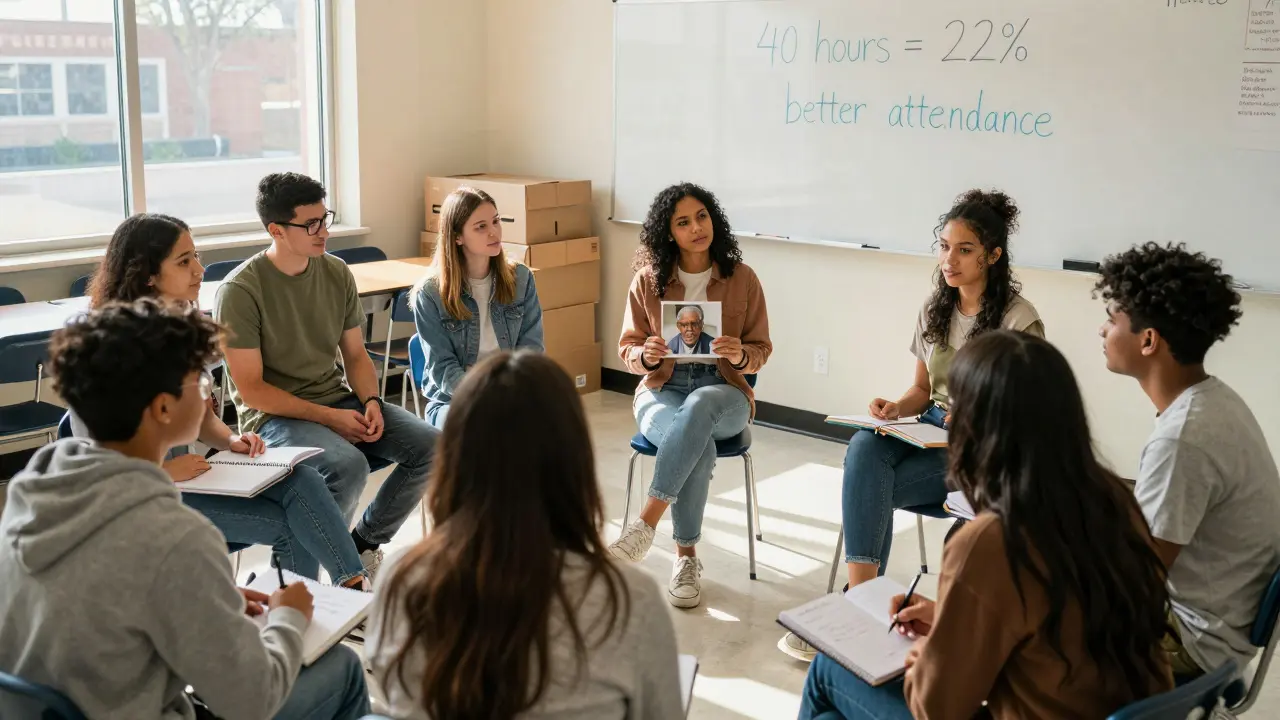
More high schools across the U.S. aren’t just asking students to volunteer-they’re building entire programs around it. It’s not just about checking a box for college applications anymore. Schools are seeing real changes in student behavior, school culture, and even graduation rates because of structured volunteer efforts.
Why Schools Are Pushing Volunteering Harder Than Ever
In 2024, a study by the National Center for Education Statistics found that 73% of public high schools now require or strongly encourage community service as part of their curriculum. That’s up from 41% just ten years ago. Why the shift? Teachers and administrators aren’t just chasing metrics-they’re seeing students become more engaged, less anxious, and more connected to their communities.
At Westside High in Raleigh, North Carolina, students who completed 40 hours of volunteer work over two years showed a 22% increase in attendance and a 15% drop in disciplinary incidents. The school didn’t just hand out flyers. They built a system: trained peer leaders, mapped local needs, and tied service to classroom learning. One student, Maya, spent her weekends helping at a food pantry. She told her counselor, "I used to think homelessness was something you saw on TV. Now I know the names of the people who come in every Thursday."
How Schools Are Making It Stick
Volunteering doesn’t work when it’s optional and unstructured. The most successful programs have four things in common:
- Clear expectations - Not just "do some service," but "complete 30 hours with documented outcomes."
- Student choice - Let kids pick causes they care about. One school found that students who chose their own projects were 3x more likely to finish their hours.
- Reflection time - Journaling, group discussions, or presentations help students process what they’ve seen. At Lincoln High in Portland, students give a 10-minute talk to their class after each service term.
- Real partnerships - Schools don’t just send kids to nonprofits-they work with them. Some districts now co-design service projects with local organizations like animal shelters, senior centers, and environmental groups.
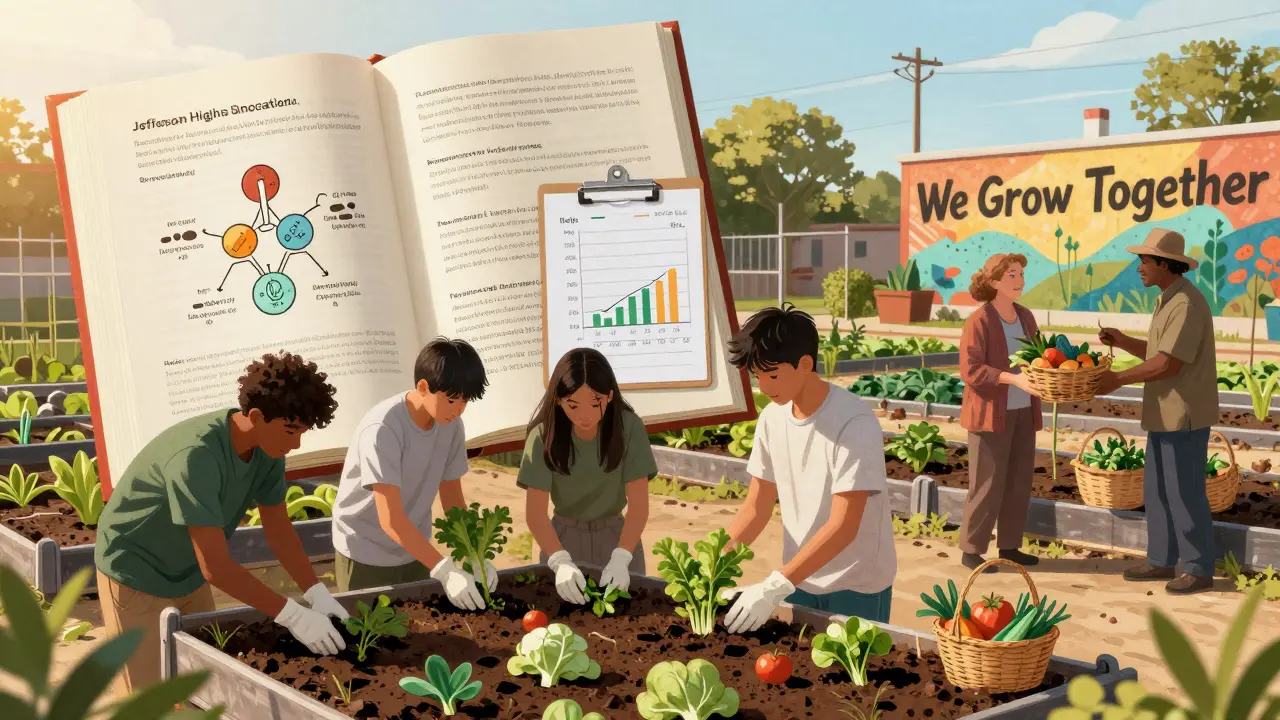
At Jefferson High in Chicago, the school partnered with a local urban farm. Students didn’t just plant vegetables-they learned soil chemistry in biology class, wrote grant proposals in English, and tracked crop yields in math. The farm now donates 60% of its harvest to neighborhood families. The students? They’re running the program.
What’s Working in Different Types of Schools
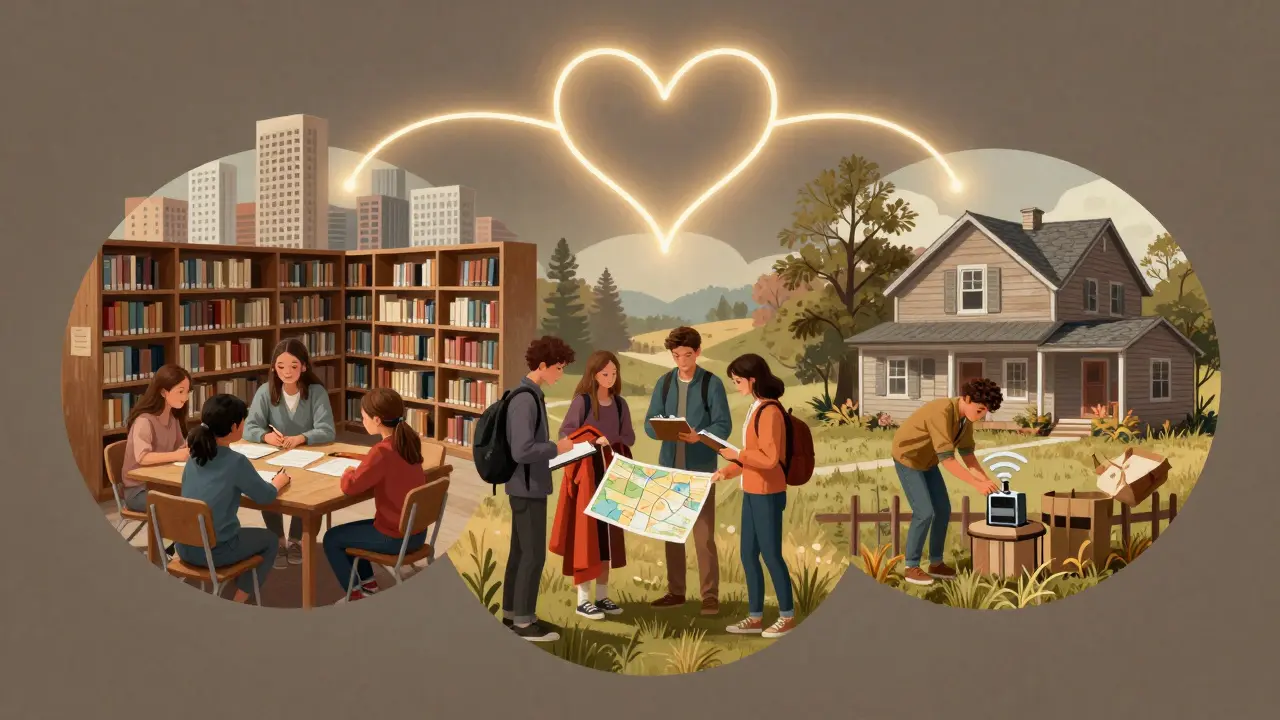
Urban, suburban, and rural schools face different challenges-but all are finding ways to make volunteering meaningful.
- Urban schools often focus on food insecurity, tutoring, and youth mentorship. In Detroit, high schoolers tutor elementary students after school. The program cut reading gaps by 30% in participating neighborhoods.
- Suburban schools tend to organize larger events like charity runs or coat drives. But the most successful ones now tie those events to leadership training. Students plan budgets, manage volunteers, and handle PR.
- Rural schools tackle isolation and access. In Montana, students deliver meals to elderly residents who live miles from town. They also help fix internet hotspots so seniors can video-call family. The school now offers a credit in community technology.
It’s Not Just About Hours
Some schools used to count hours like a math problem. Now they’re measuring impact.
At Mountain View High in Colorado, they replaced hour logs with "impact stories." Students submit a written or video reflection answering: "Who did you help? What changed? How did you change?" One student wrote about helping a homeless veteran find housing. The next semester, he started a student-led housing advocacy group.
These stories are shared in newsletters, school assemblies, and even local news. They show parents, teachers, and city leaders that volunteering isn’t charity-it’s civic education.
The Hidden Benefits
Teachers notice things beyond the service logs:
- Improved empathy - Students who work with people from different backgrounds start asking better questions in class.
- Better teamwork - Volunteering forces collaboration without grades. No one gets an A for showing up on time-just respect.
- Reduced bullying - Schools with strong service programs report fewer incidents. Why? Students see each other in new roles-as helpers, not just classmates.
- College readiness - Students who lead service projects can talk about leadership, problem-solving, and resilience in interviews. They don’t just say "I volunteered." They say, "I started a tutoring program that helped 47 kids pass their GED."
What Doesn’t Work
Not every program succeeds. The biggest failures happen when:
- Volunteering feels like punishment. "You got detention? Go clean the park." That breeds resentment.
- There’s no follow-up. Students show up once for a one-day event and never hear from the school again.
- It’s disconnected from learning. If a student spends 20 hours at a shelter but never talks about poverty, inequality, or policy in class, the experience doesn’t stick.
- Only certain students participate. If volunteering is seen as a "good kid" activity, it misses the kids who need it most.
Successful schools avoid these traps by making service optional but supported, meaningful but not forced.
What Students Say
Here’s what students from different schools shared in anonymous surveys:
- "I thought volunteering was about being nice. Now I know it’s about justice." - 10th grader, Atlanta
- "My mom said I was wasting time. But now she volunteers too." - 11th grader, Ohio
- "I didn’t know I could lead anything. Now I’m running our school’s food drive." - 9th grader, Arizona
The pattern is clear: when students feel trusted and heard, they rise to the occasion.
Where This Is Headed
By 2027, more than half of U.S. high schools plan to integrate service-learning into core subjects-not as an add-on, but as a teaching tool. Math classes might analyze food distribution data. History classes might interview veterans. English classes might write policy letters to city councils.
Some states are even considering service hours as a graduation requirement. But the best programs aren’t about compliance. They’re about transformation.
High schools aren’t just encouraging volunteering. They’re teaching students how to show up-for each other, for their communities, and for their own futures.
Do high schools require community service for graduation?
It varies by state and district. As of 2026, 17 states have some form of service requirement for graduation, ranging from 20 to 100 hours. Many others encourage it without making it mandatory. Schools that require service usually tie it to real-world learning, not just clocking hours.
Can students get academic credit for volunteering?
Yes, more schools are offering credit through service-learning courses. These are often cross-disciplinary-combining social studies, science, or language arts with hands-on community work. For example, a biology class might partner with a local wetland restoration project and earn lab credit. The key is that the service is directly connected to academic goals.
What if a student doesn’t want to volunteer?
Most schools offer alternatives for students who can’t or won’t participate in traditional volunteering. Options include internships, peer mentoring, or working on school improvement projects. The goal isn’t to punish-it’s to find a way for every student to connect with their community in a meaningful way.
How do schools find volunteer opportunities?
Many schools have a dedicated service coordinator who builds partnerships with nonprofits, libraries, hospitals, and city agencies. Some use online platforms like VolunteerMatch or local community boards. The best programs let students suggest ideas too-often the most impactful projects come from student-led proposals.
Is there data showing volunteering improves academic performance?
Yes. A 2023 study from the University of Michigan tracked over 12,000 high school students and found that those who completed regular service projects had higher GPAs, better attendance, and were more likely to enroll in college. The biggest gains were seen in students from low-income backgrounds. Researchers believe this is because service builds self-efficacy, problem-solving skills, and emotional resilience-all linked to academic success.
Morgan ODonnell
February 14, 2026 AT 05:57Liam Hesmondhalgh
February 15, 2026 AT 19:38Patrick Tiernan
February 16, 2026 AT 12:32Patrick Bass
February 16, 2026 AT 21:11Tyler Springall
February 17, 2026 AT 01:09Colby Havard
February 17, 2026 AT 09:15Mongezi Mkhwanazi
February 17, 2026 AT 22:46Alan Crierie
February 18, 2026 AT 00:04Nicholas Zeitler
February 18, 2026 AT 00:40Teja kumar Baliga
February 18, 2026 AT 21:16michael Melanson
February 19, 2026 AT 17:34lucia burton
February 20, 2026 AT 04:30Denise Young
February 21, 2026 AT 17:57