How High Schools Are Fighting Bullying Today
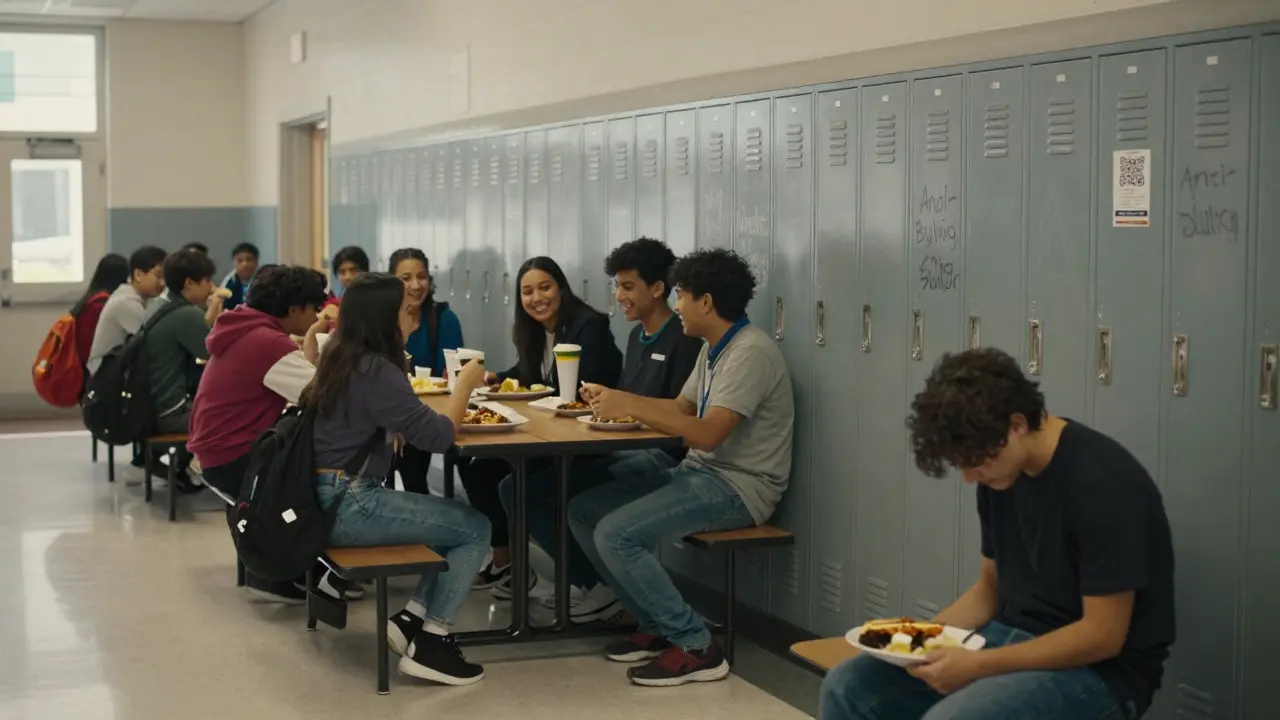
Every day in U.S. high schools, over 20% of students report being bullied. That’s more than 1 in 5 kids facing humiliation, threats, or isolation-sometimes daily. It’s not just mean comments in the hallway. It’s texts that won’t stop, rumors that spread like wildfire, and kids who start skipping class because they’re afraid to walk through the doors. Schools can’t ignore this anymore. And many are finally stepping up with real, measurable strategies-not just posters and assemblies, but systems that change how students interact, how staff respond, and how safety is built into the school culture.
What Bullying Looks Like in 2026
Bullying today isn’t just physical shoving or name-calling. It’s evolved. Cyberbullying now makes up nearly half of all reported cases. A student might be mocked in a group chat at 2 a.m., have a private photo shared without consent, or be excluded from group projects because someone posted a fake rumor about them. Social media doesn’t clock out when the bell rings. And schools that treat bullying as a "kids being kids" problem are missing the point.
Physical bullying still happens-pushing in lockers, stealing lunch money, tripping someone in the hallway-but it’s often paired with emotional tactics. Isolation is one of the most damaging forms. A student might sit alone at lunch every day because no one sits with them. Teachers might not notice because the student isn’t causing trouble. They’re just disappearing.
And the cost? Students who are bullied are 2x more likely to skip school, 3x more likely to report depression, and 5x more likely to consider suicide, according to CDC data from 2025. This isn’t about toughness. It’s about survival.
What Works: Real Anti-Bullying Programs That Deliver
Not all anti-bullying programs are created equal. A 2024 study by the National Education Association reviewed 127 school-based interventions and found only 18 had lasting results. The ones that worked shared three key traits: they were consistent, student-led, and tied to consequences.
One of the most effective models is the Olweus Bullying Prevention Program. Originally developed in Norway, it’s now used in over 1,000 U.S. high schools. It doesn’t just train staff-it trains students. Peer mentors are selected and given real authority to report incidents, mediate conflicts, and lead classroom discussions. Teachers aren’t the only ones watching. Students become part of the solution.
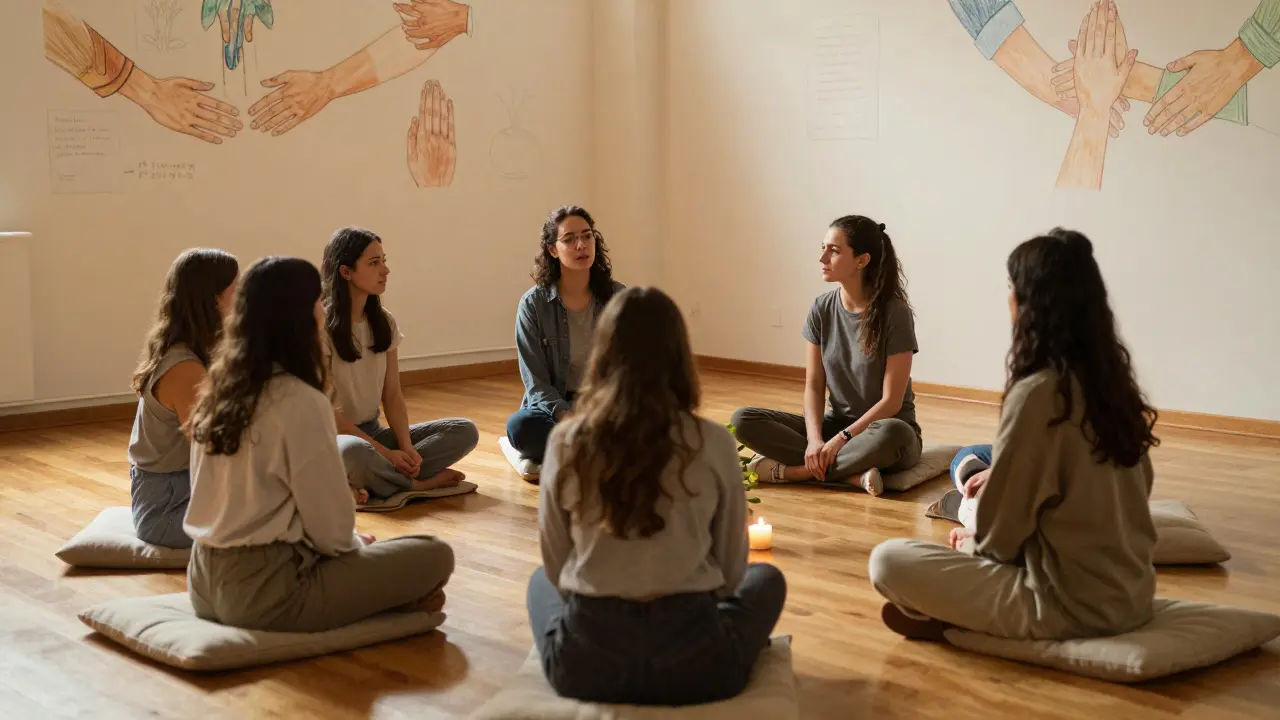
Another approach that’s gaining traction is restorative circles. Instead of suspending a student who bullied someone, the school brings the bully, the victim, and a trained facilitator into a room to talk. It’s not about punishment-it’s about accountability and healing. In schools using this method, repeat bullying dropped by 40% in two years. Students who once felt powerless started speaking up. Bullies, when given a chance to understand the impact of their actions, often changed.
Staff Training Isn’t Optional Anymore
Teachers can’t fix what they don’t see. And many still don’t know how to spot subtle bullying. A student who suddenly stops raising their hand, who always eats lunch alone, who flinches when someone walks behind them-these aren’t just "shy" behaviors. They’re red flags.
High schools that are making progress require all staff-teachers, custodians, bus drivers, cafeteria workers-to complete annual training. Why? Because bullies don’t only operate in classrooms. They operate in hallways, on buses, in the cafeteria, even in the bathroom. If the person who sees it doesn’t know what to do, nothing changes.
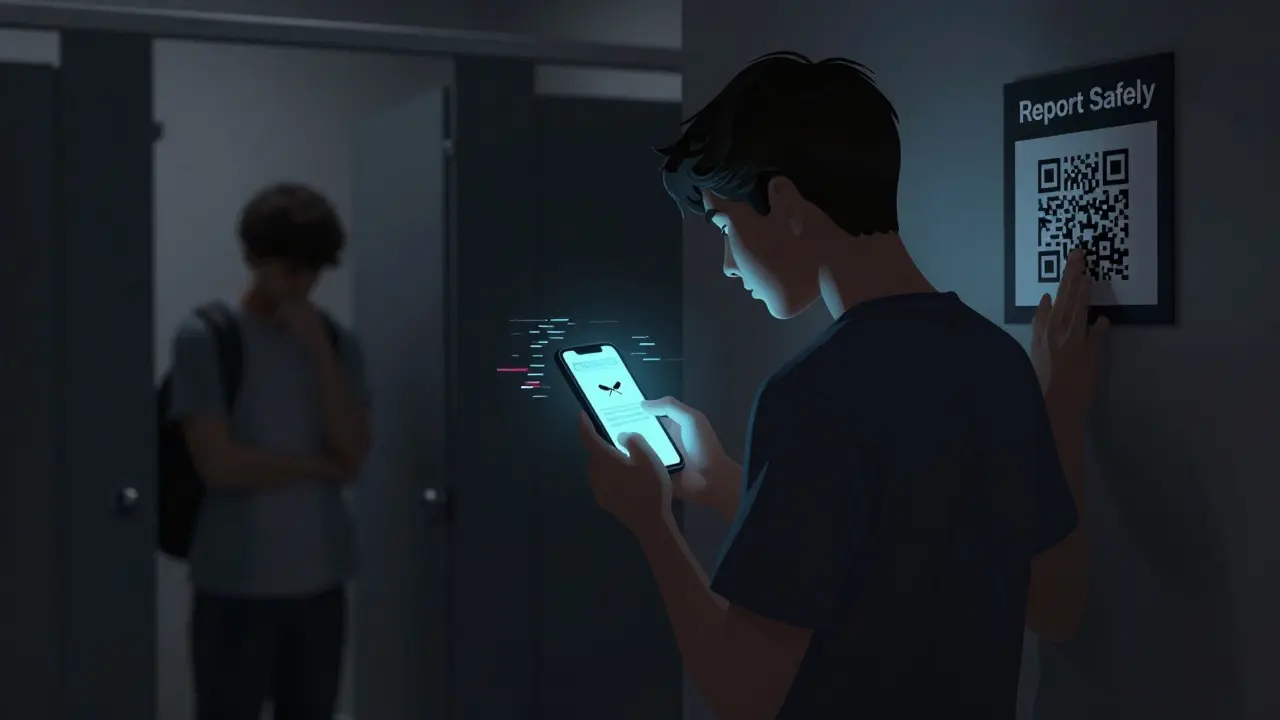
Training includes recognizing digital bullying, understanding how trauma affects behavior, and knowing how to report incidents without retraumatizing the victim. Schools are now using anonymous reporting apps that let students submit tips via phone. Some even have QR codes posted in bathrooms and lockers that link directly to a secure reporting portal. No names. No fear. Just action.
Student Voices Are Changing the Game
The most powerful anti-bullying force in any school isn’t the principal’s policy-it’s the student body. When students lead the charge, change sticks.
At Westlake High in Ohio, students started a club called "No One Left Behind." They didn’t wait for permission. They made videos showing what bullying looked like in their school. They held lunchtime forums where anyone could share their story. They created a "buddy system"-new students were paired with upperclassmen for the first month. Attendance among targeted students rose 22% in one semester.
Other schools have student-led bystander training. Instead of telling kids to "just tell a teacher," they teach them how to safely intervene. "Hey, that’s not cool," or "Let’s go get a drink," or even just sitting with someone who’s alone-it works. A 2025 study in the Journal of Adolescent Health found that when students were trained to respond, bullying incidents dropped by 31% in six months.
Why Zero Tolerance Doesn’t Work
Many schools still use zero tolerance policies: bully = suspension. But research shows this doesn’t reduce bullying-it just hides it. Students stop reporting because they know the punishment won’t fix anything. The bully gets a few days off, comes back, and the cycle starts again.
Worse, zero tolerance often hurts the most vulnerable. A student with ADHD who impulsively pushes someone might get suspended, while the student who spends weeks spreading rumors online gets no consequence. The system isn’t fair. It’s mechanical.
Schools that are seeing real change are replacing punishment with accountability. They’re using behavioral contracts, peer mediation, and mandatory counseling. They’re asking: Why did this happen? What does the student need? How do we prevent it from happening again?
The Role of Parents and Community
Bullying doesn’t start at school. It starts at home, online, and in the culture kids absorb. Schools can’t fix this alone.
The best programs involve parents. Some schools host monthly workshops on digital safety, how to recognize signs of distress in teens, and how to talk to kids about respect. Others partner with local mental health clinics to offer free counseling for families. A student who’s being bullied at school might also be dealing with abuse at home. The school can’t fix that-but they can connect the family to help.
Community involvement matters too. Local businesses sponsor anti-bullying campaigns. Police officers visit classrooms-not to scare kids, but to explain what’s illegal and what can be reported. Libraries host teen-led discussions on online behavior. When the whole community stands with the school, the message changes: bullying isn’t normal. It’s unacceptable.
What Still Needs to Change
Progress is happening, but it’s uneven. Rural schools with limited funding still rely on outdated handbooks. Urban schools with overcrowded classrooms don’t have time for restorative circles. And too many districts still treat bullying as a discipline issue, not a mental health crisis.
What’s missing? Funding. Training. Time. And the willingness to listen to students.
Every school should have a dedicated anti-bullying coordinator-not a teacher who does it on the side, but someone hired specifically for this role. They should track incidents, analyze trends, and report back to staff and students. They should have a budget for student-led initiatives. They should be empowered to change policies.
And most of all, schools need to stop waiting for a crisis to act. Bullying doesn’t announce itself with a scream. It whispers. And if you’re not listening, you’re already too late.
What You Can Do-Even If You’re Not a Teacher
If you’re a parent, ask your child: "Who do you sit with at lunch?" Not "How was school?" That’s too vague. Be specific. If you’re a student, don’t stay silent. If you see someone being left out, sit with them. Text them. Say hi. It takes five seconds and could change their whole year.
If you’re a school board member, demand data. Ask: How many bullying reports came in last quarter? How many were resolved? What programs are working? Don’t accept vague answers. Demand numbers.
Bullying isn’t going away because we hope it will. It’s going away because people decided to do something about it. And that’s happening-in classrooms, in hallways, in quiet moments between students who choose kindness over silence.
What’s the most common type of bullying in high schools today?
Cyberbullying is now the most common form, making up nearly half of all reported cases. This includes hurtful messages, rumors spread on social media, exclusion from group chats, and sharing private photos without consent. But emotional bullying-like isolation, gossip, and intimidation-is just as damaging and often harder to detect.
Do anti-bullying programs actually work?
Yes-but only the right ones. Programs that are consistent, student-led, and include clear consequences and support systems show lasting results. The Olweus program and restorative circles have proven success in multiple studies. Programs that rely only on assemblies or posters without follow-up rarely change behavior.
Should bullies be suspended?
Suspension alone doesn’t stop bullying. It often makes things worse by removing accountability and letting the behavior go unchecked. Schools that use restorative practices-where bullies face their victims, understand the harm, and work to make amends-see much lower repeat rates. Punishment without education doesn’t fix the root problem.
How can students help stop bullying?
Students are the most powerful tool against bullying. Simple actions like sitting with someone who’s alone, speaking up when they hear cruelty, or reporting incidents anonymously can reduce bullying by over 30%. Training programs that teach bystanders how to safely intervene are proven to work. You don’t need to be a hero-just a witness who chooses to act.
What should parents do if their child is being bullied?
First, listen without judgment. Don’t tell them to "just ignore it" or "toughen up." Document the incidents-dates, times, what was said or done. Then contact the school’s anti-bullying coordinator or counselor. Ask what steps they’ll take and follow up in a week. If the school doesn’t respond, escalate to the district office. Your child’s safety is non-negotiable.
Are there laws schools must follow about bullying?
Yes. All 50 states have anti-bullying laws that require schools to have written policies, investigate reports, and protect victims from retaliation. Some states also require training for staff and reporting to state education departments. Schools that fail to act can face legal consequences. But laws only matter if they’re enforced.
High schools don’t need perfect solutions. They need consistent effort. They need adults who listen. They need students who refuse to stay silent. And they need to treat bullying not as a behavior problem-but as a crisis that demands a human response.
Gabby Love
January 9, 2026 AT 17:29Just saw this and had to say-most schools still treat bullying like a hallway fight you can fix with detention. But the real damage? It’s the kid who stops raising their hand. The one who eats alone. The one who doesn’t reply to texts anymore. No one notices until it’s too late.
allison berroteran
January 11, 2026 AT 15:50I’ve been thinking about this a lot lately-not just as a parent, but as someone who remembers being the quiet kid in the back row. Bullying isn’t about the big moments. It’s about the thousand tiny erasures: the chair that gets pulled away, the group chat that never includes you, the laugh that’s never at your expense but always around you. It’s systemic loneliness dressed up as ‘kids being kids.’ And honestly? We’ve normalized it so much that we don’t even see it anymore. The Olweus program works because it flips the script-students aren’t just victims or bystanders, they’re witnesses with power. That shift-from passive observation to active care-is the only thing that lasts.
Jen Kay
January 12, 2026 AT 22:51Let’s be real-restorative circles sound beautiful on paper. But try implementing them in a school where the counselor is juggling 400 students and the principal hasn’t read the policy since 2019. The real issue isn’t the program-it’s the lack of funding, staffing, and actual political will. We cheer for student-led initiatives while cutting their budgets. We post #EndBullying hashtags while refusing to hire one full-time coordinator. It’s performative compassion with zero accountability.
Michael Thomas
January 13, 2026 AT 14:49America’s falling apart because we coddle kids. Suspension is weak. They need discipline. Toughen up.
Abert Canada
January 14, 2026 AT 23:50Canada’s been doing restorative practices for over a decade now. It’s not perfect, but when you actually sit down and make a bully listen to the person they hurt? It changes something. Not every kid. But enough. And the best part? Students start doing it themselves. No adults needed. Just human beings talking. We don’t need more apps-we need more conversations.
Tony Smith
January 15, 2026 AT 15:12It’s interesting how we’ve pathologized bullying as a mental health crisis while simultaneously defunding school psychologists, counselors, and social workers. We want students to heal-but we’ve turned their schools into prisons with no therapists. The irony is almost poetic. If we truly believed this was about survival, we’d fund it like we fund football stadiums.
Rakesh Kumar
January 16, 2026 AT 14:50Back home in India, we don’t have these fancy programs. But we have something better-elders. Uncles and aunties who call out bad behavior at family gatherings. Teachers who actually know their students’ names. Schools here still believe in shame as a tool-but sometimes, shame works better than apps. Not saying it’s right-but it’s real. Maybe we need both: structure and soul.
Bill Castanier
January 16, 2026 AT 20:04Anonymous reporting tools are useless if no one follows up. I’ve seen it. Kid submits a tip. Nothing happens. Next week, same kid gets pushed into lockers again. Trust evaporates. Systems must have accountability-not just buttons.
Ronnie Kaye
January 17, 2026 AT 13:39Oh wow, another feel-good article about ‘student-led change.’ Meanwhile, my niece’s school just cut their art program to ‘save money for security cameras.’ So kids can be watched but not heard. Brilliant strategy. Let’s surveil the silence instead of ending it.
Priyank Panchal
January 19, 2026 AT 02:44Stop pretending bullying is complicated. It’s weakness. The victim is weak. The bully is weak. The system is weak. Just punish them. No circles. No therapy. Just consequences. Weakness has no place in society.
Ian Maggs
January 20, 2026 AT 17:47...and yet, we continue to institutionalize silence... under the guise of ‘safety protocols’... while ignoring the fundamental truth: that loneliness is not a behavioral issue... but an existential one... and no app... no policy... no QR code... can fill the hollow space left by a community that refuses to look up... from its screens... and see... each other.
Michael Gradwell
January 21, 2026 AT 15:10Parents are the problem. Let your kid get punched once. Maybe they’ll learn to fight back. Stop coddling them. This is why America’s weak.
Flannery Smail
January 21, 2026 AT 18:09Wait-so now we’re supposed to believe that a kid who sits alone at lunch is being bullied? What if they just hate people? Maybe they’re antisocial? Maybe they’re weird? Maybe we’re pathologizing personality?
Emmanuel Sadi
January 21, 2026 AT 21:07Oh please. You think this is new? In 1998, I was called ‘curry muncher’ every day. I didn’t cry. I didn’t report it. I got stronger. Now you want circles and apps? Pathetic. This is why your generation is soft. Stop blaming schools. Blame parents who let their kids grow up on TikTok and think kindness is a curriculum.
Nicholas Carpenter
January 22, 2026 AT 13:22I’ve seen this work. Not in theory-in practice. My daughter’s school started a buddy system last year. She was paired with a freshman who barely spoke. Now they eat lunch together. Every day. She says it’s the first time she’s ever felt like she mattered. No grand policy. Just one person sitting down. That’s all it took.