How High Schools Are Preparing Students for Global Citizenship
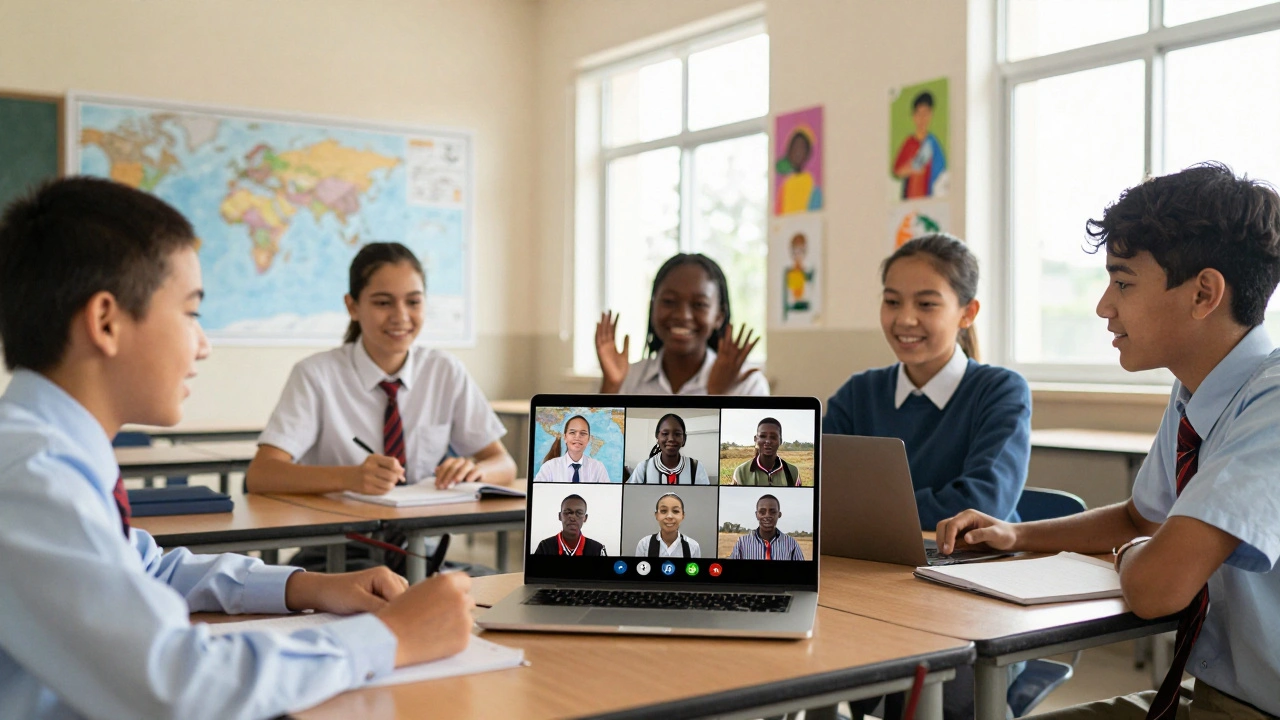
When you think of high school, you probably picture algebra tests, locker combos, and maybe a football game on Friday night. But across the U.S. and beyond, something quieter-and more powerful-is happening in classrooms. High schools are no longer just preparing students for college or jobs. They’re preparing them to be global citizens.
What Does Global Citizenship Actually Mean?
Global citizenship isn’t about traveling the world or speaking five languages. It’s about understanding how your actions connect to people and places far beyond your town. It’s knowing why a drought in Kenya affects coffee prices in your local café. It’s recognizing how social media trends in Tokyo influence fashion choices in Nashville. It’s realizing that climate policies in Germany impact air quality in your own city.
Schools are shifting from teaching facts to teaching connections. Students now learn not just what happened in the Rwandan genocide, but how media bias, international diplomacy, and economic inequality played roles. They don’t just memorize the Paris Climate Agreement-they analyze who signed it, who didn’t, and what it means for their future.
Curriculum Changes: From Textbooks to Real-World Problems
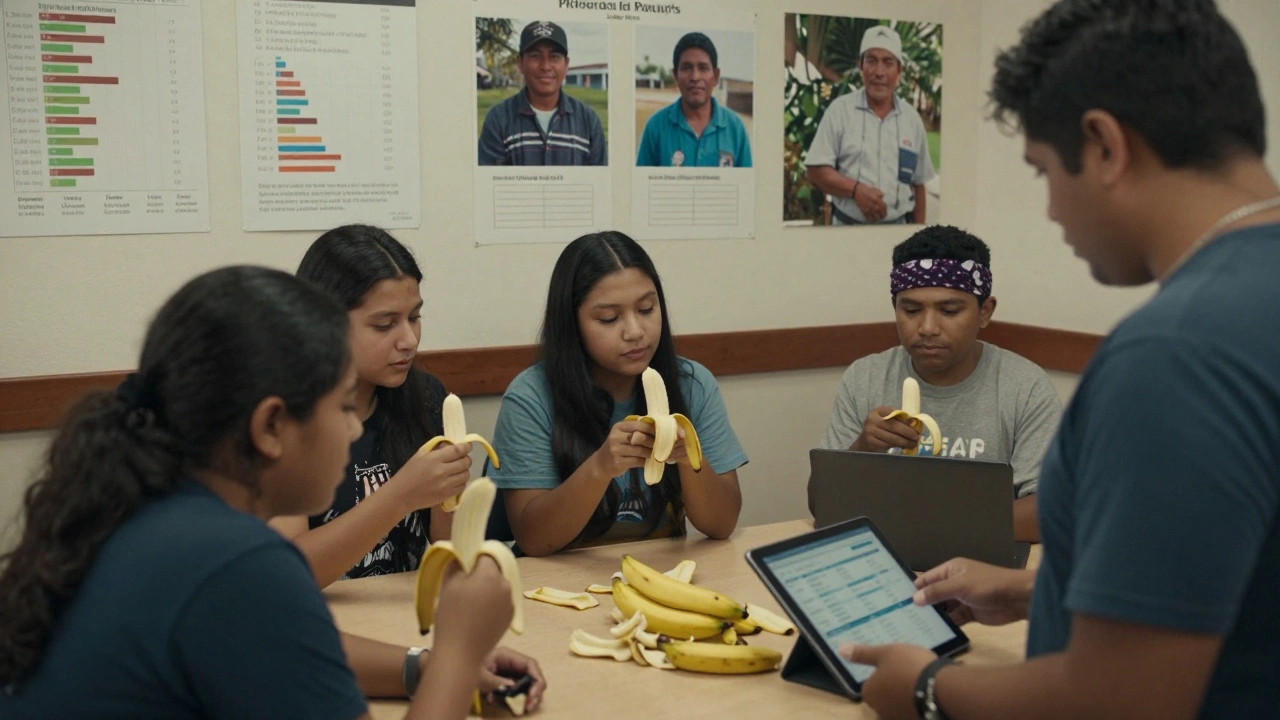
Many high schools have replaced traditional history and geography classes with interdisciplinary courses that tie global issues to local action. In Portland, Oregon, juniors take a course called "Global Systems," where they study food supply chains by tracking the journey of a banana from Ecuador to their school cafeteria. They calculate carbon emissions, interview immigrant workers, and propose fair-trade solutions.
In Chicago, a public high school partners with a school in Lagos, Nigeria. Students exchange videos, not just letters. They debate topics like internet access, gender roles in education, and youth unemployment. One American student wrote: "I thought poverty meant no food. Now I know it also means no Wi-Fi, no chance to learn coding, no voice in your own future."
These aren’t electives anymore. They’re becoming core requirements. The Common Core State Standards now include global competence benchmarks. The College Board’s AP courses in World History, Environmental Science, and Economics all require students to analyze international contexts.
Language Isn’t Just About Grammar
Learning Spanish or Mandarin isn’t just about conjugating verbs. Schools are rethinking language programs to focus on cultural fluency. In Minneapolis, students in the Mandarin program don’t just learn how to order dumplings-they study how China’s one-child policy shaped family structures, how social media platforms like WeChat differ from WhatsApp, and how Chinese youth view climate change compared to their American peers.
Teachers use authentic materials: Chinese news clips, Brazilian telenovelas, German podcasts. Students don’t just memorize vocabulary-they debate the ethics of AI surveillance in France or the impact of refugee policies in Sweden. Language class is now a window into how people think, not just how they speak.
Service Learning: Doing Good, Not Just Talking About It
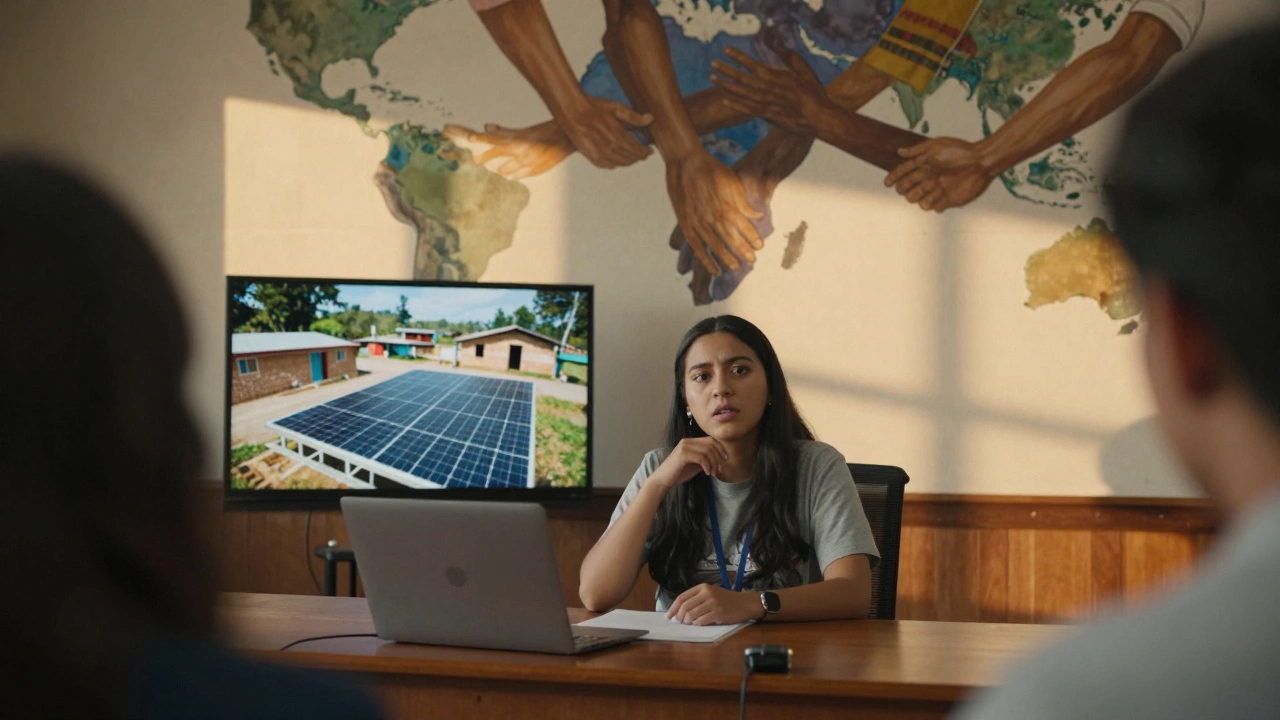
Volunteering isn’t just a resume booster anymore. It’s a classroom. In Atlanta, a high school launched a "Global Impact Project" where seniors design and fund small initiatives abroad-with real money raised by the students themselves. One group raised $8,000 to install solar-powered water filters in a village in Guatemala. They didn’t just send the money-they trained local teachers to maintain the systems, recorded the process in a documentary, and presented it to the city council.
Another group in Seattle partnered with a refugee resettlement agency. Students helped new arrivals navigate public transit, write resumes, and prepare for job interviews. One student said: "I thought I was helping them. Turns out, they taught me how to be patient, how to listen without fixing, and how to see dignity in struggle."
Technology as a Bridge, Not a Barrier
Virtual exchanges are now common. Through platforms like Empatico and iEARN, students in rural Iowa video chat weekly with peers in rural Kenya. They don’t talk about homework. They talk about dreams, fears, and what they want the world to look like in 2040.
Teachers use AI tools to simulate global decision-making. In one simulation, students play the role of UN delegates negotiating water rights in the Nile River Basin. They get real data on population growth, drought predictions, and economic needs. They argue, compromise, and fail-then try again. These aren’t games. They’re practice for the kind of complex, messy problems they’ll face as adults.
Teachers Are the New Global Navigators
None of this works without teachers who’ve stepped outside their comfort zones. Many high schools now require educators to complete global immersion programs. In Asheville, a biology teacher spent six weeks in Costa Rica studying biodiversity loss and returned with a curriculum that now includes interviews with indigenous conservationists.
Professional development isn’t about new apps or grading software anymore. It’s about cultural humility. Teachers are learning to ask: "Whose voices are missing from this textbook?" and "How do I make sure my students don’t see the world as something to fix, but as something to understand?"
It’s Not Perfect-But It’s Changing
Not every school has the budget for virtual exchanges. Not every district has the training for global curriculum design. Rural schools face bigger challenges than urban ones. Some parents still think global citizenship means "losing American values." But the shift is real.
Graduates from these programs don’t just get into better colleges-they stand out in internships, gap year programs, and first jobs. Employers are looking for people who can collaborate across time zones, understand cultural nuance, and adapt to uncertainty. That’s not a soft skill. It’s a survival skill.
One senior from Denver summed it up after returning from a month-long exchange in Japan: "I used to think the world was big because it had so many countries. Now I know it’s big because it has so many ways of being human. And I’m not here to fix it. I’m here to learn from it."
What does a global citizenship curriculum look like in a typical high school?
A global citizenship curriculum blends subjects like history, science, and language with real-world global issues. Students might study climate migration in geography class, analyze international trade policies in economics, or collaborate on a virtual project with peers in another country. Projects often include service learning, cultural exchanges, and data-driven problem solving. The goal isn’t to memorize facts, but to understand interconnected systems and develop empathy across cultures.
Do students need to travel abroad to become global citizens?
No. While international travel can be powerful, it’s not required. Many schools use virtual exchanges, online collaborations, local immigrant communities, and global media to build global awareness. A student in rural Nebraska can learn as much about global water access by interviewing a refugee resettlement worker as someone who visits a Kenyan well project. The key is depth of engagement, not distance traveled.
How do schools measure success in global citizenship education?
Schools track growth in critical thinking, cultural empathy, and civic action-not test scores. Some use surveys to measure changes in student attitudes toward diversity. Others assess project outcomes: Did students create a real solution? Did they collaborate across differences? Did they reflect on their own biases? Programs like the Global Competence Certificate from the Asia Society evaluate students on research, communication, and ethical reasoning.
Are global citizenship programs only for advanced or affluent students?
No. The best programs are designed to be inclusive. Schools in low-income districts often lead in global citizenship because they focus on equity and justice-core parts of global awareness. Programs use free digital tools, partner with local nonprofits, and leverage community resources. What matters is intentionality, not funding. A student in a Title I school can lead a campaign for fair-trade school supplies just as effectively as one from a private academy.
How do parents react to global citizenship education?
Reactions vary. Some parents worry it’s too political or takes focus away from basics like math and reading. Others see it as essential preparation for a connected world. Schools that succeed involve parents early-hosting student-led presentations, sharing project videos, and explaining how global learning builds critical thinking and communication skills. When parents see their child’s passion and growth, resistance often turns to support.
What Comes Next?
The next generation won’t just need to know how to code or write an essay. They’ll need to know how to work with someone whose values, religion, or worldview is different from theirs-and still find common ground. That’s not a nice-to-have. It’s the foundation of every major challenge ahead: climate change, pandemics, AI ethics, migration crises.
High schools are no longer just gateways to college. They’re training grounds for a world that doesn’t stop at borders. And the students who walk out of those classrooms aren’t just graduates. They’re the first wave of people ready to build something better-not by pretending they have all the answers, but by asking better questions.