How High Schools Can Drive Equality and Justice in Students' Lives
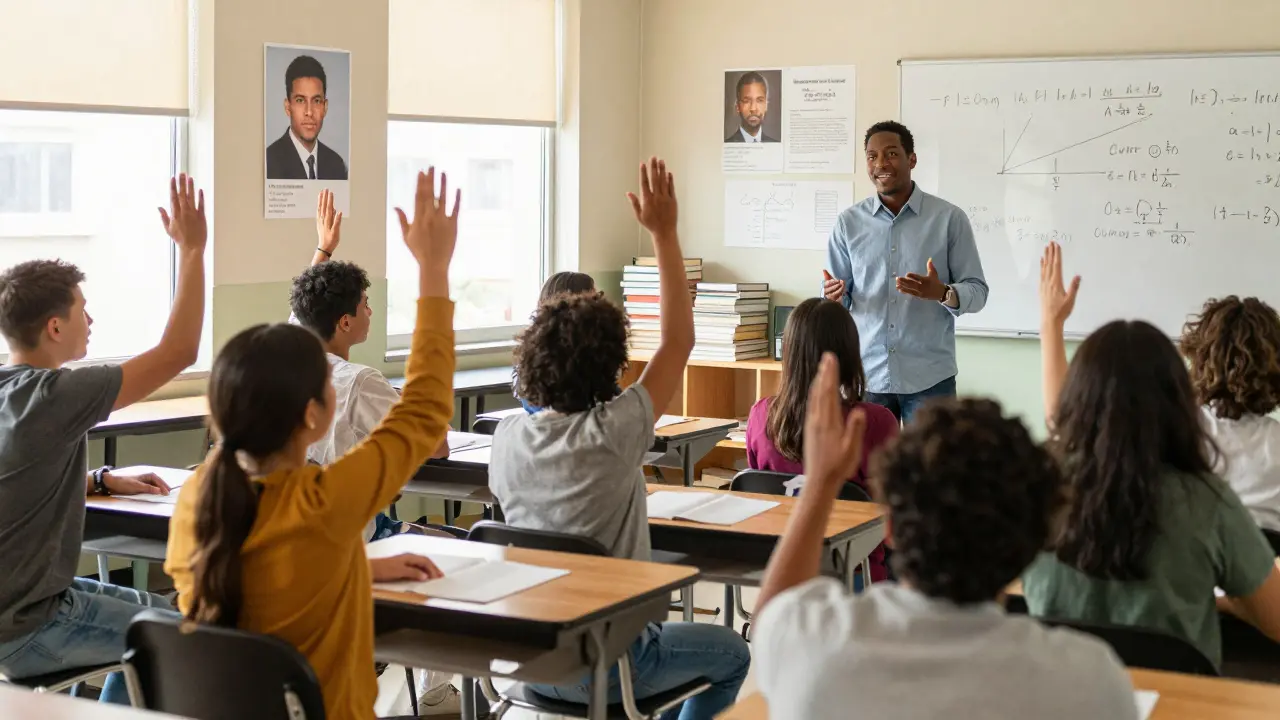
High schools don’t just teach algebra and history. They shape who students become - and who they believe they can be. In too many places, a student’s zip code still decides their future. But some high schools are changing that. They’re not waiting for policy changes or funding boosts. They’re fixing inequality day by day, in classrooms, hallways, and cafeterias.
Equality Starts with Access
Not every student walks into school with the same resources. Some have tutors, AP classes, and college counselors. Others get overcrowded rooms, outdated textbooks, and teachers juggling five different subjects. The gap isn’t about effort. It’s about design.
High schools that push for equality start by asking: Who’s missing from the advanced classes? Who’s being disciplined more often? Who’s not getting picked for leadership roles? The answers aren’t random. They’re patterns. Black and Latino students are overrepresented in disciplinary actions but underrepresented in gifted programs. Girls often get pushed out of STEM tracks not because they’re less capable, but because they’re rarely encouraged to stay.
One school in Milwaukee stopped using standardized test scores to place students in honors classes. Instead, they used teacher recommendations, past effort, and student interest. Within two years, the number of Black and Hispanic students in advanced math tripled. Not because they suddenly got smarter. Because they got a chance.
Justice Isn’t Just Fairness - It’s Repair
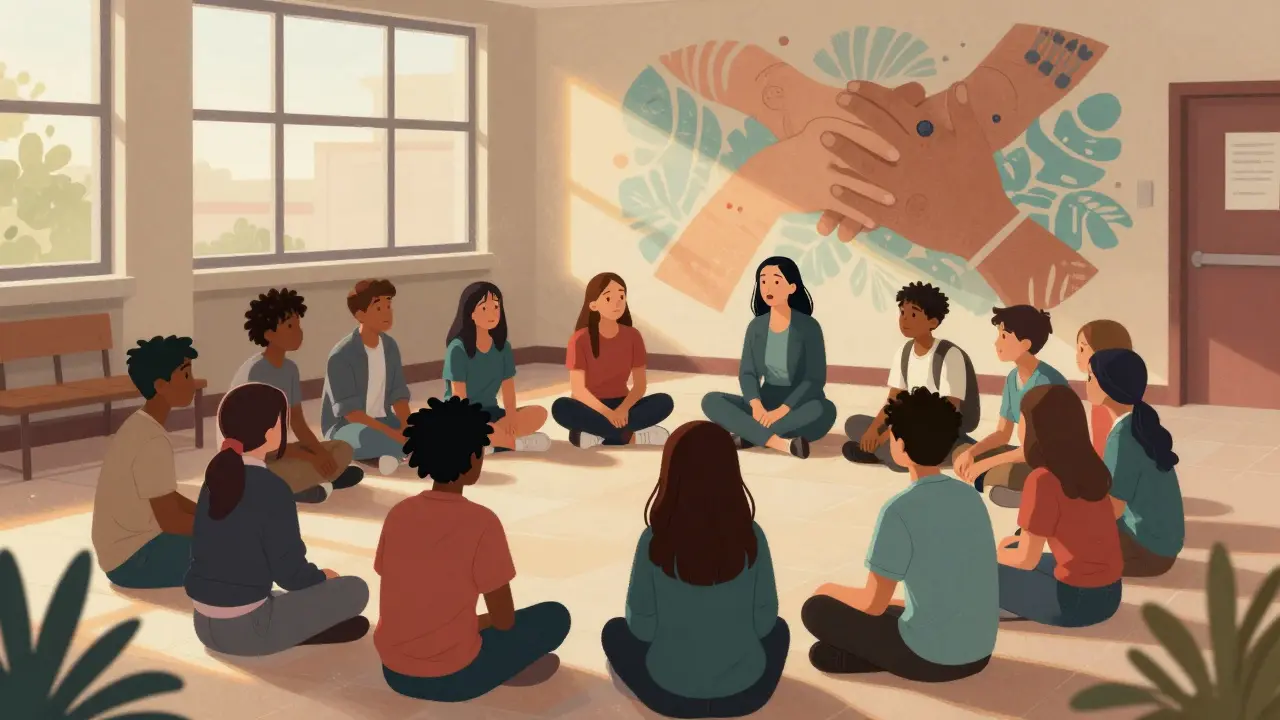
Justice doesn’t mean treating everyone the same. It means giving people what they need to succeed. That’s why some schools are replacing zero-tolerance policies with restorative circles. When a fight happens, students don’t just get suspended. They sit in a circle with peers, teachers, and sometimes even the other student’s family. They talk. They listen. They figure out how to make things right.
A study from the University of California found schools that used restorative practices saw a 40% drop in suspensions and a 25% increase in graduation rates. The kids weren’t just less disruptive. They felt seen. That’s the difference between punishment and justice.
Some schools now hire community liaisons - people who speak the same languages, understand the same cultural pressures, and can walk into a home where a parent works two jobs and say, ‘I know this is hard. Let’s figure out how your kid stays on track.’
Curriculum That Reflects Reality
Textbooks still teach U.S. history like it’s a straight line from the Founding Fathers to modern democracy. But what about the students whose ancestors were enslaved, displaced, or excluded from voting? What about the kids who live in neighborhoods redlined in the 1950s and still lack clean water today?
High schools that care about justice don’t just add a unit on MLK or Native American history. They rewrite the whole story. They teach the 1619 Project alongside the Constitution. They include Indigenous science in biology. They bring in local activists to talk about housing rights, not just civil rights.
At a high school in Chicago, students in a government class didn’t just read about voting rights - they ran a voter registration drive in their community. They partnered with a local nonprofit. They trained seniors to help non-English-speaking parents fill out forms. By election day, they registered over 1,200 new voters. That’s not civics class. That’s civic power.
Teachers as Advocates, Not Just Instructors
Teachers aren’t just grading papers. They’re noticing when a kid stops raising their hand. When they stop turning in homework. When they start skipping lunch because they’re too ashamed to ask for free meals.
The best high schools train teachers to be advocates. They give them time to meet with families. They pay them extra to lead after-school clubs for kids who don’t have safe spaces at home. They let them drop the lesson plan if a student needs to talk about a death in the family or ICE raids in the neighborhood.
At a rural high school in West Virginia, a teacher started a ‘Friday Check-In’ where students could write anonymous notes about anything - bullying, hunger, anxiety. She read them every week and acted. She got free snacks for the pantry. She connected kids with counselors. She didn’t wait for a crisis. She built a system to catch them before they fell.
Opportunity Doesn’t Come From the Top Down
It’s easy to blame lawmakers or budgets. But real change starts in the school building. The principal who hires a counselor who speaks Spanish. The math teacher who stays late to help a kid who’s never had homework help. The student council that pushes for gender-neutral bathrooms. The art teacher who lets students paint murals about their immigrant grandparents.
Equality and justice aren’t programs. They’re habits. They’re daily choices: Do you let the quiet kid speak? Do you call the parent who hasn’t answered emails? Do you give a second chance to the kid who failed the test but showed up every day?
One school in Oakland started a ‘Student Voice Council’ where kids from every grade and background met monthly with the principal. No adults spoke first. No scripts. Just questions: What’s not working? What do you need? What’s one thing we should stop doing? Within a year, they changed the dress code, added mental health days, and started a peer mentoring program.
That’s the power of listening. Not just hearing. Listening.

What Stops Schools From Doing This?
Money? Sure. But more often, it’s fear. Fear of parents who say, ‘Why are we teaching that?’ Fear of test scores dropping if you shift focus. Fear of being called ‘woke’ for caring too much.
But the real cost isn’t in budgets. It’s in lost potential. Every kid who drops out because they feel invisible. Every girl who leaves STEM because no one told her she belongs. Every kid who thinks college isn’t for people like them.
High schools that do this work don’t need fancy grants. They need courage. They need leaders who say, ‘This matters more than the next report card.’
It’s Not About Perfection - It’s About Progress
You won’t fix decades of inequality in one year. But you can start. One class. One policy. One conversation.
Start by asking: Who’s not in the room? Who’s being left behind? Then make space. Not as a favor. Not as charity. Because every student deserves to walk into school and feel like they already belong.
That’s not idealism. That’s justice.
Sandeepan Gupta
January 2, 2026 AT 16:39One school in Milwaukee replacing test scores with teacher recommendations is the exact model every district should copy. It’s not about lowering standards-it’s about recognizing potential that standardized tests blind us to. Teachers see the kid who stays late to ask questions, the one who tries even when they fail. That’s the real metric.
Tarun nahata
January 3, 2026 AT 13:46THIS. Right here. This is the kind of energy schools need more of. Not more tests, not more bureaucracy-but more humans who refuse to let a kid slip through the cracks. When a teacher stays late because a student didn’t turn in homework and finds out they’re working nights to help their family? That’s not teaching. That’s revolution.
Aryan Jain
January 4, 2026 AT 18:40Wait. So now we’re telling kids they don’t need to earn their way into advanced classes? That’s just handing out trophies. Next they’ll say you don’t need to study to pass math. This isn’t justice-it’s surrender. What happened to hard work? Who’s paying for all this feel-good nonsense?
Nalini Venugopal
January 5, 2026 AT 18:14Restorative circles? Yes. Absolutely yes. I’ve seen it work. A friend’s son got suspended for throwing a book-he was angry because his mom lost her job and he was scared. In the circle, he cried. The kid he threw it at said he’d been bullied too. They hugged. No suspension. Two weeks of community service together. He’s now president of the debate team. That’s magic.
Pramod Usdadiya
January 7, 2026 AT 10:53in india we dont have this kind of schools but i saw a video of a teacher in delhi who made a reading corner in a slum and every day after school kids come and read books she bought with her salary. not because its required. just because she saw they needed it. this is the same spirit. small things matter
Aditya Singh Bisht
January 8, 2026 AT 15:42Let me tell you something-this isn’t just about schools. It’s about what we value as a society. We say we want equity, but we still reward the loudest, the most privileged, the ones who already have the advantages. The real win isn’t when a kid gets into AP Calculus-it’s when they believe they deserve to be there. That’s the real curriculum.
Agni Saucedo Medel
January 9, 2026 AT 22:41❤️ This is the kind of post that makes me believe things can change. I’m a teacher in a rural school and we just started Friday check-ins last month. One kid wrote: ‘I haven’t eaten since yesterday.’ We got snacks in the next week. No big announcement. Just care. Small steps. Big hearts.
ANAND BHUSHAN
January 11, 2026 AT 19:58My high school had zero-tolerance. Got suspended for bringing a pocketknife to cut an apple. Kid who beat up his brother got a slap on the wrist because his dad was a board member. So yeah. Justice isn’t fairness. It’s about who has power.
Rohit Sen
January 13, 2026 AT 10:10Interesting. But let’s be real-most of these ‘success stories’ are cherry-picked. The real system is still rigged. You think a kid in a poor district with 40 students per teacher and no internet can replicate Oakland’s model? It’s feel-good theater. Real change needs funding, not inspiration.
Amit Umarani
January 13, 2026 AT 15:06Grammar note: ‘They’re not waiting for policy changes or funding boosts.’ Should be ‘They aren’t.’ Also, ‘Who’s missing’ is informal. Use ‘Who is missing’ in formal writing. This article reads like a TED Talk, not an academic piece.
Noel Dhiraj
January 14, 2026 AT 02:14I’ve worked in three different schools across three states and this is exactly what works. You don’t need a fancy program. You need one adult who refuses to look away. One teacher who calls the kid’s mom even when the kid thinks they’re in trouble. That’s the glue holding this together. Not grants. Not policy. Just someone who shows up.
vidhi patel
January 15, 2026 AT 22:41This article is dangerously naive. The notion that removing standardized testing will lead to equity ignores the reality of academic preparedness. Without benchmarks, we are merely indulging in sentimentality at the expense of academic rigor. Furthermore, the term ‘restorative justice’ is being misapplied to excuse behavioral misconduct. Discipline must remain firm and consistent.
Priti Yadav
January 16, 2026 AT 01:52They’re all just woke indoctrination. Next they’ll tell kids the Founding Fathers were racists and that’s why we shouldn’t learn history. This is how they brainwash kids. They don’t want equality-they want control. And now they’re using schools to do it. Watch. This will lead to mandatory gender pronouns and parents being reported for ‘cultural insensitivity’.