How Many Hours a Day Should a High School Student Study?
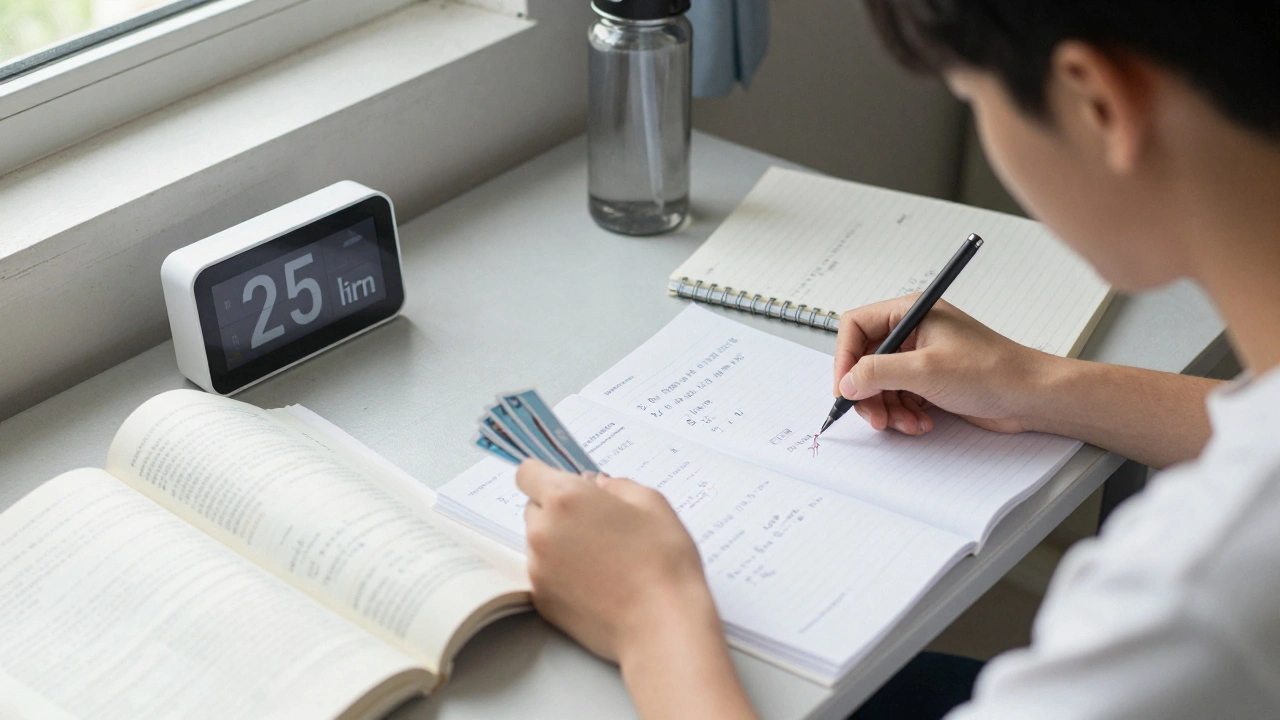
There’s no magic number that works for every high school student. But if you’re asking how many hours a day you should study, the real answer isn’t about clocking in time-it’s about working smart, staying consistent, and not burning out.
Most high school students need 2 to 4 hours of focused study time per day
A 2023 study by the National Center for Education Statistics found that students who averaged 2.5 hours of homework and independent study per weekday performed better on standardized tests than those who studied less than an hour-or more than five. The sweet spot? Two to four hours. Not because more is always better, but because beyond that, retention drops and stress spikes.
Think of it like training for a sport. You wouldn’t run five miles every day if you’re just starting out. You build up. Same with studying. A student taking four AP classes might need 3.5 hours. Someone with a lighter course load might only need 1.5. The key isn’t matching someone else’s schedule-it’s matching your own workload.
It’s not about quantity-it’s about quality
Sitting at your desk for six hours while scrolling through TikTok or zoning out doesn’t count. What matters is active learning: recalling facts without notes, solving problems from scratch, teaching concepts out loud, or using flashcards with spaced repetition.
One student I worked with in Flagstaff used to study 5 hours a night. She’d highlight textbooks, copy notes, and feel exhausted. Her grades didn’t improve. Then she switched to 90-minute blocks: 25 minutes of practice problems, 5 minutes of review, 10 minutes of self-testing. Her GPA went up half a point in one semester. She was studying less-but learning more.
Active recall and retrieval practice are proven to stick better than rereading or passive highlighting. A 2020 meta-analysis in Psychological Science in the Public Interest showed students who tested themselves regularly retained 50% more information after two weeks than those who just reviewed notes.
Balance matters more than hours
High school isn’t just about grades. It’s about sleep, mental health, extracurriculars, and family time. The American Academy of Pediatrics recommends 8 to 10 hours of sleep for teens. If you’re studying until midnight, you’re not getting that. And sleep is when your brain consolidates what you learned.
Try this: If you’re studying 3 hours a night, are you still awake by 11 p.m.? If yes, you’re cutting into recovery time. Adjust your schedule. Study earlier. Cut distractions. Get it done faster. Better to study 2 focused hours and sleep well than 4 groggy ones.
Students who report higher well-being don’t study the most-they study the smartest. They block time for breaks. They say no to extra clubs when they’re overloaded. They know when to ask for help.
How to build your own study schedule
Here’s a simple system that works for most high schoolers:
- Map your week. List all your classes, assignments, tests, and practices. Note when big deadlines are.
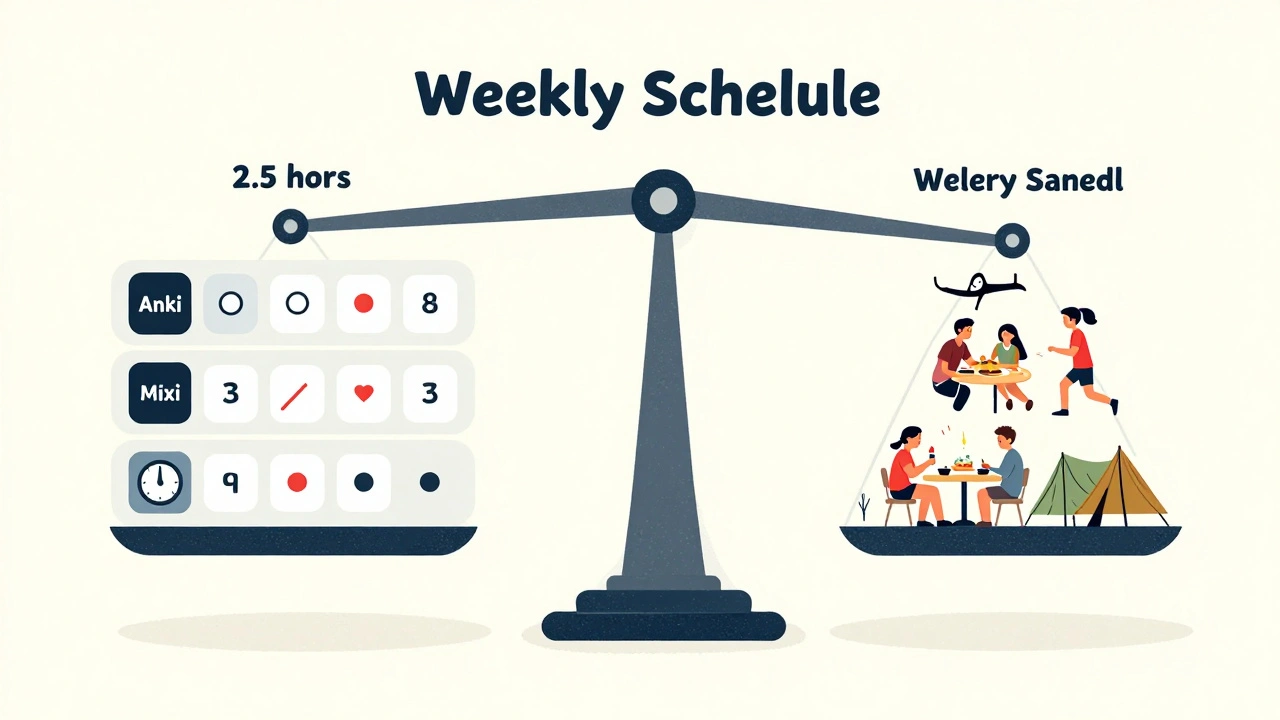
- Break it down. Divide total study time across the week. If you have a big test on Friday, don’t wait until Thursday night. Spread it out.
- Assign 30-60 minutes per subject per day. If you have 5 core classes, that’s 2.5 to 5 hours total. Adjust based on difficulty and workload.
- Use the 25/5 rule. Study 25 minutes, then take a 5-minute break. After four cycles, take 20 minutes off. This keeps your brain fresh.
- Review every Sunday. Spend 30 minutes looking at what you learned all week. What stuck? What’s still fuzzy?
Don’t try to do it all in one sitting. One 90-minute session is better than three 30-minute ones with distractions in between.
What about weekends?
Weekends shouldn’t be a study marathon. Use them for light review, catching up, or planning. If you’ve kept up during the week, you shouldn’t need to cram on Saturday.
One effective strategy: Spend 60-90 minutes on Saturday morning reviewing notes from the week. No new material. Just recall. Then take the rest of the weekend off. Your brain needs downtime to process what it’s learned.
Students who study 2-3 hours on weekends consistently outperform those who study 6-8 hours. Why? Because they’re not exhausted. They’re not cramming. They’re reinforcing.
Signs you’re studying too much-or too little
Here’s how to tell if your study time is off:
- Too much: You’re tired all the time, your grades aren’t improving, you skip meals or sleep, you dread studying, you can’t focus for more than 10 minutes.
- Too little: You’re cramming before tests, you forget what you learned last week, you feel lost in class, you’re constantly behind on assignments.
If you’re in the too-much zone, cut back. Focus on quality. If you’re in the too-little zone, add 15-20 minutes a day. Build slowly.
Tools that help (and ones that don’t)
Not all apps or methods are created equal.
Useful:
- Anki (flashcards with spaced repetition)
- Google Calendar (blocking study time)
- Forest app (focus timer that grows a tree-you lose it if you leave the app)
- White noise or lo-fi playlists (if they help you concentrate)
Waste of time:
- Highlighting entire textbook pages
- Copying notes word-for-word
- Watching YouTube summaries instead of reading
- Studying with your phone on the desk
Tools are only as good as how you use them. A timer won’t help if you’re not actually doing the work.
What top students do differently
Students with straight A’s aren’t necessarily the ones who study the longest. They’re the ones who:
- Start assignments the day they’re given
- Ask questions in class instead of waiting until later
- Review notes within 24 hours of class
- Know their weak spots and target them
- Get help early-before they’re drowning
They treat studying like a habit, not a chore. They don’t wait for motivation. They show up-even on days they don’t feel like it.
Final thought: It’s a marathon, not a sprint
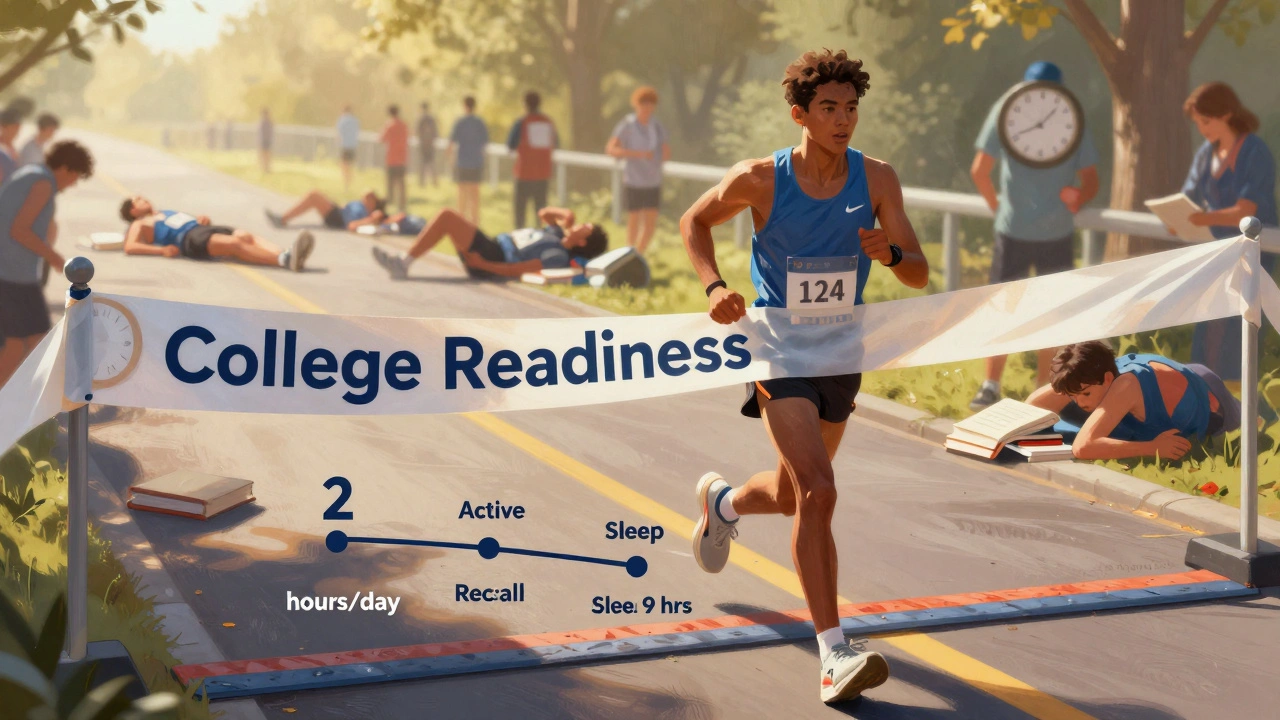
You’re not trying to cram for one test. You’re building skills that will carry you through college and beyond. The goal isn’t to study 5 hours a day now-it’s to learn how to learn.
If you can study 2 hours a day with focus, get enough sleep, and stay balanced, you’ll do better than 80% of your peers. You don’t need to be the hardest worker. You just need to be the smartest one.
Is 1 hour of studying enough for high school?
It might be enough if you’re only taking regular classes and staying on top of assignments. But if you’re in honors, AP, or IB, 1 hour is likely too little. Aim for at least 2 hours on weekdays, and adjust based on workload. Quality matters more than quantity-so make sure that hour is focused, not distracted.
Should I study every day, even on weekends?
You don’t need to study every single day, but you should review material regularly. Aim for 4-5 days a week of active studying, and use weekends for light review or planning. Taking one full day off each week helps prevent burnout. Just make sure you’re not letting material pile up.
How many hours should I study for finals?
Start studying at least 2 weeks before finals. Break your total study time into 1-2 hour blocks per day. For example, if you have 5 finals, spend 30-45 minutes per subject each day. Don’t try to study 8 hours the night before-it won’t stick. Consistency beats cramming every time.
Is it better to study longer or more often?
More often is better. Studying 30 minutes a day, five days a week, builds stronger memory than studying 3 hours once a week. Your brain learns through repetition and spacing. Short, regular sessions help information stick. Long, irregular ones lead to forgetting.
What if I’m tired and can’t focus?
Stop. Rest. Go for a walk, eat a snack, take a nap. Forcing yourself to study while exhausted leads to wasted time and frustration. Try the 25/5 Pomodoro method-if you can’t focus for 25 minutes, try 10. Build up slowly. Also, check your sleep and diet. Low energy often comes from poor rest, not laziness.
Do colleges care how many hours I study?
Colleges don’t look at your study hours-they look at your grades, rigor of classes, and how you’ve used your time. If you’re taking challenging courses and earning strong grades while balancing extracurriculars and rest, that’s what matters. Studying 6 hours a day won’t impress them if your GPA is low. Studying 2 focused hours a day with good results will.
Next steps: Start small, stay consistent
Don’t try to overhaul your whole routine tomorrow. Pick one thing: block 30 minutes after dinner for active recall. Use flashcards. Test yourself. No phone. Just you and your notes.
Do that for five days. Then add 10 more minutes. Keep going. You’ll find your rhythm. And you won’t just be studying more-you’ll be learning better.
Pamela Watson
December 10, 2025 AT 01:59OMG YES I LOVE THIS!! 🙌 I study 6 hours a day and my grades are trash but now I get it 😭
Jeremy Chick
December 10, 2025 AT 16:50Bro this is just common sense. If you're studying 5 hours a day and still failing, you're doing it wrong. Not your fault though, schools don't teach you how to learn, they just throw books at you.
Seraphina Nero
December 10, 2025 AT 23:32I used to highlight everything until I realized I was just coloring pages. Now I quiz myself with flashcards and my GPA jumped. This post saved me.
Sagar Malik
December 11, 2025 AT 19:28Let me elucidate: the 2–4 hour paradigm is a neoliberal construct designed to optimize cognitive labor under capitalist pedagogical hegemony. The real issue is not time allocation but epistemic alienation-when the student becomes a mere vessel for standardized test outputs, the soul of inquiry dies. 🌌
Gabby Love
December 13, 2025 AT 08:34Small correction: the 25/5 rule is called Pomodoro, and it’s backed by cognitive science. Also, white noise helps some people, but for others, silence is better. Know your brain.
Tyler Durden
December 14, 2025 AT 00:10Y’all are overthinking this. I study 90 minutes a day, max. No apps, no highlighters, just me, my notebook, and a timer. I sleep 9 hours. I got a 35 on my ACT. You don’t need to suffer to succeed. Just be consistent. And stop scrolling.
Jen Kay
December 14, 2025 AT 02:16Wow. Someone finally said it without sounding like a motivational poster. I wish my high school counselor had this mindset. Instead, they told me to "study harder." Thanks for the real talk.
Megan Ellaby
December 14, 2025 AT 08:33Just started using anki last week and my bio grade went from C to A-. It’s weird but it works. I thought flashcards were for little kids but nope. My brain actually remembers stuff now. 🤯
Rahul U.
December 14, 2025 AT 17:20Love this! 🙏 I’m from India and here everyone thinks 8 hours = success. But I study 2.5 hours daily with focus and still top my class. Quality > quantity. Sleep is sacred. 🌙
Frank Piccolo
December 14, 2025 AT 19:01Why are we even talking about this? In my day, we studied until our eyes bled. No apps. No breaks. Just grit. Kids today think they deserve A’s without paying the price. Pathetic.
Lissa Veldhuis
December 16, 2025 AT 08:02So you're telling me I'm not lazy I'm just doing it wrong? 😭 I've been crying over textbooks for years thinking I'm stupid but I just needed to stop highlighting and start testing myself?? This is a revelation. I'm gonna start today. I promise.
Michael Thomas
December 16, 2025 AT 22:17Stop. Just stop. If you're not studying 5+ hours a day you're falling behind. This post is dangerous. America is losing.