How Many Hours Should a High School Student Study Each Day?
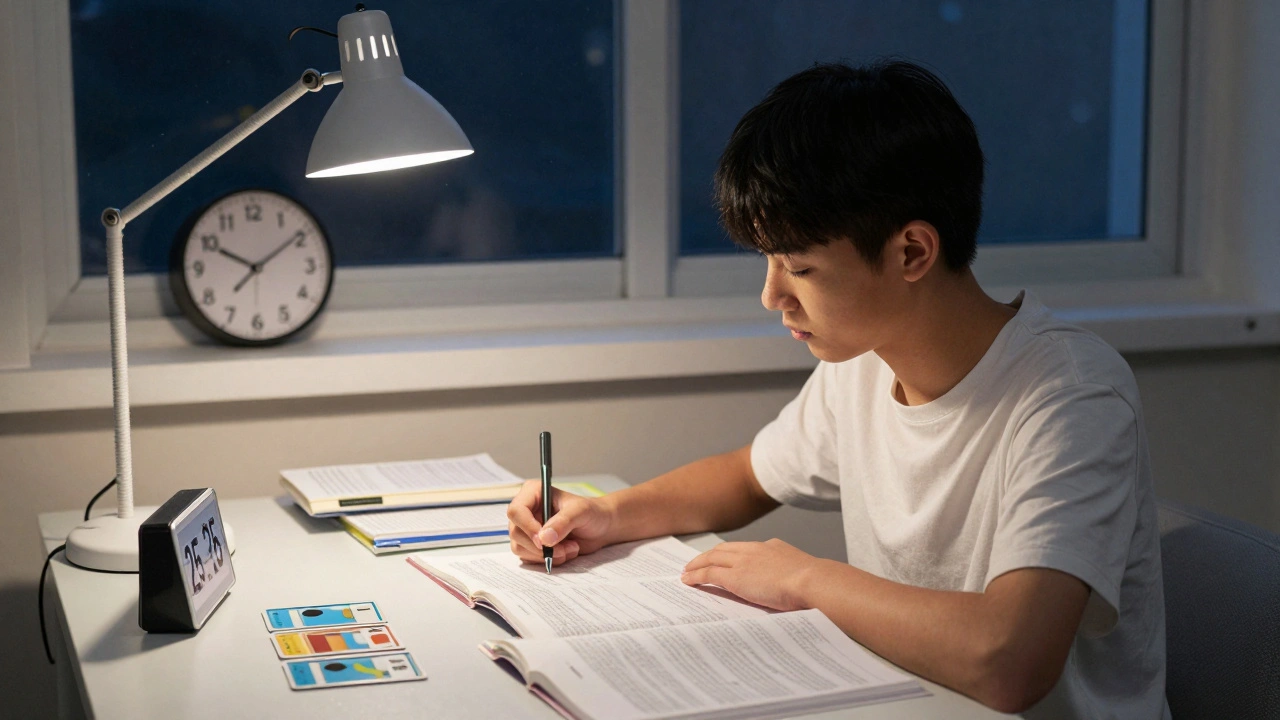
There’s no magic number for how many hours a high school student should study. But if you’re spending six hours a night cramming and still getting C’s, something’s off. And if you’re only studying 30 minutes a day and acing every test, you might be lucky-or you might be missing out on real learning. The real question isn’t how long you sit at your desk. It’s how effectively you use that time.
What the Data Actually Shows
A 2023 study by the National Center for Education Statistics tracked over 12,000 U.S. high school students and found that those who studied between 1 and 2 hours per night on average scored higher on standardized tests than those who studied less-or more. Students who studied more than 3 hours a night showed no further improvement in grades. In fact, their stress levels and sleep quality dropped significantly.
That doesn’t mean you should stop studying after two hours. It means you need to stop wasting time. Hours don’t equal results. Focused, intentional work does.
Study Time by Grade Level
Not all high school years are the same. Your workload changes as you move up.
- 9th grade: 45 minutes to 1.5 hours per night. This is the transition year. You’re adjusting to more complex material, but you don’t need to burn out yet. Build habits, not hours.
- 10th grade: 1 to 2 hours per night. This is when classes like Algebra II, Chemistry, and World History ramp up. Consistency matters more than marathon sessions.
- 11th grade: 1.5 to 2.5 hours per night. This is the most important year for college prep. AP classes, SAT/ACT prep, and extracurriculars pile up. You’ll need to prioritize.
- 12th grade: 1 to 2 hours per night (on average). Surprised? Many seniors spend more time on college applications than textbooks. But if you’re taking APs or dual enrollment, plan for 2-3 hours on heavy days. Balance is key.
These aren’t strict rules. They’re guidelines based on what works for students who keep their grades up and still have time for sleep, sports, and friends.
Why More Hours Don’t Mean Better Grades
Let’s say you study for 4 hours straight. You might feel productive. But here’s what’s really happening:
- Your brain hits a wall after 45-60 minutes of focused work.
- After 2 hours, your retention drops by over 50% (based on Ebbinghaus forgetting curve studies).
- You start copying notes without understanding them.
- You mix up formulas, misread questions, and make careless errors.
Studying longer doesn’t fix bad habits. It just makes them longer.
Students who study smart-using spaced repetition, active recall, and short breaks-often outperform those who grind for hours. One student I worked with in Boulder studied just 90 minutes a night, used flashcards for 15 minutes before bed, and reviewed weak topics on weekends. She got into Stanford. Another student studied 4 hours every night but never tested themselves. She barely passed chemistry.
What Effective Studying Looks Like
Effective study time isn’t about sitting still. It’s about doing things that force your brain to work.
- Active recall: Close your book and ask yourself: "What are the three main causes of the Civil War?" Then write or say the answer. No peeking.
- Spaced repetition: Review material 1 day, then 3 days, then 1 week later. Use free apps like Anki or Quizlet.
- Practice testing: Do past exams or create your own quiz. This is the #1 predictor of exam success.
- Teach it: Explain a concept to a friend, your pet, or even a mirror. If you can’t simplify it, you don’t understand it.
- Focus blocks: Study in 25-minute chunks with 5-minute breaks. Use a timer. No phone. No music with lyrics.
That’s it. You don’t need 5 hours. You need 60 minutes of this kind of work-and doing it consistently.
When You Need More Than 2 Hours
There are times when more time is necessary:
- You’re retaking a class and failed it before.
- You’re preparing for the SAT or ACT and need to build speed and accuracy.
- You’re taking 4+ AP courses and have major projects due.
- You’re applying to highly selective colleges and need to stand out.
But even then, it’s not about clocking hours. It’s about targeted practice. If you’re studying for the SAT math section, don’t just do 50 problems. Do 10 hard problems, analyze your mistakes, and redo them the next day. That’s 30 minutes of real progress.
What to Cut Out
Most students waste time on things that feel like studying but aren’t:
- Highlighting textbooks (you remember 10% of what you highlight)
- Copying notes word-for-word
- Watching YouTube videos labeled "study with me"
- Reading the same paragraph 5 times without testing yourself
- Studying in bed or while scrolling TikTok
These habits make you feel busy. They don’t make you smarter.
How to Build a Realistic Study Schedule
Start with your week:
- Write down your classes, practices, jobs, and extracurriculars.
- Block out 30-60 minutes each night for study time. Pick the same time daily-right after dinner or before bed.
- Use a planner or Google Calendar. Color-code subjects.
- Put one hard topic on your list each day. Don’t try to do everything.
- Review your week every Sunday. What worked? What didn’t?
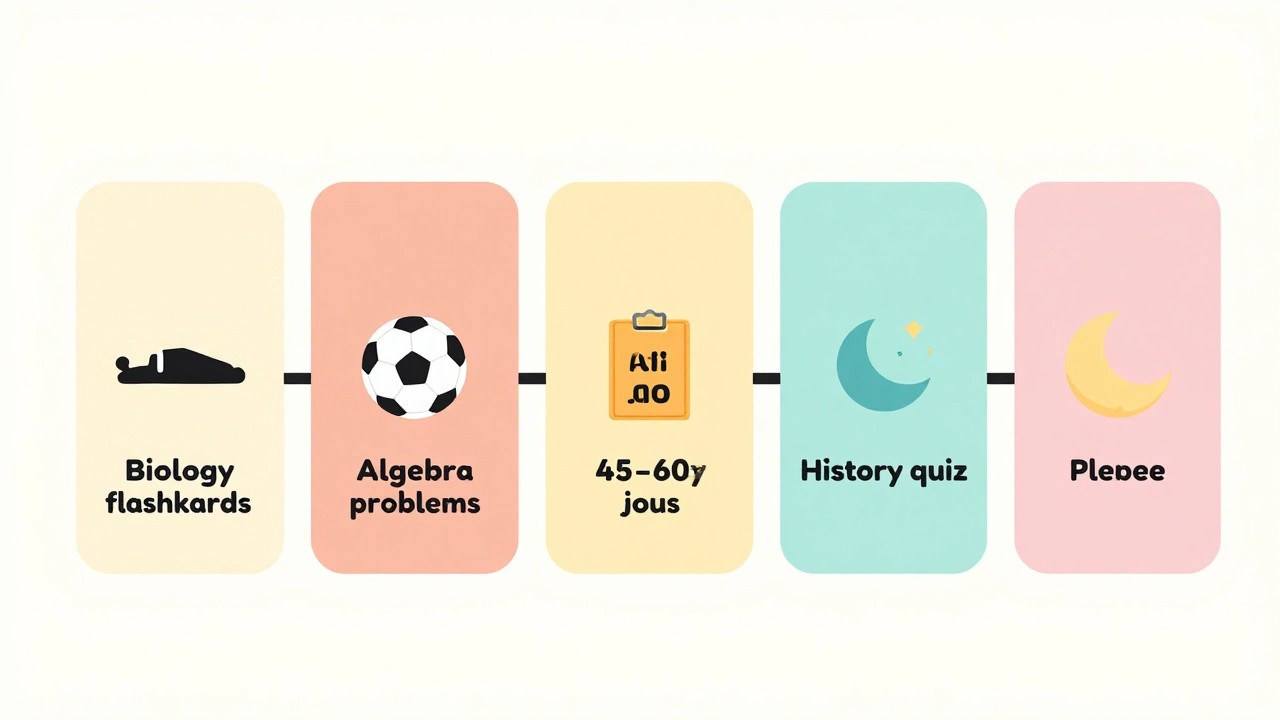
Example schedule for a 10th grader:
- Monday: 60 min-Biology flashcards + practice questions
- Tuesday: 45 min-Algebra practice problems
- Wednesday: 60 min-History timeline quiz
- Thursday: 45 min-Chemistry lab review
- Friday: 30 min-Quick review of weak topics
- Saturday: 90 min-Full practice test (timed)
- Sunday: 20 min-Plan next week
That’s 5.5 hours total for the week. Not bad for a student who’s also on the soccer team and works part-time.
What to Do If You’re Falling Behind
If you’re behind and overwhelmed:
- Don’t panic. Don’t try to study 8 hours straight.
- Identify the 2-3 biggest topics you’re missing.
- Focus on those for 20-30 minutes a day for 5 days.
- Ask your teacher for a quick review session. Most will help if you show effort.
- Use free resources like Khan Academy or YouTube channels like Crash Course.
Progress, not perfection, is the goal.
Why Sleep Matters More Than Extra Hours
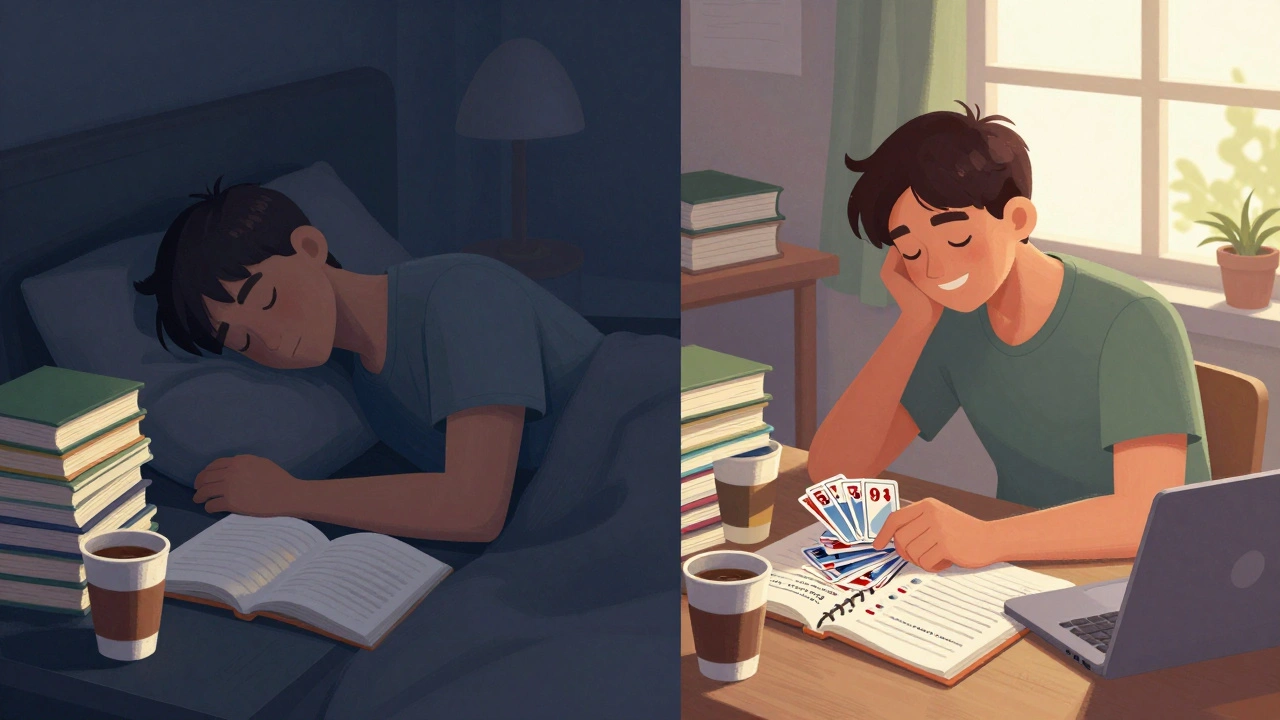
Your brain consolidates memory while you sleep. If you’re pulling all-nighters to cram for a test, you’re sabotaging yourself.
Studies show students who get 7-9 hours of sleep score 15-20% higher on exams than those who sleep less, even if they studied the same amount. Sleep isn’t downtime. It’s part of studying.
Try this: If you’re tired after school, take a 20-minute nap before studying. You’ll absorb more in 45 minutes after a nap than in 2 hours exhausted.
Final Rule: Study Less, Learn More
High school isn’t a race to see who can stay up the longest. It’s a test of how well you use your time, energy, and focus.
One hour of active recall beats three hours of passive reading. Two focused nights a week beat five exhausted ones. A consistent 90-minute routine beats a 6-hour cram session the night before the test.
You don’t need to study more. You need to study better.
Is 2 hours of studying enough for high school?
Yes, for most students, 1 to 2 hours of focused study per night is enough. What matters more than time is how you use it. Active recall, spaced repetition, and practice tests are far more effective than long, unfocused sessions. Students who study smart often outperform those who study longer.
How many hours should I study for AP classes?
For AP classes, aim for 1.5 to 2.5 hours per night on average. But don’t just spend time reading the textbook. Use practice exams, create flashcards for key terms, and review past FRQs (free response questions). Many students who score 5s on AP exams study less than 2 hours a day but test themselves daily.
Should I study on weekends?
Yes, but not to catch up. Use weekends for review, not new material. Spend 60-90 minutes on Saturday reviewing weak topics from the week. Sunday can be for planning the next week. Avoid studying for more than 3 hours total on weekends-keep time for rest and recharge.
What if I have a part-time job and extracurriculars?
You don’t need to study more-you need to study smarter. Block out 45-60 minutes right after school or before dinner. Use active recall techniques so you retain more in less time. Skip passive habits like highlighting. Focus on one subject per day. Consistency beats intensity.
Is it better to study in the morning or at night?
Study when your brain is sharpest. For most teens, that’s after school or early evening. Morning study works if you’re a morning person and can focus before school. Avoid studying right before bed unless it’s light review-your brain needs downtime to sleep well. Test both and stick with what gives you better focus and retention.
Can I study too little?
Yes-if you’re studying less than 30 minutes a night and struggling in class, you’re not giving yourself a chance. But if you’re studying 30 minutes with active recall and spaced repetition, you might be doing better than someone who studies 3 hours with passive reading. Quality beats quantity every time.
Jeanie Watson
December 4, 2025 AT 06:02Bro i studied 10 hours last night for chem and got a 68. Guess i’m just bad at life.
Amanda Harkins
December 5, 2025 AT 11:27It’s not about hours. It’s about whether your brain is actually in the room. I’ve seen kids with highlighters glued to their hands and zero recall. Sad.
Tom Mikota
December 7, 2025 AT 08:49Stop saying 'active recall' like it's a new invention. People studied with flashcards before TikTok existed. Also, 'spaced repetition'? That's just not forgetting stuff. Basic.
Mark Tipton
December 9, 2025 AT 07:35Let’s be honest: the real issue isn’t study habits-it’s the systemic failure of public education to teach metacognition. The curriculum is designed for compliance, not cognition. The fact that students are being told to ‘study smarter’ instead of being given cognitive tools suggests a deeper institutional rot. Also, the Ebbinghaus curve was published in 1885. We’re still using 140-year-old psychology to fix 21st-century problems. That’s not innovation. That’s negligence.
Adithya M
December 9, 2025 AT 15:40Indian students study 6 hours daily and still top global rankings. Your 2 hours is a luxury. Discipline > advice.
Salomi Cummingham
December 9, 2025 AT 19:45i just read my notes before bed and hope for the best. it works sometimes.
Johnathan Rhyne
December 10, 2025 AT 09:46Who wrote this? A corporate ed-tech ad? ‘Study less, learn more’? Sounds like a slogan for a $29.99 app that doesn’t work. Real talk: if you’re not grinding, you’re falling behind. No magic tricks. Just sweat.
Jawaharlal Thota
December 11, 2025 AT 22:54I’ve seen students from rural India who wake up at 4 AM, walk 5 kilometers to school, study until 11 PM without electricity, and still score top 1%. The issue isn’t how long you study-it’s how badly you want it. Your 2 hours? That’s a vacation. Real learning begins when you’re exhausted and still open your book.
Lauren Saunders
December 12, 2025 AT 23:22Let’s not pretend this is about ‘study habits.’ This is a class issue. Students with tutors, private schools, and parents who can afford Anki Pro subscriptions are the ones who ‘study smart.’ The rest of us are just told to ‘do better’ while our schools cut funding for counselors and librarians. It’s not a study problem. It’s a power problem.
sonny dirgantara
December 13, 2025 AT 17:45i dont even know what active recall is but i got an a in bio sooo
Andrew Nashaat
December 13, 2025 AT 17:55Highlighting? That’s not studying-that’s self-deception. And if you’re watching ‘study with me’ videos, you’re not studying-you’re procrastinating with a side of performative productivity. Wake up. Your brain isn’t a sponge. It’s a muscle. And you’re lifting feathers.
Gina Grub
December 15, 2025 AT 17:48THEY WANT YOU TO BELIEVE 2 HOURS IS ENOUGH. BUT WHAT IF THEY’RE LYING? WHAT IF THE SYSTEM WANTS YOU TIRED, CONFUSED, AND TOO EXHAUSTED TO QUESTION WHY YOU’RE NOT GETTING INTO HARVARD? THEY’RE NOT TEACHING YOU TO THINK-THEY’RE TEACHING YOU TO SURVIVE. AND SURVIVING ISN’T LEARNING. IT’S SURRENDER.
Nathan Jimerson
December 16, 2025 AT 23:03I know it’s hard. I’ve been there. But even 20 minutes of focused review every day adds up. You don’t need to be perfect. Just consistent. One day at a time.
Sandy Pan
December 18, 2025 AT 09:34What if the entire premise is flawed? We’re measuring learning by test scores, which are themselves products of a system designed to rank, not to understand. What if ‘effective studying’ is just a neoliberal tool to make students internalize their own exploitation? The real question isn’t how long to study-but whether the system deserves your time at all.