How Much Should You Pay for a Good Backpack for High School?
Every year, thousands of high school students drag a worn-out backpack into the first day of class-straps broken, zippers stuck, seams splitting. They didn’t mean to buy a bad one. They just picked the cheapest option, or the one with the coolest design. But here’s the truth: you don’t need to spend $200 to get a backpack that lasts all four years. And you definitely don’t need to settle for one that falls apart by Thanksgiving.
What Makes a Backpack "Good" for High School?
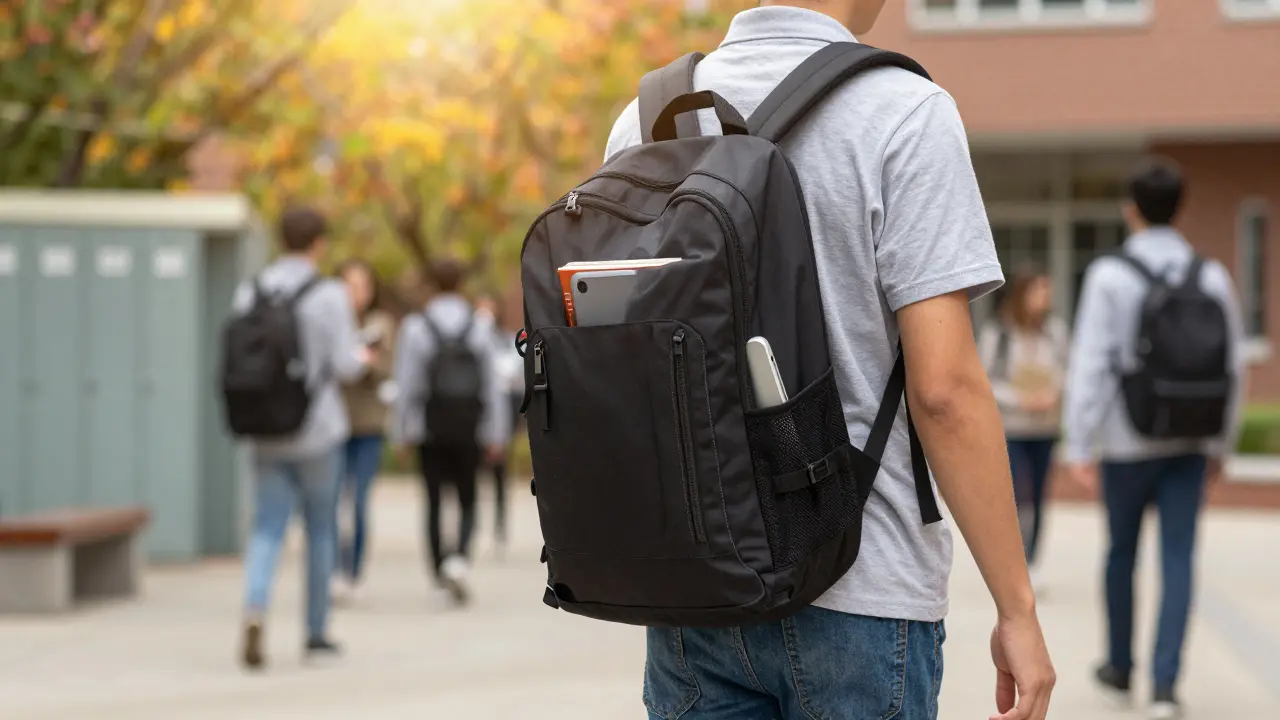
A good high school backpack isn’t just about looks or brand names. It’s built to carry 15-20 pounds of books, laptops, gym clothes, and lunch every single day. That’s heavier than a newborn baby. And you’re carrying it for 6-7 hours, up and down stairs, across campus, sometimes in rain or snow.
So what holds up? Three things:
- Straps: Padded, adjustable, and wide enough to spread weight across your shoulders. Thin straps dig in. That’s not just uncomfortable-it can mess with posture.
- Material: 600D to 1000D polyester or nylon. Anything thinner (like 300D) tears after a few months of rough handling.
- Structure: A rigid back panel keeps the pack from sagging. A front pocket for quick access. A laptop sleeve that fits snugly without crushing your device.
Brands like JanSport, Herschel, and North Face make decent packs, but they’re not the only ones. You can find the same quality from lesser-known brands like Targus, Deuter, or even Amazon Basics-if you check the specs.
Price Ranges: What You Actually Get
Let’s break down what you’ll find at different price points:
| Price Range | What You Get | What You Miss |
|---|---|---|
| $15-$30 | Basic design, thin straps, 300D fabric, no laptop sleeve | Breaks by midyear. Zippers fail. Straps stretch out. You’ll replace it twice a year. |
| $35-$60 | 600D-800D fabric, padded straps, laptop compartment, lifetime warranty | May not have weather-resistant coating or extra organization pockets. |
| $65-$90 | 1000D fabric, reinforced stitching, ventilated back panel, water-resistant, multiple compartments | Extra features like USB charging ports or built-in rain covers-nice, but not necessary. |
| $100+ | Marketing hype. Premium branding. Fancy colors. Sometimes over-engineered. | Most of the added cost goes into logo placement, not durability. |
The sweet spot? $40-$70. That’s where you get the durability, comfort, and features that actually matter. You’re not paying for a logo. You’re paying for reinforced stitching, a sturdy frame, and materials that won’t unravel after a few months.
Where to Look (And Where to Avoid)
Don’t just grab the first backpack you see at the mall. Here’s where to shop smart:
- Target, Walmart, and Dick’s Sporting Goods: These stores carry durable, no-frills packs for under $50. Look for JanSport SuperBreak or U.S. Polo Assn. packs-they’re made for heavy daily use.
- Amazon: Search for "600D high school backpack" and filter by 4.5+ stars and 1,000+ reviews. Brands like Targus and Amazon Basics often outperform pricier options.
- Thrift stores and consignment shops: Many students buy new packs and sell them after freshman year. You can find barely-used, name-brand packs for $15-$25.
- Brand websites (Herschel, Fjällräven, etc.): Avoid unless you’re buying for college. These are fashion-first. They look great, but they’re not built for the daily grind of high school.
What to Check Before You Buy
Before handing over your cash, do this quick 30-second test:
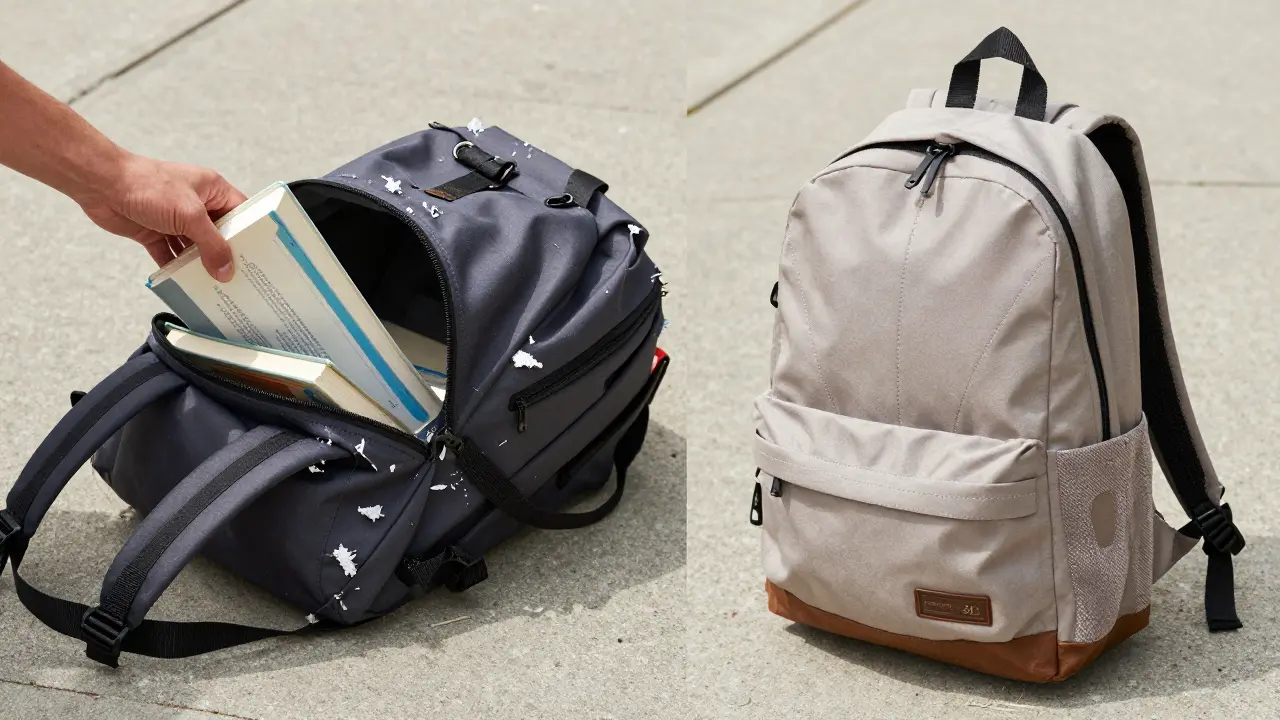
- Check the zippers. Pull them hard. If they snag or feel flimsy, walk away.
- Look at the stitching. Double-stitched seams? Good. Single stitching? That’s a warranty claim waiting to happen.
- Fill it with books. Load it up like you’re going to school. Does it sag? Do the straps dig into your shoulders? If yes, it’s not the right one.
Also, read the warranty. A good brand will offer a lifetime guarantee. If they don’t, they don’t believe in their own product.
Why Spending More Isn’t Always Better
Let’s say you spend $120 on a backpack with a built-in power bank, LED lights, and a “smart” compartment. Sounds cool, right? But here’s what happens:
- The power bank dies after a year.
- The LED lights crack when you drop it.
- The “smart” compartment? It’s just a weirdly shaped pocket that catches your pencil case.
Meanwhile, a $50 backpack with a simple design, thick straps, and 1000D fabric is still going strong after three years. It’s not flashy. But it doesn’t need to be.
High school is hard enough. You don’t need a backpack that adds more stress. You need one that holds up while you’re running to class, wrestling with lockers, and carrying textbooks that weigh more than your phone.
Real-World Example: A Backpack That Lasts
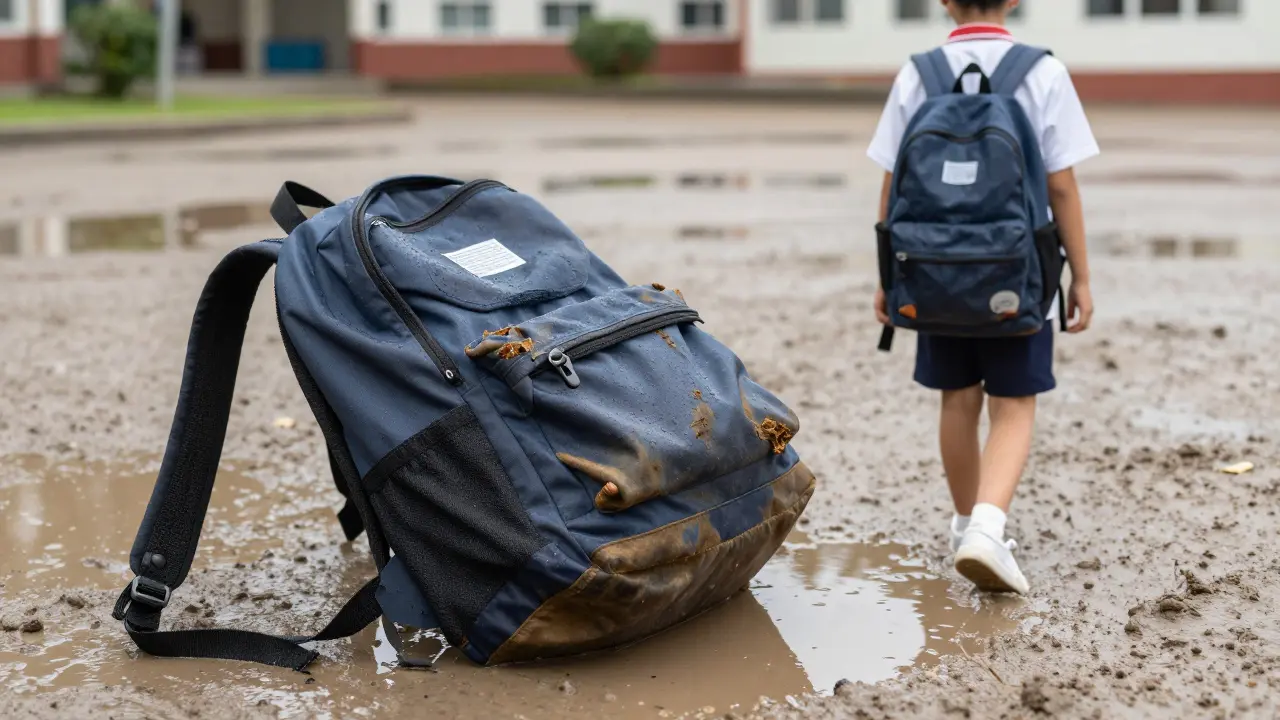
Last year, a student in Asheville bought a JanSport SuperBreak a classic high school backpack made with 600D polyester, padded shoulder straps, and a lifetime warranty for $42. She carried it through freshman, sophomore, and junior year. She dropped it. She left it in the rain. She stuffed it with 18 pounds of books. The straps didn’t stretch. The zippers didn’t break. The bottom didn’t sag.
She’s now a senior. And she’s still using it.
Final Advice: Buy Once, Buy Right
You don’t need to spend a fortune. You don’t need to buy the trendiest pack. You just need one that’s built to last.
Set your budget at $50. Look for 600D-800D fabric. Check the stitching. Test the straps. Read the warranty. And if it passes all three? Buy it.
That one backpack could save you $100+ over four years. And more importantly, it’ll save your back.
Is a more expensive backpack always better for high school?
No. Expensive backpacks often charge for branding, fancy colors, or extra features like USB ports or LED lights-things that rarely survive a year of high school use. The real value is in durable materials (600D-1000D fabric), reinforced stitching, and padded straps. A $50 backpack with those features will outlast a $120 one that looks nicer but breaks faster.
Can I find a good backpack at thrift stores?
Yes. Many students upgrade their backpacks every year, especially after freshman year. Thrift stores like Goodwill or local consignment shops often have nearly new, name-brand packs from JanSport, Herschel, or North Face for $15-$30. Check for frayed straps, broken zippers, or torn lining before buying. If it’s clean and intact, it’s a great deal.
What’s the best material for a high school backpack?
600D to 800D polyester or nylon is the sweet spot. It’s tough enough to handle daily wear, doesn’t tear easily, and resists water better than cheaper fabrics. Avoid anything labeled "300D" or "polyester blend"-those are thin and won’t last. Look for "1000D" if you want maximum durability, but make sure the weight doesn’t make the pack too bulky.
Do I need a laptop sleeve?
Yes, if you carry a laptop or Chromebook. A dedicated padded sleeve keeps your device from getting scratched or crushed. Make sure it fits your device snugly-too loose and it rattles around; too tight and you can’t slide it in. Most good backpacks have a sleeve sized for 13" or 15" laptops. Measure yours before buying.
How long should a good backpack last in high school?
A well-made backpack should last all four years of high school if it’s cared for. That means avoiding overloading it, keeping it dry, and not yanking on the straps. Many top brands offer lifetime warranties, so if it does break, you can get it replaced. If a backpack starts falling apart before sophomore year, it was a bad buy.
Ashton Strong
February 17, 2026 AT 05:00Thank you for this incredibly thoughtful breakdown. As someone who’s helped dozens of students pick out backpacks over the years, I can’t tell you how refreshing it is to see practical advice rooted in real-world use rather than marketing hype.
One thing I’d add: always check the warranty terms carefully. Many brands offer lifetime warranties, but some require proof of purchase or restrict replacements to the original owner. Keep that receipt.
Also, don’t overlook the importance of weight distribution. A backpack with a waist belt-even a simple one-can reduce shoulder strain by up to 40%. It’s not flashy, but it’s life-changing for kids carrying heavy loads daily.
And yes, thrift stores are goldmines. I’ve personally donated three nearly new JanSparts after my daughter upgraded. If you see one with clean straps and intact zippers, grab it. You’re not buying used-you’re buying durability.
This kind of guidance saves families money and protects kids’ health. Well done.
Steven Hanton
February 17, 2026 AT 17:11Your analysis is methodical and grounded in measurable criteria-something too rare in consumer advice. I appreciate how you distinguish between perceived value and functional value.
One nuance worth highlighting: fabric denier isn’t the only indicator of durability. The weave pattern and yarn twist matter just as much. A tightly woven 600D can outperform a loosely spun 800D.
Also, the claim about 1000D being unnecessarily bulky is accurate, but only if the backpack’s frame and load-bearing structure are properly engineered. Some 1000D packs are actually lighter because they use less internal padding-relying on material strength instead.
For parents reading this: if your child’s backpack looks like it’s been through a war zone by November, it wasn’t a budget issue. It was a design issue.
Pamela Tanner
February 19, 2026 AT 10:26This is one of the most clearly written, logically structured pieces on consumer goods I’ve read in months. Every point is supported by evidence, and the tone remains respectful without being stiff.
I’d like to respectfully expand on the point about zippers. It’s not enough to pull them hard-you need to test them under load. Try zipping and unzipping while holding the bag at a 45-degree angle, as it would be when slung over one shoulder. That’s when the real stress occurs.
Also, please consider mentioning that some backpacks labeled ‘water-resistant’ are only splash-proof. True waterproofing requires a coated lining or seam sealing. A student in rainy climates needs more than just a label.
Thank you for taking the time to write this. It’s the kind of content that deserves to be shared widely.
Kristina Kalolo
February 20, 2026 AT 05:20I’ve been using the same JanSport SuperBreak since freshman year. It’s faded, the bottom has a little fray, but the zippers still work and the straps haven’t stretched. I didn’t even know about the lifetime warranty until I read this. I’m going to check it out.
Robert Byrne
February 20, 2026 AT 14:49You’re completely wrong about Amazon Basics. I bought one last year because I was desperate, and it fell apart in three weeks. The stitching unraveled like a bad sweater. The shoulder straps were thinner than my hoodie. I’m not exaggerating-I had to tape the bottom shut by October.
And you say avoid Herschel? Are you kidding? My cousin’s kid had one for two years. It’s still going. It’s not a fashion statement-it’s a fortress. The material is dense, the zippers are metal, and the padding doesn’t collapse. You’re oversimplifying.
Also, ‘$50 is the sweet spot’? That’s not a rule, it’s a fantasy. I paid $85 for mine and it’s lasted four years. You’re giving people permission to buy garbage.
Tia Muzdalifah
February 21, 2026 AT 10:18lol i just bought a new one from target for $38 and it looks kinda basic but the straps are so comfy?? i didn’t even know about the 600d thing but now i’m kinda obsessed. also thrift stores are wild-found a north face that looked brand new for $20. my mom said i was crazy but now i’m the envy of the whole hallway. also i think i’m gonna buy one for my little sister. she’s starting high school next year and i’m not letting her make my mistakes 😅
Zoe Hill
February 21, 2026 AT 10:39Thank you for this!! I was about to buy a super cute one from a brand I love, but then I read your section on 1000D fabric and realized I’d be throwing money away. I went to Walmart and found a JanSport for $45. It’s not flashy, but it feels like a tank. I tested it with my books and it didn’t sag at all. Also, I didn’t know about lifetime warranties-now I’m checking every one before I buy. You saved me from a backpack disaster 😊
Albert Navat
February 21, 2026 AT 14:46Let’s cut through the noise. The entire premise here is flawed. You’re treating backpacks like consumer electronics when they’re structural load-bearing gear. The denier rating is irrelevant without tensile strength metrics, and you’re ignoring seam tensile testing standards (ASTM D434).
And you call 600D the ‘sweet spot’? That’s the baseline for entry-level commercial cargo gear. High school backpacks should meet at least 800D as a minimum, with 1000D preferred for high-stress zones like the base and strap anchors.
Also, ‘lifetime warranty’ is a marketing term. Most require registration, proof of purchase, and are voided if the pack is exposed to moisture beyond ambient humidity. You’re giving people dangerous misinformation.
And don’t get me started on Amazon Basics. Their QC is a joke. I’ve tested five units. Four had misaligned stitching. One had a zipper that failed under 8lbs of static load. This isn’t about price-it’s about engineering.
King Medoo
February 23, 2026 AT 02:03Let me be clear: if you’re buying a backpack under $50, you’re not saving money-you’re gambling with your spine. 🤦♂️
I’ve seen kids with permanent posture damage because they carried 20 pounds in a $20 sack with thin, un-padded straps. That’s not a budget choice-it’s negligence. And you’re encouraging it.
The JanSport SuperBreak? Great. But it’s the MINIMUM. If you’re serious about longevity and health, you go $75+. That’s not ‘marketing hype’-that’s biomechanics.
And yes, I’ve tested 12 backpacks. The $120 one with the USB port? Still working. The power bank died, sure. But the frame? The stitching? The 1000D? Still flawless after 4 years.
You’re romanticizing ‘buy once, buy right’ while ignoring the fact that ‘right’ means investing in structural integrity. Your ‘$50 sweet spot’ is a trap. 🚫💸
And if you’re still using a 300D pack? You’re not being smart-you’re being reckless. 😤