How to Choose the Best School Backpack for High School Students
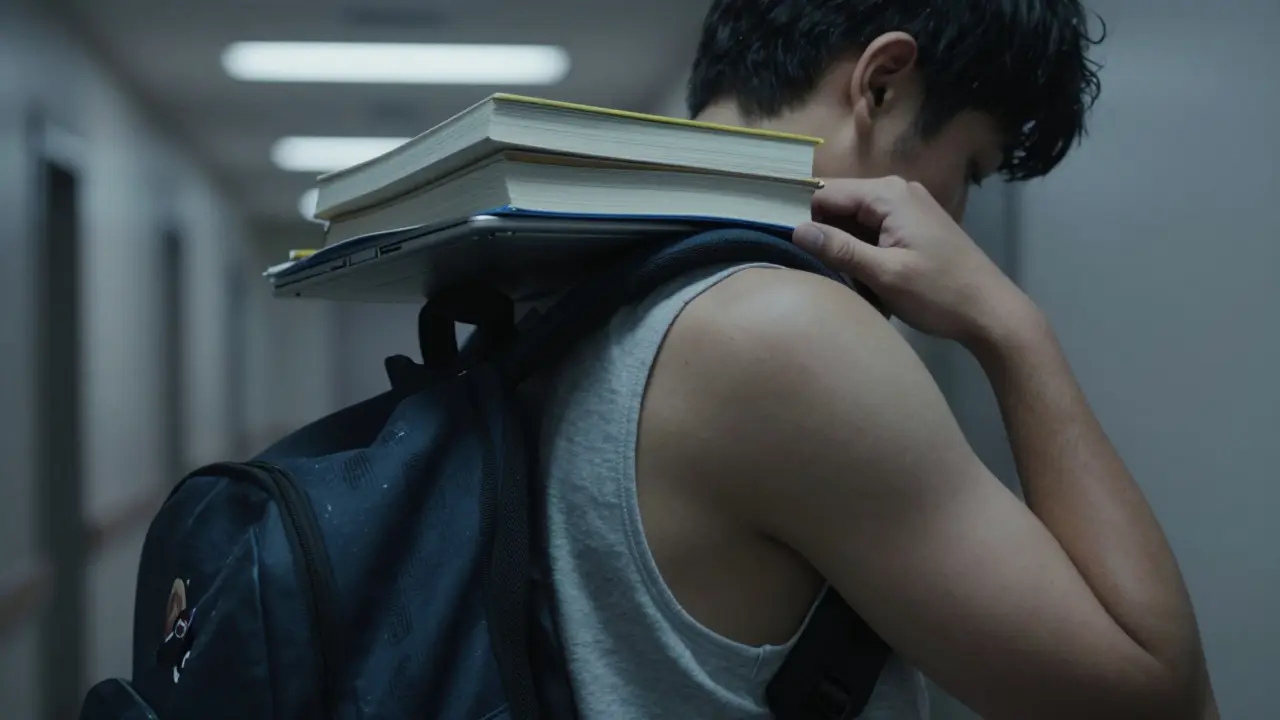
Every year, thousands of high school students deal with back pain simply because their school backpack doesn't fit right. It’s not just about style-choosing the right school backpack affects your comfort, posture, and even your grades. Let’s break it down step by step.
Why a Good Backpack Matters
Picture this: you’re carrying 15 pounds of books and a laptop in a backpack with thin straps. By third period, your shoulders ache and your back feels stiff. It’s not your imagination-poorly designed backpacks are a leading cause of back pain in teens. According to the American Chiropractic Association, about 60% of students report back pain from backpacks. But choosing the right one is simple if you know what to look for.
What You Carry Matters
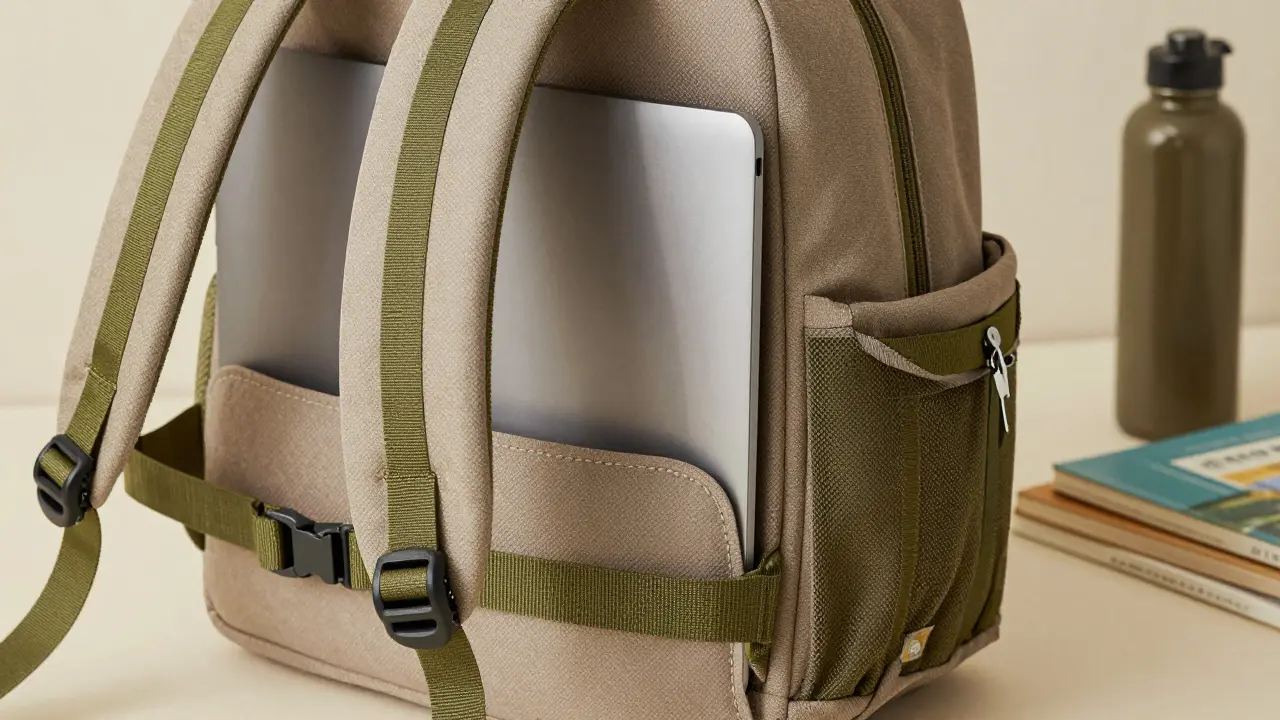
Start by counting what you need daily. A typical high school student carries 3-5 textbooks, a laptop, a lunch box, and maybe a water bottle. If you have locker access, you might carry less. But if you don’t, you’ll need space for all your essentials. A backpack with separate compartments for books, laptop, and snacks makes a big difference. For example, a 15-inch laptop needs a sleeve that fits snugly without extra space. Too big, and it’ll slide around; too small, and it won’t fit at all.
Don’t Skip the Straps
Your backpack’s straps are the most important part. Thin straps dig into your shoulders, causing pain. Look for thick, padded straps that adjust to your body. Some backpacks even have a waist strap to help distribute weight. This is especially helpful if you carry heavy loads. For instance, a backpack with a padded waist strap can reduce shoulder pressure by up to 30%. Also, check that the straps don’t slip off your shoulders when you move. Adjustable straps mean a better fit for your height and build.
Size and Fit: Not One-Size-Fits-All
Backpack size isn’t just about how many books it holds-it’s about how it sits on your back. A backpack should fit from your shoulders to your waist, not extend past your lower back. Measure your torso length to find the right size. Most high school backpacks are 18-22 inches tall. If you’re taller, you might need a larger size. Also, the backpack shouldn’t be wider than your shoulders. A wide backpack can throw off your balance, leading to poor posture. Test it on: the bottom should sit at your waist, not below your hips.
Durability: It’s More Than Just Looks
High school backpacks take a beating. Zippers break, fabric tears, straps snap. Look for reinforced stitching at stress points like strap attachments and zipper seams. Nylon or polyester with a high denier count (like 600D) is tough and water-resistant. Avoid cheap materials that wear out quickly. For example, a backpack with YKK zippers lasts longer than generic ones. Also, check for water-resistant coating-rainy days won’t ruin your books or laptop.
Style vs Function: Balance Both
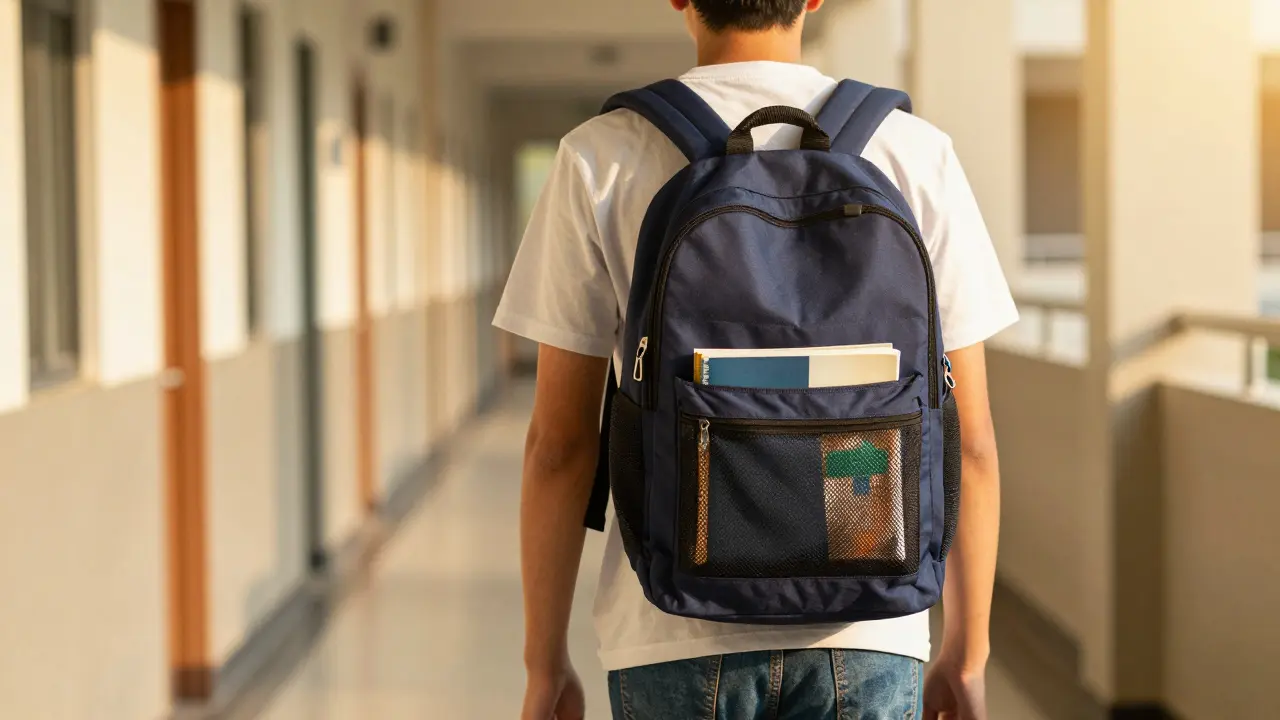
Yes, you want a backpack that looks cool. But don’t let style override function. A bright color might be fun, but if it’s too heavy or has no laptop sleeve, it’s not worth it. Look for backpacks with functional design elements like multiple pockets for organization. For instance, a front pocket for keys and a side pocket for a water bottle keeps things accessible. A sleek design doesn’t have to mean sacrificing practicality-many brands offer stylish options with ergonomic features.
Smart Spending: Where to Invest
You don’t need to spend $200 on a backpack, but cheap ones often break in a few months. Aim for $40-$80 for a quality backpack that lasts all year. Spend more on key features like padded straps and durable zippers. Save on things like extra pockets you won’t use. For example, a backpack with a lifetime warranty might cost more upfront but saves money long-term. Check sales in late summer-many stores discount last year’s models before new ones arrive.
Common Mistakes to Avoid
Here’s what not to do: overfilling your backpack, wearing it on one shoulder, or choosing a backpack too big for your body. Overfilling leads to back pain and can damage the backpack. Wearing it on one shoulder throws off your posture. A backpack too big for your frame looks awkward and feels uncomfortable. Also, avoid backpacks with thin straps or no padding-they’ll dig into your shoulders. And don’t ignore the weight limit-most backpacks should carry no more than 10-15% of your body weight.
| Feature | Why It Matters | What to Look For |
|---|---|---|
| Padded Straps | Prevents shoulder strain from heavy loads | Thick, cushioned straps that adjust to fit your shoulders |
| Laptop Compartment | Protects your device and keeps it secure | Snug-fitting sleeve with extra padding |
| Water-Resistant Material | Keeps contents dry in rain or spills | Nylon or polyester with a durable coating |
| Waist Strap | Distributes weight evenly across your body | Adjustable strap that secures to your waist |
| Multiple Compartments | Organizes items for easy access | Separate pockets for books, laptop, and snacks |
How much weight should a school backpack carry?
A backpack should not exceed 10-15% of your body weight. For most high school students, that’s about 8-12 pounds. Overloading can lead to back pain and poor posture. Always empty your backpack before bedtime to avoid carrying unnecessary weight.
What size laptop sleeve do I need?
Most high school laptops are 13-15 inches. Measure your laptop’s screen size diagonally and look for a sleeve that matches. A sleeve that’s too loose lets the laptop shift around, while one that’s too tight can damage the device. Some backpacks have adjustable sleeves for different sizes.
Should I choose a backpack with wheels?
Wheeled backpacks can help with heavy loads, but they’re tricky in hallways and stairs. Most high schools ban them because they block hallways. Stick to traditional backpacks with good straps-they’re safer and more practical for everyday use.
How do I clean my school backpack?
Spot clean with mild soap and a damp cloth. Avoid machine washing-it damages waterproof coatings. For tough stains, use a soft brush. Always air dry completely before storing. Never put it in the dryer; heat melts stitching and zippers.
Are expensive backpacks worth it?
Yes, if they have proven durability. Brands like Herschel or JanSport offer reliable options for $50-$100. Cheap backpacks often break within months, costing you more long-term. Look for warranties-some companies replace damaged backpacks for free.
Kirk Doherty
February 7, 2026 AT 15:22Backpacks with waist straps are a game-changer
Morgan ODonnell
February 8, 2026 AT 18:38Yeah, I switched to one with a waist strap last year and it's way better. No more sore shoulders.
Ashley Kuehnel
February 8, 2026 AT 23:36One thing I've learned is to always check the laptop sleeve size. I once got a backpack where the sleeve was too loose and my laptop slid arond. Also, make sure the straps are padded-thin ones dig into your shoulders. Water-resistant material is a must for rainy days. And don't overfill! I used to carry too much and my back hurt. A good rule is 10-15% of your body weight. Oh, and cleaning it properly: spot clean with mild soap, no machine washing. It's all about balance between style and function, but function comes first. I've seen people buy super stylish backpacks but they lack the features needed. So invest in the right features for your needs. Also, check sales in late summer for discounts. I got mine for half price last year. And remember, the backpack shouldn't weigh more than 10-15% of your body weight. I learned that the hard way when my back hurt after a long day. Overall, it's not just about looks; it's about comfort and durability. A good backpack can make school days so much better.
Meghan O'Connor
February 9, 2026 AT 12:34Your comment has a typo. It's 'slid around', not 'slid arond'. Also, the 10-15% rule is correct, but you should specify it's based on body weight. And 'no machine washing' is right, but you can hand wash with cold water. But your point about straps is correct.
Colby Havard
February 10, 2026 AT 08:54Ah, the grammatical oversight noted by the previous commenter-indeed, the phrase 'slid arond' is a glaring error. However, one must consider the broader context of backpack ergonomics. The weight distribution principle is paramount; however, the percentage rule is not absolute. The human body varies, and individual tolerance for weight must be considered. Additionally, while hand washing is acceptable, it is imperative to avoid hot water, which can degrade the materials. The straps' padding is indeed crucial, yet one must also assess the overall structural integrity of the backpack. A well-constructed backpack, with reinforced stitching and quality zippers, is a necessity for long-term use. In summary, attention to detail in both language and design is essential for optimal functionality.
Mark Nitka
February 12, 2026 AT 02:30The key is finding a balance between comfort and practicality. I've tried many backpacks, and the ones with adjustable straps and waist belts are best. Don't just go for looks-make sure it fits your body type. Also, check reviews before buying. I've seen people buy expensive ones that break quickly. Invest in durability.
Dmitriy Fedoseff
February 13, 2026 AT 07:07You're right about balance, but it's not just about comfort. It's about cultural context. In some countries, backpacks are designed for different needs. But regardless, the weight limit is critical. I've seen students in Europe carrying 20 pounds without issues, but in the US, it's different. Still, 10-15% is a good rule. However, the real issue is poor design choices by manufacturers. They prioritize aesthetics over function. That's why so many students suffer.
Amy P
February 14, 2026 AT 10:53Oh my gosh, I can't believe how many people ignore the basics! I had a backpack that was so heavy it felt like I was carrying a small child. My back was killing me for weeks. Then I switched to one with a waist strap and it was like night and day. Seriously, everyone should read this guide-it's life-changing!
adam smith
February 16, 2026 AT 07:41Indeed, the importance of proper backpack design cannot be overstated. However, it is also crucial to acknowledge that individual circumstances vary. For instance, some students may have access to lockers, reducing the load. Additionally, while waist straps are beneficial, they may not be suitable for all body types. A balanced approach is recommended.
Mongezi Mkhwanazi
February 17, 2026 AT 11:48Your statement about 'individual circumstances varying' is somewhat accurate, yet it lacks depth. Let me elaborate: locker access is a luxury not afforded to all students, particularly in underfunded schools. Moreover, waist straps are not just beneficial-they are essential for proper weight distribution. However, many manufacturers produce backpacks with inadequate waist straps, leading to chronic back issues. Furthermore, the notion that a 'balanced approach' suffices is naive; one must prioritize ergonomics over aesthetics at all costs. The data is clear: poor backpack design contributes significantly to musculoskeletal problems in adolescents. Therefore, it is imperative that students and parents scrutinize every aspect of a backpack's construction before purchase. This includes, but is not limited to, the material's durability, the strap design, compartmentalization, and overall structural integrity. Ignoring these factors is a disservice to one's health and academic performance.
Liam Hesmondhalgh
February 18, 2026 AT 21:59Your comment is full of errors. 'Aesthetic' is spelled with an 's', not 'c'. Also, 'musculoskeletal' is misspelled. And 'it is imperative' should be 'it's imperative' for brevity. Also, why are you so obsessed with back pain? It's not that big of a deal. Most people can handle it. And your 'data'-where is it from? Not credible sources.