How to Choose the Right High School Backpack: Features, Types & Tips
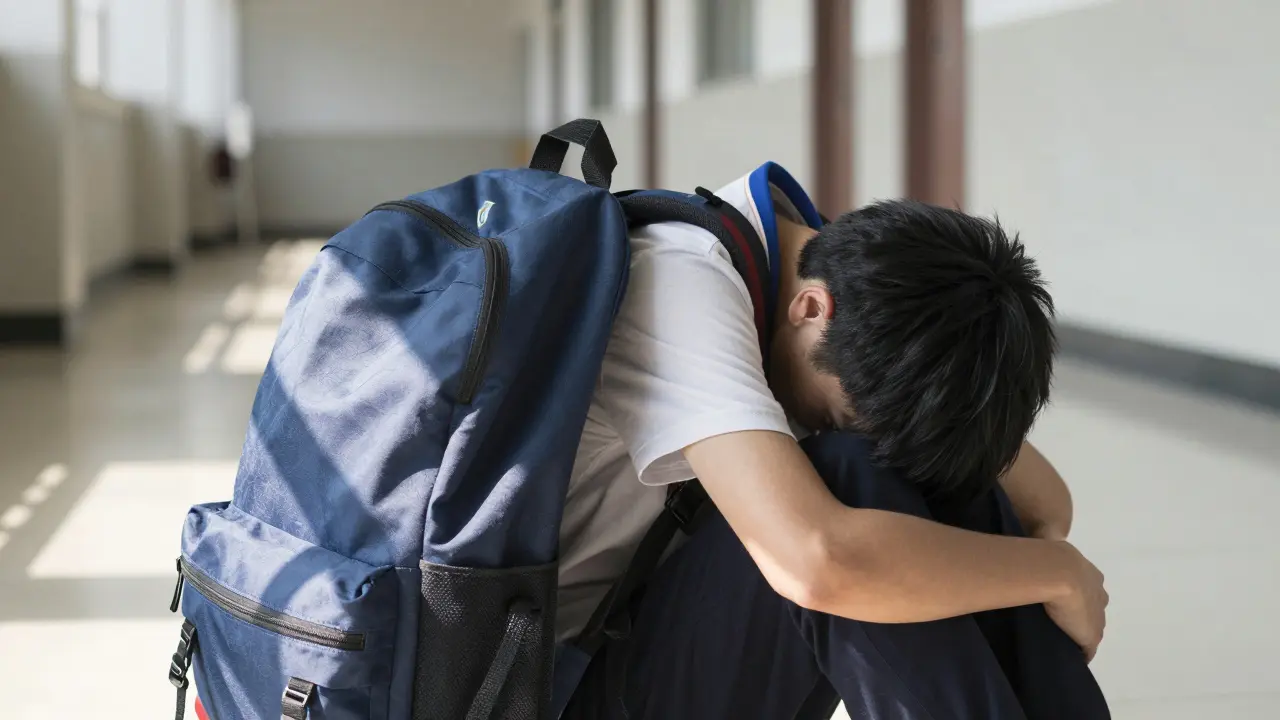
Every day, millions of high school students carry backpacks loaded with textbooks, laptops, and personal items. But did you know that carrying a heavy backpack incorrectly can lead to chronic back pain? Choosing the right backpack is more than just style-it’s about health, comfort, and staying organized. A well-designed high school backpack can prevent strain, keep your gear safe, and even boost your confidence. Let’s cut through the noise and find exactly what works for you.
Why the Right Backpack Matters for High School Students
Think about your average school day. You lug textbooks, a laptop, notebooks, and maybe gym clothes across campus. A poor backpack choice turns this into a daily struggle. The American Chiropractic Association reports that 60% of students carry backpacks over 15% of their body weight. That’s like carrying a 15-pound weight on your back for hours. Over time, this causes muscle strain, poor posture, and even long-term spinal issues. But it’s not just health. A disorganized backpack means wasted time hunting for supplies, missed deadlines, and unnecessary stress. The right backpack solves both problems: it keeps your body healthy and your life running smoothly.
Key Features to Look for in a High School Backpack
Not all backpacks are built the same. Here’s what actually matters for high school use:
- Padded shoulder straps: Look for straps at least 2 inches wide with memory foam padding. Narrow straps dig into your shoulders, while wide, cushioned ones spread weight evenly. This is non-negotiable for comfort.
- Lumbar support: A padded panel at the lower back prevents slouching. Brands like Osprey and JanSport include this in student-specific models. Without it, your lower back takes the brunt of the load.
- Multiple compartments: Separate pockets for laptops, books, and small items keep things organized. A dedicated laptop sleeve (usually 15-17 inches) protects your device. A front pocket for pens and keys saves time during class transitions.
- Weight distribution: Backpacks with a sternum strap or hip belt shift weight to your hips. This reduces pressure on your shoulders by up to 30%. For heavy loads, this feature is a game-changer.
- Durable materials: Nylon or polyester with a water-resistant coating handles rain, spills, and daily wear. Avoid cheap canvas-it tears easily and doesn’t protect your gear.
Types of Backpacks for High School: Traditional vs. Rolling vs. Hybrid
Not all backpacks fit every student. Here’s how the main types compare:
| Feature | Traditional Backpack | Rolling Backpack | Hybrid Backpack |
|---|---|---|---|
| Best for | Students with moderate loads, stairs-heavy schools | Students carrying 20+ pounds, flat campuses | Students who need flexibility |
| Weight limit | Up to 15 pounds | Up to 25 pounds | Up to 20 pounds |
| Mobility | Easy on stairs, but heavy on shoulders | Easy on flat ground, hard on stairs | Switch between carrying and rolling |
| Organization | Good compartments | Less organized, wheels take space | Excellent compartments |
| School rules | Usually allowed everywhere | Banned in some schools | Generally allowed |
Traditional backpacks are the go-to for most students. They’re simple, durable, and work well on stairs. But if you carry heavy textbooks daily, a rolling backpack might seem tempting. Just check your school’s policy-many ban wheels because they block hallways. Hybrid backpacks solve this by adding removable wheels. You can carry them like a regular backpack or roll them when needed. For students with long walks between classes, this is the smartest choice.
What to Avoid When Choosing a Backpack
Some common mistakes make backpacks worse than useless:
- Overloading: Never carry more than 10-15% of your body weight. For a 100-pound student, that’s 10-15 pounds. Packing too much strains your muscles and spine.
- Single-strap use: Always wear both straps. Using one strap shifts weight unevenly, causing back pain and shoulder imbalance.
- Ignoring fit: Backpacks should sit 2 inches below your shoulders and end at your waist. Too high or too low creates pressure points. Try it on with weight before buying.
- Skipping water resistance: Rain or spills can ruin books and electronics. Choose materials like ripstop nylon or coated polyester. A simple water-resistant coating costs $5-$10 more but saves hundreds in replacements.
Tips for Choosing the Perfect Backpack for Your Needs
Here’s how to pick the right one:
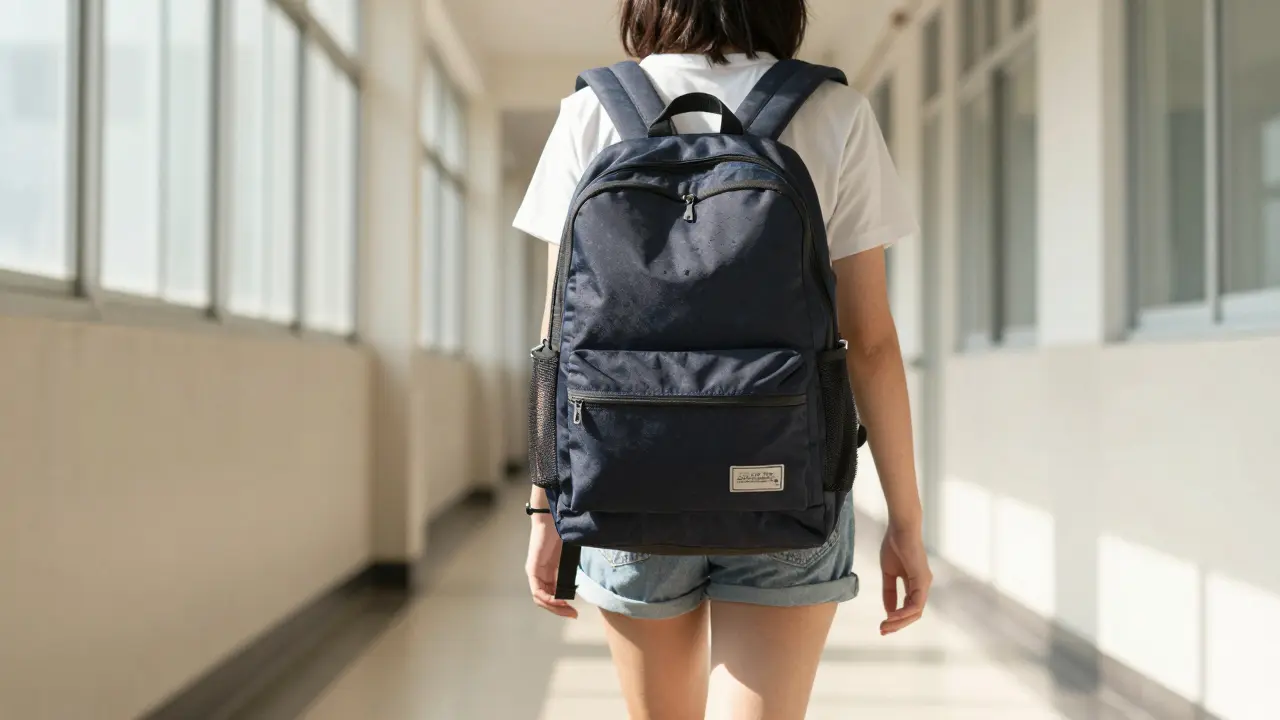
- Measure your back: Use a tape measure. The ideal backpack height should match your torso length (from shoulder to waist). Most high school backpacks are 17-20 inches tall.
- Test it with weight: Load it with books and a laptop. Walk around the store. Does it feel balanced? Do the straps dig in? Adjust straps until the weight feels even.
- Check school rules: Call your school office. Some ban rolling backpacks or require specific sizes. Avoid surprises on the first day.
- Invest in quality: A $50 backpack that lasts two years is cheaper than a $30 one that tears in six months. Look for reinforced stitching and sturdy zippers.
- Organize smartly: Place heavier items closest to your back. Use compartments for similar items (e.g., all notebooks in one pocket). This reduces strain and saves time.
Real-Life Example: How a Smart Backpack Choice Made a Difference
Sophie, a 10th grader in Arizona, struggled with back pain every day. Her old backpack was too small, forcing her to overfill it. After switching to a hybrid backpack with lumbar support and a hip belt, her pain disappeared within weeks. She now carries 18 pounds comfortably-up from 12 pounds before. "I used to dread walking to class," she says. "Now I focus on my studies instead of my back." Her school even updated its backpack policy after seeing her model’s safety features.
How heavy should a high school backpack be?
Your backpack should never exceed 10-15% of your body weight. For example, a 120-pound student should carry no more than 12-18 pounds. Heavier loads increase back pain risk by 40% according to the American Academy of Orthopaedic Surgeons. Weigh your backpack weekly to stay safe.
What’s the best backpack size for high school?
Most high school students need a backpack between 17-20 inches tall. Measure your torso length (from shoulder to waist) to confirm. Too small forces overpacking; too large encourages carrying unnecessary items. A 19-inch backpack fits textbooks, a 15-inch laptop, and gym clothes without bulk.
Are rolling backpacks allowed in high school?
It depends on your school. Many ban rolling backpacks because wheels block hallways or create tripping hazards. Check with your school administration before buying. If allowed, choose a model with sturdy wheels and a handle that locks in place. Hybrid backpacks with removable wheels are often the safest bet.
How do I prevent back pain from my backpack?
Wear both straps tightly so the backpack sits close to your back. Adjust straps so the bottom rests at your waist. Always use the sternum or hip belt if available. Pack heavier items closest to your spine. Limit weight to under 15% of your body weight. If pain persists, see a physical therapist-don’t ignore it.
What materials are best for a high school backpack?
Ripstop nylon or polyester with a water-resistant coating is ideal. These materials resist tears, handle rain, and last years. Avoid canvas-it absorbs moisture and wears out fast. For extra protection, look for backpacks with a PVC lining inside the laptop sleeve. This keeps electronics dry during spills or storms.
Taylor Hayes
February 7, 2026 AT 04:06When I was in high school, I didn't realize how important backpack fit was. I had this one that was too big and kept sliding down.
After talking to a physical therapist, I learned to measure my torso length.
Now I have a 19-inch backpack that fits perfectly. Also, placing heavier items close to your back really helps distribute weight.
It's not just about the straps; the whole structure matters.
I've seen so many kids with bad posture because they don't know this stuff.
Take the time to try it on with weight before buying.
Trust me, your back will thank you.
Sanjay Mittal
February 8, 2026 AT 15:44For those in India, the climate can be humid. A water-resistant backpack is crucial.
I've seen many students' books get ruined in monsoon season.
Look for nylon with PVC coating. It's cheap insurance.
Mike Zhong
February 9, 2026 AT 10:59People think it's about comfort, but it's really about survival.
Every day you're carrying your future on your back.
If you don't take care of your spine now, you'll regret it later.
Stop being lazy and get a proper backpack.
Jamie Roman
February 9, 2026 AT 19:40As a former student, I can confirm that proper backpack fit is everything.
When I first started using a lumbar-supported pack, my back pain vanished.
But it's not just about the straps-organization matters too.
Heavy books should be closest to your back, not at the bottom.
And don't forget to check school rules; some ban rolling backpacks.
Hybrids with removable wheels are great for flat campuses.
It's all about balance.
Trust me, it's worth the effort.
Johnathan Rhyne
February 10, 2026 AT 03:12Hold up, let's talk about the '10-15% of body weight' rule.
Sounds good on paper, but who actually measures that?
Most kids just throw in whatever fits.
And don't get me started on 'water-resistant' coatings-most of that is marketing fluff.
Real talk: if you're in a rainy area, get a pack with a rain cover.
Simple. No fancy coatings needed.
Also, 'hybrid' backpacks? More like 'compromise' backpacks.
You can't have it all, folks.
Pick one style and stick with it.
Stop wasting money on gimmicks.
Jawaharlal Thota
February 11, 2026 AT 00:32As someone who's helped students with backpack issues for years, I can't stress enough the importance of proper fit.
Many schools don't even teach this.
I've seen kids with back pain from age 12 onwards because they didn't know.
Take 5 minutes to measure your torso-just use a tape measure from shoulder to waist.
Then check the backpack height.
Also, always wear both straps.
Using one strap is like lifting weights unevenly-it's bad for your posture.
And those little pockets? They're not just for show.
Organize your stuff so the heavy books are closest to your back.
Trust me, it makes a huge difference.
I've had students go from struggling to acing their classes just by switching backpacks.
For example, in my school, we have a backpack fitting session every year.
It's not just about comfort-it's about preventing lifelong issues.
A properly fitted backpack can reduce strain by up to 30%.
So please, don't ignore this.
It's not just a fashion statement; it's your health.
Trust me, I've seen too many students with chronic pain because they didn't take it seriously.
Lauren Saunders
February 11, 2026 AT 04:28Honestly, most students don't even know what 'ergonomic' means.
It's not just about the backpack-proper posture matters too.
I mean, have you seen how many kids slouch? It's pathetic.
The real issue is that schools don't provide lockers for everyone, forcing students to carry everything.
But instead of fixing the root problem, we're just shoving more gadgets on them.
A backpack is a band-aid solution.
If you want real help, talk to your school board about locker access.
Andrew Nashaat
February 12, 2026 AT 16:04I've noticed so many people get this wrong!
For example, 'lumbar support'-it's not just padding, it's structured support for your lower back.
And 'water-resistant'? Most backpacks labeled that way aren't actually waterproof!
You need a PVC lining for the laptop sleeve.
Also, using one strap is a no-no-it's not 'convenient', it's dangerous!
And please, stop saying 'backpacks are for style'-they're for health!
If you're carrying over 15% of your body weight, you're causing damage!
Just saying, facts matter!
Janiss McCamish
February 13, 2026 AT 20:40Use both straps always. No excuses.
Richard H
February 15, 2026 AT 20:29America has the best backpacks. Why? Because we design them for real people.
Other countries? They don't get it.
Our schools teach kids to carry properly.
You want a good backpack? Buy American.
It's not complicated.
Salomi Cummingham
February 16, 2026 AT 08:53Oh my goodness, I just had to share this.
I used to carry a backpack that was way too heavy for me, and it was causing me so much pain.
But then I discovered the importance of lumbar support and proper weight distribution.
It's like night and day!
Now I feel so much better, and I can focus on my studies instead of my aching back.
I can't recommend enough to check out those hybrid backpacks with removable wheels-so versatile for different school environments.
Seriously, this is something every student should take seriously.
Your future self will thank you!