How to Focus 100% on Studying: Proven Strategies for High School Students

Ever sat down to study, only to realize 45 minutes later you’ve read the same paragraph three times and still don’t remember a word? You’re not lazy. You’re not broken. You’re just fighting the wrong battle. The real problem isn’t willpower-it’s environment, timing, and habits that pull your attention apart like static on a bad radio signal.
Stop trying to ‘just focus’
People tell you to focus. But no one tells you how. Telling yourself to focus is like telling a phone to stop draining battery without turning off apps or lowering the screen brightness. You need system-level changes, not pep talks.
Focus isn’t a mental state you summon. It’s a byproduct of structure. When your study space is messy, your phone buzzes every 90 seconds, and your brain doesn’t know when it’s supposed to switch into work mode, your attention gets scattered. You don’t lack discipline-you lack design.
Build a study zone that doesn’t fight you
Your brain doesn’t separate ‘home’ from ‘study’ unless you make it clear. If you study on your bed, your brain associates that spot with sleep. If you study at the kitchen table with the TV on, your brain thinks it’s snack time.
Find one spot-just one-and use it only for studying. It doesn’t need to be fancy. A desk in your room, a corner of the library, even a quiet booth at the diner after hours. But it has to be consistent. Your brain learns: this chair = work mode.
Remove distractions before you sit down. Put your phone in another room. Use a simple timer app, not your phone. Keep water and a snack nearby so you don’t have to get up. Clear your desk of everything except what you need for this session: textbook, notebook, pen, highlighter.
Work in 25-minute bursts, not 5-hour marathons
Studies from the University of Illinois show that sustained attention drops sharply after about 20-30 minutes. That’s not weakness-it’s biology. Your brain isn’t wired to stare at a textbook for hours. It’s wired to switch tasks, rest, and return.
Use the Pomodoro Technique: 25 minutes of focused work, then 5 minutes of total break. No scrolling. No checking messages. Stand up. Stretch. Walk to the window. Look at something far away. Reset your eyes. Then go back for another 25.
After four cycles, take a longer break-20 to 30 minutes. Eat something real. Talk to someone. Let your brain recharge. This isn’t laziness. This is how your brain actually learns.
Turn studying into a game you can track
Why do video games keep you hooked? Because they give instant feedback. You get points. You level up. You see progress.
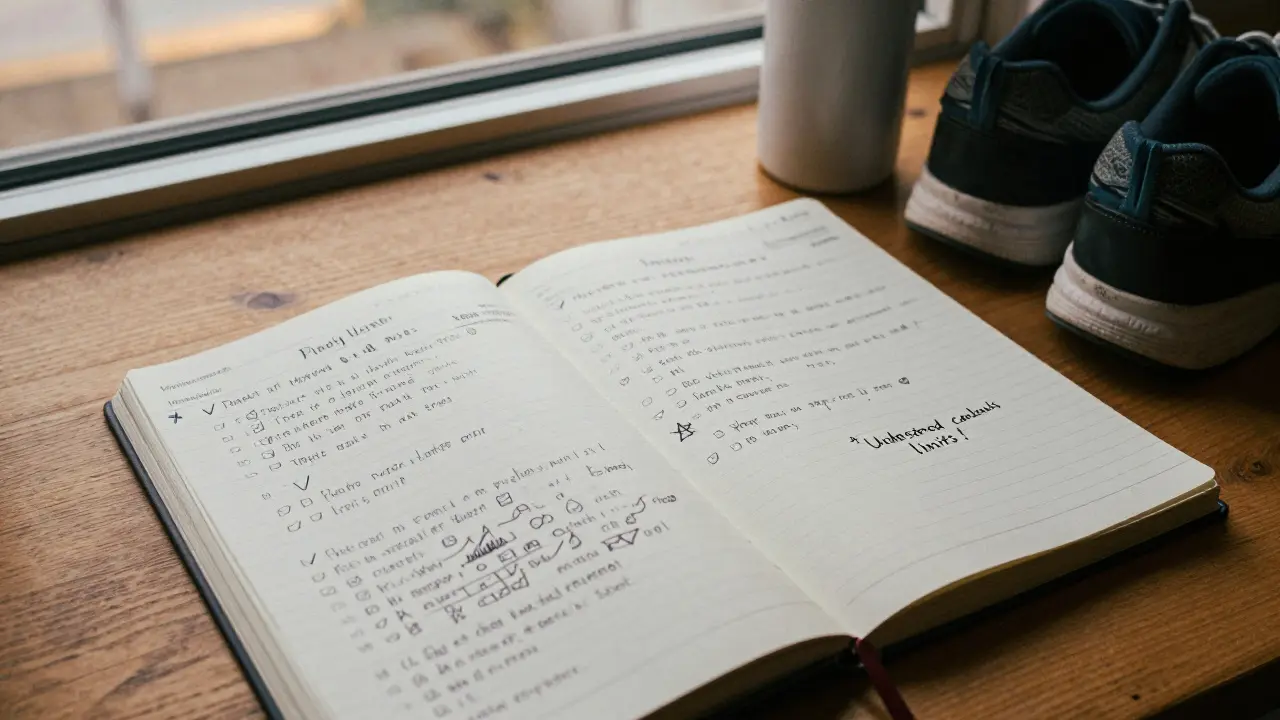
Study doesn’t feel like that. But it can. Grab a notebook and make a simple tracker. Each day, write down:
- What you studied
- How many Pomodoros you completed
- One thing you understood better than yesterday
At the end of the week, look back. You’ll see patterns. Maybe you focus best after lunch. Maybe math is easier when you do it right after a walk. You’ll also see progress you didn’t notice while you were in the middle of it.
This isn’t about perfection. It’s about proof. Your brain needs to know: I’m getting better. That’s what keeps you going.
Study with your body, not just your brain
Most students think studying is all about reading and writing. But your body is part of the system. If you’re tired, hungry, or stiff, your brain can’t focus.
Get at least 7 hours of sleep. Not 6. Not 6.5. Seven. Sleep is when your brain moves short-term memories into long-term storage. Skimp on sleep, and you’re literally erasing what you learned.
Move for 10 minutes before you study. Walk around the block. Do 10 squats. Jump rope. It increases blood flow to your brain. It clears mental fog.
Drink water. Dehydration by just 2% reduces concentration and memory recall. Keep a bottle on your desk. Sip constantly.
Stop multitasking. Seriously.
You think you’re good at checking Instagram while reviewing biology flashcards? You’re not. You’re just slower.
Every time you switch tasks-reading a text, checking a notification, scrolling your feed-your brain has to reboot. That takes time. And it leaves gaps in your memory.
Studies from Stanford show that heavy multitaskers are worse at filtering out irrelevant information. They’re more easily distracted. They remember less. And they take longer to finish tasks.
Put your phone on Do Not Disturb. Use an app like Forest or Focus To-Do that locks your phone for set periods. If you absolutely need to use your laptop, close every tab except the one you’re working on. One window. One task. That’s it.
Teach what you learn
There’s a reason teachers remember everything. They have to explain it. Teaching forces your brain to organize information clearly.
After you study a chapter, close your book. Pretend you’re teaching it to someone who knows nothing. Say it out loud. Use simple words. If you get stuck, that’s your clue: you didn’t understand it yet.
Record yourself on your phone. Play it back. You’ll hear where you fumble. That’s where you need to go back and review.
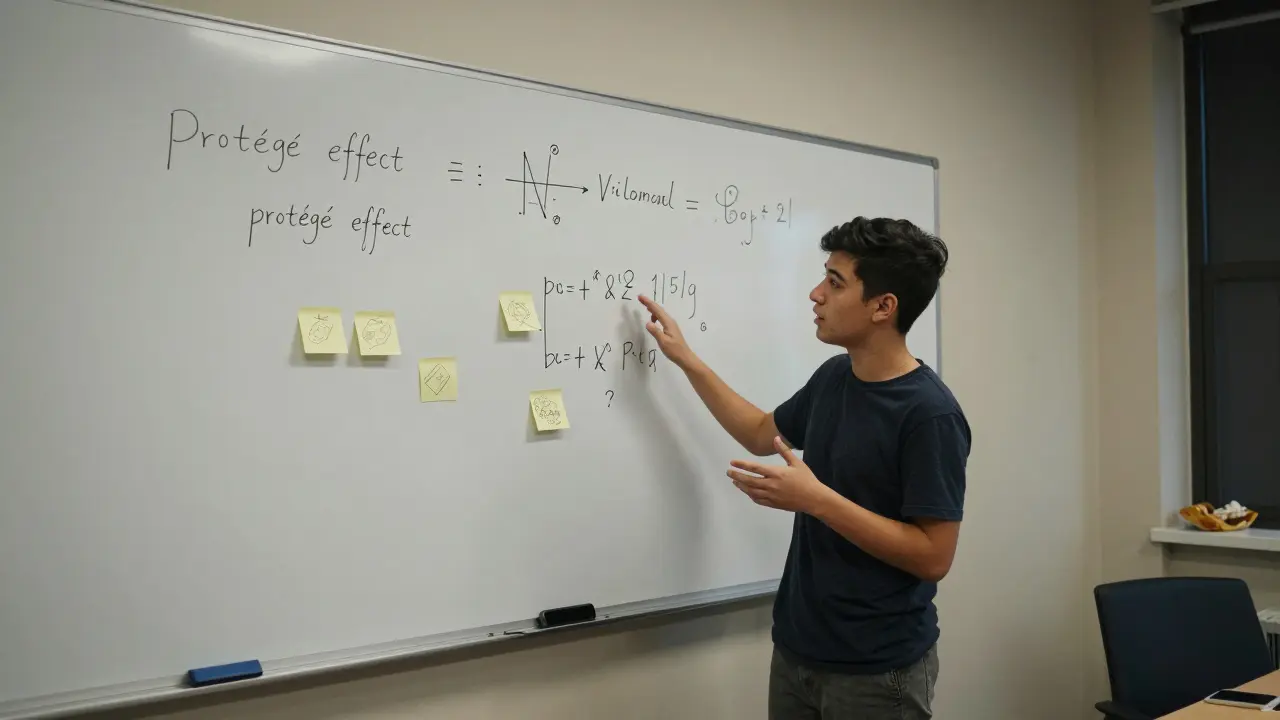
This isn’t just a trick. It’s called the protégé effect. Research from UCLA shows students who teach material to others score higher on tests than those who just re-read notes.
What to do when your mind still wanders
Even with all this, your mind will drift. That’s normal. The trick isn’t to stop it-it’s to notice it faster.
When you catch yourself thinking about your crush, your weekend plans, or what you’re eating later, don’t beat yourself up. Just say quietly: Not now. Then gently bring your eyes back to the page.
Keep a notepad next to you. If a thought pops up-Call Mom, Need new sneakers-write it down. Then let it go. You’ll remember to do it later. Your brain will stop nagging you.
It’s not about being perfect. It’s about returning. Every time you notice you’re distracted and come back, you’re strengthening your focus muscle.
Focus isn’t magic. It’s practice.
You don’t become a great runner by wishing you could run faster. You become one by showing up, day after day, and doing the work.
Same with studying. There’s no secret hack. No app that makes you hyper-focused overnight. But there are small, repeatable actions that stack up over time.
Start with one thing. Pick the study zone. Or the Pomodoro timer. Or the phone-in-another-room rule. Do it for a week. Then add another. In a month, you won’t recognize the student you were before.
Focus isn’t something you find. It’s something you build.
Shivam Mogha
January 18, 2026 AT 03:09Study zone fixed. Phone in another room. Pomodoro timer on. Done. Been doing this for two weeks. Grades up 20%. No magic.
mani kandan
January 19, 2026 AT 15:15There's something almost poetic about treating focus like a garden-you don't yell at the seeds to grow, you prepare the soil, remove the weeds, and show up every dawn. This post didn't just give me tips-it gave me a metaphor that stuck. The idea that my brain isn't broken, just poorly landscaped, feels like a relief I didn't know I needed.
I used to think discipline was about gritting my teeth and forcing myself. Now I see it's about designing a world where distraction is the outlier, not the norm. That shift changed everything.
Rahul Borole
January 19, 2026 AT 22:00As an educational psychologist with over fifteen years of experience working with secondary students, I can confirm with empirical certainty that the strategies outlined here align precisely with cognitive load theory and attention restoration theory. The Pomodoro Technique, environmental conditioning, and the protégé effect are not merely anecdotal-they are evidence-based pedagogical interventions with peer-reviewed validation across multiple longitudinal studies. Implementing these systematically yields statistically significant improvements in retention, task completion rate, and academic self-efficacy.
Furthermore, the emphasis on physiological factors-hydration, sleep, and movement-is not ancillary; it is foundational. Neurocognitive performance is inseparable from somatic state. Students who neglect these are not 'lazy'-they are operating under biological constraints they are unaware of.
I recommend this framework to every high school counselor in my district. It is, without hyperbole, the most practical and scientifically grounded approach to academic focus I have encountered in a decade.
Sheetal Srivastava
January 20, 2026 AT 03:44Let’s be honest-this is just behavioral conditioning dressed up as wisdom. You’re training your brain like a lab rat with a lever and a pellet. The ‘study zone’? That’s Pavlovian. The Pomodoro timer? A Skinner box with a countdown. And the ‘teach it back’ trick? That’s just rehearsing for an exam, not learning. Real understanding doesn’t need tricks-it needs depth, curiosity, and intellectual autonomy. You’re reducing education to a productivity hack, and that’s the real crisis.
Meanwhile, the system keeps pushing standardized testing, crushing creativity, and pretending that memorizing formulas equals intelligence. You’re not fixing the machine-you’re just teaching kids how to survive it better. That’s not empowerment. That’s adaptation to oppression.
Bhavishya Kumar
January 21, 2026 AT 09:21There are three grammatical errors in the original post and two instances of improper comma usage in the Pomodoro section. Also the phrase 'static on a bad radio signal' is a mixed metaphor-static is auditory, not visual. And 'study zone' should be hyphenated when used adjectivally: study-zone. Also you wrote 'you’re literally erasing' but 'literally' is being misused. It's not literal erasure, it's impaired consolidation. Please be more precise.
ujjwal fouzdar
January 22, 2026 AT 05:07What if focus isn’t the goal? What if the whole idea of ‘studying’ is a cage built by industrial education to make us docile consumers of information? We’ve been taught to worship productivity, to quantify our worth in Pomodoros and highlighter streaks. But what if the real rebellion is not to focus at all? To let your mind wander-to stare at the ceiling and wonder why the sky is blue? Maybe the answer isn’t in the textbook. Maybe it’s in the silence between the paragraphs.
I stopped studying. I started listening. To my breath. To the wind. To the way my thoughts drift like clouds. And guess what? I remembered more. Not because I forced it. But because I stopped trying to control it.
They call it distraction. I call it communion.
Anand Pandit
January 22, 2026 AT 19:00Just wanted to say this made my week. I’ve been struggling to study since lockdown and this actually feels doable. I tried the phone-in-another-room thing yesterday and I finished a whole chapter without checking my phone once. Felt like a superhero.
Also the ‘write down the thought and let it go’ trick? Genius. I had a whole list of ‘buy sneakers’ and ‘call dentist’ scribbled on a sticky note and it felt like my brain finally took a deep breath.
You don’t need to be perfect. Just consistent. One small win at a time. You got this.
Reshma Jose
January 24, 2026 AT 15:11OMG YES the study zone thing changed my life. I used to study on my bed and then couldn’t sleep at night because my brain was like ‘we’re still in class mode’. Now I sit at my tiny desk with just my notebook and a candle and it’s like a mental switch flips. No more guilt. No more dragging myself there. It just… happens.
Also I started using Forest and I’ve never been this productive. I even beat my own record yesterday. 5 Pomodoros straight. I felt like I won a gold medal.
rahul shrimali
January 25, 2026 AT 23:23Do the 25 min thing. Put phone away. Drink water. Walk after. That’s it. No overthinking. Just do it. Day after day. You’ll see. No fluff. Just results.
Eka Prabha
January 26, 2026 AT 08:30Let me guess-this was written by someone who’s never failed a test. Or maybe they’re part of some corporate ed-tech propaganda machine pushing ‘productivity hacks’ to keep students compliant. Did you know that standardized testing was invented by eugenicists to sort children by class and race? And now you’re telling kids to optimize their focus within a broken system? That’s not empowerment. That’s gaslighting.
They don’t want you to think critically. They want you to memorize, regurgitate, and shut up. Your ‘study zone’? It’s just a better cage. Your ‘Pomodoro timer’? It’s a digital leash. Your ‘teach it back’ trick? It’s just rehearsing the script they gave you.
Real change doesn’t come from better focus. It comes from burning the system down.
Bharat Patel
January 27, 2026 AT 10:19I think what’s really being asked here isn’t how to focus-but how to be present. We live in a world that treats attention as a commodity to be mined, not a gift to be nurtured. These strategies aren’t about efficiency. They’re about reclaiming your inner rhythm from the noise.
The study zone? That’s sacred space. The Pomodoro? A heartbeat. The act of teaching back? That’s communion with your own mind.
It’s not about doing more. It’s about being more. And that’s the quiet revolution.
Bhagyashri Zokarkar
January 28, 2026 AT 21:43i tried all this stuff and it was like okay i sit at my desk but then i just stare at the wall for 20 min and then i get up and eat a whole bag of chips and then i feel bad and then i scroll tiktok for 2 hours and then i cry and then i think maybe im just not cut out for this and then i wonder if its even worth it because like what if the whole education system is just a lie and we’re all just rats in a maze trying to press the right button to get the cheese but the cheese is fake and the maze is rigged and like why am i even trying
but then i drank water and took a walk and now i feel a little better
Rakesh Dorwal
January 30, 2026 AT 21:15These so-called strategies are just Western individualism wrapped in neuroscience jargon. In India, we’ve been studying for centuries without Pomodoros or study zones. We sat on the floor, memorized under the lamp, and passed exams with grit. Your ‘focus’ is weakness. Our tradition is strength. Stop chasing apps. Start respecting your roots.
Also, why are all these tips coming from English-speaking countries? Did they forget we’ve been educating generations without ‘Forest’ or ‘protégé effect’? This is cultural imperialism disguised as advice.