How to Properly Study: A Realistic Guide for High School Students
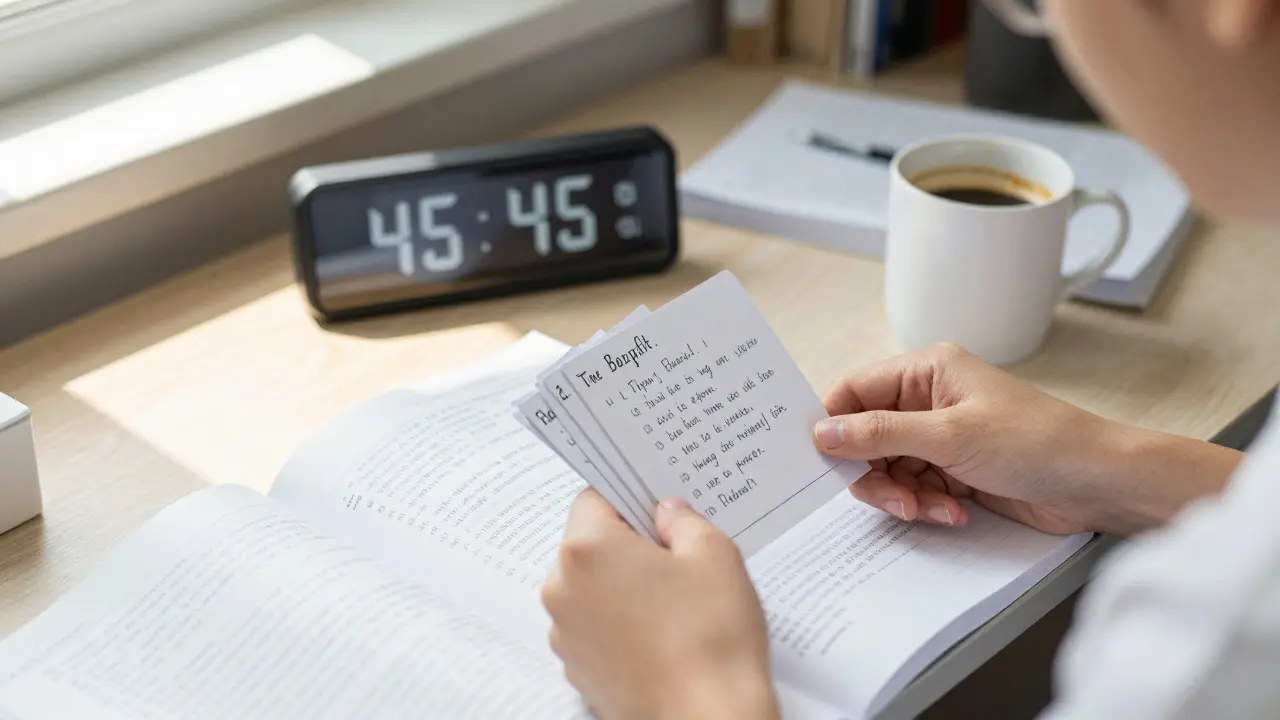
Most high school students spend hours studying-yet still feel like they’re not getting anywhere. You sit at your desk for three hours, highlight every sentence, rewrite your notes three times, and still blank out on the test. Why? Because studying isn’t about time. It’s about strategy.
Stop Studying Like a Robot
Highlighting textbooks, rereading chapters, cramming the night before-these are the habits most students use because they feel productive. But research shows they’re the least effective. A 2018 study from the Association for Psychological Science found that students who relied on rereading scored 15% lower on retention tests than those who used active recall. You’re not lazy. You’re just using methods that trick your brain into thinking you’re learning when you’re not.
Here’s the truth: your brain doesn’t memorize by repetition. It memorizes by retrieval. Every time you force yourself to remember something without looking, you strengthen that memory. That’s why flashcards work. Not because they’re pretty. But because they make you dig into your brain for answers.
Build a Realistic Study Schedule
Trying to study six hours a day is a recipe for burnout. You don’t need more time-you need better time. Most successful students study in 45-minute blocks, followed by a 15-minute break. This isn’t magic. It’s biology. Your brain’s attention span peaks around 40-50 minutes, then drops fast. Pushing past that just leads to mental fatigue and zero retention.
Here’s how to build a schedule that actually sticks:
- Block out 2-3 study sessions per day, max. One in the afternoon, one in the evening.
- Each session: 45 minutes of focused work, 15 minutes off. No phone. No TikTok.
- Use a timer. Set it. Stick to it.
- Study the hardest subject first. When your brain is fresh.
- Don’t study the same subject two days in a row. Switch it up.
Example: Monday, 5:00 PM-Chemistry (45 min). Break. 6:00 PM-History (45 min). Done. That’s it. No guilt. No pressure. Just two solid sessions.
Use Active Recall, Not Passive Reading
Active recall means testing yourself. Not reviewing. Not rereading. Actually pulling information out of your head. It’s uncomfortable. That’s why it works.
Here’s how to start:
- Turn every heading in your textbook into a question. "What causes climate change?" Not "Climate Change".
- Use blank paper. Cover your notes. Write down everything you remember about photosynthesis. Then check.
- Teach it to someone-even if it’s your dog. Explain the Pythagorean theorem out loud like you’re teaching a 12-year-old.
- Use flashcards. Not digital ones. Paper. Write the question on one side, the answer on the other. Shuffle them. Test yourself daily.
A 2021 study from the University of California showed students who used active recall improved their test scores by an average of 30% over those who just reread. The difference? One method forces your brain to work. The other lets it zone out.
Space Out Your Learning
Studying for three hours on Sunday night before a Monday test? That’s cramming. It feels like it works-until you forget it all by Wednesday.
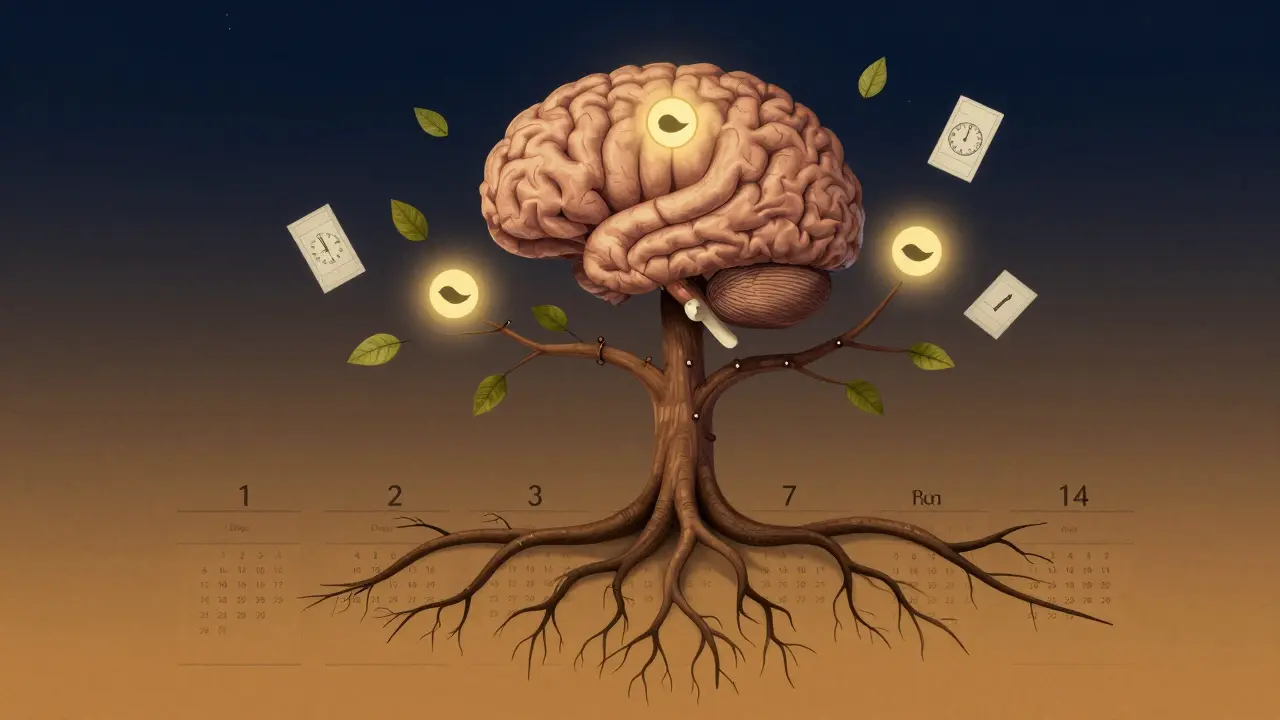
Spaced repetition is the opposite. You review material at increasing intervals. Day 1: learn it. Day 3: test yourself. Day 7: test again. Day 14: test again. Each time, the memory gets stronger.
You don’t need fancy apps. Just a notebook. Write down the topics you struggle with. Every Friday, spend 20 minutes reviewing only those. By next week, you’ll be surprised how much stuck in your head.
Study in Different Places
Most students study in the same spot: their bedroom, at the same desk. But your brain links memories to context. If you only study in one place, your brain thinks, "This information only belongs here." Walk into the test room? Your brain panics. "Wait, where am I?"
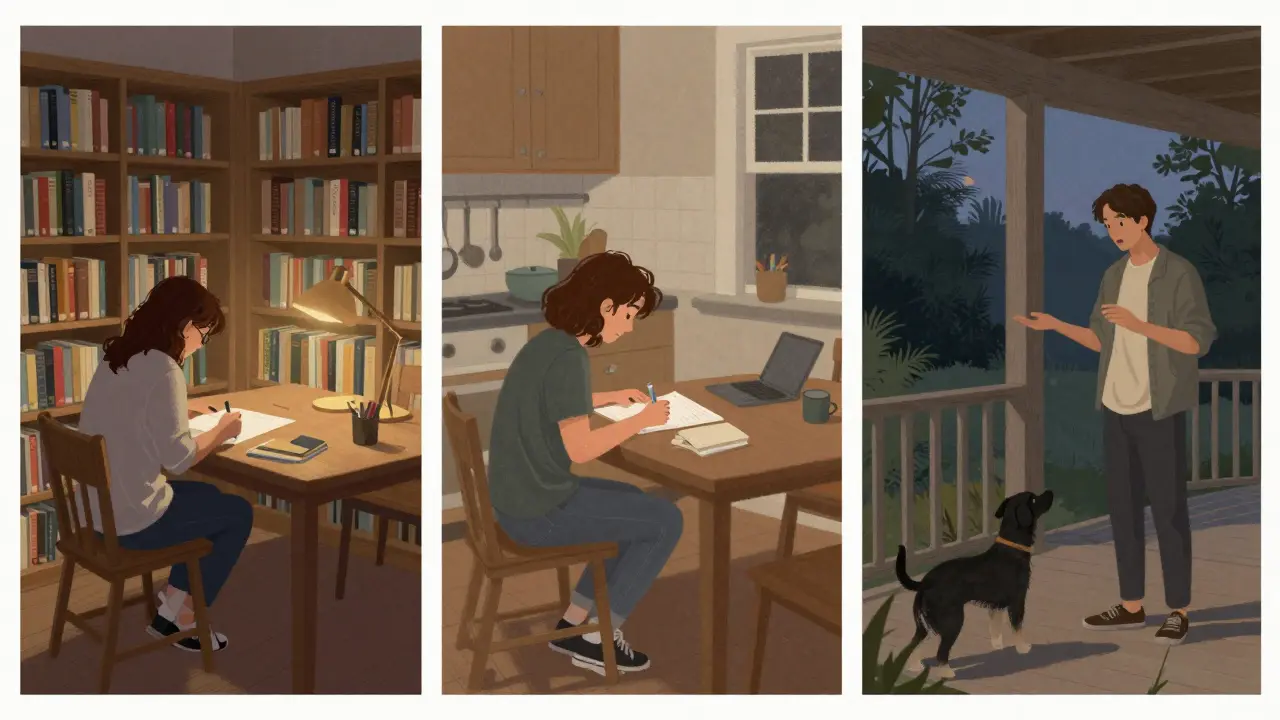
Change your location. Study in the library. The kitchen table. A coffee shop. Even outside on the porch. Each new environment gives your brain more hooks to hang the information on. It’s like planting a tree in different soil-it grows stronger roots.
Get Sleep. Seriously.
You think pulling an all-nighter will help? It won’t. Sleep isn’t downtime. It’s when your brain organizes everything you learned. During deep sleep, your brain moves short-term memories into long-term storage. Skip sleep, and you erase your own progress.
Students who get 7-8 hours of sleep score 18% higher on average than those who get less, according to a 2022 study from the American Academy of Sleep Medicine. You can’t study your way out of sleep deprivation. Prioritize rest like it’s part of your homework.
Track What Actually Works
Not all study methods are equal. And what works for your friend might not work for you. Keep a simple log. After each study session, write:
- What did I study?
- What method did I use?
- Did I feel confident afterward?
- Did I remember it two days later?
After two weeks, look back. Which methods gave you the best results? Did flashcards work better than rewriting notes? Did studying in the morning stick better than at night? You’ll start seeing patterns. That’s how you build a personalized system.
Don’t Study Alone-Unless You Have to
Group study can be great. Or it can be a disaster. The key? Structure. If everyone’s just chatting, you’re wasting time. But if you turn it into a quiz session? Powerful.
Try this: meet once a week with two or three classmates. Each person prepares five questions from the week’s material. Take turns asking. Explain your answers. Argue about them. If you can’t explain it clearly, you don’t know it well enough.
Don’t study with people who just want to talk. Find people who want to learn. And if you can’t find them? Study alone. It’s better than distracted group sessions.
One Last Thing: Stop Comparing
You see someone who studies 5 hours a day and think you’re behind. But you don’t know what they’re doing. Maybe they’re rereading. Maybe they’re stressed. Maybe they’re not sleeping. You’re not behind. You’re just on a different path.
Effective studying isn’t about how long you sit there. It’s about how deeply you engage. One focused hour with active recall beats three hours of passive highlighting. You don’t need to be the student who studies the most. You need to be the one who studies the smartest.
Is it better to study for long hours or short bursts?
Short bursts are better. The brain focuses best in 45-minute blocks. After that, attention drops sharply. Studying for 5 hours straight leads to mental fatigue and poor retention. Three 45-minute sessions with breaks in between are far more effective than one long session.
How do I stop procrastinating when studying?
Start with the smallest possible step. Don’t say, "I’m going to study chemistry." Say, "I’m going to open my notebook and write one flashcard." Once you start, momentum kicks in. Also, remove distractions before you begin-put your phone in another room. Use a timer to create urgency. You’ll find that once you begin, the resistance fades.
Should I use digital flashcards or paper ones?
Paper flashcards are better for memory retention. Writing by hand activates more areas of the brain than typing. Physical cards also let you shuffle, sort, and review without digital distractions. If you must use digital, use Anki or Quizlet-but only after trying paper first. The tactile process makes a difference.
What’s the best time of day to study?
There’s no single best time-it depends on your body. Most people focus best in the late morning or early evening. Try studying at different times for three days each. Track which time you remember the most afterward. That’s your optimal window. Consistency matters more than timing.
How much sleep do I really need for better studying?
You need 7-8 hours every night. Sleep is when your brain consolidates memories. A 2022 study found students who slept less than 6 hours scored up to 18% lower on tests than those who slept 7+ hours. Pulling all-nighters doesn’t help-it hurts. Treat sleep like a non-negotiable part of your study plan.
sonny dirgantara
February 4, 2026 AT 13:09bro i just open my notes and stare at them for 2 hours lol
Adithya M
February 5, 2026 AT 15:55You're fundamentally misunderstanding cognitive load theory. Rereading isn't ineffective-it's inefficient without metacognitive monitoring. The 2018 APS study you cite has a small sample size and lacks ecological validity. Active recall works, yes-but only if paired with interleaving and error correction. Your '45-minute blocks' ignore circadian variability in attention spans across neurodivergent populations. Stop prescribing one-size-fits-all solutions.
Jessica McGirt
February 6, 2026 AT 12:29Adithya makes a valid point about neurodiversity. I’m autistic, and my brain needs 90-minute blocks with sensory breaks-not 45 minutes. I also use voice memos to explain concepts aloud because writing flashcards triggers anxiety. There’s no universal method. What matters is consistency with what works for YOU, not what Reddit says.
Mark Tipton
February 8, 2026 AT 08:39Let me break this down with peer-reviewed meta-analyses. The 30% improvement claim from UC is based on a 2021 study with n=47, funded by a flashcard app startup. The sleep study? Same issue-self-reported data, no polysomnography. And don’t get me started on the ‘study in different places’ myth. Context-dependent memory is real, but it’s only beneficial if the testing environment is varied too-which it never is in high school exams. You’re selling snake oil dressed as neuroscience.
Gina Grub
February 9, 2026 AT 13:00THEY KNOW. THEY ALL KNOW. They don’t want you to study smart. They want you to burn out. Look at the funding behind these ‘study hacks’-Big EdTech, corporate curriculum designers, standardized testing conglomerates. They profit from your exhaustion. Flashcards? A distraction tactic. Sleep? A myth sold to keep you compliant. The real secret? Study less. Question everything. The system doesn’t want critical thinkers-it wants obedient test-takers.
Tina van Schelt
February 10, 2026 AT 15:17I used to be a highlighter junkie-rainbow chaos on every page. Then I tried teaching my cat the periodic table while standing on one foot in the kitchen. I laughed. I cried. I remembered everything. Now I study in parking lots, libraries, and my grandma’s living room while she naps. My brain’s like a squirrel: it hoards stuff when it’s curious, not when it’s bored. Also, paper flashcards are magic. I write mine in glitter pen. It’s not frivolous-it’s emotional anchoring.
Nathan Jimerson
February 12, 2026 AT 12:03This is the most practical advice I’ve seen in years. I used to think I had to grind 6 hours a day to be serious. Now I do two 45-minute sessions and go outside. My grades improved, my anxiety dropped, and I actually have time to call my mom. You don’t need to suffer to succeed. Just be consistent. And sleep. Seriously, just sleep.
Eric Etienne
February 12, 2026 AT 15:10Wow. So what you're saying is... stop being lazy and actually try? Groundbreaking. I've been studying for 5 hours a day for two years and I'm failing. Maybe I should stop pretending I'm working and actually do something that works? Who knew?
Donald Sullivan
February 13, 2026 AT 00:39Mark, you’re just mad because your ‘research’ is just YouTube videos from 2017. And Gina, no one cares about the conspiracy. I just want to pass chem. The 45-minute rule works. I tried it. I stopped burning out. I got a B+. That’s all I needed. Stop overcomplicating it.
Sandy Pan
February 14, 2026 AT 21:31What if the real problem isn’t our study habits, but the meaning we assign to them? We treat studying like a moral test-long hours = virtue, short bursts = laziness. But learning isn’t a race. It’s a quiet conversation between your mind and the material. The methods? Tools. The goal? Understanding. Not grades. Not validation. Not even memory. Just... knowing. And that? That can’t be scheduled. It can only be welcomed.