How to Tell if a Backpack Is Good Quality for High School

Every high school student carries a backpack full of books, laptops, gym clothes, and snacks-sometimes weighing 20 pounds or more. A flimsy backpack won’t last a semester. But how do you actually know if a backpack is good quality before you buy it? It’s not just about brand names or color. Real quality shows up in the details you can’t see at first glance.
Check the stitching
Look closely at where the straps meet the bag, where the bottom panel connects to the sides, and around any pocket openings. Good backpacks use double or even triple stitching in high-stress areas. If you see loose threads, uneven stitches, or single lines of thread holding critical parts together, walk away. A backpack with single stitching will rip open after a few months of heavy use. Schools like Chicago Public Schools have tested over 120 backpacks over three years and found that 78% of failures happened at the strap seams. That’s not a coincidence-it’s poor construction.Feel the fabric
Not all nylon or polyester is the same. High-quality backpacks use 600D to 1000D polyester or ripstop nylon. The higher the number, the thicker and tougher the material. You can test this by pinching the fabric between your fingers. If it feels thin, flimsy, or stretches easily, it won’t hold up. Look for a textured surface-this usually means the material has been treated for abrasion resistance. Avoid backpacks with shiny, plastic-like fabric. That’s often cheap PVC coating that cracks in cold weather. Real durability comes from dense, matte-finish textiles that feel substantial but not stiff.Test the zippers
Zippers are the weakest link in most backpacks. A good backpack uses YKK or Lampo zippers-brands trusted by outdoor gear companies. These zippers glide smoothly and don’t jam or break under pressure. Try pulling the zipper all the way open and closed five times. If it catches, feels stiff, or the pull tab wobbles, skip it. Also check the zipper teeth. They should be metal or high-grade plastic, not flimsy molded plastic that bends easily. A backpack with plastic zippers might work fine in September, but by January, you’ll be unzipping your bag with a pen because the zipper won’t move.Examine the straps
Padded straps look nice, but padding alone doesn’t make them good. The padding should be dense foam, not hollow or squishy. Press your thumb into the strap. If it compresses too easily, it won’t support weight over time. Look for straps that are wide-at least 2 inches. Narrow straps dig into shoulders and cause discomfort. Also, check how the straps attach to the bag. They should be sewn into a reinforced bar or webbing loop, not just stitched directly onto the fabric. Some quality backpacks even have a plastic or metal frame inside the shoulder straps to help distribute weight. If the straps are sewn with visible stitching that looks like it’s holding on by a thread, that’s a red flag.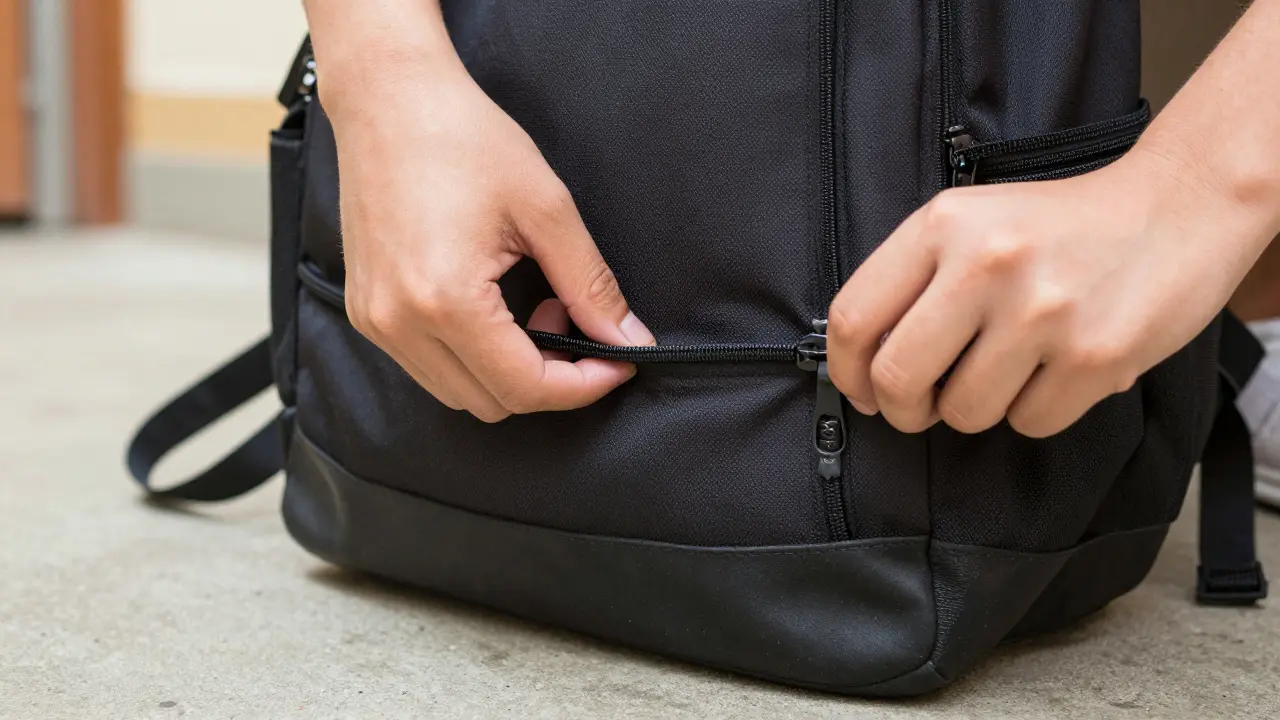
Look at the bottom and back panel
The bottom of a backpack takes the most abuse. It scrapes against floors, gets kicked, and sits on wet sidewalks. A good backpack has a reinforced bottom panel-usually made of the same heavy-duty material as the sides, sometimes with an extra layer of plastic or rubber. Run your fingers along the bottom edge. If it feels thin or flexible, the bag will sag and wear out fast. The back panel should also be padded and ventilated. Many cheap backpacks use solid foam that traps heat. Better ones use mesh or honeycomb padding that lets air flow. That’s not just comfort-it prevents sweat buildup that can damage the fabric over time.Check the hardware
Buckles, clips, and D-rings might seem small, but they’re critical. Metal hardware is always better than plastic. Look for aluminum or zinc alloy buckles-they’re lightweight but strong. Plastic buckles crack in cold weather or under tension. Test the clips by pulling on them firmly. If they feel loose or click when you wiggle them, they’ll fail. Also check the D-rings where you attach keys or water bottles. They should be riveted, not just sewn on. A rivet is a metal pin pressed through the fabric and flattened on the back. Sewn-on rings can pull out with a heavy keychain or water bottle.Weight distribution matters
A good backpack doesn’t just feel sturdy-it feels balanced. When you load it up, the weight should sit close to your back, not stick out like a tail. Look for a contoured back panel and a sternum strap. The sternum strap isn’t just for show-it keeps the shoulder straps from slipping off your shoulders during movement. Some backpacks even have a waist belt. That’s rare in school backpacks, but if one has it, it’s designed for heavier loads. High schoolers carrying 15+ pounds daily need every bit of support.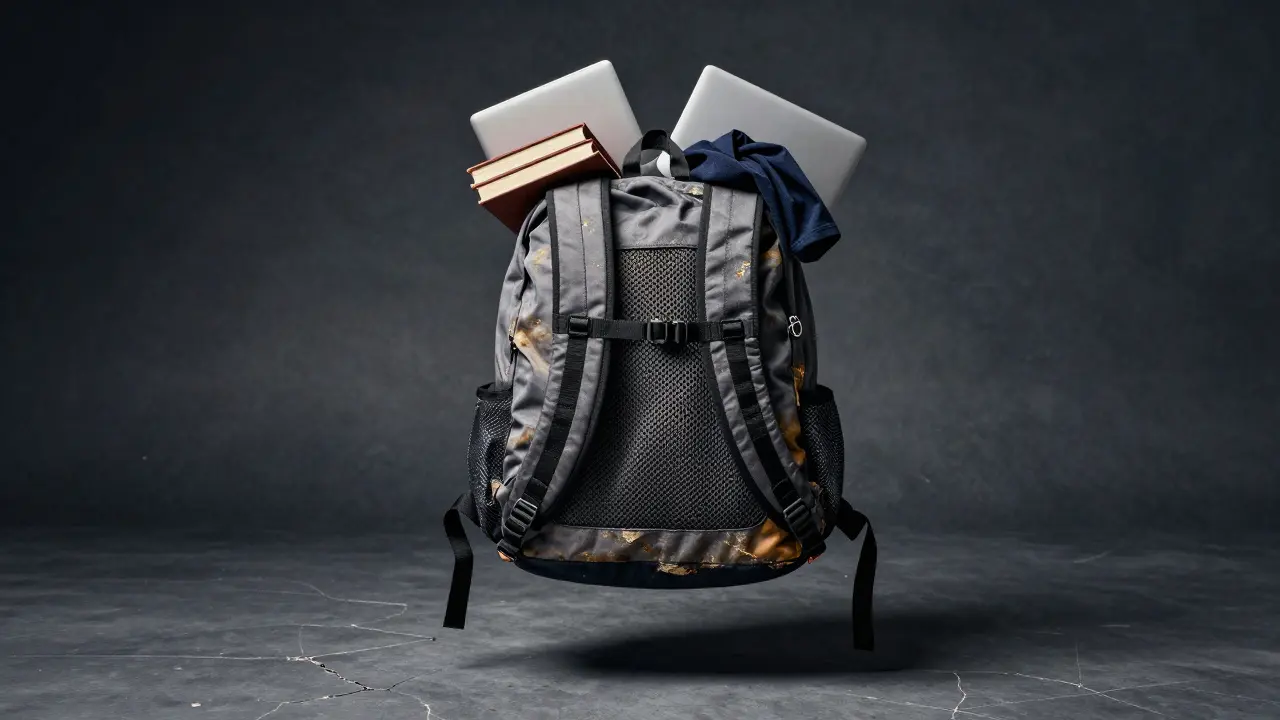
Compare real-world use, not ads
Don’t trust Instagram influencers or flashy ads. Look for reviews from students who’ve used the backpack for a full school year. Search for phrases like “backpack fell apart after winter” or “straps ripped in November.” Real users will tell you what the photos don’t show. Brands like JanSport, Herschel, and Deuter have been tested by schools and parents for decades. But even within those brands, some lines are cheaper. The JanSport SuperBreak is fine for light loads. The JanSport Right Pack, with reinforced stitching and YKK zippers, is better for heavy use.What to avoid
Avoid backpacks with:- Plastic zippers (especially cheap, transparent ones)
- Thin, shiny fabric that looks like trash bags
- Straps that are less than 1.5 inches wide
- No padding on the back panel
- Loose or flimsy buckles
- Single-stitched seams
- Zero reinforcement on the bottom
These aren’t just annoyances-they’re failures waiting to happen. A backpack that breaks mid-semester isn’t just inconvenient. It’s expensive. Replacing one costs $50 to $80. A good one lasts three years. That’s less than $20 a year.
How much should you spend?
You don’t need to buy a $150 hiking pack. But $30 or less? That’s usually a gamble. A quality school backpack costs between $45 and $75. That’s the sweet spot where you get durable materials, proper stitching, and reliable hardware. Spend less, and you’re paying more in replacements. Spend more, and you’re paying for features most students don’t need-like waterproofing for indoor use or external hydration bladders.Final checklist before buying
Before you hand over your money, run through this quick test:- Pinch the fabric-does it feel thick and dense?
- Pull the zippers-do they glide smoothly without catching?
- Press the shoulder straps-do they compress easily or feel firm?
- Check the seams-double or triple stitching?
- Look at the bottom-does it feel reinforced, not flimsy?
- Wiggle the buckles-do they feel solid or loose?
- Ask: Would this survive a year of daily use in Chicago winters?
If you answer yes to all of these, you’ve found a good one. If even one feels off, keep looking. Your back, your books, and your wallet will thank you.
mark nine
December 23, 2025 AT 10:51YKK zippers are the only way. I had a $20 backpack that died in October. Bought a Deuter for $65 and it’s still going strong after 3 years. No joke.
Worth every penny.
Scott Perlman
December 24, 2025 AT 14:18Just check the seams. If it looks like it was sewn by a sleepwalker walk away. Been there done that. Lost my whole semester’s books when the strap popped. Never again.
Xavier Lévesque
December 24, 2025 AT 16:16Funny how people think ‘brand’ means quality. I’ve seen JanSport SuperBreaks fall apart faster than a politician’s promise. The Right Pack? That’s the one. Same brand different soul.
Also avoid anything with a ‘trendy’ color. Those are the ones schools discount when they’re clearly defective.
Sandi Johnson
December 26, 2025 AT 06:51So you’re telling me I shouldn’t buy the one that looks like it belongs in a hipster coffee shop but falls apart by Thanksgiving?
Wow. Groundbreaking. I’ll just wait for the TikTok influencer to tell me what to buy next.
Buddy Faith
December 26, 2025 AT 14:04YKK zippers are a government plot to make you spend more
Also the whole ‘1000D nylon’ thing is just marketing
My cousin’s backpack was made of trash bags and lasted 5 years
They just don’t want you to know
Eva Monhaut
December 27, 2025 AT 17:55I used to think padding = comfort until I got a backpack with foam that felt like a wet sponge. Then I found one with honeycomb mesh and it was like carrying clouds.
Also the bottom reinforcement? Non-negotiable. I’ve seen kids drag their bags across snowy parking lots like sleds. If the bottom gives, everything else follows.
And yes - sternum straps are underrated. They keep your shoulders from turning into pretzels by March.
Tony Smith
December 28, 2025 AT 12:31It is of paramount importance to recognize that the structural integrity of a backpack is not a matter of aesthetics but of biomechanical necessity.
One must therefore evaluate the tensile strength of stitching, the durability of fastening mechanisms, and the hydrophobic properties of textile substrates.
Failure to do so constitutes a gross negligence of personal well-being and fiscal responsibility.
Moreover, the assertion that a $30 backpack is an acceptable expenditure is not merely erroneous - it is statistically indefensible.
Karl Fisher
December 29, 2025 AT 13:40Okay but have you considered that maybe backpacks are just a capitalist trap designed to make you buy new ones every year?
I mean… what if we just carried our stuff in a pillowcase?
It’s lighter. It’s trendy. It’s rebellion.
Also I once saw a kid with a $120 backpack and he still dropped his lunch. So what’s the point?
Rakesh Kumar
December 30, 2025 AT 11:14In India we use school bags made of cloth and metal frames - they last 7 years. No zippers. No plastic. Just strong stitching and thick cotton.
Why do we overcomplicate this? A good bag doesn’t need 17 pockets. Just strong straps and a solid bottom.
Also my cousin used his bag for college, then his little sister used it for high school. Then his mom used it for groceries.
That’s quality.
Bill Castanier
December 31, 2025 AT 17:54Check the bottom. If it’s thin it’s trash
Check the straps. If they’re narrow they’ll hurt
Check the zipper. If it’s plastic it’ll break
That’s it
No fluff
No ads
No hype
Just facts
Ronnie Kaye
January 2, 2026 AT 11:03Wait so you’re saying I shouldn’t buy the one with the glitter and the neon lanyard?
But… but it matches my shoes.
Also I saw a guy on YouTube who said the ‘aesthetic’ matters more than durability.
He had 300k followers.
Do I trust him or this guy with his ‘YKK zippers’?
My soul is in turmoil.
Priyank Panchal
January 3, 2026 AT 00:17You people waste too much time over backpacks. Just buy the cheapest one and replace it every semester. It’s cheaper than your emotional attachment to plastic. Your back will survive. Your wallet will thank you. Your pride? That’s just ego.
Chris Atkins
January 4, 2026 AT 14:50My dad bought me a backpack from Costco for $25 and it’s still going after 4 years
He said if it breaks just duct tape it
So I did
And now it’s got more duct tape than fabric
But it holds everything
So I guess it works
Also the zipper is plastic but I just pull it slow
Live and learn
Thabo mangena
January 6, 2026 AT 06:25As someone who carried a 20-kilogram load daily across uneven terrain to school in rural South Africa, I can confirm that durability is not a luxury - it is survival. A backpack must endure rain, dust, and the weight of knowledge. I have seen children carry their entire education in a single stitched sack. The principles you outline are not merely recommendations - they are echoes of necessity. Choose wisely, for your burden is not only physical but symbolic.