Is It Legal to Sell Study Guides? What You Need to Know Before Selling High School Study Materials
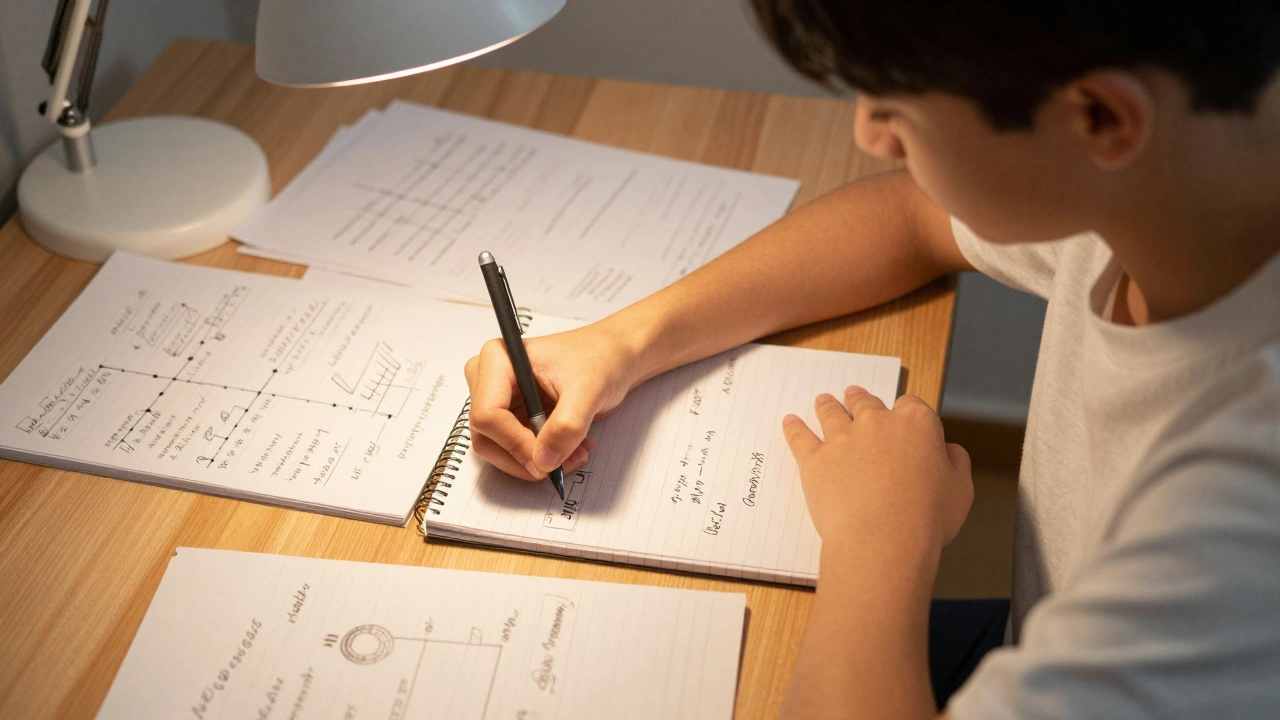
Every year, thousands of high school students scramble for study guides before finals, AP exams, or state standardized tests. Some buy them from their teachers. Others find them online. A few even start selling them-printed booklets, PDFs, or digital flashcards-hoping to make a little extra cash. But here’s the question no one asks until it’s too late: Is it legal to sell study guides?
It Depends on What’s in the Guide
There’s no single law that says, "You can’t sell study guides." The legality hinges on one thing: who created the content and what rights you have to it. If you wrote the guide yourself-based on your own notes, your understanding of the textbook, and your experience in the class-then yes, you own it. You can sell it. You can even sell it on Etsy, Gumroad, or your own website.
But if you copied questions directly from a textbook, pulled diagrams from a teacher’s PowerPoint, or reprinted a publisher’s review sheet without permission, you’re infringing on copyright. That’s not just unethical-it’s illegal. Publishers spend millions developing educational materials. They hold the copyright to their content, including practice questions, chapter summaries, and test formats. Even if you didn’t profit from it, distributing copies without permission violates federal copyright law in the U.S.
Teachers’ Materials Are Off-Limits
Many students think, "My teacher gave me this study guide, so I can share it." Not true. When a teacher creates a study guide using district resources, textbook excerpts, or curriculum materials owned by the school or publisher, they don’t own the copyright. The school or publisher does. If you take that guide, scan it, and sell it online, you’re distributing someone else’s intellectual property.
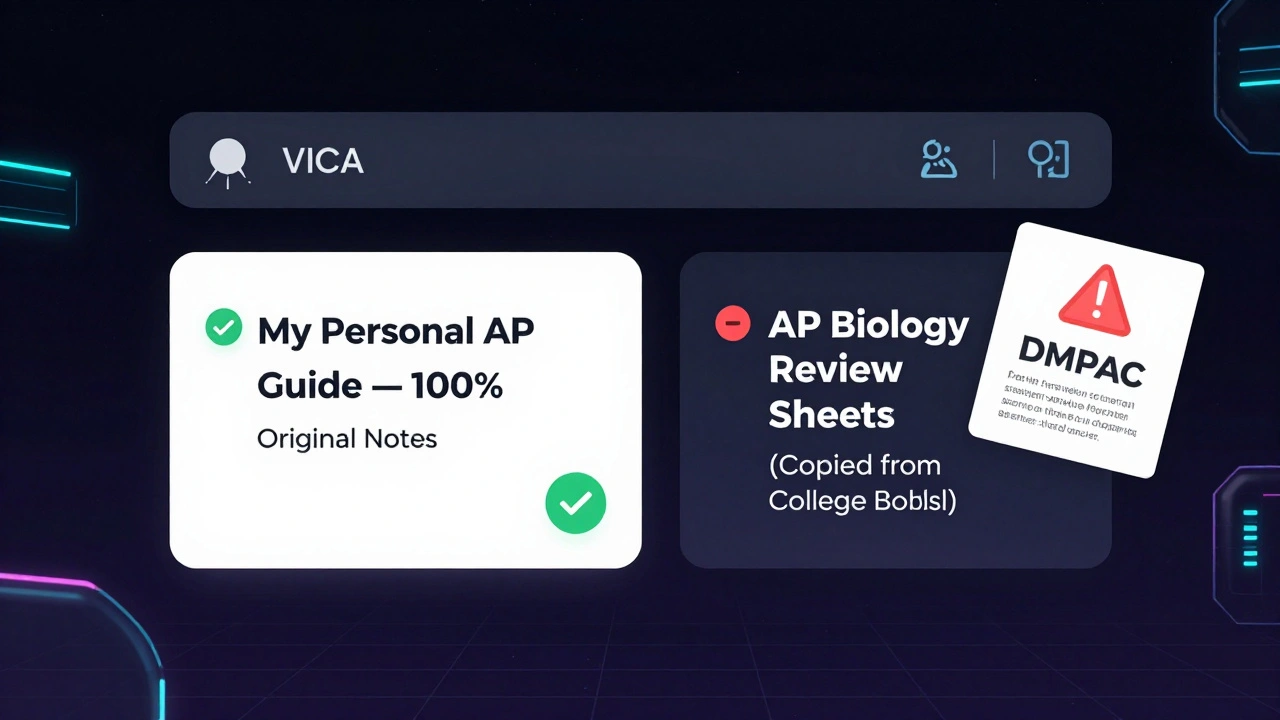
Real-world example: In 2023, a Florida high school student started selling PDFs of AP Biology review sheets online. The sheets included exact questions from the College Board’s released practice exams. The College Board sent a cease-and-desist letter. The student had to take down the files and refund buyers. No lawsuit followed, but the legal risk was real.
What Can You Legally Sell?
You can sell study guides if they meet these criteria:
- You created the content from scratch using only your own notes and understanding
- You didn’t copy text, diagrams, or questions from textbooks, teachers, or publishers
- You’re not using branded logos, official exam names, or trademarked phrases like "AP Exam Prep" unless you’re licensed
- You’re not implying you’re endorsed by the school, teacher, or testing organization
For example: You aced U.S. History and wrote a 30-page summary of the Civil War era using your own phrasing, timelines you drew, and mnemonics you invented. That’s yours. You can sell it as "My Personal U.S. History Study Guide: Civil War Edition."
But if you call it "Official AP U.S. History Study Guide" or include a diagram from the AMSCO textbook, you’re crossing the line.
Textbooks and Publishers Are Watching
Major educational publishers like Pearson, McGraw-Hill, and Cengage actively monitor online marketplaces. They use automated tools to scan for copies of their content. If your guide matches their copyrighted material-even if you reworded it slightly-they can issue a takedown notice under the Digital Millennium Copyright Act (DMCA). You could lose your listings, get banned from platforms like eBay or Amazon, or even face fines.
One seller on Etsy got hit with a DMCA notice for selling a "Calculus Study Guide" that included 12 problems nearly identical to those in a Stewart Calculus textbook. The seller claimed they "just explained it differently," but the math was the same, the variables unchanged. The platform removed the listing and suspended the account for six months.
What About Public Domain Materials?
Some older textbooks and educational resources are in the public domain. For example, U.S. government publications, like those from the National Science Foundation or NASA, are free to use. You can create a study guide based on NASA’s Mars mission data and sell it. Same goes for classic literature summaries-Shakespeare’s plays are public domain, so your analysis of "Hamlet" is yours to sell.
But be careful. Modern editions of public domain works often include new introductions, footnotes, or formatting that are copyrighted. Just because the original text is free doesn’t mean the version you’re copying is.
How to Stay Safe: A Simple Checklist
If you’re thinking about selling study guides, run through this before you list anything:
- Did you write every word yourself? (No copying from notes, handouts, or online sources)
- Did you create your own diagrams, charts, or timelines?
- Are you avoiding official exam names like "SAT," "AP," or "ACT" in your title or branding?
- Did you check if your school or district owns the rights to any content you used as inspiration?
- Are you not claiming affiliation with any school, teacher, or testing body?
If you answered "yes" to all five, you’re likely in the clear. If even one answer is "no," reconsider.
What Happens If You Get Caught?
Most cases don’t go to court. Publishers usually start with a DMCA takedown notice. The platform removes your listing. If you keep selling after a notice, they may report you to your school, your ISP, or even the Department of Education. In extreme cases-especially if you’re making thousands of dollars-they can sue for damages.
One case in Texas involved a student who sold 2,000 copies of a chemistry guide using questions from a Pearson textbook. The publisher sued for $15,000 in statutory damages. The student settled for $5,000 and had to pay legal fees. That’s not worth $5 a guide.
What’s the Alternative?
You don’t need to copy to make money. Many students earn money legally by:
- Creating original video tutorials on YouTube (with clear disclaimers)
- Offering tutoring services and charging hourly
- Selling custom-made flashcards you designed yourself
- Writing blog posts or eBooks based on your own learning journey
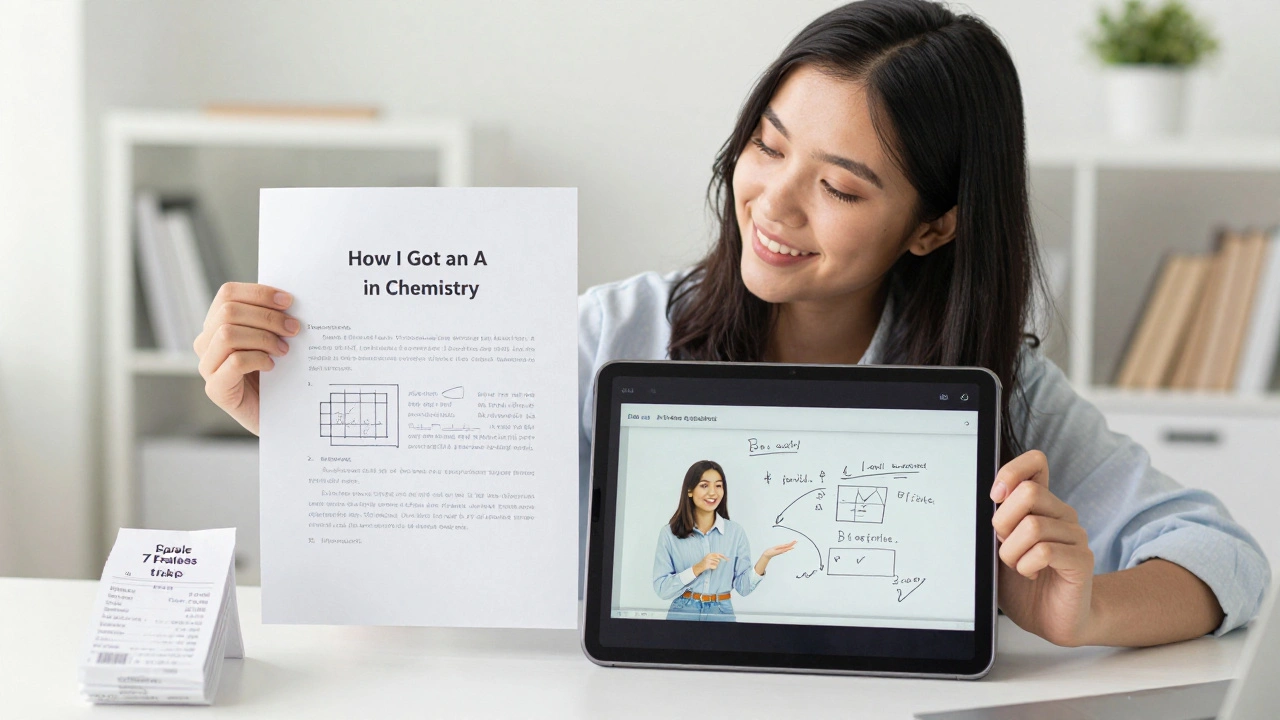
One student in Ohio started a TikTok series called "How I Got an A in Chemistry"-using only her own notes and study tricks. She got 50,000 followers, then sold a $7 PDF with her full study system. She never used a single diagram from her textbook. She made $3,200 in six months.
Bottom Line: Creativity Beats Copying
Selling study guides isn’t illegal by default. But copying someone else’s work is. The line between legitimate and illegal isn’t always obvious, but the rule is simple: if you didn’t create it, you don’t own it. Don’t risk your grades, your reputation, or your future over a few extra dollars.
Instead, turn your knowledge into something original. Your notes, your explanations, your way of remembering things-that’s your value. That’s what people will pay for. Not someone else’s textbook.
Can I sell study guides I made from my own class notes?
Yes, as long as you didn’t copy text, diagrams, or questions from your textbook, teacher’s handouts, or publisher materials. Your personal notes, rewritten explanations, and original diagrams are yours to sell. Just avoid using official exam names or implying school endorsement.
Is it legal to sell AP study guides?
You can sell AP study guides only if you created the content entirely yourself without using College Board materials. You cannot use official AP exam questions, College Board logos, or phrases like "Official AP Prep." Doing so violates trademark and copyright law. Many sellers get flagged for this.
Can I sell study guides on Etsy or Amazon?
Yes, but platforms actively scan for copyrighted content. If your guide matches content from major publishers, your listing will be removed. You may also face account suspension. Only sell guides you created from scratch with no copied material.
What if I rewrite the questions in my own words?
Rewriting isn’t enough. If the structure, concept, and answer choices are identical to a copyrighted source, it’s still infringement. Courts look at substantial similarity-not just wording. Two math problems with the same variables and solution steps are considered copies, even if you change the names.
Can my teacher legally sell study guides?
It depends. If the teacher created the guide using only their own original content and no district or publisher materials, yes. But if they used textbook content, district templates, or copyrighted materials, they’re likely violating their employment contract or copyright law. Most school districts claim ownership over materials created with district resources.
Mark Brantner
December 12, 2025 AT 07:16so like… you’re telling me i can’t just copy-paste my friend’s ap bio notes, slap ‘official prep’ on it, and call it a day? lmao. i thought that was the whole point of high school. also, why is everyone so scared of publishers? they’re not gonna sue a 16-year-old for $5k. right? right??
Tamil selvan
December 13, 2025 AT 02:21While I appreciate the informality of the preceding remarks, I feel compelled to underscore the legal and ethical imperatives at play here. The creation of derivative educational materials, even in the spirit of peer assistance, constitutes a violation of intellectual property rights under U.S. copyright law, regardless of intent or scale. One must exercise due diligence in ensuring originality-this is not merely a matter of legality, but of academic integrity.
chioma okwara
December 13, 2025 AT 20:13u spelled ‘copyright’ wrong in ur post. its not ‘copy right’. its copyright. one word. also, u said ‘u can sell if u wrote it urself’ but u forgot to mention fair use. also, ur example about the calculus guide? that’s not substantial similarity, that’s plagiarism. fix ur grammar before u give legal advice.
Kate Tran
December 15, 2025 AT 10:56i made a whole set of flashcards for bio using my own doodles and dumb mnemonics-like ‘mitochondria = power plant, but it’s also where i go to cry after chem’-and sold them on etsy. no textbook was harmed. i made $200. my teacher even asked where i got them. i told her i made them. she smiled. i think she approved.
Jim Sonntag
December 15, 2025 AT 22:15so let me get this straight-selling your own notes is legal, but if you write ‘how to ace the ap exam’ in the title, suddenly you’re a criminal? the system is absurd. also, why do publishers care more about their profits than students learning? just saying.
Deepak Sungra
December 16, 2025 AT 13:46bro. i sold a ‘crash course’ for ap chem last year. i copied the diagrams from the textbook, rewrote the questions in my own ‘words’ (i just swapped the numbers), and made $800. then i got a dmca notice. i cried. then i made a new one called ‘how i almost got sued but still made money’ and sold that instead. now i have 12k followers on tiktok. the real crime was not selling it.
Samar Omar
December 16, 2025 AT 14:43It is not merely a question of legality-it is an existential crisis of pedagogical authenticity. To commodify knowledge that one has not personally synthesized, that one has not wrestled with in the quiet hours of midnight, is to reduce education to a transactional commodity. The very notion of selling ‘study guides’-as if they were trinkets on a street vendor’s cart-betrayed the sanctity of intellectual labor. I, for one, would rather starve than profit from the derivative rehashing of another’s cognition.
amber hopman
December 17, 2025 AT 23:29just wanted to say that the part about rewriting questions not being enough? that’s so true. i tried that last semester-changed the names, kept the structure-and got flagged by a teacher who recognized the problem from the textbook’s online bank. she didn’t report me, but she gave me a lecture that lasted 20 minutes. i never did it again. worth it to learn the hard way.
Tasha Hernandez
December 19, 2025 AT 09:54okay but imagine if your teacher sold your notes without asking. imagine if your teacher used your handwritten timeline of the civil war and sold it as ‘Mrs. Johnson’s Ultimate U.S. History Guide’ and made $5k. you’d be furious. but somehow it’s fine when publishers do it? double standard. also, i’m not mad, i’m just disappointed.
saravana kumar
December 20, 2025 AT 20:18just sell your notes. nobody’s gonna care. unless you’re selling 500 copies. then they’ll come for you. until then, good luck.