Making High Schools Safe: Practical Strategies for Parents and Educators
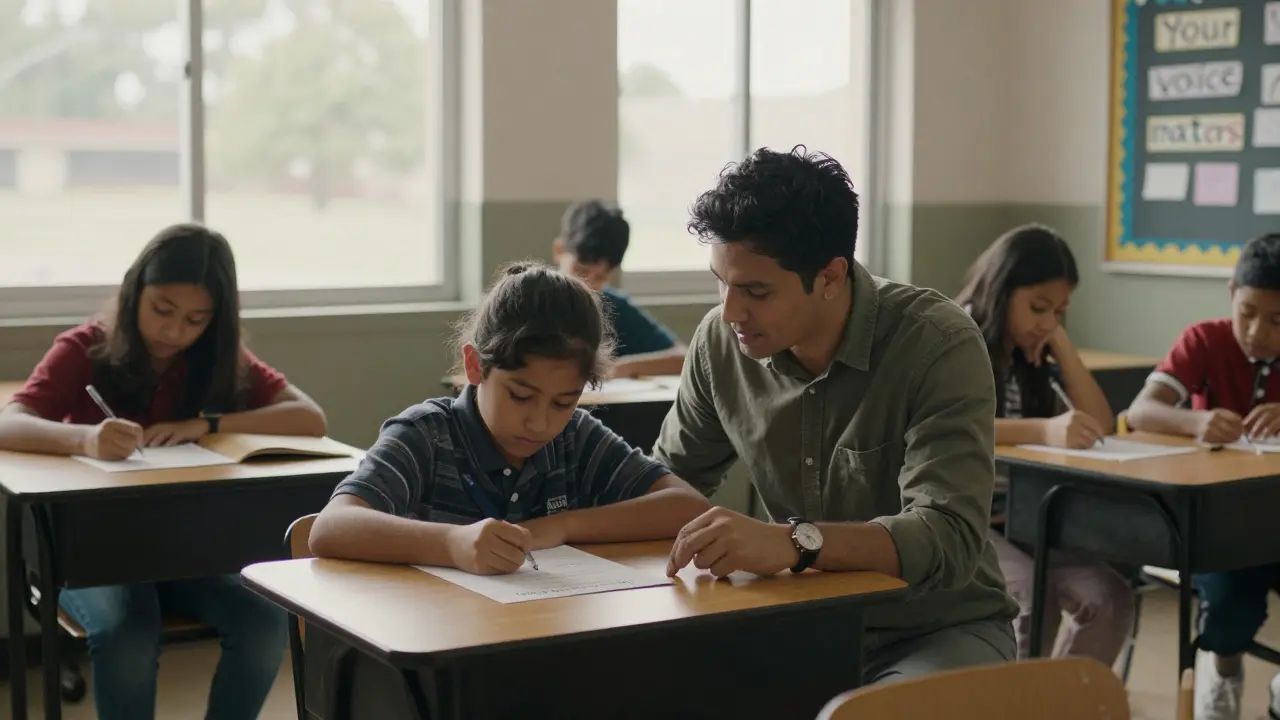
Every morning, parents drop off their kids at high school with a quiet prayer: make sure they come home safe. It’s not paranoia. It’s reality. In 2025, over 1 in 5 U.S. high school students reported feeling unsafe at school, according to the National Center for Education Statistics. That’s not just about shootings or violence. It’s about bullying, anxiety, exclusion, and the slow erosion of trust in the environment meant to prepare them for life.
What Does a Safe High School Really Look Like?
A safe high school isn’t just one with metal detectors or locked doors. Those things have their place, but they don’t fix the root problem. A truly safe school is one where students feel seen, heard, and respected. Where a kid who’s being teased in the hallway knows someone will step in. Where a student struggling with anxiety can walk into the counselor’s office without fear of judgment. Where teachers notice when someone stops laughing in class.
Research from the American Psychological Association shows that schools with strong social-emotional learning programs see a 40% drop in disciplinary incidents. That’s not magic. That’s structure. That’s adults paying attention.
Parents: You’re Not Just Drop-Off Drivers
Too many parents think safety is the school’s job. It’s not. It’s a shared responsibility. Your child spends seven hours a day, five days a week, in that building. You know their friends, their moods, their routines. That’s information no school administrator has.
- Ask specific questions, not just "How was school?" Try: "Who did you sit with at lunch?" or "Did anyone say something that made you feel weird today?"
- Know the school’s reporting system. If there’s a bullying hotline or anonymous tip box, use it. If there isn’t, ask why.
- Volunteer. Not just for bake sales. Show up for lunch duty, club meetings, or hallway supervision. Students behave differently when they know adults are watching - and not just in the office.
- Build relationships with teachers. Don’t wait for a problem to call. Send a quick note: "I appreciate how you’ve helped my child feel included in class. Thank you."
One mom in Flagstaff started a monthly coffee chat with three other parents and the school’s guidance counselor. Within six months, they identified three quiet students who were being isolated - and helped create a peer mentor program. No drama. No headlines. Just connection.
Teachers and Staff: Safety Starts in the Classroom
Teachers aren’t security guards. But they’re often the first line of defense. A student who’s been bullied might not tell a counselor. But they might stare out the window during math class. Or stop turning in homework. Or sit alone at lunch.
- Start every class with a 90-second check-in. "One word for how you’re feeling today?" No pressure. No judgment. Just a pulse check.
- Teach conflict resolution like you teach algebra. Role-play scenarios. Practice calm responses. Make it part of the curriculum.
- Don’t ignore the "invisible" students. The quiet ones. The ones who always sit in the back. They’re often the most at risk.
- Use classroom surveys anonymously. "Do you feel safe in this room?" "Do you know who to talk to if you’re upset?" Then act on the answers.
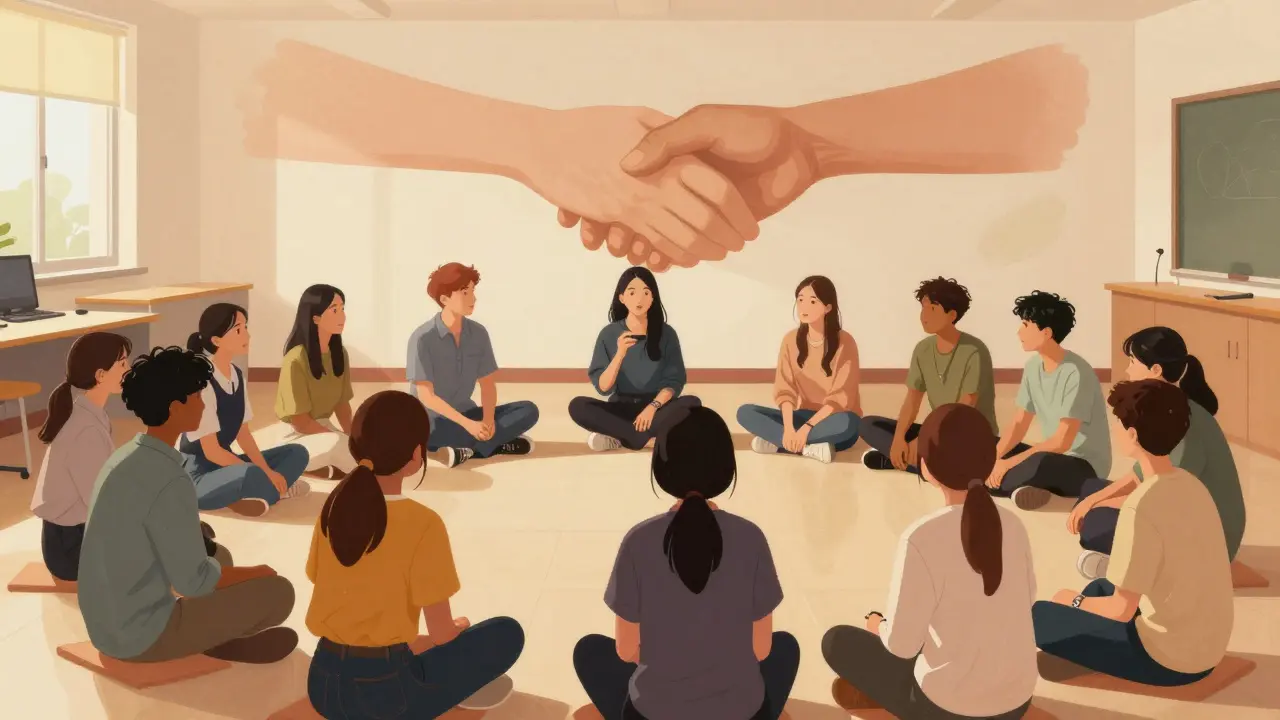
A high school in Ohio replaced one detention period per week with a "Community Circle" - where students and staff sat in a circle and talked about anything. No punishments. No lectures. Just listening. Suspensions dropped by 62% in one semester.
Technology Can Help - But It Can’t Replace Humans
Schools are installing surveillance cameras, panic buttons, and AI tools that scan social media for threats. Some of these tools work. But they also create a culture of suspicion. Students feel watched, not protected.
Technology should be a tool - not a crutch. A panic button is useless if no one responds. An AI alert is meaningless if no one checks it. The best tech supports human connection, not replaces it.
Instead of spending $50,000 on facial recognition software, consider this: hire one more counselor. Train all staff in trauma-informed care. Create a student-led safety committee. These cost less. And they work better.
What About Lockdowns and Active Shooter Drills?
These drills are necessary. But they’re not enough. And they can do real harm. A 2024 study in the Journal of School Health found that students who underwent frequent lockdown drills showed higher levels of anxiety - especially those already struggling with mental health.
Here’s how to make them better:
- Explain the purpose before the drill. "This is like a fire drill - we’re practicing how to stay safe so we’re ready if something happens."
- Don’t simulate gunfire. Don’t use loud noises. Don’t make it scary.
- Include mental health debriefs afterward. Let students talk about how they felt.
- Offer alternatives for students with trauma. They shouldn’t be forced into a situation that triggers panic.
Safety isn’t about fear. It’s about preparedness - and peace of mind.
Building Trust: The Secret Ingredient
The most dangerous thing in any school isn’t a weapon. It’s silence. When students don’t trust adults, they don’t speak up. When adults don’t trust students, they don’t listen.
Trust is built in small moments:
- A teacher remembers a student’s pet’s name.
- A principal shows up at a basketball game.
- A parent sends a thank-you note to the janitor.
- A student is allowed to say "I’m not okay" without being labeled "problematic."
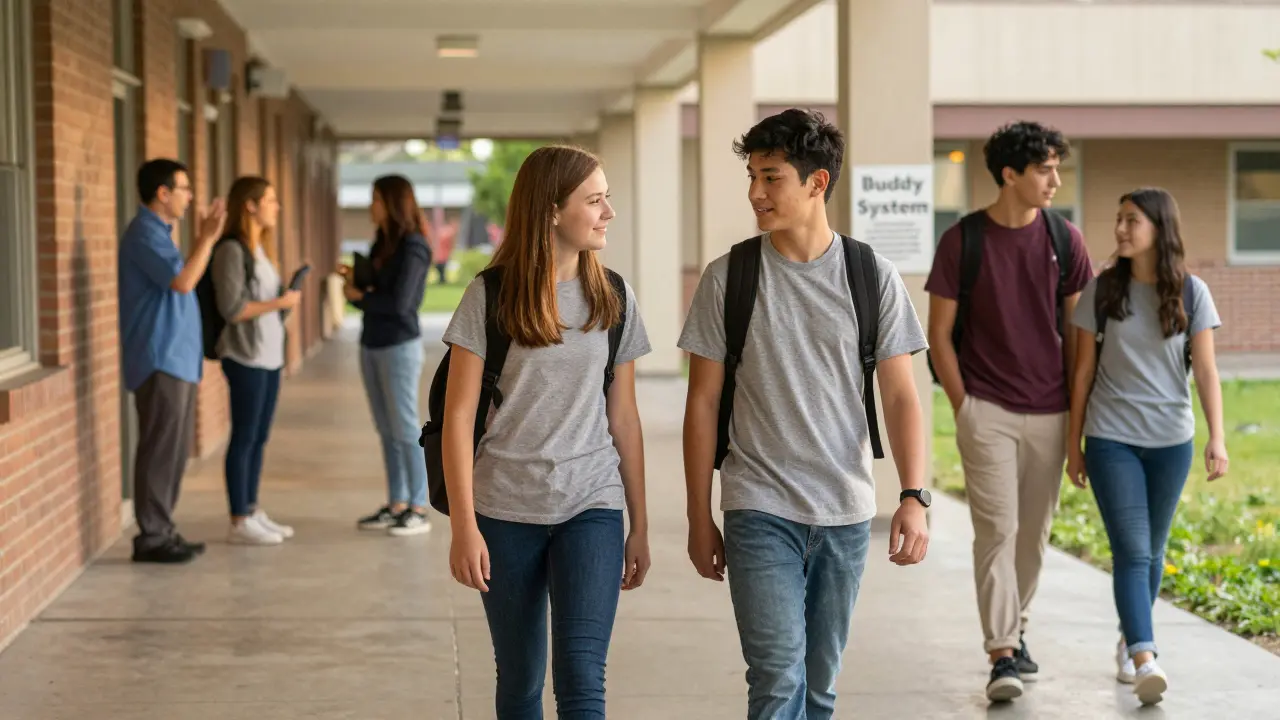
One school in Wisconsin started a "Buddy System" - every senior was paired with a freshman. Not for tutoring. Just to check in. Once a week. No agenda. Just: "How are you really doing?" Within a year, reports of bullying dropped by 58%. Why? Because someone cared enough to ask.
What’s Next? Start Today
You don’t need a grant. You don’t need a new law. You need to show up.
For parents: Talk to your child tonight. Not about grades. Not about chores. Ask: "What’s one thing that made you feel safe today?" And listen.
For educators: Tomorrow, say something different to one student. Not "Good job." Not "Keep it up." Say: "I noticed you spoke up in class today. That took courage. Thank you."
Safe schools aren’t built by policies. They’re built by people - who choose, every day, to see each other.
What are the most common safety issues in high schools today?
The top three issues are bullying (both in-person and online), mental health struggles like anxiety and depression, and feelings of isolation or exclusion. Physical violence is less common than most people think, but the fear of it is widespread. Many students report feeling unsafe because they’re ignored, mocked, or left out - not because someone pulled a weapon.
How can parents help without overstepping?
Parents help best by staying informed and building relationships - not by demanding changes or confronting staff. Ask questions. Attend meetings. Volunteer. Offer support. If you’re worried, say: "I’ve noticed my child seems quieter lately. Is there anything I should know?" That opens the door without creating tension.
Do metal detectors and security guards make schools safer?
They can prevent some incidents, but they also send a message: "This place is dangerous." Studies show schools with heavy security often see higher student stress and lower attendance. The best approach combines minimal, non-intrusive security with strong human connections. A counselor who knows every student by name is more effective than ten cameras.
Should schools monitor students’ social media?
Monitoring social media can uncover real threats - but it also violates trust. Most students don’t post threats openly. And many posts are just venting. Instead of surveillance, schools should teach digital citizenship and create safe channels for students to report concerns anonymously. Trust works better than spying.
What’s the role of mental health support in school safety?
It’s central. Students who feel emotionally supported are less likely to act out, isolate, or harm themselves or others. One school counselor can make a difference for 50 students - if they’re not overwhelmed with paperwork. Schools need more counselors, not more police. Mental health isn’t a side issue - it’s the foundation of safety.
Wilda Mcgee
February 28, 2026 AT 08:32Glenn Celaya
February 28, 2026 AT 10:06Samuel Bennett
March 1, 2026 AT 22:54Jen Becker
March 2, 2026 AT 21:21Chris Atkins
March 4, 2026 AT 01:32Madeline VanHorn
March 5, 2026 AT 18:32Franklin Hooper
March 7, 2026 AT 08:50Rob D
March 8, 2026 AT 23:09Ryan Toporowski
March 10, 2026 AT 03:12