Making the Most of High School: Essential Tips for Students

High school doesn’t last forever, but the habits you build now will stick with you long after graduation. If you’re wondering how to get through these years without burning out, staying ahead, or just feeling like you’re barely keeping up-you’re not alone. The truth is, most students aren’t taught how to actually succeed in high school. They’re just told to study harder, show up, and hope for the best. That’s not enough. Here’s what actually works.
Start with your schedule-not your to-do list
- Grab a planner or open a free calendar app like Google Calendar.
- Block out every class, practice, club meeting, and job shift.
- Then, block out 45-minute study slots for each subject, 4-5 days a week.
- Leave one day completely open for catching up or breathing.
Stop highlighting-start questioning
Highlighting your textbook? That’s not studying. That’s decorating. Real studying means turning facts into questions. Instead of reading, “The Civil War began in 1861,” ask: Why did tensions rise so sharply after 1850? Then write your own answer in the margin. This forces your brain to connect ideas instead of just memorizing dates. Try this: After each chapter, close your book and say out loud: “What were the three most important things here?” If you can’t say them in under 30 seconds, go back. This is called retrieval practice. It’s backed by over 100 studies. It’s the #1 reason some students remember everything and others forget everything after the test.Your friends are your secret study tool
Most students think studying alone is the best way. It’s not. Form a study group with two or three classmates who are serious but not perfectionists. Meet once a week. Each person picks one topic they struggled with and teaches it to the group. Teaching is the fastest way to learn. If you can explain it simply, you understand it. If you can’t, you find the gap. Don’t wait for someone else to start it. Be the one who says, “Hey, let’s meet Thursday after football practice.” You’ll be surprised how many people want to do this but are too shy to ask.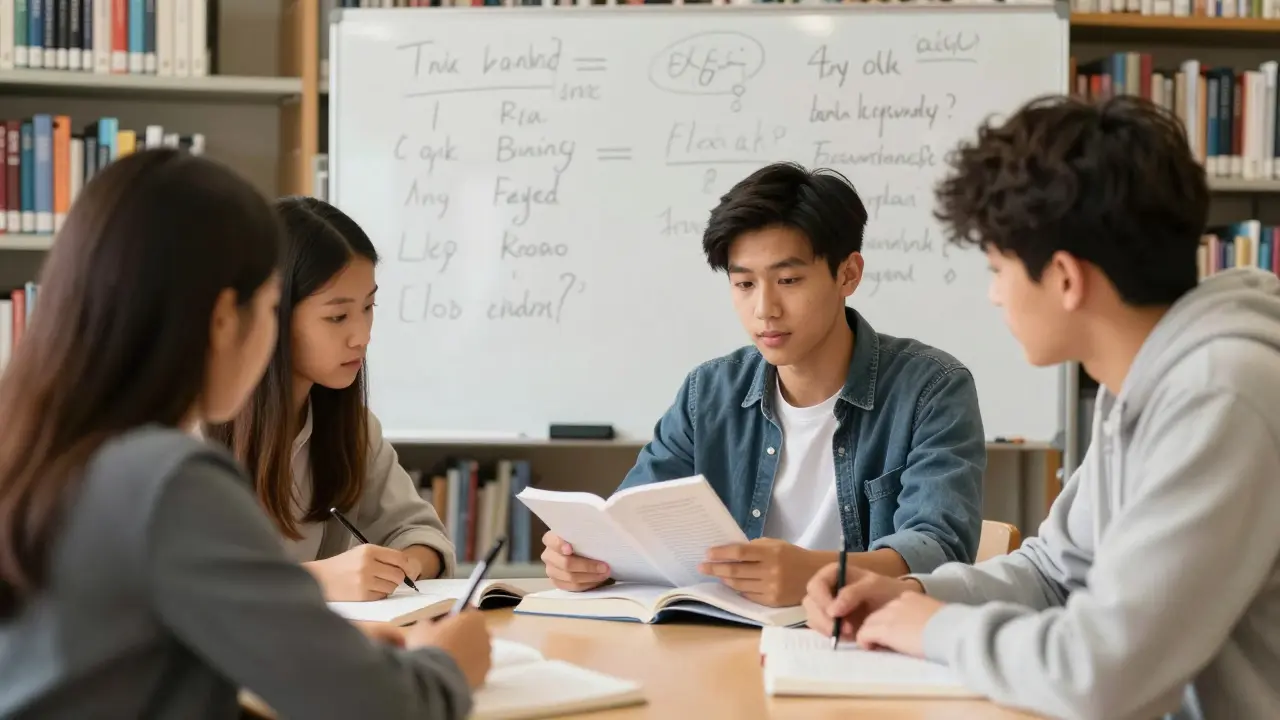
Use your teachers-not just for grades
Teachers aren’t just grading machines. They’re your best source of insider knowledge. Go to office hours. Not because you’re failing. Just to ask: “What’s the one thing most students miss on this unit?” or “What should I focus on if I want to get into a good college?” A 2024 survey of college admissions officers found that 68% of applicants who had strong teacher recommendations were more likely to be accepted-even if their GPA was average. Why? Because those recommendations showed curiosity, effort, and initiative. You don’t need to be the smartest kid in class. You just need to show up and care.Don’t wait for motivation-build momentum
Motivation is a myth. Nobody wakes up excited to do algebra at 7 a.m. The secret? Start small. Do one problem. Read one page. Write one paragraph. That’s it. Once you start, your brain shifts into gear. Momentum beats motivation every time. Try the 2-minute rule: If it takes less than two minutes to start, do it now. Open your notebook. Put on your headphones. Grab your pencil. That’s the whole task. After that, you’re likely to keep going.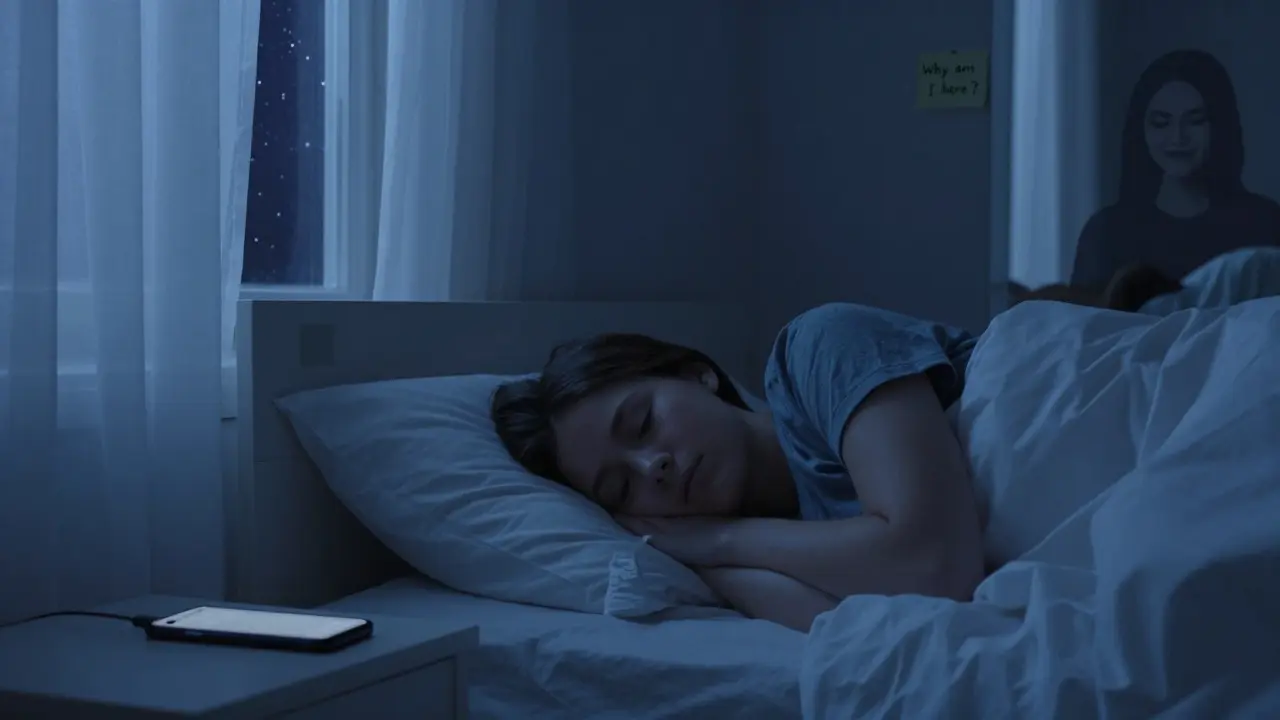
Protect your sleep like it’s a scholarship
You think pulling all-nighters makes you look tough? It’s making you stupid. Sleep isn’t downtime-it’s when your brain organizes what you learned. Teens need 8-10 hours. Most get 6-7. That’s a 25% drop in memory retention. And yes, it affects your grades. Set a phone curfew. Not “I’ll stop at midnight.” Set it for 11 p.m. Use a smart plug or app to turn off Wi-Fi. Charge your phone outside your room. If you’re not scrolling, you’re sleeping. And if you’re sleeping, you’re learning.Find your why
Why are you in high school? Not because your parents say so. Not because it’s expected. What’s your real reason? Maybe it’s to get into a college that lets you study marine biology. Maybe it’s to leave your neighborhood and build something better. Maybe it’s just to prove to yourself that you can stick with something hard. Write it down. Put it on your mirror. Say it out loud when you’re tired. High school isn’t about being perfect. It’s about becoming someone who doesn’t quit when things get hard. That’s the skill that matters more than any test score.One last thing: You’re not behind
You see other kids with perfect grades, perfect extracurriculars, perfect Instagram feeds. You think you’re falling behind. You’re not. High school isn’t a race. It’s a training ground. The goal isn’t to be the fastest. It’s to build resilience, discipline, and self-awareness. Those don’t show up on a transcript. But they show up in your first job interview. In your first apartment. In your first real relationship. Do the work. Not for a grade. Not for a college. For yourself. The version of you that’s waiting on the other side of these four years? She’s already proud of you-for showing up.What’s the most important habit for high school students?
The most important habit is consistency in study time. Scheduling even 45 minutes a day for each subject builds momentum, reduces last-minute cramming, and improves long-term retention. Students who stick to a routine perform better on tests and feel less stressed overall.
Is it too late to start improving my grades in junior year?
Not at all. Colleges look at your entire transcript, but they pay close attention to upward trends. If you went from a C average in sophomore year to a B+ in junior year, that tells them you’re growing. Focus on improving one subject at a time. Ask teachers for feedback. Show up to office hours. Progress matters more than perfection.
How do I balance sports, jobs, and school?
Use time blocking. Map out your weekly schedule: classes, practice, work shifts, meals, sleep. Then insert 30-45 minute study blocks in gaps between commitments. Don’t try to study after a 10-hour day. Study before. Even 20 minutes of focused work counts. Prioritize sleep and recovery-you can’t perform well if you’re running on empty.
Should I take honors or AP classes?
Only if you can handle the workload without sacrificing sleep or mental health. Colleges care more about how you challenge yourself than how many APs you take. If you’re barely keeping up in three APs and failing to sleep, it’s better to take two and earn A’s than to take five and scrape by. Depth beats breadth.
What should I do if I’m failing a class?
Talk to your teacher before the next grading period. Ask: “What can I do to improve?” Most teachers will give you extra credit, extensions, or study resources if you show initiative. Don’t wait until it’s too late. A single F can be fixed. A pattern of failing grades is harder to recover from. Take action early.
Jawaharlal Thota
February 14, 2026 AT 07:30Man, this post hit different. I wish someone had told me this when I was in 10th grade. Scheduling study time? Game-changer. I used to think if I didn't feel like studying, I should wait until I did. Turns out, waiting meant never starting. Once I blocked out 45 minutes every evening for math, even if I just did one problem, something shifted. My grades didn’t skyrocket overnight, but the stress? It dropped. I stopped dreading homework because I knew exactly when it’d get done. And honestly, the biggest win? I started sleeping better. No more 2 a.m. panic sessions. I’m not saying this is easy. But it’s simple. Show up for the 45 minutes. Even on days you’re exhausted. Even when your brain feels like mush. That consistency? That’s the real magic. It builds a rhythm. A quiet confidence. You stop wondering if you’re behind. You just know you’re showing up. And that’s more than most people manage.
Also, the teacher thing? Yeah. I went to my history teacher just to ask what she wished students knew before finals. She gave me a list of 12 common mistakes. I used it. Got an A. No extra credit. Just showing up and caring. You don’t need to be brilliant. You just need to be reliable.
And sleep? Don’t sleep on it. Pun intended. I used to think all-nighters made me look dedicated. Turns out, they made me forget half of what I studied. My brain literally needs 8 hours. Not 6. Not 7. Eight. I set a phone curfew at 10:30. No more scrolling. I charge it in the kitchen. Best decision I ever made. I’m not saying I’m perfect. But I’m finally not running on fumes.
High school isn’t about being the best. It’s about becoming someone who doesn’t quit. And that starts with showing up - even when you don’t feel like it.
Also - yes, teach your friends. I started a tiny study group with two guys from chem. We met once a week. One guy taught me stoichiometry. I taught him periodic trends. We all passed. And we became friends. Who knew learning could feel like hanging out?
You’re not behind. You’re building. And that’s enough.
Lauren Saunders
February 15, 2026 AT 07:42How quaint. Scheduling study time? As if high schoolers are capable of discipline. Most of them can’t even organize their backpacks. And this ‘45-minute block’ nonsense? It’s a middle-class fantasy. What about the kids working 30 hours a week to help their families? Or the ones with no quiet space at home? This reads like a brochure from a private school counselor who’s never met a real student. Also - retrieval practice? That’s just spaced repetition with a buzzword. And ‘teaching your friends’? Sure, if you’re in a magnet program with peers who aren’t equally lost. This whole thing is performative advice for people who already have advantages. Stop pretending structure alone fixes systemic inequity. Or better yet - stop writing advice like you’re some guru. You’re not. You’re just another adult who never had to struggle.
sonny dirgantara
February 16, 2026 AT 13:14lol this is so true i didnt know studying could be this simple. i just started blocking out 30 mins a day for math and its already helping. i used to wait til like 11pm to start and then panic. now i do it after dinner. no stress. also i tried the 2 min rule and opened my notebook and then i just kept going. weird. also my teacher gave me extra credit just cause i asked a question in office hours. i thought theyd be mad. turns out theyre just happy someone cares. also sleep. i started charging my phone outside. i sleep 8 hours now. i feel like a new person. also my grades went up. not by much. but enough. thanks for this.
Andrew Nashaat
February 18, 2026 AT 00:04Oh, here we go. Another ‘motivation is a myth’ lecture. Let me guess - you also think ‘just do it’ solves depression? You’re missing the point. The problem isn’t that students don’t schedule. The problem is that schools are broken. 7 a.m. start times? 800-page textbooks? Standardized testing as a measure of worth? You’re telling kids to ‘block out 45 minutes’ while the system forces them into 8-hour days with zero mental health support. And ‘teaching friends’? Cute. What if your friends are just as lost as you? What if you’re in a school where nobody cares? What if your ‘teacher’ is overworked and doesn’t even know your name? You’re not offering solutions - you’re offering band-aids on a hemorrhage. And don’t even get me started on ‘protect your sleep like it’s a scholarship’ - as if sleep is a choice and not a luxury denied by poverty, housing instability, or family trauma. This isn’t advice. It’s victim-blaming dressed up as empowerment. Stop romanticizing hustle culture. Real change doesn’t come from planners. It comes from policy. And you? You’re not helping. You’re distracting.
Gina Grub
February 18, 2026 AT 09:37Consistency? Please. Everyone’s obsessed with ‘routine’ like it’s some sacred ritual. As if structure magically erases anxiety. I’ve seen too many kids burn out trying to ‘stick to the schedule’ while their parents scream about college apps. And ‘retrieval practice’? That’s just another way to say ‘memorize faster.’ What about the kids who think differently? The ones who learn by doing, not by reciting? You’re reducing education to a productivity hack. And ‘teach your friends’? That’s not collaboration - it’s peer-to-peer exploitation. Who’s grading the teacher? Who’s making sure the group doesn’t become a dumping ground for the weakest student? And ‘talk to your teacher’? Sure. If your teacher isn’t emotionally exhausted. If they’re not teaching five classes with 40 kids each. If they haven’t been told not to ‘favor’ students. This whole post reads like a TED Talk written by someone who’s never set foot in a public school. You’re not offering tools. You’re offering a fantasy. And fantasies don’t feed kids who are starving for dignity.
Nathan Jimerson
February 19, 2026 AT 08:20This is exactly what I needed to hear. I’ve been feeling lost for months, like no matter how hard I try, I’m not doing enough. But the part about momentum? That stuck with me. I started with just opening my notebook for 2 minutes after dinner. No pressure. Just opening it. And then, one day, I wrote one paragraph. Then two. Now I’m actually getting through my assignments without panic. I didn’t even realize how much I’d been waiting for motivation - like it was some magical force. But it’s not. It’s just showing up. And now I’m sleeping better. I’m not saying I’m perfect. But I’m trying. And that’s new. Thank you. I needed this.
Sandy Pan
February 20, 2026 AT 23:38There’s something profoundly human about this - not the tactics, but the underlying philosophy. We’ve turned education into a performance metric, and in doing so, we’ve erased the soul of learning. The real gift here isn’t the 45-minute block or the retrieval practice. It’s the quiet insistence that you are not a grade. That you are not a GPA. That you are not your SAT score. You are a person learning how to become. And that process - messy, slow, inconsistent - is sacred. The system wants efficiency. But growth isn’t efficient. It’s irregular. It’s quiet. It happens in the spaces between the scheduled blocks. In the silence after the alarm goes off. In the moment you choose to open the book even though you’re tired. That’s not productivity. That’s courage. And courage doesn’t show up on transcripts. But it shows up in who you become. And that’s the only thing that lasts.
Eric Etienne
February 21, 2026 AT 16:16Ugh. This is so basic. Like, duh. Everyone knows you should sleep and schedule. Why is this even an article? Also, ‘teach your friends’? That’s what people do in college. Not high school. Most kids here are too busy getting into drama or TikTok. And ‘talk to your teacher’? Yeah, right. My chem teacher doesn’t even know I exist. I’m just a number. This whole thing feels like a middle-class fantasy. Like, congrats, you got your planner. Now go cry about it. Honestly? Just chill. High school’s not that important. College doesn’t care. Jobs don’t care. You’ll figure it out. Stop overthinking. Just chill.
Dylan Rodriquez
February 22, 2026 AT 01:27I want to say something gentle, but I also want to be real. This advice? It’s good. But it’s not enough. Because not everyone has a quiet room. Not everyone has a parent who checks their planner. Not everyone has a teacher who has time for office hours. Some of us are caring for siblings. Some of us are working nights. Some of us are scared to ask for help because we’ve been told we’re ‘too much’ or ‘not enough.’ So yes - schedule your time. Yes - talk to your teacher. Yes - sleep. But let’s also demand change. Let’s demand schools start at 9 a.m. Let’s demand counselors have manageable caseloads. Let’s demand that being a student doesn’t mean being broken. This advice helps. But policy heals. And we need both. To the kid reading this who’s exhausted, scared, or alone - you’re not failing. You’re surviving. And that’s already brave.
Amanda Ablan
February 22, 2026 AT 05:24Thank you for writing this. I’m a junior and I’ve been struggling so hard. I didn’t realize I was trying to ‘be perfect’ instead of just ‘be consistent.’ I started using the 2-minute rule last week - just opened my notebook. That’s it. And now I’m actually doing homework before midnight. I didn’t think I could change that fast. Also, I asked my teacher one question in office hours. She gave me a list of resources. I didn’t even ask for them. She just offered. I cried. Not because I was sad. Because someone saw me. That’s what this post is really about - not the tips. But the quiet dignity in showing up. I’m not fixed. But I’m trying. And that’s enough.
Meredith Howard
February 22, 2026 AT 20:07The structural integrity of this advice is commendable. It adheres to established pedagogical frameworks concerning cognitive load theory and metacognitive strategy development. The emphasis on temporal allocation of study sessions aligns with the Zeigarnik effect and the benefits of distributed practice. However, one must interrogate the implicit assumptions embedded within the narrative - namely, that all learners possess the requisite environmental and socioeconomic capital to enact these strategies. The absence of acknowledgment regarding systemic inequities in educational access renders this framework, while theoretically sound, practically exclusionary. A more robust model would integrate institutional advocacy alongside individual behavioral modification. Without structural support, personal discipline becomes a burden rather than a tool.
Yashwanth Gouravajjula
February 22, 2026 AT 20:53India here. This is real. I used to study at 2 a.m. because I had no quiet time. Now I wake up at 5:30. 45 minutes before school. No phone. Just me and my book. My grades went up. My parents stopped yelling. I sleep better. Simple. But hard. You don’t need a planner. Just start. One page. One day. That’s all.