Should Backpack Straps Be Tight or Loose? The Right Way to Wear a Backpack for High School
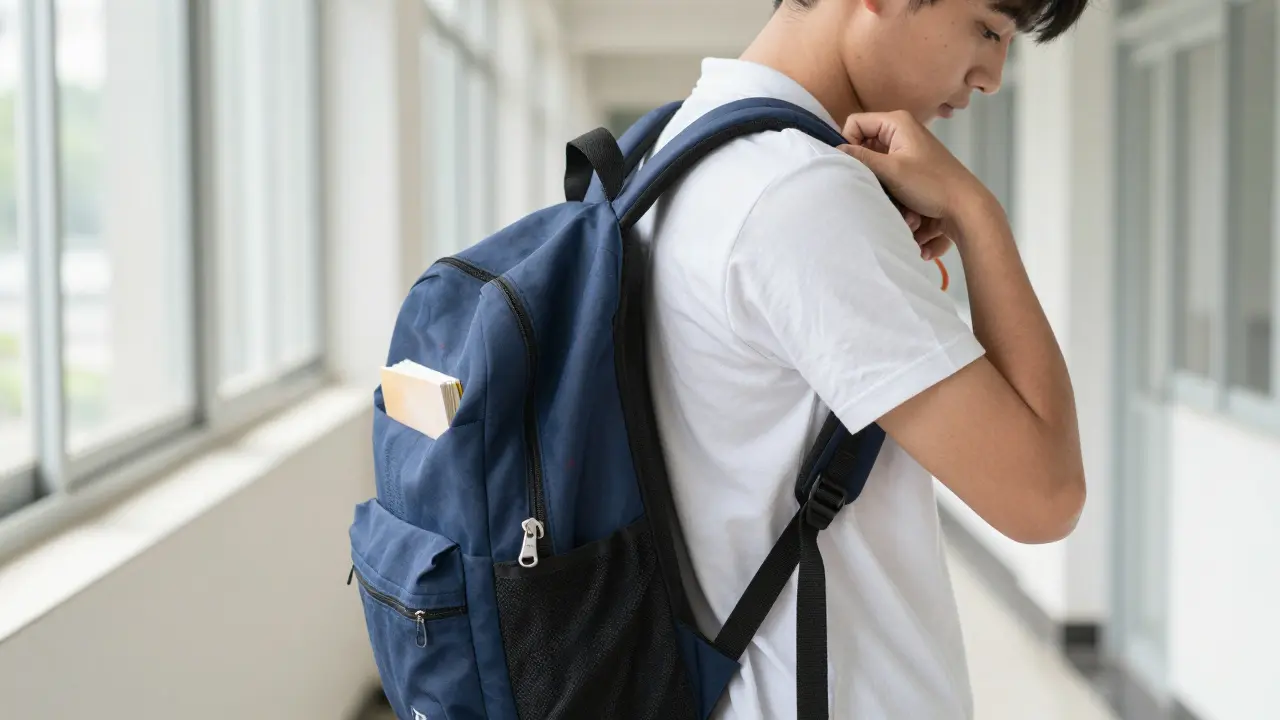
Every morning, thousands of high school students throw on their backpacks and head out the door-loaded with books, laptops, binders, and lunch. But how many of them actually think about how the straps are adjusted? If your shoulders ache by third period, or you’re leaning forward like you’re fighting a strong wind, your straps are probably too loose-or too tight. The right fit isn’t about fashion. It’s about physics, posture, and avoiding pain that lasts long after graduation.
Why Backpack Fit Matters More Than You Think
A heavy backpack isn’t just an inconvenience. It’s a strain on your body. The American Chiropractic Association says kids who carry backpacks over 10-15% of their body weight are at higher risk for back and shoulder pain. For a 120-pound student, that’s just 12 to 18 pounds. Most high schoolers carry way more.
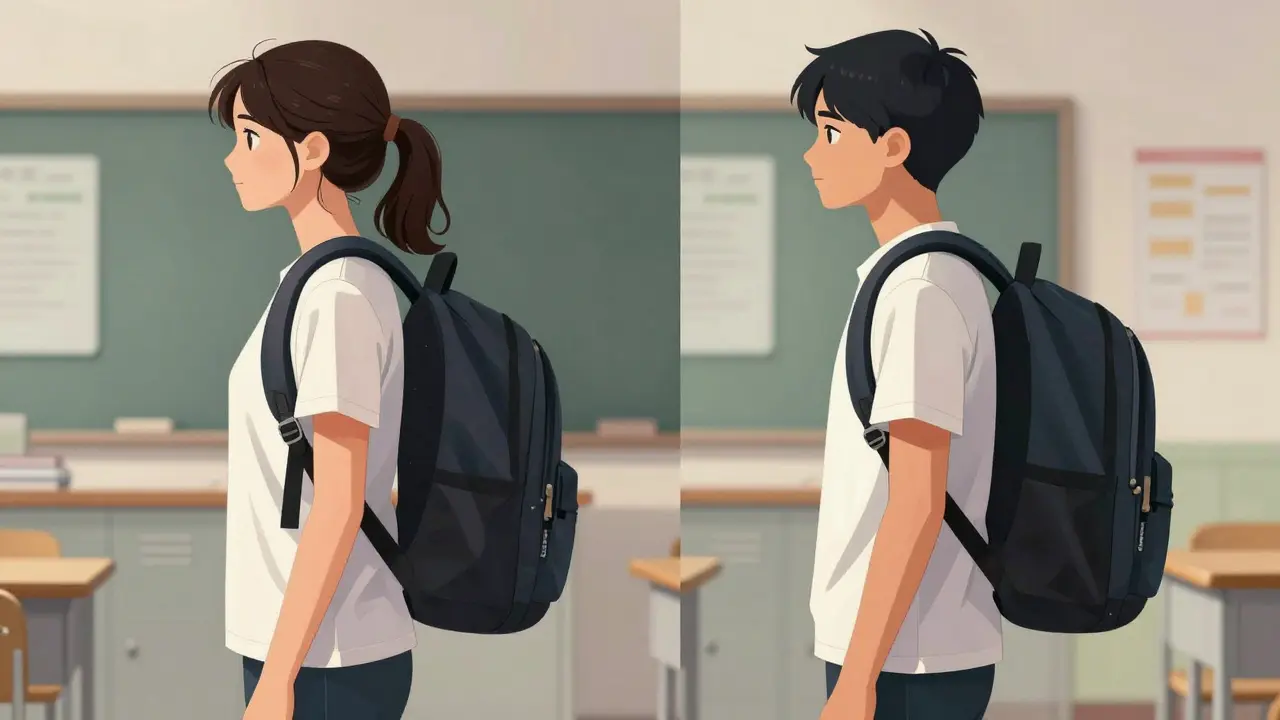
But weight isn’t the only problem. How that weight is distributed matters just as much. Loose straps let the backpack hang low, pulling your shoulders backward and forcing your spine into a C-curve. Tight straps? They dig into your shoulders, cut off circulation, and make you hunch forward to compensate. Neither is right.
The goal isn’t to make the backpack feel light. It’s to make it feel stable.
The Goldilocks Zone: Just Right Tightness
Here’s the simple rule: your backpack straps should be tight enough to keep the pack snug against your back, but not so tight they leave marks or make breathing hard.
Start by adjusting the shoulder straps so the bottom of the backpack sits at the curve of your lower back-not hanging below your butt, not resting on your shoulders. If the pack bounces as you walk, it’s too loose. If you feel pressure on your collarbones or neck, it’s too tight.
Try this test: Put on your fully loaded backpack. Lift your arms straight out to the sides. If the backpack stays in place without you holding it, the straps are tight enough. If it slides down or shifts, loosen the load and retighten.
Don’t forget the waist belt-if your backpack has one. It’s not just for hikers. Fastening it transfers up to 30% of the weight from your shoulders to your hips. That’s huge. If your pack doesn’t have one, consider upgrading. Many modern high school backpacks now come with padded hip belts designed for daily use, not just outdoor trips.
What Happens When Straps Are Too Loose
Loose straps might feel comfortable at first. But over time, they cause real damage.
- Shoulder strain: The pack hangs down, forcing your trapezius muscles to work overtime to hold it up. This leads to knots, headaches, and even tingling in your arms.
- Poor posture: Your body leans forward to counterbalance the weight pulling you backward. That slouch becomes a habit. Studies show teens who carry loose backpacks are 40% more likely to develop chronic forward head posture by age 18.
- Increased fatigue: Every step makes the pack swing. Your core and back muscles have to stabilize it constantly. That’s energy you’re wasting just walking to class.
One 2024 study of 1,200 high school students found that those with loose straps reported 2.5 times more back pain than those with properly adjusted packs-even when carrying similar weights.
What Happens When Straps Are Too Tight
Some kids think pulling the straps as tight as possible will help. It doesn’t. It just makes things worse.
- Nerve compression: Tight straps press on the brachial plexus-a bundle of nerves running from your neck to your arm. That’s why you get numb fingers or a “pins and needles” feeling after school.
- Restricted breathing: If the straps squeeze your upper chest, your lungs can’t expand fully. You might not notice it, but your oxygen intake drops during long days.
- Shoulder dents: If you see red marks or indentations after taking off your backpack, you’re over-tightening. That’s not a badge of honor. It’s a warning sign.
One student, 16-year-old Maya from Ohio, told her school nurse she couldn’t raise her right arm without pain. Turns out, her backpack straps were so tight they’d compressed the nerve for months. She switched to a properly fitted pack and recovered in three weeks.
How to Adjust Your Backpack the Right Way
Here’s a step-by-step guide that works for any backpack:
- Empty your pack. Put only what you need for the day inside.
- Put the backpack on. Don’t just throw it over one shoulder-use both.
- Adjust the shoulder straps until the bottom of the pack sits at your lower back, just above your hips.
- Fasten the chest strap (if it has one). This keeps the straps from sliding off your shoulders.
- Clip the waist belt. Tighten it until it’s snug but not digging in. You should be able to fit two fingers underneath.
- Test it: Walk around, bend over, lift your arms. The pack shouldn’t move more than an inch.
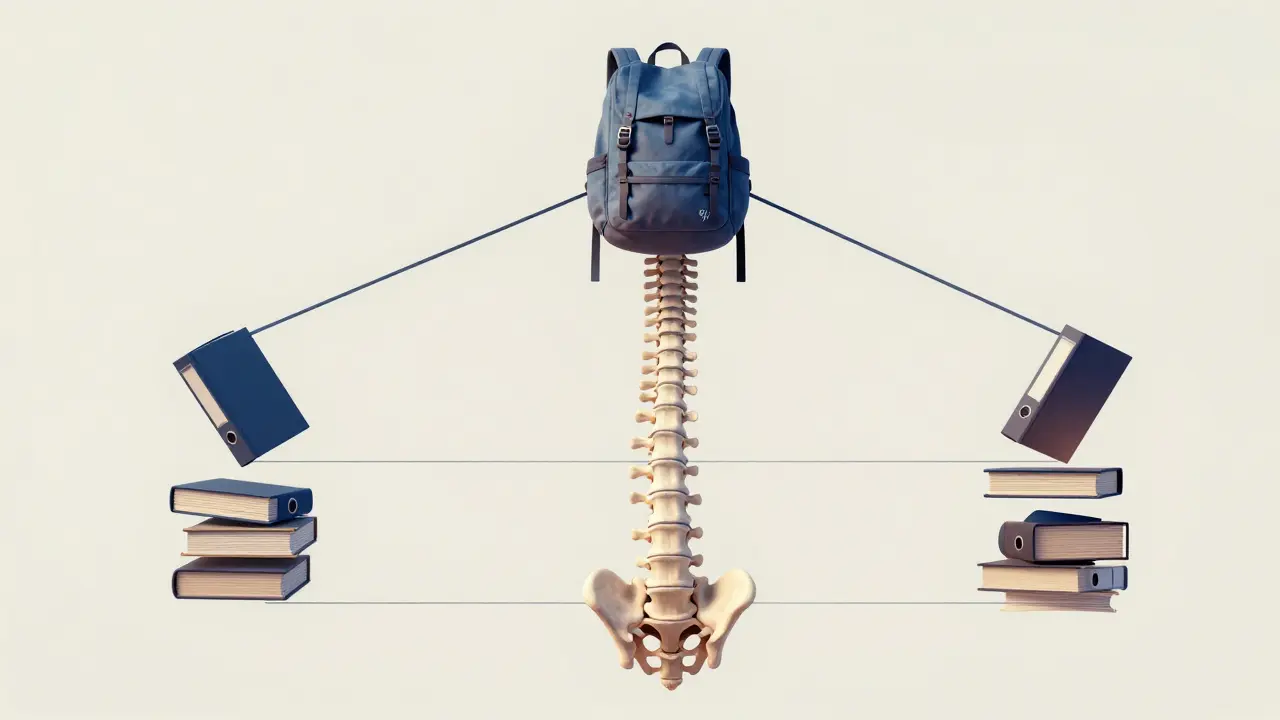
Pro tip: Pack the heaviest items closest to your back. That keeps the center of gravity aligned with your spine. A heavy textbook near your shoulders? That’s like holding a dumbbell out in front of you-it throws you off balance.
What to Look for in a Backpack for High School
Not all backpacks are made equal. If you’re buying one, look for these features:
- Padded shoulder straps: At least 2 inches wide. Thin straps dig in.
- Waist and chest straps: Non-negotiable. They’re not optional extras-they’re safety features.
- Back padding: A ventilated, contoured back panel reduces sweating and improves weight distribution.
- Multiple compartments: Helps you organize weight evenly. Don’t shove everything into one big pocket.
- Lightweight material: A pack that weighs 2 pounds empty is better than one that weighs 4.
Brands like JanSport, Herschel, and Deuter make models designed specifically for students. Look for ones labeled “ergonomic” or “spinal support.” They’re not expensive-often under $60.
Real-Life Fixes for Real Problems
Maybe you already have a backpack you love. But the straps feel off. Here’s how to fix common issues without buying new gear:
- Straps slipping off shoulders? Add a small loop of elastic or a silicone grip (sold as backpack strap keepers) to the ends. They cost under $5.
- Backpack too heavy? Use lockers more. Don’t carry everything daily. Ask teachers if you can leave textbooks in class.
- One shoulder always hurts? Switch which shoulder you use. Alternate every day. Don’t always carry it on the same side.
- Can’t find a pack with a waist belt? Buy a separate hip belt attachment. They’re sold online for under $15 and clip onto most standard backpacks.
Final Thought: It’s Not About Strength-It’s About Smart Design
Some kids think carrying a heavy pack is a rite of passage. It’s not. It’s a preventable health issue. You don’t need to be strong to carry your books-you need to carry them right.
Adjusting your straps isn’t a chore. It’s a daily habit, like brushing your teeth. Do it right, and you’ll feel better, move better, and avoid pain that could follow you into college-and beyond.
Should backpack straps be tight or loose?
Backpack straps should be tight enough to keep the pack snug against your back-no bouncing or sliding-but not so tight they dig into your shoulders or restrict breathing. The ideal fit lets you lift your arms without the backpack moving more than an inch.
Why do my shoulders hurt after wearing my backpack?
Shoulder pain usually comes from either straps that are too loose (causing your muscles to overwork) or too tight (compressing nerves). It can also happen if the pack is too heavy or if you’re carrying it on one shoulder. Adjust the fit and lighten the load.
Is it better to wear a backpack with one strap or two?
Always use both straps. Wearing a backpack on one shoulder forces your spine to bend sideways, which can lead to muscle imbalances and long-term posture problems. Even if it feels easier, it’s not safer.
Do waist belts on backpacks really help?
Yes. A waist belt transfers 20-30% of the backpack’s weight from your shoulders to your hips, which are built to carry load. Even if you’re not hiking, this feature reduces strain and improves balance during daily movement.
How heavy should my high school backpack be?
Your backpack should weigh no more than 10-15% of your body weight. For a 130-pound student, that’s 13 to 19.5 pounds. Anything heavier increases injury risk. Use lockers and plan your load daily.
What if my backpack doesn’t have padding?
Unpadded straps and backs cause discomfort and pressure points. If you can’t replace the pack, add foam padding to the straps (available at drugstores) or use a thin towel between your back and the pack. It’s not ideal, but it helps until you can upgrade.
pk Pk
January 31, 2026 AT 12:43Yo, this is actually life-changing info. I used to think my backpack was just heavy, but turns out I had the straps so loose it was basically a pendulum on my back. Started adjusting them like this last week and my shoulders don’t scream anymore. Also got a waist belt for $12 online - best money I’ve spent all year.
sumraa hussain
February 1, 2026 AT 04:20bro i’ve been carrying 20lbs since 7th grade and never thought about this… i just accepted the fact that my neck hurts and my arms go numb… this post just hit me like a textbook to the face
Raji viji
February 1, 2026 AT 20:20LMAO you people are acting like this is some revolutionary discovery. My grandma in 1987 had a backpack with a waist strap and padded shoulders. You’re all out here treating this like a TED Talk on quantum physics. Also, if you’re carrying more than 15% of your body weight, you’re not a student-you’re a walking storage unit. Stop buying 17 notebooks and start using a damn locker.
Rajashree Iyer
February 3, 2026 AT 05:49Think about it-our backpacks are physical manifestations of the weight we carry emotionally too. The straps, tight or loose, mirror how we hold our burdens. Are we letting them dangle, dragging us into depression? Or are we cinching them too tight, suffocating our spirit? Maybe the real question isn’t how to adjust the straps… but how to lighten the load inside.
Parth Haz
February 4, 2026 AT 18:59Thank you for this well-researched and practical guide. I’ve shared it with my son’s school wellness committee. Many students still wear backpacks improperly, and awareness is the first step toward change. The science is clear: ergonomics matter. Schools should include this in orientation materials.
Vishal Bharadwaj
February 5, 2026 AT 14:13wait… you’re telling me the ‘backpack pain’ thing isn’t just a myth made up by overprotective parents? i thought it was just ‘kids these days’ being soft. also, who even uses a waist belt in high school? that’s for hikers and dads who think they’re on the appalachian trail
anoushka singh
February 6, 2026 AT 06:42okay but why are you assuming everyone has lockers? my school doesn’t even let us use them after 1st period. also my backpack is like 30lbs because i have 5 AP classes and no time to clean it out. so… what am i supposed to do? drop out?
pk Pk
February 6, 2026 AT 21:34you don’t have to drop out-you just have to be strategic. Ask teachers if you can leave textbooks in class. Use a digital planner. And if your school won’t give you a locker, get a lightweight rolling backpack for the heavy stuff. I did it. Still walk, still survive. Just smarter.