Should You Study 12 Hours a Day? The Real Impact on High School Students
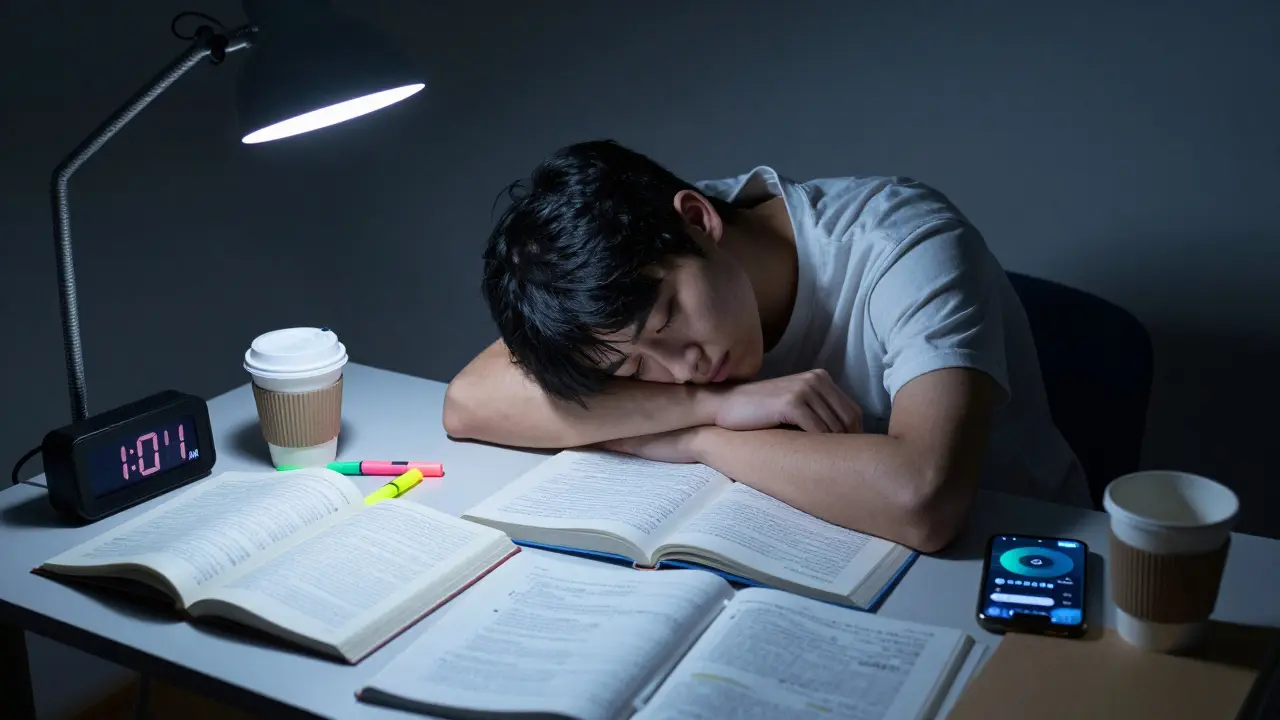
Studying 12 hours a day sounds like the ultimate hustle. You see it on social media-students posting midnight study sessions with coffee cups and highlighters, claiming they’re crushing their grades. But here’s the truth: studying 12 hours a day doesn’t make you smarter. It makes you exhausted. And exhaustion doesn’t lead to success-it leads to burnout.
What happens when you study 12 hours a day?
Let’s say you’re in 11th grade, juggling AP classes, extracurriculars, and a part-time job. You decide to study 12 hours a day to get into a top college. You wake up at 5 a.m., study until school starts, cram during lunch, stay late after school, and then study again until 1 a.m. That’s 12 hours. Sounds disciplined, right?
Here’s what actually happens. Your brain doesn’t work like a machine. After 90 minutes of focused work, your attention starts to drop. By hour five, you’re rereading the same paragraph three times. By hour eight, you’re forgetting what you just read. By hour 10, your eyes hurt, your head throbs, and you’re scrolling through TikTok just to feel something.
Studies from Stanford and the University of California show that students who study more than 10 hours a day see diminishing returns. Their test scores plateau-or even drop-because their brains stop absorbing new information. Instead, they start storing stress. Cortisol levels rise. Sleep quality plummets. Anxiety spikes.
Why 12 hours is a myth
The idea that more hours = better results comes from a misunderstanding of how learning works. It’s not about time spent. It’s about how well you use that time.
Think of it like cooking. You can spend six hours stirring a pot of soup, but if you never tasted it, added salt, or checked the heat, you’ll end up with bland, overcooked mush. Studying for 12 hours without breaks, review, or active recall is the same thing.
Research from the Learning Scientists shows that students who study in focused 25- to 50-minute blocks, with 5- to 15-minute breaks, retain 70% more information than those who cram for hours straight. This isn’t opinion-it’s cognitive science. Your brain needs downtime to consolidate memories. Sleep is when your brain files away what you learned. Skip sleep, and you’re erasing your own progress.
What top students actually do
The students who get into Ivy League schools and ace AP exams don’t study 12 hours a day. They study smarter.
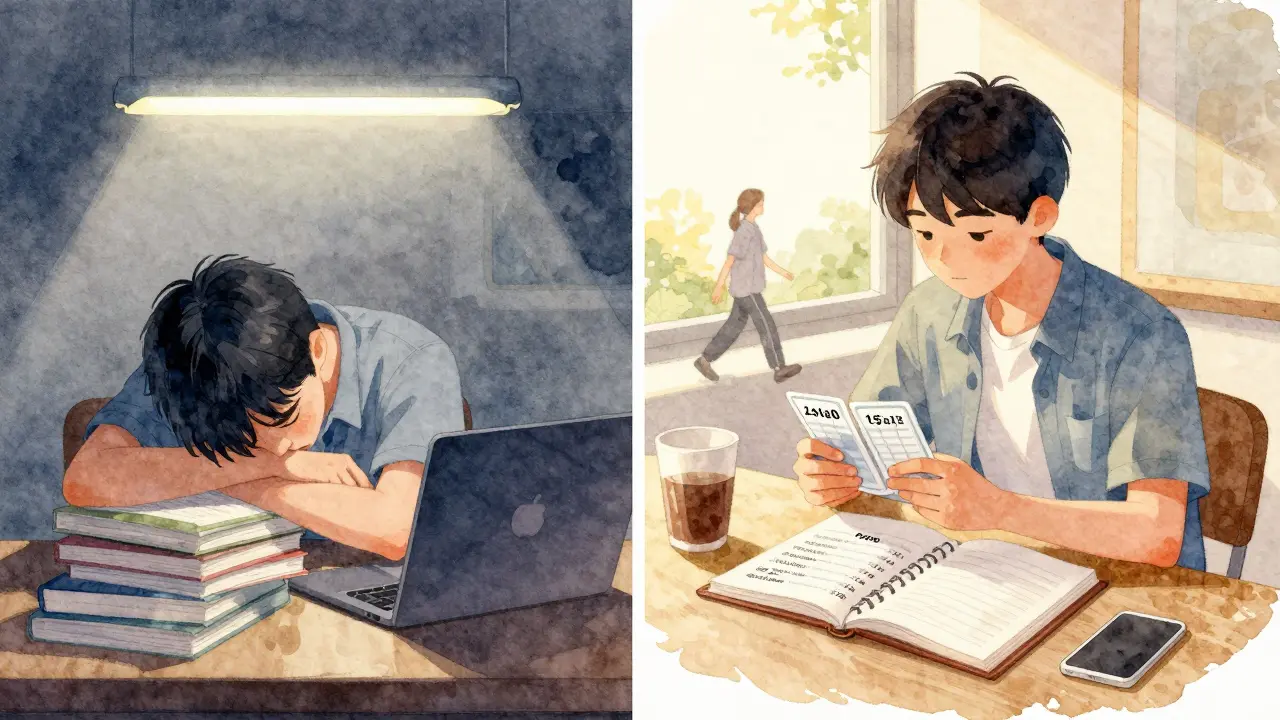
- They plan their week in advance-blocking out specific times for each subject.
- They use active recall: testing themselves instead of rereading notes.
- They space out their review-studying a little every day instead of all at once.
- They sleep 7-8 hours. No exceptions.
- They take walks, eat real meals, and talk to friends.
One student from Lincoln High School in Ohio studied 5-6 hours a day during senior year. She got a 1580 on the SAT, four 5s on her AP exams, and got into Northwestern. When asked how she did it, she said: “I didn’t study more. I studied better.”
The hidden cost of long study hours
Studying 12 hours a day doesn’t just hurt your grades-it hurts your life.
- You miss family dinners. You stop calling your friends. You stop doing the things that make you, you.
- You start to hate studying. What was once a tool for growth becomes a source of dread.
- You risk developing chronic stress, insomnia, or even depression. A 2023 study in the Journal of Adolescent Health found that high school students who studied more than 10 hours daily were 3.5 times more likely to report severe anxiety symptoms.
- You burn out before college even starts. And when you get there, you won’t have the energy to keep going.
Colleges don’t want students who are broken. They want students who are curious, resilient, and well-rounded. If you’re studying 12 hours a day just to check a box, you’re not building a future-you’re building a cage.
What should you do instead?
Here’s a simple, proven plan:
- Set a daily limit: 4-6 hours of focused study max. That’s enough if you’re using the right methods.
- Break it up: Two 90-minute blocks in the morning, one 60-minute block in the evening. No studying after 10 p.m.
- Use active recall: Flashcards, practice tests, teaching the material out loud.
- Review weekly: Every Sunday, go over what you learned. This cuts down on last-minute cramming.
- Protect your sleep: 7-8 hours non-negotiable. Your brain cleans house while you sleep.
- Move your body: Even 20 minutes of walking or stretching boosts memory and focus.
And here’s the secret: Consistency beats intensity. Studying 5 hours a day, every day, for 6 months, will beat cramming 12 hours a day for one week. Your brain remembers patterns. It doesn’t remember panic.

When is more time okay?
There are exceptions. If you’re recovering from a failed test, or preparing for a final exam in two days, it’s okay to push harder for a short burst. But that’s not a lifestyle-it’s an emergency plan.
And even then, don’t skip sleep. Pull an all-nighter once, and you’ll lose more than you gain. Better to study 8 hours with 7 hours of sleep than 12 hours with 4.
Final thought: You’re not a machine
You’re a human being. Your brain needs rest. Your body needs food. Your soul needs connection. Studying isn’t a race to see who can suffer the most. It’s a way to understand the world-and yourself.
If you’re studying 12 hours a day because you’re scared you’re not good enough, stop. You’re already enough. What you need isn’t more hours. It’s better strategies, better rest, and better self-trust.
High school is a chapter, not the whole book. The goal isn’t to burn out trying to be perfect. It’s to grow strong enough to keep learning long after the exams are over.
Is studying 12 hours a day effective for high school students?
No, studying 12 hours a day is not effective. Research shows that after 8-10 hours, retention drops sharply due to mental fatigue. Students who study longer often perform worse on tests because their brains can’t process new information. Quality of study matters more than quantity.
How many hours should a high school student study each day?
Most high school students should aim for 4-6 hours of focused study per day, broken into 60-90 minute blocks with breaks. This allows for deep learning without burnout. Students taking advanced courses may need up to 7 hours, but only if they’re using active learning techniques and getting enough sleep.
Does studying longer improve grades?
Not necessarily. Studies show that students who study smart-using spaced repetition, self-testing, and active recall-outperform those who study longer but passively. One 2022 study found that students who studied 5 hours a day with effective methods scored higher than those who studied 10 hours with poor techniques.
What are the signs of study burnout?
Signs include constant fatigue, trouble concentrating, irritability, loss of interest in school, trouble sleeping, headaches, and feeling emotionally drained. If you’re studying 12 hours a day and still feel like you’re falling behind, you’re likely burned out-not failing.
Can I study 12 hours on weekends only?
Studying 12 hours on weekends isn’t better-it’s just delayed burnout. Cramming large blocks of study leads to shallow learning. It’s better to spread 6-8 hours over the weekend in smaller sessions with breaks. Consistent, daily review is far more effective than weekend marathons.
What’s the best study method for high school students?
The best method combines active recall, spaced repetition, and self-testing. Use flashcards, practice problems, and teach concepts out loud. Avoid rereading notes or highlighting text-these are passive and ineffective. Tools like Anki or Quizlet can help automate spaced review.
How important is sleep for studying?
Sleep is critical. During deep sleep, your brain moves short-term memories into long-term storage. Students who sleep 7-8 hours remember 40% more than those who sleep less than 6. Skipping sleep to study is like deleting your hard drive to free up space.
Should I stop studying if I’m tired?
Yes. If you’re tired, your brain isn’t learning-it’s just spinning wheels. Take a 20-minute walk, drink water, or nap for 15 minutes. Return to studying when you’re alert. Productive 4 hours beat exhausted 12.
kelvin kind
December 22, 2025 AT 03:08Been there. Studied 12 hours a day senior year. Got a 1520 SAT and zero motivation to do anything after. Sleep > cramming.
Peter Reynolds
December 22, 2025 AT 06:15I used to think more hours meant more discipline until I realized I was just staring at the same page for three hours and remembering nothing. Now I do 5 hours max, take walks, and actually retain stuff. My grades went up and my anxiety went down. No magic, just science.
Ian Cassidy
December 22, 2025 AT 18:59the cognitive load theory is real bro. your prefrontal cortex isn't a hard drive you can just overwrite. spacing + retrieval practice = neural consolidation. cramming is just noise with highlighters.
Kenny Stockman
December 24, 2025 AT 12:56you're not a machine. you're a human with a brain that needs to rest like your muscles do after a workout. if you're exhausted, you're not grinding-you're spinning your wheels. take the nap. go outside. come back fresh. you'll thank yourself later.
Zach Beggs
December 25, 2025 AT 00:06my cousin studied 8 hours a day with breaks, slept 8 hours, and got into Stanford. her secret? She tested herself every night. Not rereading. Not highlighting. Actually recalling. It made all the difference.
Fred Edwords
December 25, 2025 AT 15:03It’s important to note, however, that the notion of ‘12-hour study days’ is not merely inefficient-it is neurologically counterproductive, as the hippocampus, under chronic cortisol elevation, begins to atrophy, impairing long-term memory encoding. Moreover, the absence of deliberate rest intervals disrupts synaptic pruning, which is essential for cognitive refinement. Therefore, the data is unequivocal: quality trumps quantity, and rest is not a luxury-it is a biological imperative.
Sarah McWhirter
December 26, 2025 AT 05:09you know who benefits from you studying 12 hours a day? The college industrial complex. They want you exhausted so you’ll keep paying for test prep, tutoring, and ‘success coaches’-but the truth? They don’t care if you burn out. They just want your tuition check. Wake up. This isn’t about learning. It’s about control.
Ananya Sharma
December 26, 2025 AT 17:11Let me be clear: the idea that 4-6 hours is enough is a dangerous myth peddled by privileged kids who never had to work two jobs and still get As. I studied 14 hours a day while my mom worked double shifts, and yes, I got burnt out-but I also got into a top 10 school. You think your ‘active recall’ and ‘Anki decks’ matter when your school doesn’t even offer AP classes? Stop preaching about ‘smart studying’ like it’s a universal solution. For most of us, it’s not about how you study-it’s about how long you can survive without collapsing.
Antonio Hunter
December 27, 2025 AT 14:10I appreciate the perspective here, and I think it's important to acknowledge that while the research is clear on cognitive efficiency and burnout, the reality for many students is shaped by systemic pressures-family expectations, college admissions culture, even peer competition. What’s missing from this conversation is the emotional toll of feeling like you’re never enough. The advice to ‘study smarter’ is valid, but it doesn’t change the fact that many students are told their worth is tied to their GPA. So while the science is solid, the solution needs to be cultural too. We need to stop praising exhaustion as discipline and start valuing balance as strength. And that starts with adults-teachers, parents, counselors-modeling that it’s okay to rest, to say no, to be human.