Student Learning: What Really Works in High Schools
When we talk about student learning, the process by which high school students gain knowledge, skills, and habits that last beyond graduation. Also known as active learning, it’s not just what happens in class—it’s how schools design time, space, and support to make it stick. Too many schools still treat learning like a checklist: show up, take notes, pass the test. But real learning? That’s messy, personal, and deeply connected to how safe, seen, and supported a student feels.
Academic support, structured help that goes beyond tutoring to include guided study sessions, mentorship, and time management tools makes a huge difference. Schools that offer guided study periods—where students work on homework with teachers nearby—see higher completion rates and lower stress. It’s not about coddling kids; it’s about recognizing that not everyone has a quiet space at home or a parent who can help with algebra. And when you combine that with inclusive education, a school culture where every student, no matter their background, feels they belong, the results shift. Students who feel included are more likely to ask questions, take risks, and stick with hard subjects.
It’s not just about what’s taught, but how it’s lived. Student learning thrives when schools pay attention to the little things: backpacks that don’t hurt your back, enough sleep, mental health resources, and real chances to lead—like student government or peer mentoring. The best high schools don’t just teach biology or history; they teach students how to learn, how to ask for help, and how to keep going when things get tough.
You’ll find posts here that cut through the noise. Learn why 20 hours of study a week might be too much, how clear backpacks actually hurt more than help, and why the JanSport SuperBreak became the unofficial uniform of American teens. See how guided study turns stress into success, how inclusive classrooms boost grades, and what real study habits look like for someone juggling part-time work and AP classes. This isn’t theory. These are the tools, habits, and systems that are working right now—in real schools, with real students.
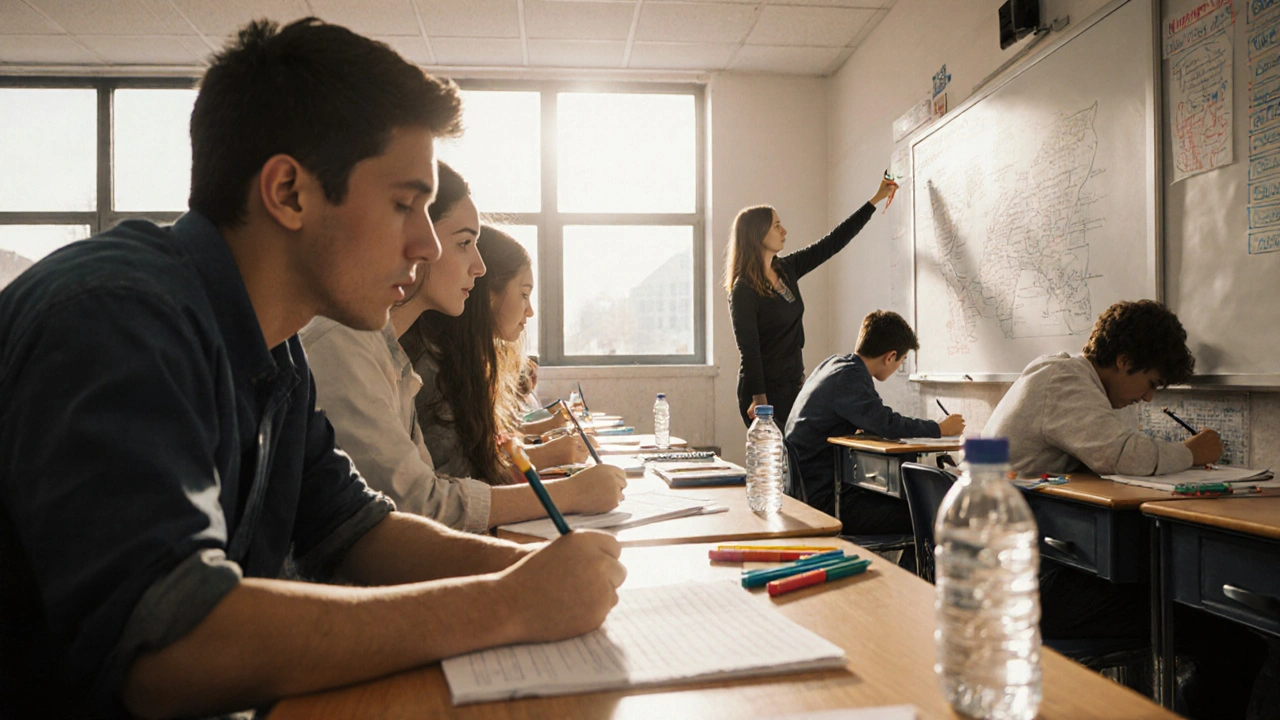
Guided notes in high school are pre-made handouts with blanks for key information, helping students stay focused and retain more during lessons. They improve test scores, support diverse learners, and turn passive listening into active learning.
- Read More