The Future of High Schools: Trends to Watch Out For
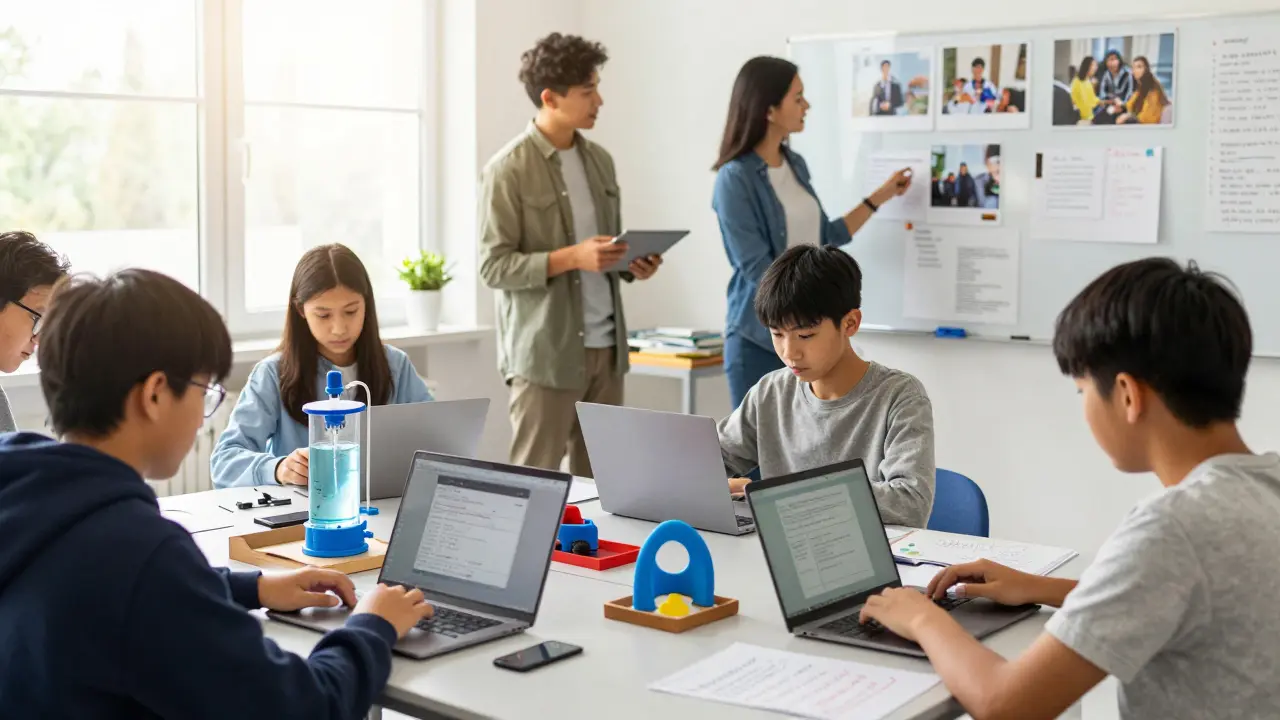
High schools aren’t what they used to be. The bell still rings, lockers still clank, and cafeteria pizza still tastes the same-but underneath the surface, everything is shifting. By 2026, the traditional model of sitting in rows, memorizing facts, and taking standardized tests is fading fast. Schools are becoming more like launchpads for real life, not just stepping stones to college. If you’re a student, parent, or educator, you need to know what’s changing and why.
Personalized Learning Is No Longer Optional
One-size-fits-all education is dead. Schools are finally admitting that not every student learns the same way, at the same pace, or on the same timeline. Instead of forcing everyone through the same curriculum, many districts are adopting personalized learning platforms. These tools track each student’s progress in real time and adjust lessons accordingly. A kid who nails algebra in three weeks moves on to calculus. Another who needs more time with reading comprehension gets targeted support without falling behind.
It’s not just software. Teachers are spending less time lecturing and more time coaching. In Flagstaff’s Northland Preparatory Academy, students now have individual learning plans-updated weekly-that include goals, projects, and skill-building tasks. One student spent three months building a solar-powered water purifier for a local Native American community. Another learned coding by designing an app to help seniors navigate public transit. These aren’t electives. They’re core requirements.
Digital Classrooms Are the New Norm
Chromebooks aren’t just for homework anymore. By 2026, nearly 85% of U.S. high schools use digital learning environments that blend online content, AI tutors, and collaborative platforms. Tools like Google Classroom and Canvas are standard, but the real shift is in how they’re used.
Instead of uploading essays to a portal, students now submit multimedia portfolios: videos explaining their science projects, podcasts on historical events, interactive maps of literary settings. Teachers grade based on mastery, not deadlines. A student who turns in a late project but shows deep understanding still earns an A. A perfect essay copied from the internet? That’s a zero.
And it’s not just about tech. Schools are training teachers to be tech integrators, not just subject experts. In Texas, a recent study found that students in classrooms with trained tech-coach teachers scored 22% higher on critical thinking assessments than those in traditional setups.
Workforce Readiness Is Part of the Curriculum
College isn’t the only path anymore-and schools are finally catching up. More than 60% of U.S. high schools now offer dual enrollment with community colleges, apprenticeships, or industry certifications. In Arizona, students can earn a certified nursing assistant (CNA) license by their junior year. In Michigan, teens spend half their day working in local manufacturing plants while earning high school credit.
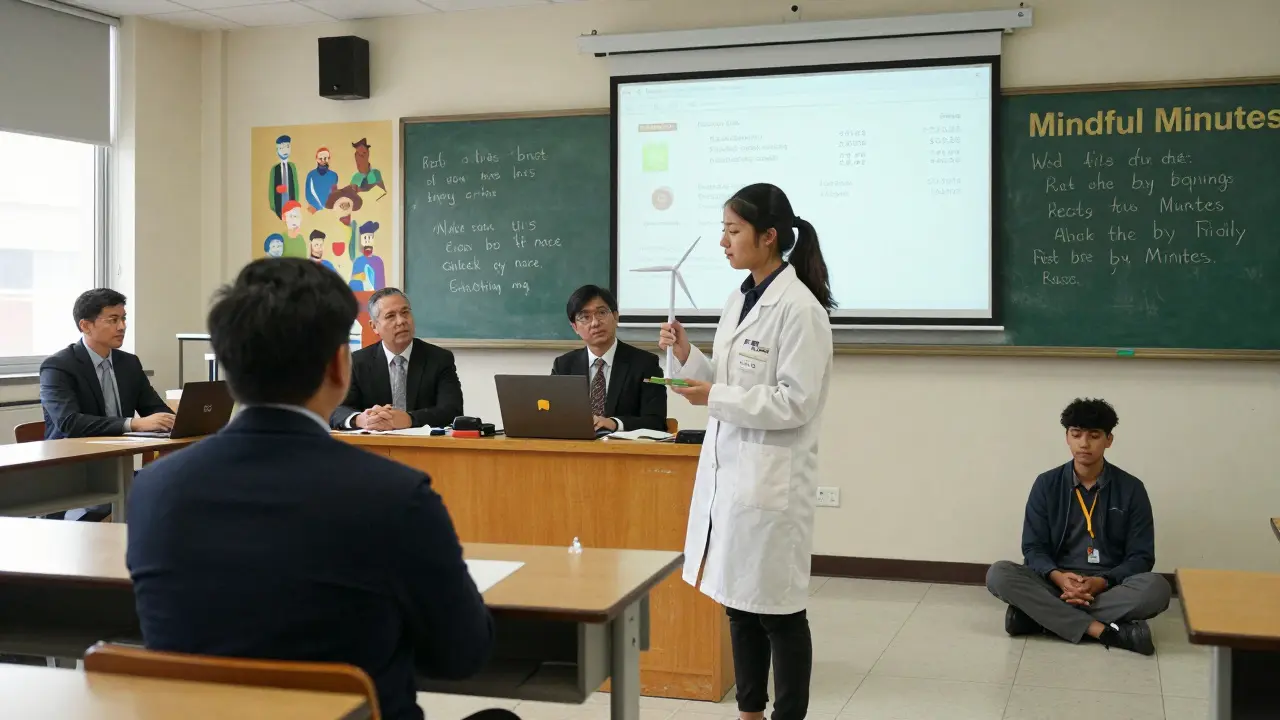
It’s not just about jobs. It’s about skills. Financial literacy, resume writing, public speaking, time management-these are now required courses. At Westside High in Ohio, every senior must complete a 40-hour internship and present a capstone project to a panel of local business owners. No grade is given. Instead, students receive feedback on communication, problem-solving, and professionalism.
The goal? To make sure students don’t graduate into a world they’re unprepared for. The Bureau of Labor Statistics says 65% of jobs created by 2030 won’t exist today. Schools can’t afford to teach what’s already outdated.
Emotional Health Is as Important as Math Scores
For years, mental health was an afterthought in high schools. Now, it’s central. Nearly every public high school in the U.S. has a licensed counselor on staff, and many have full-time mental health clinicians. Schools are tracking student well-being with anonymous check-ins, mindfulness sessions, and peer support networks.
In California, a pilot program called “Mindful Minutes” gives students five minutes at the start of each class to breathe, reflect, or journal. Teachers report fewer outbursts, less absenteeism, and higher engagement. The state’s Department of Education found that schools with daily mindfulness practices saw a 30% drop in disciplinary incidents over two years.
And it’s not just about therapy. Schools are redesigning schedules to reduce stress. Some have moved to four-day weeks. Others start class at 9 a.m. instead of 7:30 a.m., aligning with teen sleep cycles. The science is clear: sleep-deprived teens don’t learn well. So now, sleep is part of the curriculum.
Project-Based Learning Is Replacing Textbooks
Remember when you opened a textbook and read about photosynthesis? Now, students grow plants in rooftop gardens and measure oxygen output. Instead of memorizing the causes of the Civil War, they design podcasts interviewing historians, descendants of soldiers, and museum curators.
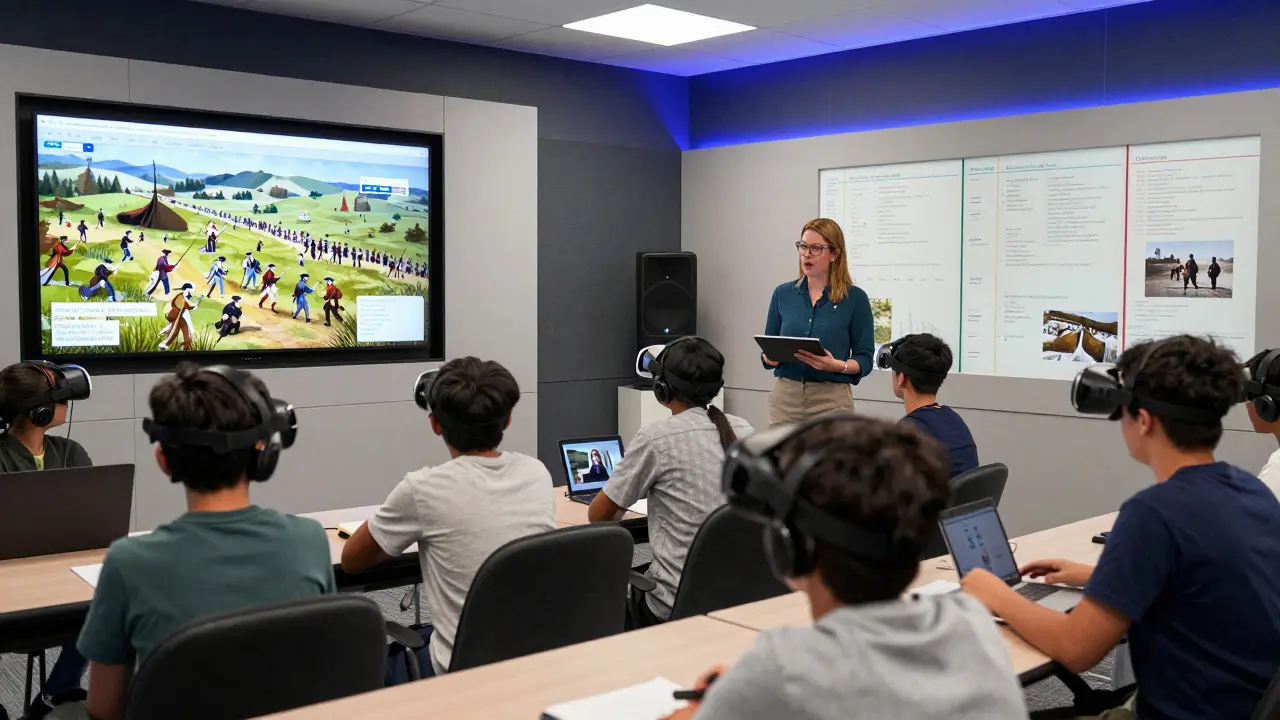
Project-based learning (PBL) is no longer a fancy add-on. It’s the default. In New York City, 70% of high school courses now use PBL as the main teaching method. Students don’t just learn history-they recreate historical events using virtual reality. They don’t just study physics-they build electric cars and race them.
The results? A 2025 study from Stanford showed that students in PBL-heavy schools scored 18% higher on real-world problem-solving tests and were 40% more likely to pursue STEM careers. And here’s the kicker: they retained information longer. One student in Oregon still remembered how to calculate torque two years after building a wind turbine in class.
Equity Is No Longer a Buzzword-It’s a Metric
High schools are finally being held accountable for who they serve. It’s not enough to say “we serve all students.” Now, districts publish data on graduation rates, college enrollment, and job placement by race, income, and disability status.
In Illinois, schools that fail to close achievement gaps lose funding. In Georgia, districts must report how many students from low-income families earn industry certifications. In Florida, schools are required to offer at least two free college-level courses to every student, regardless of background.
It’s not just policy. It’s culture. Schools are hiring more diverse staff, creating student-led equity councils, and rewriting curricula to include voices that were once ignored. History class now includes Indigenous land management practices. English class includes poetry from immigrant writers. Science class explores climate justice in coastal communities.
What This All Means for Students
If you’re a high schooler today, you’re not just preparing for college. You’re preparing for a world where adaptability matters more than memorization. Where initiative beats obedience. Where your ability to solve real problems counts more than your GPA.
The future of high school isn’t about getting into the right college. It’s about becoming the kind of person who can thrive in any situation-whether that’s starting a business, joining the military, working in a lab, or caring for aging relatives.
The tools are here. The models exist. The question isn’t whether high schools will change. It’s whether you’re ready for what’s coming.
Are traditional textbooks still used in high schools?
Textbooks are still around, but they’re no longer the main resource. Most schools now use digital platforms that offer interactive content, videos, quizzes, and real-time feedback. Textbooks are often used as reference materials rather than primary learning tools. In project-based classrooms, students rely more on research, hands-on experiments, and digital portfolios than on printed chapters.
Do high schools still give standardized tests like the SAT?
Many schools still administer the SAT or ACT, but they’re no longer the only measure of success. Some districts have replaced them with competency-based assessments-where students demonstrate mastery through projects, presentations, or portfolios. Colleges are also moving away from requiring test scores. As of 2025, over 80% of U.S. colleges are test-optional or test-blind, and high schools are adjusting their curricula to reflect that shift.
How are schools helping students with mental health?
Schools are hiring more counselors, embedding mental health into daily routines, and training teachers to recognize signs of distress. Many have mindfulness programs, peer support groups, and partnerships with local clinics. Some schools even offer therapy sessions during the school day. The goal is to treat mental health like physical health-something that needs regular attention, not just crisis intervention.
Can students graduate without going to college?
Absolutely. High schools now offer multiple pathways to graduation: industry certifications, apprenticeships, military enlistment, and entrepreneurship programs. Students who complete these pathways earn diplomas just like those who go to college. In fact, in states like Wisconsin and Oregon, over 40% of graduates now enter the workforce directly after high school with paid credentials in fields like IT, healthcare, and skilled trades.
What role do teachers play in modern high schools?
Teachers are no longer just information providers. They’re coaches, mentors, and learning designers. They help students set goals, navigate projects, and reflect on their progress. Many spend part of their day collaborating with industry professionals, designing curriculum with students, or training in new tech tools. Their success is measured by student growth-not test scores.
Dave Sumner Smith
March 7, 2026 AT 23:07Cait Sporleder
March 8, 2026 AT 17:11Paul Timms
March 9, 2026 AT 22:50Jeroen Post
March 10, 2026 AT 13:20Nathaniel Petrovick
March 11, 2026 AT 01:04Honey Jonson
March 11, 2026 AT 15:36Sally McElroy
March 12, 2026 AT 01:51Destiny Brumbaugh
March 12, 2026 AT 10:13Sara Escanciano
March 13, 2026 AT 14:14Elmer Burgos
March 14, 2026 AT 03:44Jason Townsend
March 15, 2026 AT 16:43Antwan Holder
March 16, 2026 AT 16:10Angelina Jefary
March 16, 2026 AT 23:33