Unconventional Learning Methods Making Waves in High Schools
Most high schools still run on a 100-year-old model: bells, rows of desks, lectures, and multiple-choice tests. But something’s shifting. Across the country, students are learning to code by building apps for local businesses, studying history through role-playing debates, and mastering biology by raising chickens on campus. These aren’t fancy tech demos or pilot programs in wealthy districts-they’re real, working changes in public high schools that are finally getting noticed.
Project-Based Learning Isn’t Just a Buzzword Anymore
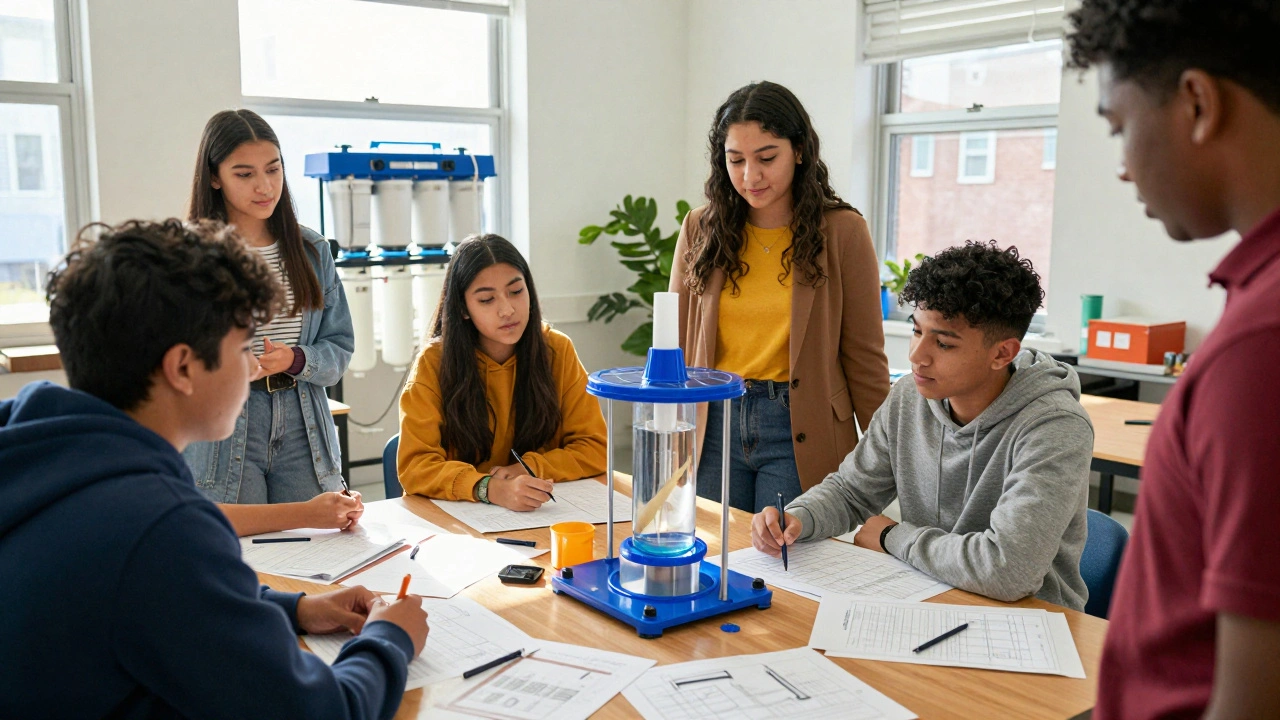
Project-based learning (PBL) used to mean a science fair project due in May. Now it’s the backbone of entire curriculums. At West Side High in Chicago, juniors spend 12 weeks designing solar-powered water purifiers for communities without clean access. They don’t just learn physics and chemistry-they learn budgeting, public speaking, and how to pitch to city officials. Their final product? Three units installed in a local housing project. The school tracks outcomes: students in PBL tracks are 37% more likely to enroll in STEM programs after graduation than peers in traditional classes.
This isn’t about doing more work. It’s about doing work that matters. When students see their math skills directly tied to calculating energy efficiency, or their writing used in grant proposals, engagement spikes. Teachers report fewer absences and less disruptive behavior. One principal in Ohio said, "We stopped calling it ‘extra credit’-we started calling it ‘real credit.’"
Gamified Classrooms: When Grades Become Levels
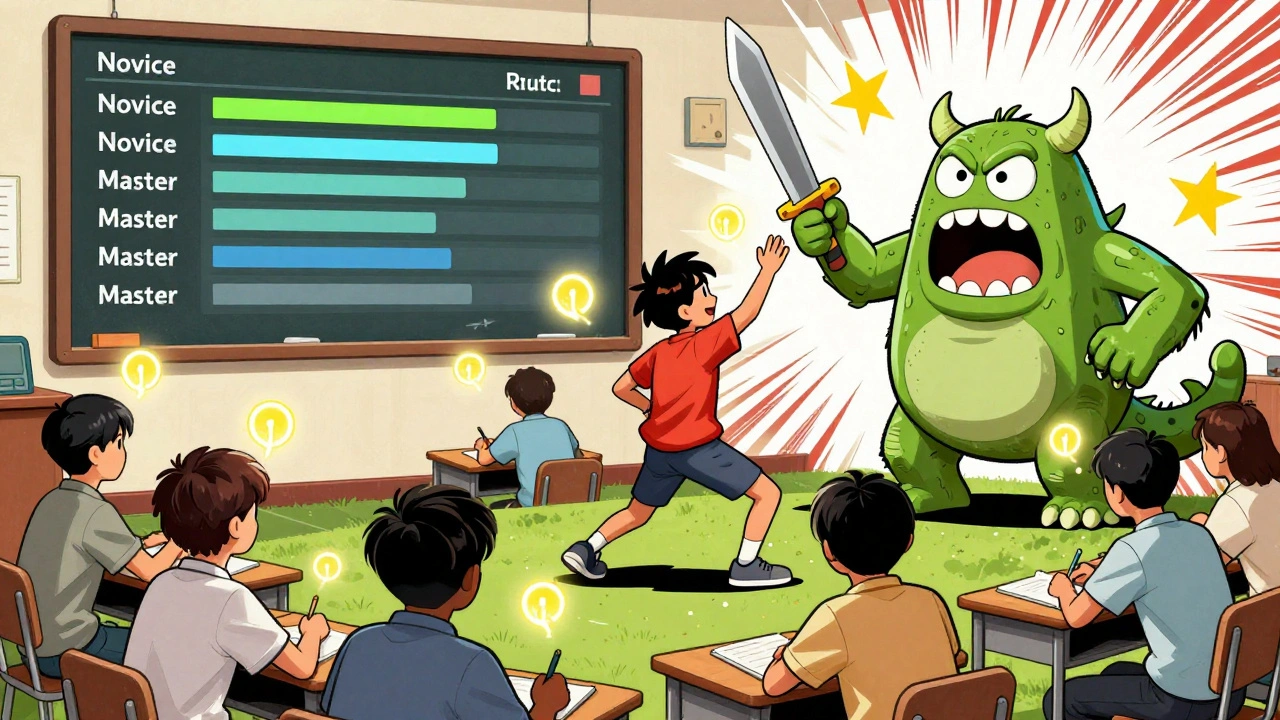
Forget the old grading scale. Some high schools are replacing letter grades with experience points (XP), levels, and unlockable challenges. At Lincoln Tech High in Oregon, students earn XP for completing assignments, helping peers, or mastering a skill-even for asking good questions. They level up from "Novice" to "Master," with each rank unlocking new learning paths.
It sounds like a video game, and that’s the point. Research from the University of Michigan found that gamified systems increased task persistence by 52% in adolescents. Why? Because failure isn’t a red F-it’s a "Try Again" prompt. Students retry math problems until they get it right, not because they’re scared of a bad grade, but because they want to unlock the next quest.
One senior in Texas, who used to skip algebra, told his teacher, "I didn’t care about passing. But I really wanted to beat the quadratic boss." He did. And now he’s taking calculus.
Learning Outside the Classroom-Literally
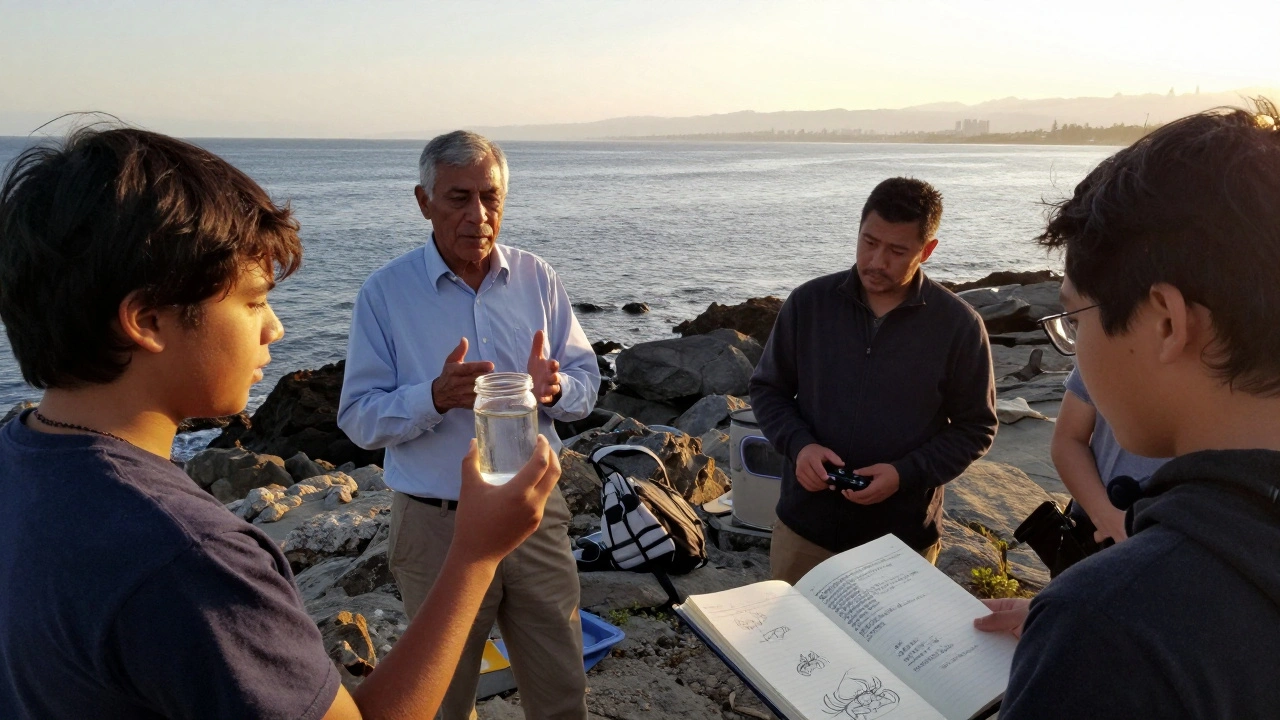
High school doesn’t have to happen inside a building. Schools in Vermont, Maine, and California are partnering with farms, workshops, and tech startups to turn the community into a classroom. At Coastal High in Santa Cruz, students spend one day a week working with marine biologists. They collect water samples, track crab populations, and present findings to the city council. No textbooks. No quizzes. Just real data, real stakes.
These programs don’t just teach science. They teach responsibility. Students learn to show up on time, handle equipment, and communicate with adults outside their peer group. Dropout rates in these programs are 22% lower than the district average. Why? Because students feel like they’re contributing, not just sitting through class.
Peer Teaching: The Hidden Powerhouse
Who learns more-the person teaching or the person listening? Turns out, it’s both. Schools like East Bay Academy in California have built peer-teaching into their weekly schedule. Seniors tutor underclassmen in subjects they’ve mastered. In return, they get credit, leadership training, and access to internships.
It’s not just about helping others. Teaching forces you to understand something deeply. A student who struggled with chemistry ended up becoming the go-to tutor for organic reactions. She didn’t just memorize formulas-she had to explain them in five different ways. By the end of the year, she scored a 5 on the AP exam. Her tutor, a junior who had been failing, passed with a 4.
Peer teaching works because it removes the power imbalance. Students ask questions they’d never ask a teacher. They laugh at the same jokes. They get frustrated together. That trust changes everything.
Learning Through Failure-Without the Punishment
Traditional schools punish failure. A bad test score drops your GPA. A missed deadline means a zero. But in unconventional classrooms, failure is part of the process. At the High School for Innovation in Denver, students submit multiple drafts of every project. Each draft gets feedback, not a grade. Only the final version is evaluated.
One student spent six weeks designing a mobile app for mental health support. It crashed every time someone clicked "save." Instead of failing, he got a meeting with a local developer who helped him debug it. He didn’t just fix the app-he learned how to think like an engineer.
When students aren’t afraid of failing, they take risks. And that’s where real learning happens. A study from Stanford found that students in failure-tolerant environments showed 41% higher creativity scores on open-ended tasks.
Why This Isn’t Just for "Gifted" Students
Some people think these methods only work for high-achievers. That’s not true. These approaches are especially powerful for students who’ve been left behind by traditional systems. A student who hates reading might thrive when they’re writing a script for a podcast about climate change. A kid who zones out in math class might light up when they’re calculating how to build a ramp for a local disabled veteran’s home.
These methods don’t require more money-they require more trust. Trust that students can handle real responsibility. Trust that they’ll learn when the stakes feel real. Trust that they’re capable of more than a bubble sheet can measure.
What’s Holding Schools Back?
Not lack of ideas. Not lack of student interest. The biggest barrier? Standardized testing and rigid scheduling. Most states still tie funding to test scores in reading and math. Teachers who want to run a six-week robotics project are pressured to "get back on track" for the state exam.
Also, teacher training. Most educators were trained to lecture, not to facilitate. A teacher who’s never led a student-led debate or managed a real-world project needs support-not criticism. Some districts are starting to offer micro-credentials for unconventional teaching methods. It’s slow, but it’s growing.
The Future Isn’t About Replacing Teachers-It’s About Redefining Them
These methods don’t make teachers obsolete. They make them more essential. Instead of being the source of all knowledge, teachers become guides, connectors, and coaches. They help students find mentors. They link classroom work to community needs. They celebrate progress, not just perfection.
At a rural high school in Montana, the English teacher now works with the local newspaper editor. Students write real articles-not essays. One student’s piece on water rights in their valley was published statewide. That student didn’t just learn grammar. She learned her voice matters.
This isn’t about replacing the classroom. It’s about expanding it. The world doesn’t fit neatly into 45-minute blocks. Why should school?
Are unconventional learning methods effective for all students?
Yes-when designed well. These methods work best when they connect learning to students’ lives, interests, and communities. Students who struggle in traditional settings often thrive when they’re solving real problems, working with peers, or seeing the direct impact of their work. It’s not about the method itself-it’s about making learning meaningful.
Do these methods cost more money?
Not necessarily. Many unconventional methods use existing resources creatively. Project-based learning can rely on local businesses, libraries, or community centers instead of new textbooks. Gamification uses free platforms like Classcraft or Google Classroom. The biggest cost isn’t money-it’s time. Teachers need time to plan, collaborate, and train. That’s where districts need to invest.
Can these methods prepare students for college?
Absolutely. In fact, they often do it better. Colleges care about critical thinking, communication, and resilience-all skills honed in project-based and experiential learning. Students who’ve led real projects, presented to experts, or recovered from failure bring stronger portfolios than those who just got high grades. Many colleges now accept project portfolios in place of traditional essays.
How do you assess student progress without grades?
Through portfolios, reflections, and demonstrations. Instead of a test, students show their learning through presentations, videos, written reflections, or live demos. Teachers use rubrics focused on growth, collaboration, and problem-solving-not just correctness. Some schools use digital portfolios where students curate their best work over time. This gives a fuller picture than a single test score ever could.
Is this just a trend, or is it here to stay?
It’s not a trend. It’s a response to a broken system. As automation and AI change the job market, employers don’t just need people who can memorize facts-they need people who can adapt, solve problems, and work in teams. Schools that cling to old models are falling behind. The students who thrive in unconventional environments are already proving they’re ready for the future. Change is slow, but it’s irreversible.