What Backpacks Are High Quality for High School Students?
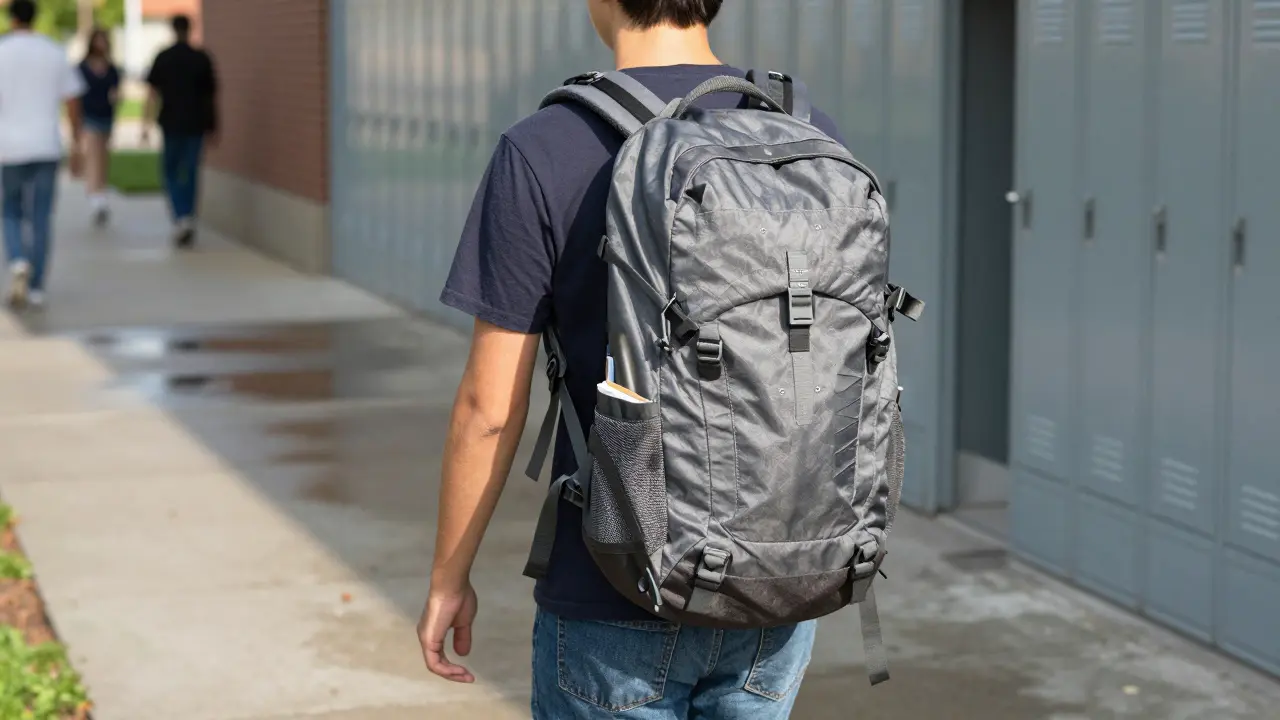
If you’ve ever dragged a shredded, sagging backpack across campus for months-only to have the strap snap on the last day of school-you know quality isn’t a luxury. It’s survival. High school students carry 15 to 20 pounds of books, laptops, gym clothes, and lunch every single day. A weak backpack doesn’t just annoy you; it hurts your posture, steals your time, and costs you money in the long run.
What Makes a Backpack Actually High Quality?
Not all backpacks labeled "durable" are built the same. A high-quality backpack for high school isn’t about flashy colors or brand names. It’s about construction that lasts through four years of slamming into lockers, getting tossed in the back of a bus, and surviving rainstorms without turning into a soggy mess.
Start with the material. Look for **600D or 1000D polyester** or **ballistic nylon**. These aren’t just marketing terms-they’re industrial-grade fabrics. Backpacks made with 600D polyester can handle over 200 pounds of abrasion before tearing. Compare that to cheap 200D nylon, which frays after a few months of daily use. Brands like **Osprey**, **JanSport SuperBreak**, and **North Face Borealis** use this material because they’ve tested it in real-world conditions, not just in a lab.
Stitching matters more than you think. Double-stitched seams with **bar-tack reinforcement** at stress points (strap attachments, bottom corners, zipper pulls) prevent blowouts. If you can see loose threads or single-line stitching, walk away. A quality backpack doesn’t just use strong thread-it uses the right pattern to distribute weight.
Straps are the next big thing. Padded, contoured shoulder straps with a **sternum strap** and **hip belt** (yes, even for high schoolers) make a huge difference. A 2023 study by the American Chiropractic Association found that students who wore backpacks with hip belts reported 40% less lower back pain. You don’t need a hiking pack, but you do need support that moves with your body, not against it.
Top 5 High-Quality Backpacks for High School in 2025
Here are the backpacks that actually hold up-not just for a semester, but for all four years of high school.
- Osprey Arcane 15: Designed for students, not hikers. It has a padded laptop sleeve that fits up to a 15-inch MacBook, a front organization panel with pen slots and a key clip, and a ventilated back panel that keeps your back dry. The 600D polyester resists scuffs, and the lifetime warranty means if it breaks, they replace it-no receipts needed.
- JanSport SuperBreak: A classic for a reason. It’s simple, lightweight, and uses 600D polyester. The shoulder straps are thick and padded, and the bottom is reinforced to prevent sagging. It’s not fancy, but it’s been used by over 10 million students since 1967. The price? Under $50.
- North Face Borealis: This one balances style and function. It has a padded laptop compartment, a hydration sleeve, and a front stash pocket with a magnetic closure. The 1000D nylon base resists scrapes from concrete floors and locker doors. It’s heavier than the JanSport, but the extra durability pays off.
- Herschel Supply Co. Settlement: If you care about looks without sacrificing function, this is your pick. The 600D polyester shell, padded back panel, and internal organization pockets make it practical. The zipper pulls are oversized so you can grab them with gloves on. It’s not the cheapest, but it’s the most popular among high schoolers in urban districts.
- Deuter Aircontact Lite 25: This one’s a bit pricier, but it’s built like a tank. The hip belt transfers 30% of the weight off your shoulders. The back panel is breathable mesh, and the material is rated for extreme weather. It’s marketed for hiking, but it’s the go-to for students who carry heavy AP textbooks and lab equipment.
What to Avoid
Some backpacks look great in ads but fall apart fast. Here’s what to skip:
- Backpacks with plastic buckles: They crack in cold weather. Metal buckles last longer.
- Thin, flat straps: If the padding is less than 1 inch thick, it won’t cushion your shoulders after a few weeks.
- Zipper-only closures: If the main compartment doesn’t have a flap or drawstring over the zipper, your stuff will spill out when you toss it on the floor.
- Unreinforced bottom: A flat, unlined bottom will warp and crack after months of being set on rough surfaces.
- Brands with no warranty: If they don’t stand behind their product, they didn’t build it to last.
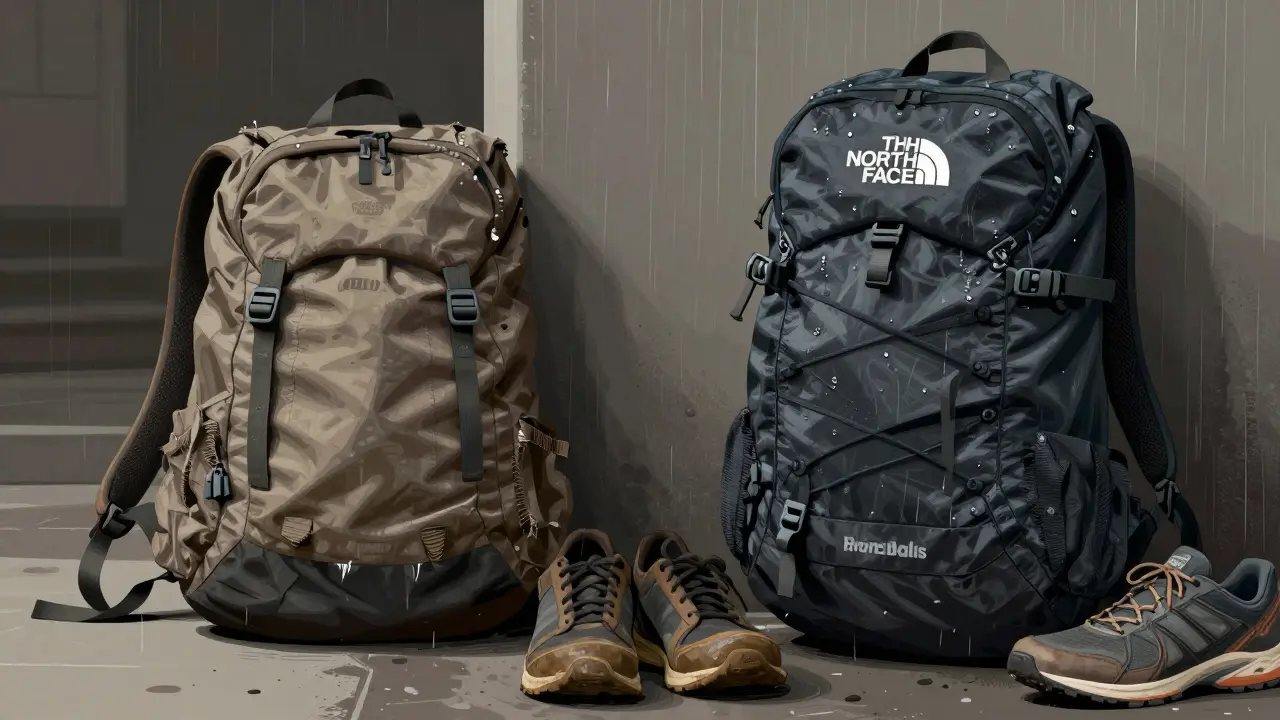
How to Test a Backpack Before You Buy
Don’t just buy online based on photos. If you can, test it in person:
- Fill it with 15 pounds of books or dumbbells. Wear it around the store for 10 minutes. Do the straps dig in? Does the back panel press into your spine?
- Pull on the shoulder straps. Can you feel the stitching stretch? If yes, skip it.
- Open and close the zippers 10 times. Are they smooth? Do they snag? Cheap zippers jam after a few months.
- Check the bottom. Press down with your hand. Does it feel like cardboard or stiff fabric? A quality backpack has a rigid, reinforced base.
- Look at the stitching. If you see gaps between stitches or uneven lines, it’s not made for daily abuse.
Why Spending More Now Saves Money Later
A $30 backpack might seem smart. But if it rips in February, you’re spending $30 twice-once for the first one, once for the replacement. A $80 backpack that lasts four years? That’s $20 a year. Add in the fact that you won’t be dealing with broken straps, lost notebooks, or back pain, and the value jumps even higher.
One parent in Denver told me her son went through three $25 backpacks in two years. She finally bought him an Osprey. He’s still using it in his senior year. She saved over $100-and avoided three separate trips to the store during busy back-to-school seasons.
How to Care for Your Backpack
Even the best backpack won’t last forever if you treat it like trash. Here’s how to keep yours in shape:
- Wipe it down monthly with a damp cloth. Dirt and grime wear down fabric over time.
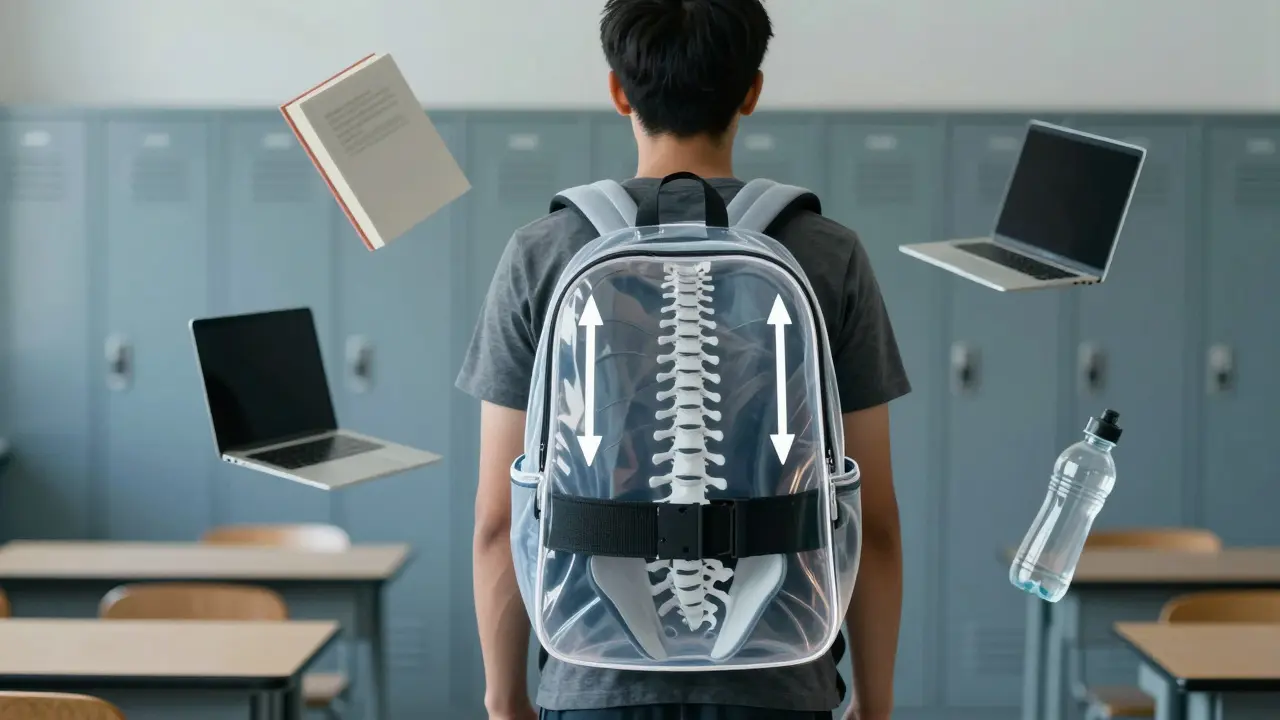
- Don’t overload it. Stay under 15% of your body weight. A 120-pound student shouldn’t carry more than 18 pounds.
- Use both straps. Slinging it over one shoulder throws off your posture and strains your spine.
- Store it empty and upright. Don’t leave it crumpled under your bed-it loses its shape.
- Check the straps and zippers every few months. Tighten loose threads or replace broken clips before they turn into bigger problems.
Final Thoughts: Quality Isn’t About Price-It’s About Design
The best backpack for high school isn’t the most expensive one. It’s the one designed for the real world: heavy loads, rough surfaces, daily abuse, and growing bodies. Look for strong materials, smart stitching, and thoughtful features like padded straps and reinforced bottoms. Skip the hype. Focus on what actually keeps your stuff safe and your back healthy.
Buy once. Buy right. Your future self will thank you.
What’s the most durable material for a high school backpack?
The most durable materials are 600D or 1000D polyester and ballistic nylon. These are industrial-grade fabrics used in luggage and outdoor gear. They resist tearing, scuffing, and water damage far better than cheaper 200D nylon or canvas. Brands like Osprey and The North Face use these materials because they’ve been tested in real student environments.
Do I need a hip belt on my high school backpack?
You don’t *need* one, but you’ll wish you had it. A hip belt transfers up to 30% of the backpack’s weight from your shoulders to your hips, reducing strain on your spine and neck. Students who carry heavy textbooks, science kits, or gym gear benefit the most. Even lightweight hip belts (like the ones on the Deuter Aircontact Lite 25) make a noticeable difference over time.
Is a more expensive backpack always better?
No. A $150 backpack isn’t automatically better than a $60 one. What matters is construction, not price tag. JanSport SuperBreak costs under $50 but uses the same 600D polyester as pricier brands. Look for reinforced stitching, padded straps, and a rigid bottom instead of brand names. The best value comes from smart design, not marketing.
How often should I replace my high school backpack?
A high-quality backpack should last all four years of high school if cared for properly. If yours is tearing, losing shape, or breaking straps before sophomore year, it wasn’t built well. Replace it only if the damage is structural-like a broken frame or shredded stitching. Minor wear like scuffs or faded color doesn’t mean it’s time to buy new.
Can I wash my backpack in the washing machine?
Most manufacturers advise against it. Machine washing can damage stitching, loosen padding, and ruin water-resistant coatings. Instead, wipe it down with a damp cloth and mild soap. For stubborn stains, scrub gently with a soft brush. Let it air dry-never put it in the dryer. Heat melts the glue in straps and zippers.
What’s the ideal weight limit for a high school backpack?
The American Academy of Pediatrics recommends no more than 10% to 15% of a student’s body weight. For a 120-pound student, that’s 12 to 18 pounds. Exceeding that increases risk of back pain, shoulder strain, and poor posture. Use a scale to check your load. If it’s too heavy, leave non-essential books at home or use a locker.
Jamie Roman
December 28, 2025 AT 23:12I used to think a backpack was just a bag with straps until I broke three in two years. Then I got the Osprey Arcane 15 and it’s still going strong in senior year. The padding on the straps? Life-changing. I used to come home with red grooves on my shoulders. Now I just shrug it on and walk. The laptop sleeve fits my 15-inch MacBook perfectly, and the front pocket keeps my pens from rolling around like marbles. I didn’t even realize how much I hated searching for my keys until I got the key clip. It’s not flashy, but it works. And when I dropped it in a puddle during a rainstorm? It dried out fine. No weird smells, no soggy fabric. Just pure, quiet reliability.
People act like spending $80 is crazy, but if you add up the cost of replacing $30 backpacks every semester? You’re already past $150. Plus, your back doesn’t hate you anymore. That’s worth more than money.
I’ve seen kids with fancy designer packs that look great on Instagram but fall apart by October. One guy had a Gucci thing with a zipper that snapped off after two weeks. He cried in the hallway. I just handed him a spare keychain clip from my backpack. He still owes me a soda.
Also, don’t sleep on the hip belt. I thought it was for hikers until I tried it. Suddenly my spine felt like it had a vacation. I don’t even notice the weight anymore. My physics teacher said I’m the first student in five years who didn’t slouch during lectures. I told him it was the backpack, not my posture. He nodded like he knew all along.
Salomi Cummingham
December 30, 2025 AT 05:09Oh my god. I just read this and I’m crying. Not because I’m emotional, but because I remember my freshman year. My backpack was a black plastic nightmare from Target. The straps were so thin they dug into my skin like wires. One day, mid-semester, the bottom ripped open and my entire chemistry notebook spilled out-pages everywhere, ink smudged, my lunchbox rolling under a locker. I stood there in the hallway, frozen, while everyone walked past like I was invisible.
My mom finally bought me the JanSport SuperBreak. It was ugly. It was simple. It didn’t have a logo. But it held up. Four years. Four years of slamming into lockers, getting tossed on buses, surviving snowstorms. I still have it. It’s in my closet. I can’t throw it away. It’s like a war medal.
And the hip belt? I didn’t believe in it either. Then I tried it. I swear, I felt like my spine finally got a hug. I didn’t know I was in pain until it stopped. That’s the thing about quality-it doesn’t scream. It just… holds you together when everything else is falling apart.
I wish I’d known this before I ruined my posture. I wish every kid had this guide. I wish my school had a backpack inspection day. I wish someone had told me that a $50 backpack could be a lifeline.
Thank you. Truly. This isn’t just advice. It’s a rescue mission.
Johnathan Rhyne
January 1, 2026 AT 00:13Hold up. You said 600D polyester is industrial-grade? That’s cute. Industrial-grade is 1680D. You’re talking about the stuff used in cheap duffels, not actual gear. Ballistic nylon? Sure, that’s legit-but it’s overkill for high school. You don’t need a backpack that can survive a mortar shell. You need one that doesn’t fall apart before prom.
Also, you called the JanSport SuperBreak a ‘classic’ like it’s a vintage car. It’s a $40 sack with a single seam. I’ve seen them unravel in the rain. The ‘reinforced bottom’? It’s a thin layer of plastic that cracks after three months. And the ‘lifetime warranty’? Good luck getting Osprey to honor it without a receipt from 2021.
And don’t get me started on the hip belt. Most high schoolers aren’t hauling 20 pounds of gear. They’re carrying a notebook, a phone, and a half-eaten granola bar. You’re selling fear to sell gear. That’s not advice-that’s marketing with a thesaurus.
Also, ‘1000D nylon base’? That’s just a fancy way of saying ‘heavy as hell.’ I’ve carried the North Face Borealis. It’s like wearing a suitcase made of bricks. Your shoulders will thank you? No. Your shoulders will stage a coup.
Real talk? Buy a $35 JanSport. If it dies, buy another. Save your money for pizza. Your spine will survive. Probably.
Nathan Jimerson
January 2, 2026 AT 01:21This is the kind of post that makes you believe in people again. So many of us grow up thinking we just have to accept pain and broken straps. But you showed us it doesn’t have to be this way. It’s not about spending more-it’s about thinking smarter. I’ve seen friends with backpacks that look like they’ve been through a war. One kid had duct tape holding his straps together. He didn’t even realize his posture was bent like a question mark.
I bought my first real backpack last year. It was the Osprey. I didn’t know what I was doing. But I followed your advice-tested it with books, checked the stitching, felt the padding. It wasn’t cheap. But it was right.
Now I carry my books like they’re treasures, not burdens. My back doesn’t ache. I sleep better. I’m not just surviving high school. I’m actually present in it. That’s the real upgrade.
Thank you for writing this. It’s not just about backpacks. It’s about dignity. And that matters more than we let ourselves admit.
Sandy Pan
January 3, 2026 AT 13:53There’s a deeper truth here that no one talks about. A backpack isn’t just a container for books-it’s a symbol of how society treats young bodies. We demand that students carry the weight of curriculum, expectations, and social pressure, then give them flimsy plastic sacks to bear it all.
The real failure isn’t the backpack. It’s the system that expects teenagers to haul 20 pounds of knowledge across concrete floors every day without a second thought. We don’t ask for ergonomic chairs. We don’t mandate locker access between classes. We don’t reduce textbook loads. We just tell them to ‘buy a better bag.’
And yet, the fact that we’re even having this conversation means something. It means we’re starting to notice. That the body matters. That pain isn’t normal. That durability isn’t luxury-it’s justice.
So yes, buy the Osprey. Buy the JanSport. But also ask why this burden falls on the student in the first place. A good backpack doesn’t fix the system. But it does give you a moment of relief while you’re fighting to change it.
Eric Etienne
January 5, 2026 AT 12:34LMAO. This whole thing is a scam. You’re telling kids to spend $80 on a backpack? Bro, I got mine at the dollar store for $5. It lasted a whole semester. Then I taped the straps and kept going. You think your back’s gonna die from carrying books? Nah. You just gotta be tough. My grandpa carried a sack of potatoes uphill both ways. You think he had a hip belt?
And don’t even get me started on ‘ballistic nylon.’ That’s for soldiers, not kids who forget their homework. You’re turning a backpack into a status symbol. Next thing you know, we’ll be getting backpack reviews from Forbes.
Also, ‘check your weight’? How about ‘don’t bring so much junk’? Why do you need five notebooks and a full lunchbox? Just leave the extra stuff at home. Problem solved. No $80 backpack needed.
Stop selling fear. Kids don’t need to be coddled. They need to grow up.
Dylan Rodriquez
January 6, 2026 AT 19:34I read this and thought about my little brother. He’s in 8th grade. He’s small. He carries his books like they’re made of glass because he’s afraid they’ll fall out. He’s always hunched over. I asked him why he doesn’t get a new backpack. He said, ‘It’s fine. I don’t want to be the kid with the expensive thing.’
That broke my heart.
This post isn’t about backpacks. It’s about dignity. It’s about saying: you deserve to not be in pain. You deserve to not feel ashamed for needing something that lasts. You deserve to carry your future without your body screaming at you.
I bought him the JanSport. He didn’t want it at first. Said it looked ‘basic.’ I told him, ‘Yeah. That’s the point. Basic means it doesn’t break. Basic means you can focus on your homework, not your shoulder.’
He wore it today. He stood up straighter. He smiled. That’s worth more than any brand name.
Thank you for writing this. Not just for the info. For the humanity.
Amanda Ablan
January 8, 2026 AT 17:10Johnathan, I get where you’re coming from. The $80 price tag does feel excessive. But let’s not throw the baby out with the bathwater. The point isn’t that everyone needs the Deuter Aircontact Lite 25. It’s that there are options beyond the $25 plastic death trap. The JanSport SuperBreak? $45. It’s durable, simple, and doesn’t scream ‘I spent my allowance on this.’
And yes, the hip belt might seem extra-but if you’re carrying more than 15 pounds, it’s not a luxury. It’s a tool. Like a helmet for biking. You don’t need it if you’re going slow. But if you’re going fast? You’re stupid not to wear it.
Also, I’ve seen the dollar store backpacks. They’re not just flimsy-they’re unsafe. The zippers break. The straps snap. Kids end up with injuries because they’re afraid to say, ‘This hurts.’
Let’s not shame people for trying to do better. Let’s make good options accessible. Not everyone can afford $80. But $50? That’s doable. And if your school has a backpack drive or a used gear swap? Do it.
Quality doesn’t have to mean expensive. It just has to mean ‘designed to last.’ And that’s something we can all agree on.
Meredith Howard
January 9, 2026 AT 15:59Interesting perspective on material durability. I wonder if the 600D versus 1000D comparison accounts for weave density or thread count per square inch. Most consumer reports don’t disclose that. Also, the claim about 200D nylon fraying after months-what study supports that? Is there peer-reviewed data on abrasion resistance under simulated student use cases or is this anecdotal extrapolation?
The hip belt recommendation seems reasonable physiologically but I’m curious if any longitudinal studies track spinal alignment over four years in students using versus not using hip belts. The American Chiropractic Association study cited-was it controlled for body mass index and physical activity levels?
And the warranty point. Osprey’s lifetime warranty is indeed robust but does it cover zipper failure due to user overloading? Or is that considered misuse? I’d want to read the fine print before assuming coverage.
Still, the general principle of prioritizing structural integrity over aesthetics is sound. Just wish more data was presented to substantiate the claims.
Yashwanth Gouravajjula
January 9, 2026 AT 21:21My cousin in Delhi uses a backpack made from recycled jute sacks. It’s hand-stitched. Holds 20 books. Lasted three years. No brand. No warranty. Just strong thread and care.
Quality isn’t always American. It’s just good design.