What Happens During Guided Practice in High School Study Guides?

When you’re stuck on a math problem or confused by a science concept, guided practice is the moment your teacher steps in-not to give you the answer, but to help you find it yourself. It’s not just review. It’s not just homework. It’s the bridge between learning something new and actually owning it.
What Guided Practice Actually Looks Like
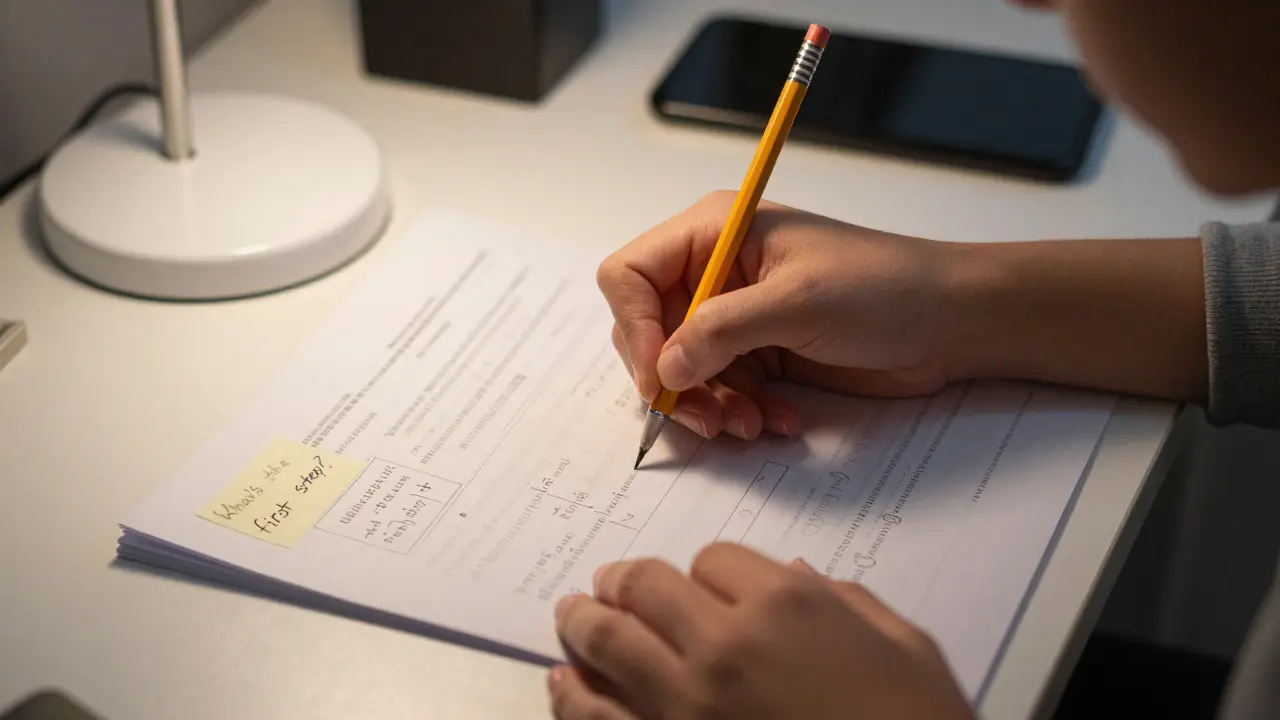
Imagine this: You’ve just learned how to solve quadratic equations using the quadratic formula. Your teacher writes one on the board. Instead of saying, ‘Here’s how,’ they say, ‘What’s the first step?’ You raise your hand. Someone else chimes in. The teacher nods, writes it down, then asks, ‘Now what?’ Slowly, with small prompts, you and your classmates walk through the whole problem together.
This is guided practice. It’s structured, interactive, and slow. No one’s left behind. No one’s rushed. You’re not alone, but you’re not being handed the solution either. The teacher’s job isn’t to lecture-it’s to ask the right questions at the right time.
In English class, guided practice might look like reading a paragraph together, then stopping to discuss word choice, tone, and author intent. In history, it could mean analyzing a primary source as a group, with the teacher pointing out key details you might miss on your own.
Why It Works Better Than Just Lectures
Most students remember what they do, not what they hear. A 2023 study from the American Educational Research Association found that students who engaged in guided practice retained 72% more information after two weeks compared to those who only listened to lectures or read textbook sections.
Why? Because guided practice forces your brain to activate what you just learned. It’s like lifting weights-you don’t build muscle by watching someone else lift. You build it by doing, with someone there to correct your form.
During guided practice, mistakes aren’t failures-they’re data. If you misapply a formula, your teacher doesn’t say, ‘Wrong.’ They say, ‘Let’s see where that went off track.’ That shift matters. It turns anxiety into curiosity.
The Role of the Teacher
A teacher in guided practice isn’t a source of answers. They’re a coach. Their questions are designed to trigger your thinking:
- ‘What pattern do you notice here?’
- ‘How is this similar to what we did last week?’
- ‘What would happen if you changed this part?’
They watch who’s struggling. They pause when the room gets quiet. They rephrase questions if no one answers. They give think time-real time, not just three seconds. They know that silence isn’t empty; it’s where learning happens.
And they don’t do all the talking. In fact, the best guided practice sessions have students speaking more than the teacher.
What Students Are Doing
You’re not passive. You’re actively:
- Testing ideas out loud
- Listening to peers and comparing approaches
- Asking clarifying questions
- Trying solutions, even if they’re half-baked
- Recognizing when you’re confused and saying so
It’s messy. It’s not perfect. But that’s the point. You’re learning how to think through problems, not just memorize steps.
For example, in a biology class studying cell division, students might be given a diagram of mitosis and asked to label the stages. The teacher doesn’t hand out a key. Instead, they walk around, listen to small groups, and ask, ‘Why do you think the chromosomes line up here?’ That question leads to a discussion about spindle fibers, centromeres, and why timing matters-all things the textbook might gloss over.
How It Builds Confidence
Guided practice isn’t about getting the right answer on the first try. It’s about building the habit of trying.
One student told me last year, ‘I used to panic when I saw a problem I hadn’t seen before. Now, I just say, “Okay, what’s the first step?” and go from there.’ That shift didn’t come from memorizing formulas. It came from doing guided practice week after week.
When you’ve walked through five similar problems with support, the sixth one feels different. You don’t feel lost. You feel prepared. That’s confidence-not the kind that says ‘I know everything,’ but the kind that says, ‘I know how to figure it out.’
What Happens When It’s Done Right
By the end of a good guided practice session, you’ve done something important: you’ve connected the dots between theory and application. You’ve seen how a concept works in real time. You’ve heard different ways to think about it. You’ve made mistakes and fixed them-with help.
That’s why guided practice is the secret sauce behind effective study guides. A good study guide doesn’t just list facts. It leads you through problems step by step, with prompts, hints, and questions that mimic the teacher’s voice.
Think of your study guide like a guided practice session on paper. Each problem should make you pause. Each hint should feel like a nudge from someone who’s been there.
Why It’s Missing in So Many Classrooms
Not every teacher uses guided practice. Some rush through material because of pacing guides. Others assume students will ‘get it’ on their own. But here’s the truth: if you don’t practice with support, you’ll likely struggle alone later.
Studies show that students who rarely experience guided practice are twice as likely to give up on tough subjects by midterms. They don’t lack ability-they lack experience in thinking through problems with scaffolding.
That’s why the best study guides don’t just summarize-they simulate guided practice. They ask questions. They break problems into chunks. They give you space to think before showing the answer.

How to Use Study Guides Like a Guided Practice Session
If you’re using a study guide on your own, treat it like a live guided session:
- Don’t skip to the answers. Try each problem first.
- If you get stuck, read the hint-not the solution.
- Ask yourself: ‘What part of this reminds me of something I’ve done before?’
- Explain the solution out loud, even if you’re alone.
- After solving it, write one sentence: ‘What did I just learn?’
This turns passive reading into active learning. And that’s the whole point of guided practice.
Final Thought: It’s Not About Speed
Guided practice doesn’t make you faster. It makes you smarter. It doesn’t help you finish the test quicker. It helps you understand the test better.
When you walk into an exam knowing how to think your way through a problem-not just recall a formula-you don’t just pass. You own it.
Is guided practice the same as group work?
No. Group work is about collaboration-students talking to each other with minimal teacher input. Guided practice is structured and teacher-led. The teacher controls the pace, asks targeted questions, and provides immediate feedback. It’s not just students working together; it’s students working with a guide who knows exactly where they’re likely to get stuck.
Can guided practice be done at home?
Yes-but only if you have the right tools. A good study guide acts as your guide. Instead of just reading, ask yourself questions as you go. Try problems before looking at solutions. Explain your reasoning out loud. Use the hints like a teacher would: pause, think, then try again. It’s not the same as having a live teacher, but it’s the closest thing you can do alone.
Why do some students hate guided practice?
Because it feels slow. It feels like you’re not ‘getting’ things fast enough. Some students are used to memorizing and moving on. Guided practice forces you to sit with confusion, ask for help, and admit you don’t know. That’s uncomfortable-but it’s also where real learning happens. The discomfort fades as you get used to it.
How is guided practice different from tutoring?
Tutoring is usually one-on-one and focused on fixing gaps. Guided practice happens in class with a whole group and is part of the normal lesson flow. It’s preventative-not remedial. It’s designed to help everyone stay on track before problems become big. A tutor helps you catch up. Guided practice helps you never fall behind.
Does guided practice work for all subjects?
Yes. In math, it’s solving problems step by step. In writing, it’s drafting paragraphs together and revising sentence by sentence. In science, it’s analyzing data as a class. In languages, it’s practicing grammar structures through conversation prompts. The structure changes, but the goal doesn’t: help students think through problems with support, not just receive answers.
Next Steps
If you’re using a study guide, don’t just read it. Use it like a guided practice tool. Try the problems. Pause. Think. Write down why you got stuck. Then try again. That’s how you turn knowledge into understanding.
And if you’re a student who’s been told to ‘just study harder’-stop. Start practicing smarter. Ask for guided support. Your brain will thank you.
kelvin kind
February 24, 2026 AT 17:00Denise Young
February 26, 2026 AT 14:09Sam Rittenhouse
February 27, 2026 AT 11:10Peter Reynolds
February 28, 2026 AT 13:35Fred Edwords
March 1, 2026 AT 21:46Sarah McWhirter
March 3, 2026 AT 16:19Ananya Sharma
March 4, 2026 AT 22:06Ian Cassidy
March 6, 2026 AT 14:30Zach Beggs
March 7, 2026 AT 02:14Kenny Stockman
March 7, 2026 AT 08:17Antonio Hunter
March 7, 2026 AT 20:35