What Is a Healthy Amount of Hours to Study a Day for High School Students?
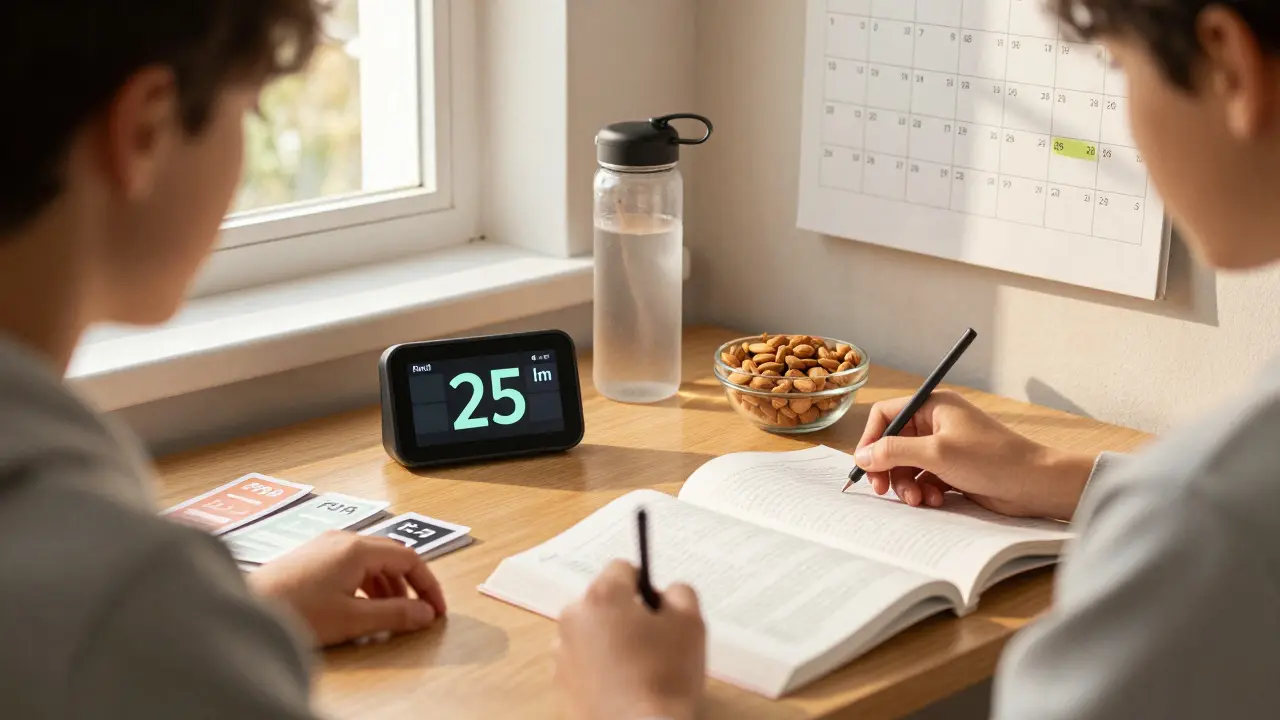
How many hours should you actually spend studying each day? It’s not about cramming until midnight or forcing yourself to sit at a desk for six straight hours. That doesn’t work-and it’s not healthy. The real question isn’t how long you study, but how well you use that time.
There’s No Magic Number, But There’s a Sweet Spot
Most high school students who stay on top of their grades without burning out study between 2 and 4 hours a day on school nights. That’s not a rule carved in stone-it’s what actually works for most people. A 2023 study from the University of California looked at over 1,200 high school students and found that those who studied 3 hours a day on average scored 15% higher on standardized tests than those who studied less than an hour. But here’s the catch: students who studied more than 5 hours a day saw no further improvement. Their stress levels went up. Sleep dropped. And their test scores plateaued or even dipped.
Why? Because your brain isn’t a machine. It needs breaks. It needs sleep. It needs time to process what it’s learned. Studying for 6 hours straight doesn’t mean you’re learning more. It just means you’re tired, frustrated, and probably forgetting half of what you read by the next morning.
Quality Beats Quantity Every Time
Two focused hours of active studying beat four hours of mindless highlighting and rereading. Active studying means doing things like:
- Testing yourself with flashcards or practice questions
- Explaining concepts out loud like you’re teaching someone else
- Solving problems without looking at the answers first
- Writing summaries in your own words
That’s how your brain builds real understanding. Passive reading? That’s just staring at words. Your brain doesn’t retain it. A 2024 meta-analysis from the Journal of Educational Psychology showed that students who used active recall techniques improved retention by up to 50% compared to those who just reread their notes.
So if you’re only studying for 90 minutes a day-but you’re using those minutes well-you’re ahead of the kid who’s studying 4 hours but scrolling through TikTok every 10 minutes.
How to Build a Realistic Daily Study Schedule
Here’s a simple, proven structure that works for most high schoolers:
- Start with your hardest subject first. Your brain is freshest right after school or after a short break.
- Study in 25-minute blocks with 5-minute breaks in between. This is called the Pomodoro Technique. It keeps your focus sharp and prevents burnout.
- After four blocks, take a longer 20-30 minute break. Go outside, stretch, eat a snack-don’t just check your phone.
- Plan for 15-30 minutes of review before bed. Go over key terms or flashcards. Sleep helps your brain organize what you learned.
That’s about 2 to 3 hours total. You can adjust based on your workload. If you have a big test coming up, add one extra block. But don’t go beyond 4 hours unless you’re doing something like AP exam prep or a science fair project.

What Happens When You Study Too Much?
Studying 6+ hours a day isn’t a badge of honor. It’s a red flag.
Here’s what happens when you overdo it:
- Your memory starts to fail. You remember less, not more.
- You get anxious, irritable, or emotionally drained.
- You stop sleeping well-or sleep too much to recover.
- Your grades stop improving, even though you’re working harder.
- You lose interest in things you used to enjoy-sports, friends, hobbies.
That’s not dedication. That’s burnout. And burnout doesn’t just hurt your grades-it hurts your mental health. A 2025 survey by the American Psychological Association found that 68% of high school students who studied more than 5 hours daily reported symptoms of chronic stress, compared to only 22% of those who studied 2-4 hours.
There’s a difference between being hardworking and being exhausted. One leads to success. The other leads to collapse.
Weekends and Breaks Matter Too
Don’t think weekends are for catching up on all the studying you skipped during the week. That’s a trap. Instead, use weekends to review, relax, and recharge.
On weekends, aim for 1-2 hours of light review-not full study sessions. Go over flashcards. Watch a short YouTube video explaining a tough concept. Do one practice test. That’s enough to keep things fresh without turning Saturday into a prison cell.
And make sure you have at least one full day off every two weeks. No studying. No schoolwork. Just you. That’s when your brain resets. That’s when creativity comes back. That’s when you remember why you’re doing this in the first place.

It’s Not Just About Hours-It’s About Your Body and Mind
Studying well means taking care of your whole self.
- Sleep: Teens need 8-10 hours. If you’re getting less than 7, you’re not learning-you’re just pretending to.
- Movement: Even a 20-minute walk after studying boosts memory and focus.
- Food: Sugary snacks give you a quick buzz, then a crash. Eat protein, nuts, fruits, and whole grains to keep your brain steady.
- Hydration: Dehydration slows your thinking. Drink water, not soda or energy drinks.
These aren’t side notes. They’re part of your study plan. Your brain runs on fuel, rest, and movement-not just caffeine and willpower.
What If You’re Falling Behind?
Maybe you’ve been slacking. Maybe you’ve got a big test next week and you’re behind. What then?
Don’t panic. Don’t try to study 8 hours straight. Instead:
- Make a list of the top 3 topics you need to master.
- Break them into small chunks-15-20 minutes each.
- Study one chunk at a time, with breaks.
- Test yourself after each chunk.
You’ll cover more ground in 2 focused hours than you would in 5 distracted ones. And you’ll still get to sleep.
Final Rule: Study Less, Learn More
The best students aren’t the ones who spend the most time at their desks. They’re the ones who know how to focus, how to rest, and how to use their time wisely.
For most high schoolers, 2-4 hours of intentional, active studying each day is the sweet spot. More than that? You’re just spinning your wheels. Less than that? You might be leaving potential on the table.
Find your rhythm. Protect your sleep. Take breaks. Review smart. And remember: you’re not trying to outwork everyone. You’re trying to outlearn them.
Is 1 hour of studying enough for high school?
It can be-if you’re using that hour well. One focused hour of active recall, practice problems, or teaching the material to yourself is better than three hours of passive rereading. But if you’re juggling multiple hard classes, one hour might not be enough. Aim for at least 2 hours on school nights, and adjust based on your workload.
Should I study every day or take days off?
Study most days, but not every single day. Consistency matters more than daily perfection. Take one full day off every two weeks to rest your brain. On other days, even 20-30 minutes of review keeps things fresh without burning you out.
Is studying at night bad for me?
Studying right before bed can hurt your sleep if you’re working on stressful material. But reviewing flashcards or light notes for 15-20 minutes before sleep can actually help your brain organize what you learned. Avoid intense studying 1-2 hours before bed. Let your brain wind down.
How do I know if I’m studying too much?
Signs you’re studying too much: constant fatigue, trouble sleeping, irritability, headaches, loss of interest in hobbies, or your grades stop improving despite more hours. If this sounds familiar, cut back. Less study time with better focus will give you better results.
What’s the best time of day to study?
Most people focus best in the late afternoon or early evening, right after school or after a short break. But your personal peak time matters more than the clock. Try studying at different times for a week and notice when you feel most alert and focused.
John Fox
January 27, 2026 AT 02:072-4 hours sounds right
Tasha Hernandez
January 28, 2026 AT 04:42Oh wow so studying less is now a virtue? I guess my 6-hour marathons were just me being a failure in disguise. Thanks for the guilt trip, guru. I'll just go cry into my highlighter now.
Anuj Kumar
January 30, 2026 AT 01:21They say 3 hours but what they dont say is schools are rigged. The real reason you dont improve after 5 hours is because they give you bad books and lazy teachers. In India we study 8 hours and still beat you in math
Christina Morgan
January 30, 2026 AT 10:07I love this breakdown so much. The Pomodoro Technique changed my life. I used to think I had to suffer to succeed, but now I actually enjoy studying because I’m not mentally exhausted by 7 PM. Also, hydration is non-negotiable. Water > energy drinks. Period.
Kathy Yip
January 31, 2026 AT 15:35i wonder if the brain needs downtime like a computer... like maybe it’s not just about sleep but also about not overloading the system. i’ve noticed when i force myself to study after a long day, i remember nothing. but if i take a walk or just stare at the wall for 20 minutes, stuff sticks later. is that science or just me?
Bridget Kutsche
February 2, 2026 AT 11:32For anyone feeling overwhelmed-start small. Even 30 minutes of focused review with flashcards counts. Progress isn’t linear. Some days you’ll crush it, some days you’ll just survive. Both are okay. Your worth isn’t measured in hours logged. You’re doing better than you think.
Jack Gifford
February 4, 2026 AT 06:20Just a quick note-‘active recall’ isn’t just a buzzword. It’s backed by decades of cognitive science. And yes, explaining something out loud forces your brain to organize the info. I used to tutor and watched students go from D’s to A’s just by switching from rereading to teaching the material to me. No magic, just method.
Sarah Meadows
February 5, 2026 AT 02:522-4 hours? That’s the American soft approach. Real academic excellence requires discipline. In top-performing nations, students study 5+ hours daily and still sleep 8 hours. This ‘balance’ culture is just an excuse for mediocrity. If you’re not sacrificing, you’re not serious.
Nathan Pena
February 6, 2026 AT 00:49Let’s be honest-this article is a feel-good misdirection. The data is cherry-picked. The 15% improvement? Correlation ≠ causation. The sample size is small. The ‘sweet spot’ is a myth created by lazy educators who don’t want to push students. Real achievement requires discomfort. If you’re not burning out, you’re not trying hard enough.