What Is the Most Feared Subject in School?
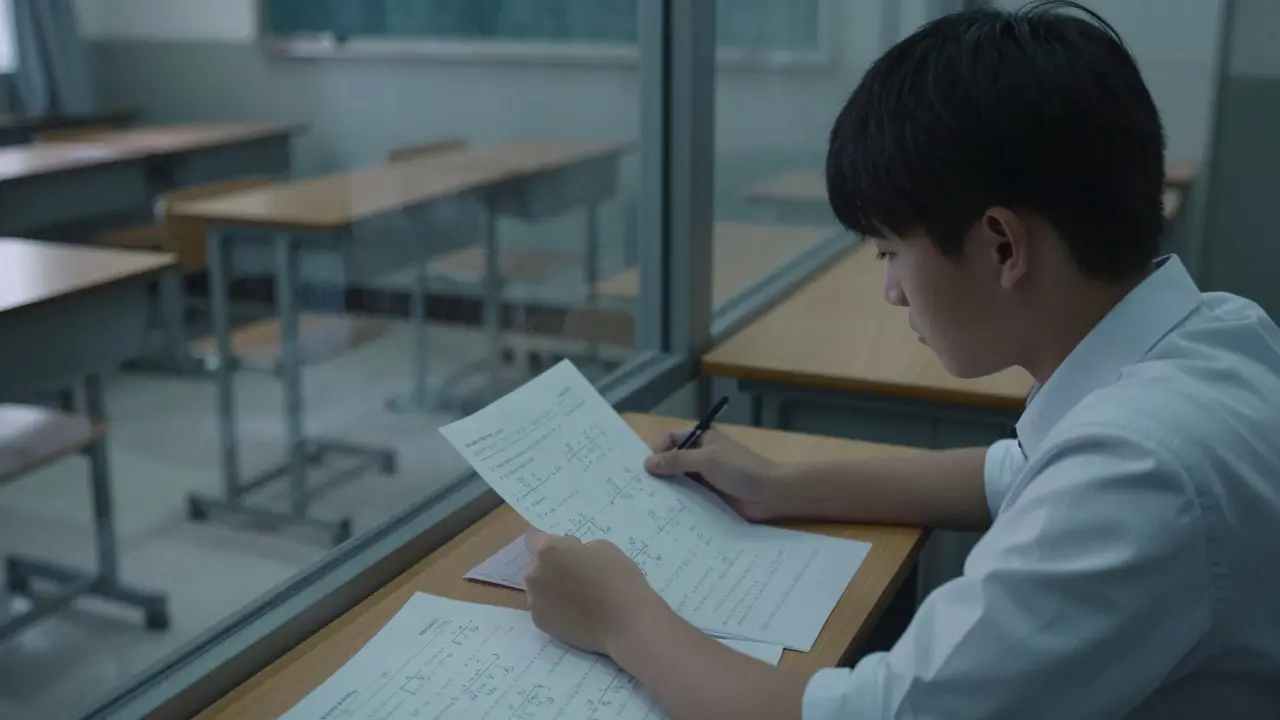
Ask any high school student what subject makes their stomach drop before class, and you’ll hear the same answer over and over: math. Not because it’s the hardest, but because it’s the one that sticks with you when you fail. It doesn’t forgive missed days. It doesn’t let you bluff your way through. One missed concept in algebra, and everything after it crumbles. That’s why, across schools in Asheville, Chicago, and beyond, math remains the most feared subject in school.
Why Math Feels Different
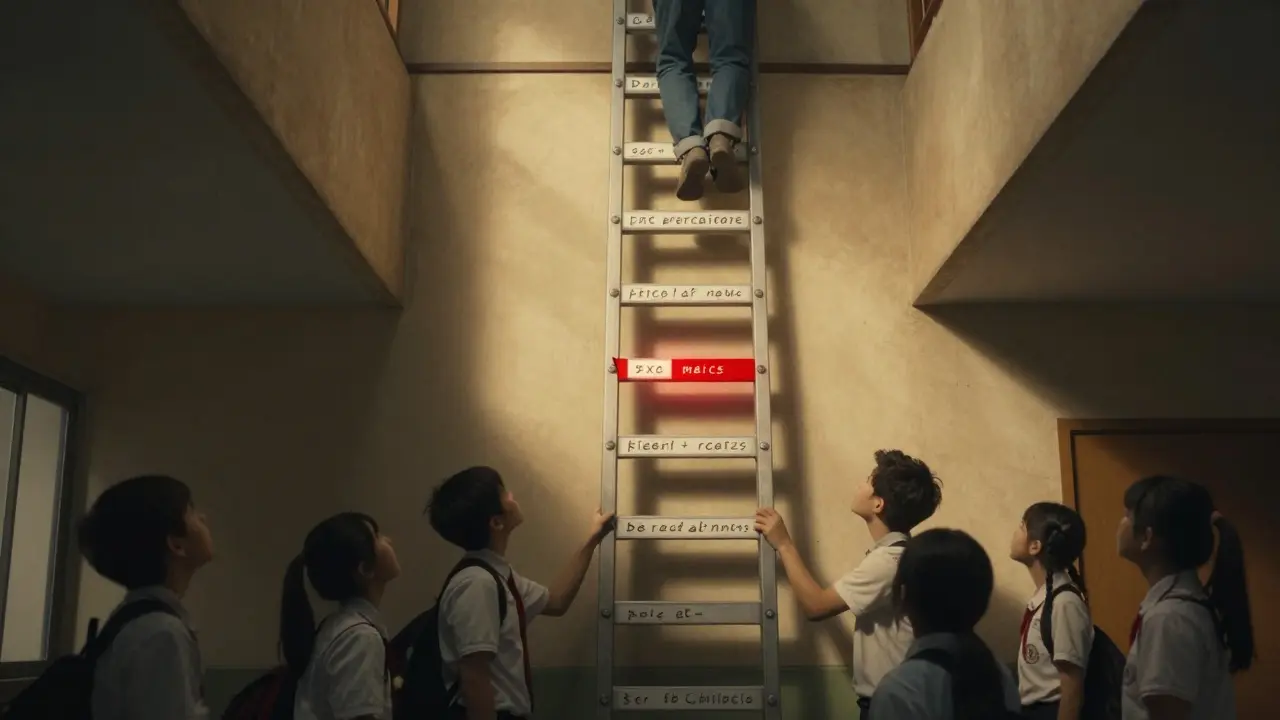
Science has labs. History has stories. English has books you can actually enjoy. But math? It’s a ladder. If you miss one rung, you’re stuck. A student who didn’t fully get fractions in 5th grade will struggle with ratios in 7th. That leads to algebra anxiety. Then geometry. Then trig. By 11th grade, they’re staring at a calculus problem like it’s written in another language - because, in a way, it is.
It’s not just the content. It’s the way it’s taught. Teachers often move fast. If you don’t get it the first time, you’re told to "just practice more." But practice doesn’t fix gaps. It just buries them deeper. A 2023 study from the National Center for Education Statistics found that 42% of U.S. high school students report feeling "constant stress" when doing math homework. That’s not just nerves - it’s learned helplessness.
The Domino Effect
Math fear doesn’t stay in math class. It spreads. Students who dread math start avoiding STEM classes altogether. They drop physics. They skip advanced biology. They tell themselves, "I’m just not a math person." And suddenly, careers in engineering, computer science, or even nursing - fields that need basic quantitative skills - feel out of reach.
It’s not about talent. It’s about timing. One teacher in North Carolina told me her students who struggled most weren’t slow learners. They were just one unit behind. A bad test in February of 9th grade. A missed tutoring session. A parent who couldn’t help because they’d forgotten their own algebra. By junior year, they’d convinced themselves they were "bad at math." But they weren’t. They were just stuck.
Other Contenders - But None as Deep
Some say physics is worse. It’s true - physics combines math with abstract concepts like force and energy. But physics usually comes after you’ve already survived algebra and trig. So if you made it through those, physics feels like a puzzle, not a prison.
Chemistry? It’s full of memorization. Periodic tables, reaction formulas, moles. It’s overwhelming. But memorization can be brute-forced. You can cram. Math doesn’t work that way. You can’t memorize how to solve a quadratic equation if you don’t understand why the formula works.
Foreign languages? They’re hard, but they’re fun. You get to watch movies, sing songs, talk to real people. Math? You sit alone with a worksheet. No reward until you get it right. And if you don’t? You feel dumb.
What Actually Helps
The schools that fix this don’t just hire better teachers. They change how they teach.
- They use visual tools - graphing apps, manipulatives, real-world examples like budgeting or sports stats.
- They let students retry problems without penalty. One school in Ohio lets kids redo quizzes until they pass. Their pass rate in algebra jumped from 58% to 87% in two years.
- They pair students up. Peer teaching works. When a 10th grader explains factoring to a 9th grader, they both learn better.
And here’s the quiet truth: most students who say they "hate math" actually hate being stuck. They hate the silence after they raise their hand and no one helps. They hate the shame of falling behind while everyone else seems to get it.
It’s Not About Being "Smart"
There’s a myth that math people are born with it. That’s false. The students who ace math aren’t geniuses. They’re the ones who asked for help early. They’re the ones who kept trying after failing. They’re the ones who found a tutor, a friend, or a YouTube video that finally clicked.
One student I talked to in Asheville said, "I failed algebra twice. Then I found a teacher who didn’t care how slow I was - she just made sure I understood. Now I’m taking calculus. I didn’t get smarter. I just stopped being afraid."

What You Can Do
If you’re a student scared of math:
- Stop saying "I’m bad at math." Say "I’m stuck on this part."
- Find one concept you used to understand - maybe fractions or decimals - and rebuild from there.
- Use free tools: Khan Academy, Photomath, or even TikTok math tutors. Millions of students learn this way now.
- Ask for help before you’re drowning. Don’t wait until the test.
If you’re a parent or teacher:
- Don’t say "It’s easy!" That shuts them down.
- Ask: "What part feels confusing?" Then listen.
- Normalize struggle. Say: "I didn’t get this either when I was your age."
It’s Fixable
Math isn’t the enemy. Fear is. And fear grows in silence. The most feared subject in school isn’t math because it’s hard. It’s math because we let students feel alone in it.
Change that, and you change everything. Students stop hiding. They start asking. They start trying. And slowly, the fear fades - not because the problems got easier, but because they finally felt seen.
Why is math the most feared subject in school?
Math is feared because it builds on itself - if you miss one concept, everything after becomes harder. Unlike subjects where you can memorize or guess your way through, math requires understanding. Missing a lesson in algebra can derail you in geometry, trig, and beyond. This creates a cycle of frustration, shame, and avoidance that many students never escape.
Is physics or chemistry harder than math?
Physics and chemistry can feel harder because they involve more complex ideas, but they usually come after foundational math skills. If a student has already struggled with algebra, then physics becomes a double challenge. But math is feared earlier and more universally - it’s the gatekeeper. You don’t need to like chemistry to graduate, but you do need to pass math.
Can someone get better at math even if they’ve always struggled?
Yes. Math ability isn’t fixed. Many students who failed math in 9th grade go on to pass calculus by rebuilding their skills slowly. The key is identifying the exact gap - maybe it’s fractions, negative numbers, or equations - and working backward from there. Tools like Khan Academy and tutoring apps make this possible without shame.
How do schools reduce math anxiety?
Schools that succeed focus on patience, not speed. They allow retakes, use visual learning tools, and teach math through real-life contexts like budgeting, sports, or cooking. Some let students work in pairs or use apps that give instant feedback. The goal isn’t perfection - it’s progress. One school in Ohio saw algebra pass rates jump from 58% to 87% by letting students redo quizzes until they mastered them.
What should I do if I’m afraid of math?
Start by naming the specific part that scares you - not "math," but "I don’t get linear equations." Then find one free resource - like a YouTube channel, app, or tutor - and spend 15 minutes a day on it. Talk to a teacher or counselor. You’re not alone. Millions of students have been where you are. The only thing that matters is that you keep trying.
Math isn’t about being smart. It’s about being persistent. And persistence is something every student can learn.
Patrick Sieber
February 13, 2026 AT 11:56Math isn't the problem - it's how we treat failure in it. I remember failing algebra twice, and no one ever sat down with me to figure out where I lost the thread. It wasn't that I was dumb. I just needed someone to say, "Let's go back to fractions." No judgment. No rush. Just patience.
Now I'm in my third year of engineering. The difference? I found a tutor who treated mistakes like detours, not dead ends. Math doesn't care how fast you go. It just wants you to show up, one step at a time.
Kieran Danagher
February 14, 2026 AT 16:38Of course math is the most feared subject. It's the only one where you get a grade for not knowing something you never got taught in the first place.
Teacher moves on. Kid falls behind. Kid gets labeled "slow." Kid stops trying. Rinse. Repeat. It's not a learning system. It's a sorting machine disguised as education.
mani kandan
February 15, 2026 AT 02:50The beauty of math lies in its honesty. It doesn't flatter you with stories or let you escape behind pretty prose. You either grasp it or you don't - and that brutal clarity is what terrifies most. But here's the twist: that same honesty is what makes it beautiful once you break through.
I once tutored a girl who thought she was "bad at math" because she'd failed three times. We started with pizza fractions. Two weeks later, she was solving systems of equations while humming Bollywood tunes. It wasn't magic. It was momentum.
Rahul Borole
February 16, 2026 AT 09:16It is imperative to recognize that mathematical proficiency is not an innate attribute but a cumulative skill developed through consistent, structured engagement. The pedagogical paradigm in contemporary education often prioritizes speed over depth, thereby fostering an environment wherein foundational deficits are systematically exacerbated.
Empirical evidence, including the 2023 NCES study cited, underscores the necessity of remediation protocols that emphasize iterative mastery rather than summative assessment. Institutions that implement mastery-based progression demonstrate statistically significant improvements in both retention and self-efficacy among learners.
Sheetal Srivastava
February 17, 2026 AT 04:21Let’s be real - math anxiety is just the symptom. The disease is capitalism’s obsession with quantifiable output. They don’t want you to understand algebra. They want you to be a cog in the machine that can fill out a spreadsheet and shut up.
And don’t even get me started on how they weaponize "growth mindset" to make you feel guilty for hating a system designed to exclude you. You’re not broken. The system is.
Bhavishya Kumar
February 18, 2026 AT 16:52There is a profound linguistic deficiency in the current pedagogical discourse surrounding mathematics. The term "I’m bad at math" is grammatically and semantically inaccurate. One does not possess an intrinsic quality of "badness" toward mathematics; rather one has experienced insufficient scaffolding.
Moreover, the passive voice employed in phrases like "math is feared" obscures agency. Who fears it? Why? These questions remain unaddressed in mainstream discourse, perpetuating systemic ignorance.
ujjwal fouzdar
February 18, 2026 AT 20:06Math is the mirror society holds up to our deepest insecurities - not because it's hard, but because it doesn't lie.
You can fake a history essay. You can memorize a poem. You can bluff your way through a science lab with charm and duct tape. But math? Math stares at you. It asks: "Did you really try?" And if the answer is no - it doesn't care about your feelings.
That's why we hate it. Not because we're stupid. But because it forces us to face the quiet truth: we stopped trying long before we stopped understanding.
And maybe that's the real lesson: math doesn't teach you equations. It teaches you how to show up when you're afraid.
So yeah. I failed algebra twice. But I showed up the third time. And that? That was the real equation.
Eka Prabha
February 20, 2026 AT 07:13Let me tell you something about math education - it’s not broken. It’s working exactly as intended. The system doesn’t need everyone to understand calculus. It just needs enough people to feel defeated so they don’t challenge the power structures that rely on quantitative ignorance.
And don’t get me started on "Khan Academy" - free resources don’t fix systemic oppression. They just make the oppressed feel like they’re solving their own problems while the real institutions sit back and profit.
You think a YouTube video fixes trauma from being called "slow" in front of 30 kids? Wake up.