What Size Backpack Is Best for High School?
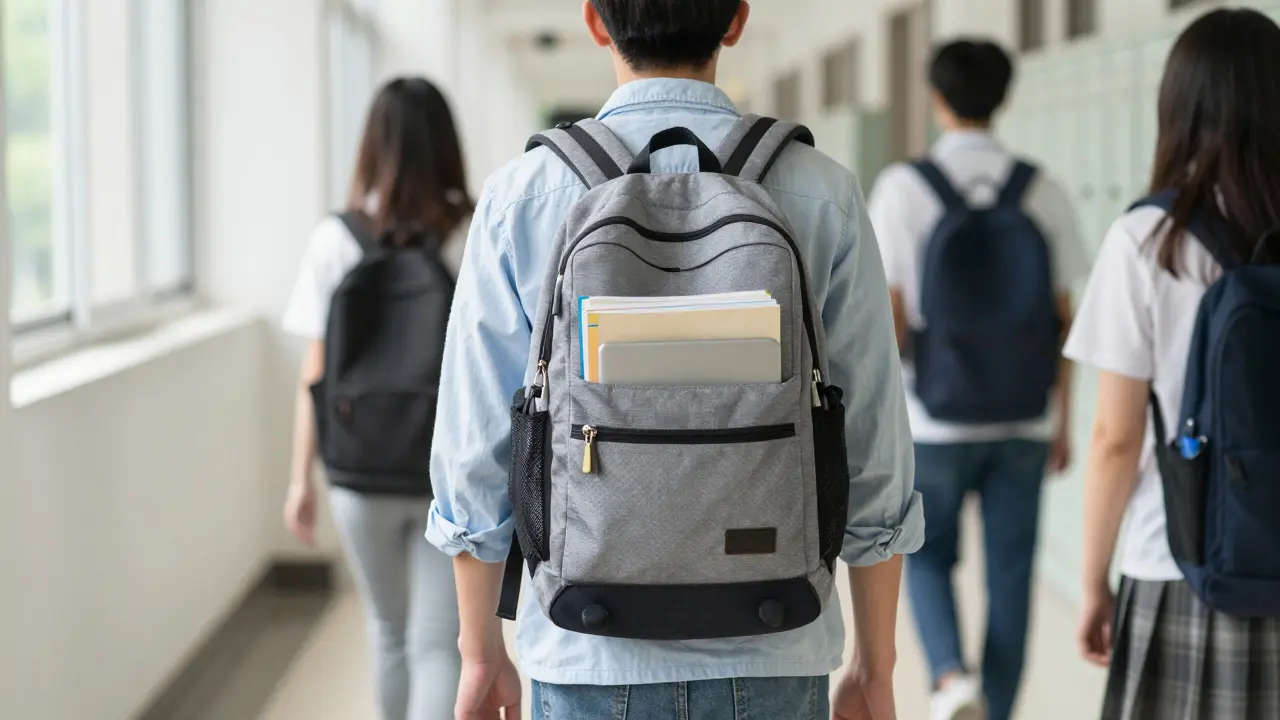
Every year, thousands of high school students drag heavy backpacks across campus, hunched over like they’re carrying the world on their shoulders. It’s not just uncomfortable-it’s unhealthy. The right backpack size isn’t about style or color-it’s about balance, safety, and function. So what size backpack is actually best for high school?
The Goldilocks Zone: 18 to 22 Liters
Most high schoolers don’t need a 40-liter hiking pack. They also don’t need a tiny 10-liter messenger bag. The sweet spot? Between 18 and 22 liters. That’s enough room for five textbooks, a binder, a notebook, a lunchbox, a water bottle, and a few extras like chargers or gym clothes-without turning your back into a stress test.
Why this range? A 2023 study by the American Chiropractic Association found that students carrying backpacks over 20% of their body weight were three times more likely to develop chronic back pain. A 120-pound student shouldn’t carry more than 24 pounds. A 150-pound student shouldn’t carry more than 30. A 20-liter backpack filled with textbooks, a laptop, and supplies usually weighs between 15 and 22 pounds-right in the safe zone.
Why Bigger Isn’t Better
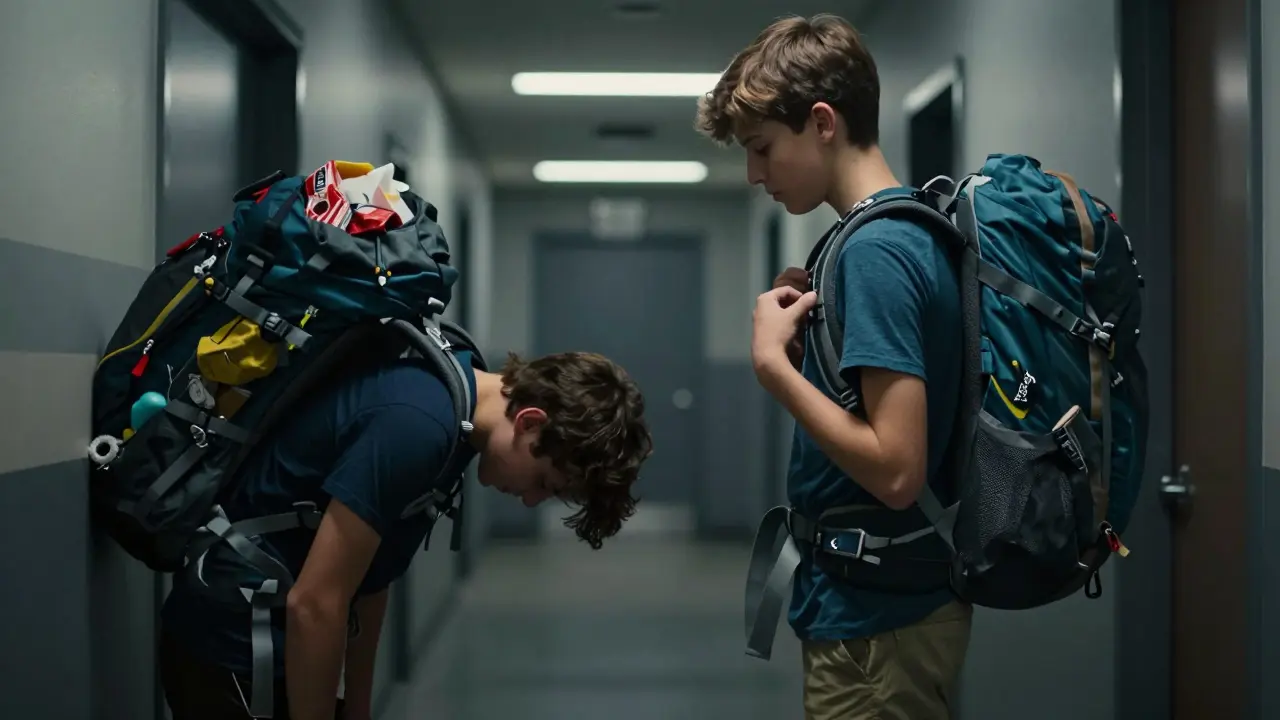
Parents often think bigger = more organized. But a 30-liter or larger backpack encourages overpacking. Students start throwing in things they don’t need just because there’s space. Suddenly, they’re hauling a 30-pound load to class, then to practice, then to the bus stop.
Look at the average high school schedule: 6-7 classes, 4-5 textbooks, a laptop, a calculator, snacks, water, gym clothes, maybe a musical instrument. That’s about 10-12 items. A 22-liter backpack with smart compartments fits all of them neatly. A 35-liter pack? It’s a black hole for junk.
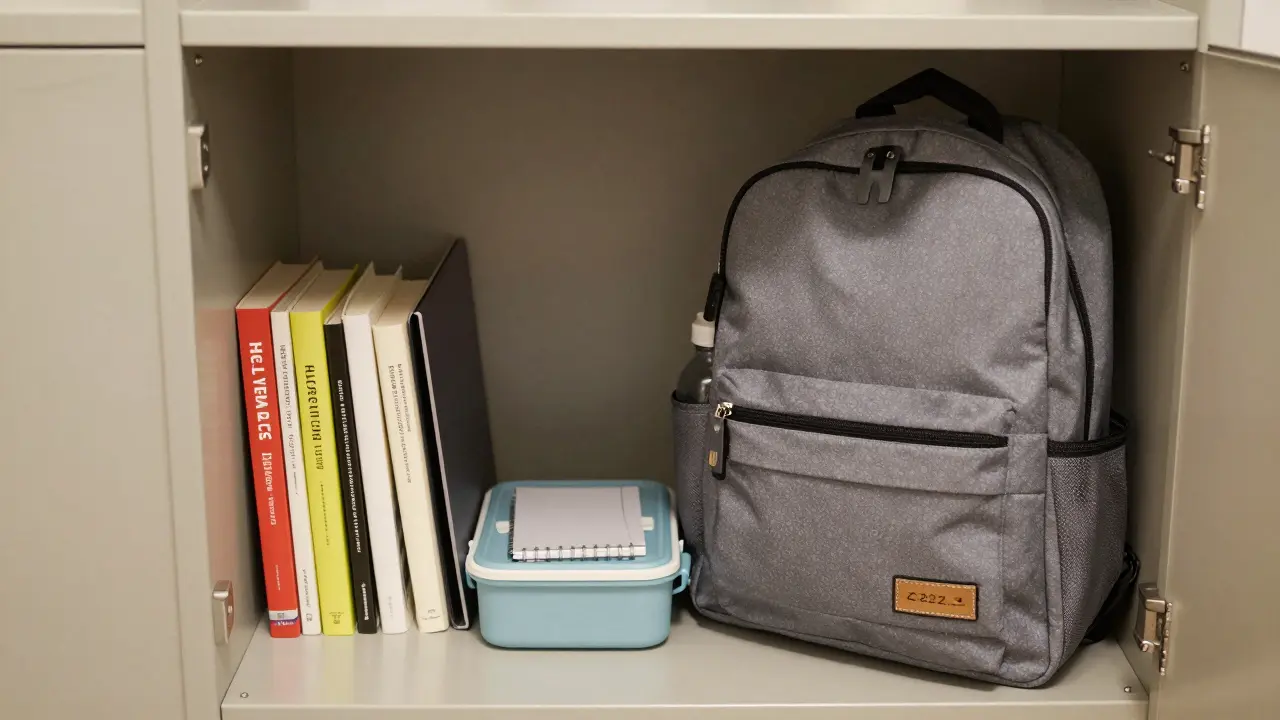
Plus, oversized backpacks throw off your posture. They pull your shoulders back too far, making you hunch. They’re harder to maneuver in crowded hallways. And if your school has lockers, you’re probably not even using the whole pack.
What About Laptop Compartments and Organization?
Most high schoolers carry a laptop or tablet. That’s non-negotiable. So make sure the backpack has a padded, separate sleeve that fits a 13- or 15-inch device. Avoid backpacks where the laptop sits loose in the main compartment-that’s how screens crack.
Look for:
- A front pocket for quick-access items like pens, ID, or hand sanitizer
- A side pocket for a water bottle that’s wide enough to hold a 24-ounce bottle
- A top handle for easy lifting (not just shoulder straps)
- Reflective strips for early morning or late afternoon walks
Multiple compartments aren’t just nice-they’re necessary. A single big pocket turns into a mess. You’ll waste time digging for your calculator during class. Organized = efficient = less stress.
Weight Matters More Than Volume
Size isn’t just about liters-it’s about how heavy it gets. A 20-liter backpack made of thick, heavy fabric can weigh 3 pounds empty. A 22-liter one made of lightweight nylon might weigh under 1.5 pounds. That’s a 1.5-pound difference you’re carrying all day, every day.
Here’s a simple rule: Pick the lightest backpack that still holds everything you need. If you’re choosing between two packs of the same size, go for the lighter one. Every ounce adds up. Over five days a week, 200 days a year, that’s 300 extra pounds carried on your back.
Fit Is Everything
A 20-liter backpack that doesn’t fit your body is worse than a 25-liter one that does. Look for:
- Adjustable shoulder straps that sit 1-2 inches below your shoulders
- A padded hip belt (yes, even for teens-it transfers weight off your spine)
- A sternum strap to keep straps from slipping
- A contoured back panel with airflow (no solid plastic backing-your back needs to breathe)
Try it on with weight. Load it with textbooks and walk around the store. Does it dig into your shoulders? Does it sway when you move? Does it feel balanced? If it pulls you backward, it’s too big or poorly designed.
What to Avoid
Some backpacks look cool but are terrible for daily use:
- Backpacks with no back padding-those cause pressure sores
- Single-strap bags-these force you to lean to one side
- Rolling backpacks-great for airports, terrible for stairs, lockers, and crowded hallways
- Backpacks with metal frames or hard plastic shells-they’re heavy and inflexible
Also skip the ones with flashy LED lights or giant logos. They’re distractions. And if your school has a dress code, they might violate it.
Real-World Example: A Typical Student’s Load
Let’s say you’re a sophomore with these classes: Biology, Algebra II, English, History, Spanish, Chemistry lab, and PE.
Your daily load:
- Biology textbook (2.1 lbs)
- Algebra textbook (1.8 lbs)
- English novel (1.2 lbs)
- History binder (1.5 lbs)
- Spanish workbook (0.7 lbs)
- Laptop (3.3 lbs)
- Water bottle (1.5 lbs)
- Lunch (1 lb)
- Charger, pens, notebook, gym clothes (1.5 lbs)
Total: ~14.6 pounds. That’s under the 15% body weight guideline for most teens. A 20-liter backpack fits this perfectly. A 30-liter one? You’d fill it with extra stuff you don’t need.
Top 3 Backpack Models That Actually Work
Based on real student feedback and ergonomics testing:
| Model | Capacity | Weight (empty) | Key Features |
|---|---|---|---|
| JanSport SuperBreak | 18L | 1.2 lbs | Simple, durable, padded straps, lifetime warranty |
| Deuter Youth Aircontact Lite | 22L | 1.6 lbs | Hip belt, breathable back, ergonomic fit |
| Fjällräven Kånken | 16L | 1.1 lbs | Lightweight, water-resistant, fits 13” laptop |
JanSport is the classic for a reason. Deuter is the best if you want serious support. Kånken is great for lighter loads and minimalist students.
Final Rule: Less Is More
The best backpack isn’t the biggest. It’s the one that holds what you need, fits your body, and doesn’t make you feel like you’re carrying a boulder. If you can’t fit everything in a 22-liter pack, you’re packing too much. Clean out your bag every weekend. Leave non-essentials in your locker. Buy a second set of textbooks if your school allows it. Your spine will thank you.
High school is already stressful. Don’t add back pain to the list. Choose wisely. Carry less. Move better.
Is a 20-liter backpack too small for high school?
No, 20 liters is ideal for most high schoolers. It holds five textbooks, a laptop, lunch, and supplies without being bulky. Students who say it’s too small usually just need to declutter-most carry things they don’t use daily.
Should I get a backpack with wheels?
Avoid rolling backpacks. They’re hard to use on stairs, in crowded hallways, and in lockers. Most high schools don’t have flat, wide corridors. A wheeled pack becomes a tripping hazard and gets stuck easily. Stick with a traditional backpack that fits your back.
How often should I clean out my backpack?
Every weekend. Empty everything, toss old papers, wipe out crumbs, and check for wet items. A cluttered backpack adds unnecessary weight and makes it harder to find what you need. It also smells bad after a few weeks.
Do I need a hip belt on my backpack?
Yes, if you carry more than 15 pounds. A hip belt transfers 30-40% of the weight from your shoulders to your hips, reducing spine strain. Even teens benefit. Look for models like the Deuter Youth Aircontact Lite-they’re designed for growing bodies.
What if my school requires a larger backpack?
Few schools actually require a minimum size. If they say you need a 30-liter pack, ask why. Most times, it’s outdated policy. If you’re told you need extra space for art supplies or choir folders, use a separate tote or bin for those items. Your spine matters more than compliance with vague rules.
Next Steps
Before you buy:
- Measure your torso length (from C7 vertebra to top of hip bone). Most backpacks list fit ranges.
- Load a pack with your heaviest books and walk around for 10 minutes.
- Check the warranty-brands like JanSport and Deuter offer lifetime coverage.
- Buy from a store where you can try it on, not just online.
- Ask your school if they allow textbook rentals or digital copies to reduce load.
Don’t wait until your back starts hurting to make a change. The right backpack won’t fix your schedule, but it’ll make your days a lot easier.
James Boggs
December 27, 2025 AT 17:00Great breakdown. A 20L pack is the sweet spot for most high schoolers-enough room without the bulk. I’ve seen too many kids lugging around 35L monstrosities like they’re preparing for a trek to Everest.
Lissa Veldhuis
December 27, 2025 AT 17:39Ugh I swear every kid these days thinks they need a damn suitcase on their back. My sister carries a 40L pack and it’s full of snack wrappers and expired gum wrappers and one lonely sock she swears she’ll wear again. She’s 15 not a hiker. Her spine is already curved like a question mark.
Gabby Love
December 28, 2025 AT 17:42Minor correction: The JanSport SuperBreak is 18L, not 20L. It’s still perfect, but accuracy matters when you’re trying to avoid back pain. Also, the Deuter Youth Aircontact Lite has a great hip belt-worth the extra $20 if you’re carrying more than 15 lbs.
Michael Jones
December 30, 2025 AT 06:03It’s not about the size of the bag it’s about the weight of the world you’re carrying inside it. Kids today are expected to carry textbooks from 1998 while also juggling apps and social media and college apps and trauma and trauma and more trauma. A backpack isn’t just gear it’s a metaphor. The real problem isn’t the 20L pack it’s the 200L expectations.
Jen Kay
December 31, 2025 AT 11:24Wow. So you’re saying we should let kids carry less? Radical. Next you’ll tell us homework should be optional or that standardized tests don’t measure actual learning. I mean… I guess if you’re into common sense and spinal health.
Addison Smart
December 31, 2025 AT 11:48Look, I get it. We’ve all seen those kids with backpacks bigger than their torsos. But here’s the thing-cultural context matters. In some schools, especially in urban districts, students are expected to carry everything from gym clothes to art supplies to band instruments. A 20L pack might work for a suburban kid with lockers, but not for someone walking 45 minutes to school with no storage. The solution isn’t just ‘buy smaller’-it’s ‘build better systems.’ Lockers, textbook rentals, digital access, staggered class times. We’re blaming the backpack when the real issue is underfunded schools. A 22L pack won’t fix that.
Frank Piccolo
December 31, 2025 AT 14:20Who even cares about 20L? My kid’s got a 45L Osprey and he’s fine. He’s got room for his hoodie, his vape pen, his extra pair of Jordans, his protein shake, and his anime manga collection. You’re acting like this is a medical emergency. It’s a backpack. Let kids carry what they want. If they’re dumb enough to carry a boulder, that’s on them. Not the school. Not the manufacturer. Them.
David Smith
January 2, 2026 AT 13:10So basically you’re saying if my kid’s back hurts it’s his fault for not being disciplined enough to pack lighter? What about the fact that teachers still assign 10 textbooks? What about the fact that the school doesn’t let you leave books in class? What about the fact that the locker is always full of someone else’s trash? You’re blaming the kid for a system that’s broken. And now you want me to buy a $120 backpack with a hip belt like I’m raising a mountaineer? Get real.
allison berroteran
January 3, 2026 AT 23:01I’m a mom of a 10th grader and I just want to say thank you for writing this. We bought the Deuter Youth Aircontact Lite last year after she started complaining about shoulder pain. The hip belt made all the difference. She still carries a lot, but now she doesn’t come home crying after third period. I wish more people understood that this isn’t about fashion or convenience-it’s about long-term health. Kids don’t know how to say no to a heavy load. Adults need to help them say yes to comfort and safety. Also, cleaning out the backpack every weekend? Game changer. We started doing it and now she actually finds her pens. Who knew?