Which Is the Toughest Grade in High School?

Everyone asks which grade is the toughest in high school. The answer isn’t a single year-it’s the year that hits you hardest based on what you’re carrying. For most students, that’s junior year. But not everyone feels it the same way. Some break under the weight of AP exams. Others drown in college applications. A few just can’t shake the pressure of maintaining a 4.0 while juggling a part-time job. So what makes one year harder than the rest? Let’s break it down.
Junior Year: The Perfect Storm
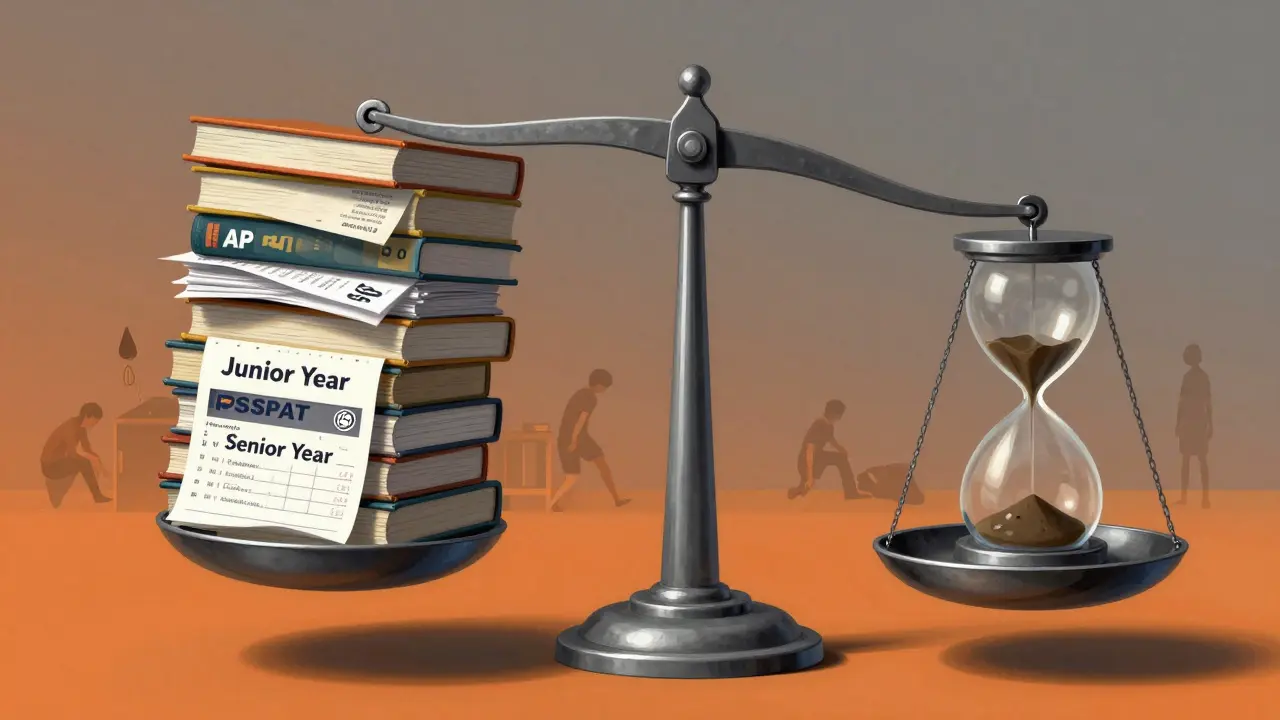
Junior year isn’t just hard-it’s engineered to be overwhelming. This is when schools pile on Advanced Placement (AP) or International Baccalaureate (IB) courses. You’re expected to take at least three of them, often in subjects you’ve never studied before. A typical schedule might include AP Calculus, AP Chemistry, AP English Literature, and AP U.S. History-all in the same semester. The workload doesn’t just add up; it multiplies. Each class assigns 30-50 pages of reading per week, plus weekly essays, labs, and problem sets that take hours to complete.
Then there’s the PSAT/NMSQT. It’s not just a practice test-it’s the gateway to National Merit Scholarships. One bad score can cost you thousands in college aid. Colleges start looking at your transcript more closely this year. Your GPA from junior year carries the most weight in admissions decisions. That means every B feels like a failure, even if it’s still an A-.
And it’s not just academics. College fairs, campus tours, and SAT/ACT retakes eat up weekends. You’re filling out activity logs, asking teachers for recommendation letters, and drafting personal essays-all while trying to sleep more than five hours a night. A 2024 survey by the National Association of Secondary School Principals found that 68% of juniors reported chronic stress levels above the clinical threshold. That’s not normal. That’s the system.
Senior Year: The Exhaustion Phase
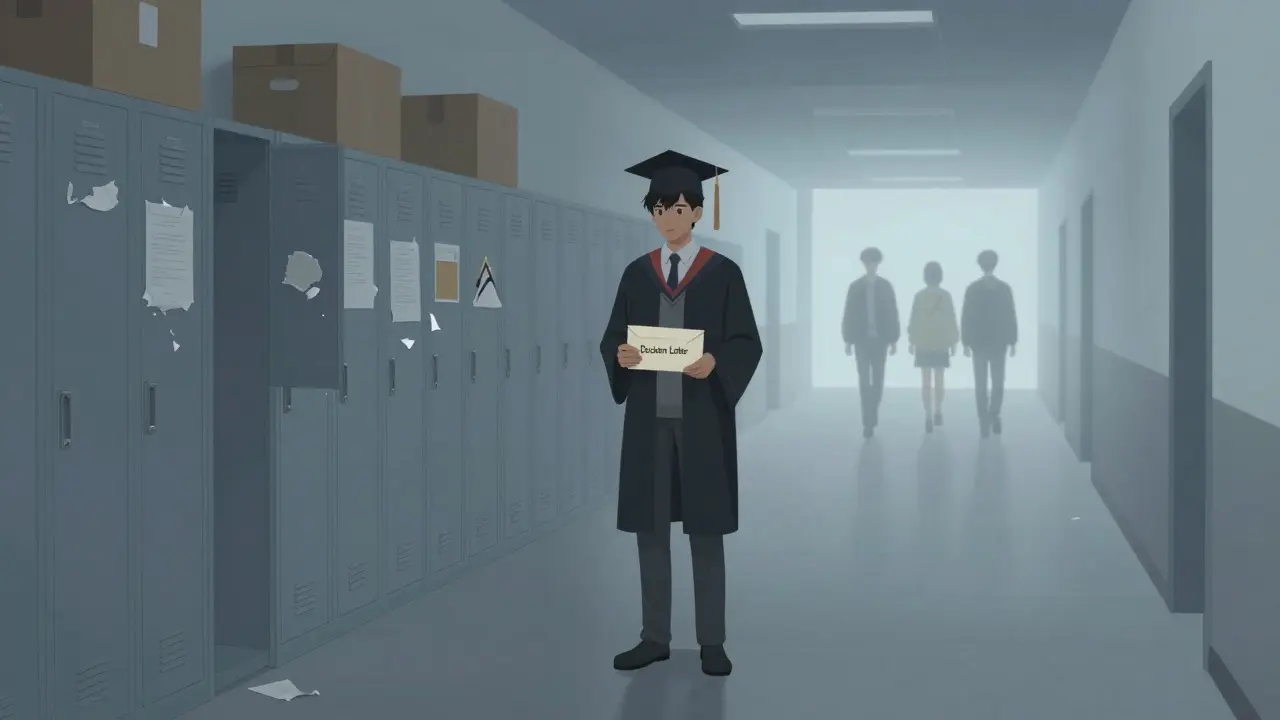
Senior year sounds like the finish line. But for many, it’s just the next marathon. You’re still taking AP classes-maybe even harder ones like AP Physics C or AP Environmental Science. The difference? Now you’re applying to college. And once you send in your applications, you’re stuck waiting. That waiting period is brutal. You can’t control whether you get in. You can’t change your grades anymore. You’re just holding your breath.
And then there’s the emotional toll. Friends are leaving. Seniors are already accepted and checking out. Teachers start treating you like you’re already gone. You’re expected to stay engaged, keep your grades up, and still participate in activities-even though your future feels out of your hands. A 2023 study by the American Psychological Association showed that 72% of seniors reported feeling “emotionally drained” during the college decision window. That’s not just stress. That’s burnout.
Some students think senior year is easier because they’re done with standardized tests. But that’s a myth. You still need to maintain your GPA. Colleges can rescind offers if your grades drop. One student in Phoenix had her acceptance to UCLA pulled after her final semester GPA dipped from 3.9 to 3.5. She didn’t fail. She just didn’t keep up.
Senior Year vs. Junior Year: What’s Really Harder?
Junior year is harder in terms of workload. Senior year is harder in terms of emotional weight.
Junior year demands you do more than you’ve ever done before. It’s physical exhaustion-staying up until 2 a.m. to finish a lab report, waking up at 6 a.m. for a 7 a.m. study group, skipping meals because you’re too tired to eat. You’re building stamina.
Senior year demands you do less while pretending you’re still fully invested. It’s mental exhaustion-the constant replay of “What if I don’t get in?” “What if I chose the wrong school?” “What if I’m not good enough?” You’re managing uncertainty.
Neither is easy. But if you had to pick one that breaks more students, it’s junior year. Why? Because you’re not prepared for it. No one tells you how much it will change you. You walk into 11th grade thinking you’ve handled tough classes before. Then you get your first AP exam score back: a 2. And suddenly, you realize you’re not just competing with your classmates-you’re competing with students from schools that have had AP programs for decades.
What About Freshman and Sophomore Years?
Freshman year is scary-but not because of the work. It’s because you’re new. You don’t know where the bathrooms are, who to sit with at lunch, or how to talk to teachers without sounding like a kid. The workload? Manageable. Most schools ease you in. You take one or two honors classes, maybe one AP if you’re ambitious.
Sophomore year is where things start to shift. You’re no longer the newbie. You’re expected to step up. This is when many students start taking AP courses. But the pressure hasn’t peaked yet. You still have time to recover from a bad grade. You haven’t started college applications. You still have breathing room.
That’s why sophomore year is the quiet prep stage. Junior year is the explosion.
What About Honors vs. AP vs. IB?
Not all hard classes are created equal. AP courses are standardized across the country. The exams are scored by the College Board. You’re graded on a curve that includes students from every state. IB programs are even more intense. They require extended essays, internal assessments, and community service hours on top of six subject exams. Honors classes? They’re harder than regular classes, but they don’t have national exams. That means your grade is mostly based on your teacher’s judgment.
If you’re aiming for top colleges, AP and IB are non-negotiable. But they’re also the biggest stressors. A student in Flagstaff took five AP classes in junior year. She slept an average of 4.8 hours per night. She lost 12 pounds. She didn’t cry. She just stopped talking to friends. Her parents didn’t realize how bad it was until she collapsed during a practice SAT.
How to Survive the Toughest Year
You can’t avoid junior year. But you can manage it.
- Plan your schedule early. Don’t wait until spring to sign up for AP classes. Talk to your counselor in February. Ask which teachers have the highest failure rates. Ask which ones give the most feedback.
- Use your summer. If you’re taking AP Biology or AP Chemistry, start reviewing over the summer. Khan Academy and Fiveable have free prep courses. Even 30 minutes a day cuts your workload in half come September.
- Build a support system. Find one adult you trust-a teacher, a coach, a relative. Not your mom. Someone who won’t panic when you say you’re overwhelmed.
- Protect your sleep. Your brain needs 7-9 hours. Pulling all-nighters doesn’t make you smarter. It makes you slower. You’ll forget what you studied. You’ll make careless mistakes.
- Accept that you won’t be perfect. A 3.8 GPA with a 5 on three AP exams is better than a 4.0 with three 3s. Colleges care about challenge, not just perfection.
What Comes After?
When junior year ends, you’ll look back and wonder how you made it. You’ll realize you didn’t just survive-you grew. You learned how to manage time under pressure. You learned how to ask for help. You learned that your worth isn’t tied to a grade.
That’s the real lesson. The toughest grade isn’t the one with the most homework. It’s the one that forces you to become someone who can handle more than you thought possible.
Is senior year harder than junior year?
It depends. Junior year is harder academically-more classes, more exams, more pressure to build your transcript. Senior year is harder emotionally-you’re waiting for college decisions, watching friends leave, and trying to stay motivated when your future feels out of your control. Both are tough, but in different ways.
Do colleges care more about junior year grades?
Yes. Colleges look at your entire transcript, but junior year carries the most weight because it’s the most recent full year before you apply. A strong junior year can make up for a rough sophomore year. A drop in junior year can undo years of good work.
Can you recover from a bad junior year?
You can, but it’s harder. If you had a rough semester, focus on improving in senior year. Take harder classes and show growth. Write about your struggles in your college essay. Colleges value resilience more than perfection. But you still need strong senior-year grades to prove you’ve turned things around.
Should I take 5 AP classes in junior year?
Only if you can handle it without burning out. Top colleges don’t care how many APs you take-they care if you’re challenged and succeeding. Taking 3-4 APs and earning 4s and 5s looks better than taking 5 and scraping by with 2s and 3s. Quality over quantity.
What’s the best way to prepare for AP exams?
Start early. Use official College Board practice tests. Review one unit per week starting in January. Join free online study groups on Fiveable or YouTube. Don’t wait until April to start cramming. AP exams test understanding, not memorization.