Why Are Fjällräven Backpacks So Popular Among High School Students?
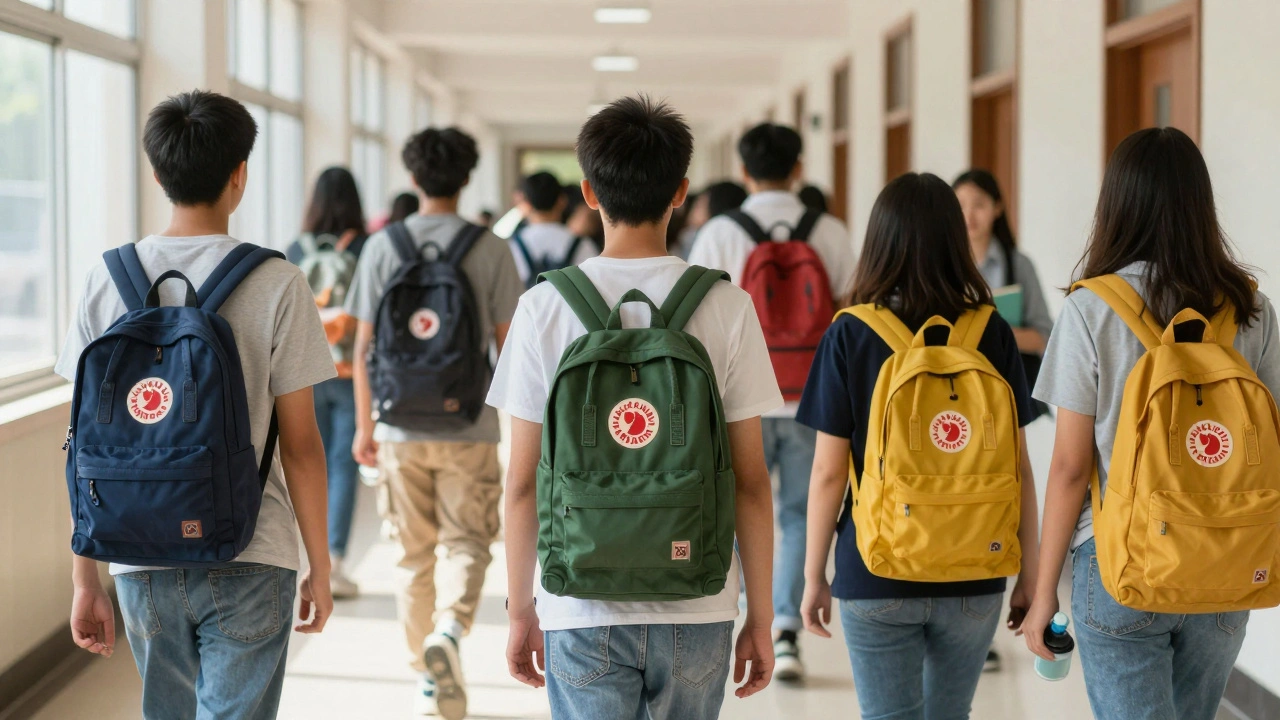
Every fall, as students head back to school, one backpack keeps showing up in hallways, on buses, and in lunch lines - the Fjällräven Kånken. It’s not the flashiest, it doesn’t have 17 pockets, and it doesn’t cost less than a pizza. But somehow, it’s everywhere. Why? If you’ve ever wondered why a simple, boxy backpack from a Swedish company became a staple in American high schools, the answer isn’t just about looks. It’s about durability, practicality, and a quiet kind of reliability that teens and parents both notice.
It’s Built to Last, Not to Look Fancy
Most high school backpacks break within a year. Zippers snap, straps tear, bottoms unravel. Students carry 20-30 pounds of books, laptops, gym clothes, and lunchboxes. A cheap backpack can’t handle that. The Fjällräven Kånken is made from Vinylon F, a synthetic fabric that’s water-resistant, abrasion-resistant, and doesn’t fray easily. It doesn’t need a special coating or lining. It just… holds up. A 2023 survey by a Swedish consumer group found that 78% of Kånken owners still used their original backpack after five years. That’s not marketing - that’s real-life use.
Compare that to most school backpacks, which are made from thin polyester and designed for one school year. When they fail, kids get frustrated. Parents get annoyed. The Kånken doesn’t ask for much. Just a little care, and it keeps going.
It’s Lightweight - But Still Holds Everything
Weight matters. The CDC recommends students carry no more than 10-15% of their body weight. For a 120-pound teen, that’s 12-18 pounds. Many backpacks weigh 3-5 pounds empty. The Kånken? Just 1.1 pounds. That’s less than a pair of sneakers. That extra weight savings adds up over the day. You’re not dragging extra pounds around before you even load your books.
And yes, it holds everything. There’s one main compartment with a zippered top, a small front pocket for pens or a phone, and two side pockets for water bottles. No gimmicks. No extra flaps. No hidden compartments that collect lint and lost socks. It’s simple. And that simplicity means less clutter. Students aren’t digging through ten pockets trying to find their calculator. They grab it and go.
It’s Not Just a Backpack - It’s a Statement
High school is where identity starts to form. What you wear, what you carry - it sends a message. The Kånken doesn’t scream for attention. It doesn’t have logos bigger than your face. But it does stand out. Why? Because it looks different. It’s clean. It’s quiet. It’s consistent. You see the same shape on a kid in Brooklyn, a student in Austin, and a teen in Seattle. That uniformity? It’s comforting. It’s a subtle signal: I’m not trying to be the loudest. I’m just trying to get through the day.
It’s also gender-neutral. No pink or blue versions forced on kids. No gendered designs. Just colors - forest green, navy, red, gray, mustard. And yes, there are limited editions, but even those feel more like art than marketing. Students don’t buy it because it’s trendy. They buy it because it feels right.
Parents Love It - Even When Teens Roll Their Eyes
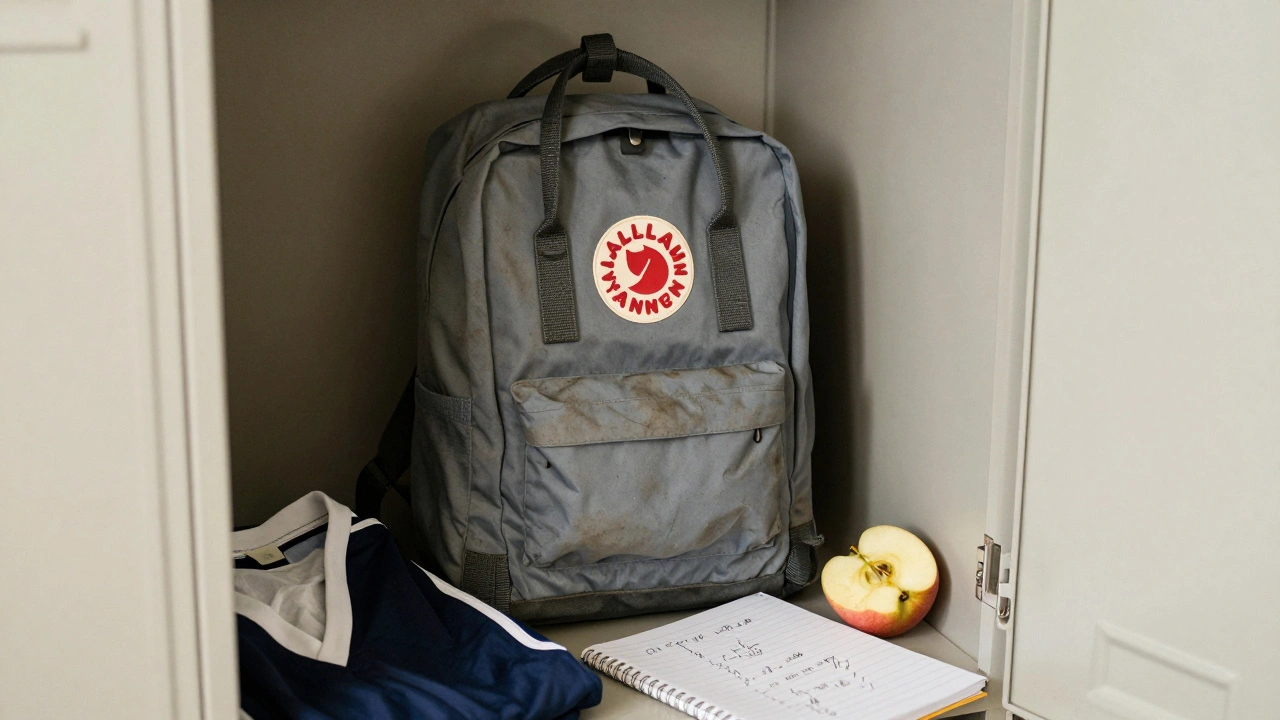
Teens might groan when their mom says, “I got you a new backpack.” But when it’s a Kånken? They don’t complain. Why? Because parents know something students don’t yet: this thing lasts. A Kånken costs $79. It’s not cheap. But it’s cheaper than buying three new backpacks a year. That’s $237 saved. And it’s easier to clean. A damp cloth wipes off mud, ink, or juice spills. No dry cleaning. No special detergents.
Plus, it’s not a fad. It’s been around since 1978. That’s longer than most students have been alive. It survived the 2000s, the rise of laptop bags, the decline of binders, and the return of paper books. It didn’t change to keep up. It just stayed the same - and that’s why it still works.
It’s Not Perfect - But It Doesn’t Need to Be
Let’s be honest. The Kånken has flaws. It doesn’t have a laptop sleeve. It doesn’t have padded straps (though newer versions have them). It’s not great for heavy loads over long distances. If you’re carrying a 15-inch laptop, a binder, a science textbook, and a full gym bag, it’ll sag. That’s why many students use it as a secondary bag - for classes, not the full load.
But here’s the thing: most high schoolers don’t carry that much every day. They rotate books. They leave some at home. They use lockers. The Kånken fits that rhythm. It’s not designed for a 30-pound load. It’s designed for the daily grind - and that’s exactly what students need.
It’s the Backpack That Grew Up With Its Users
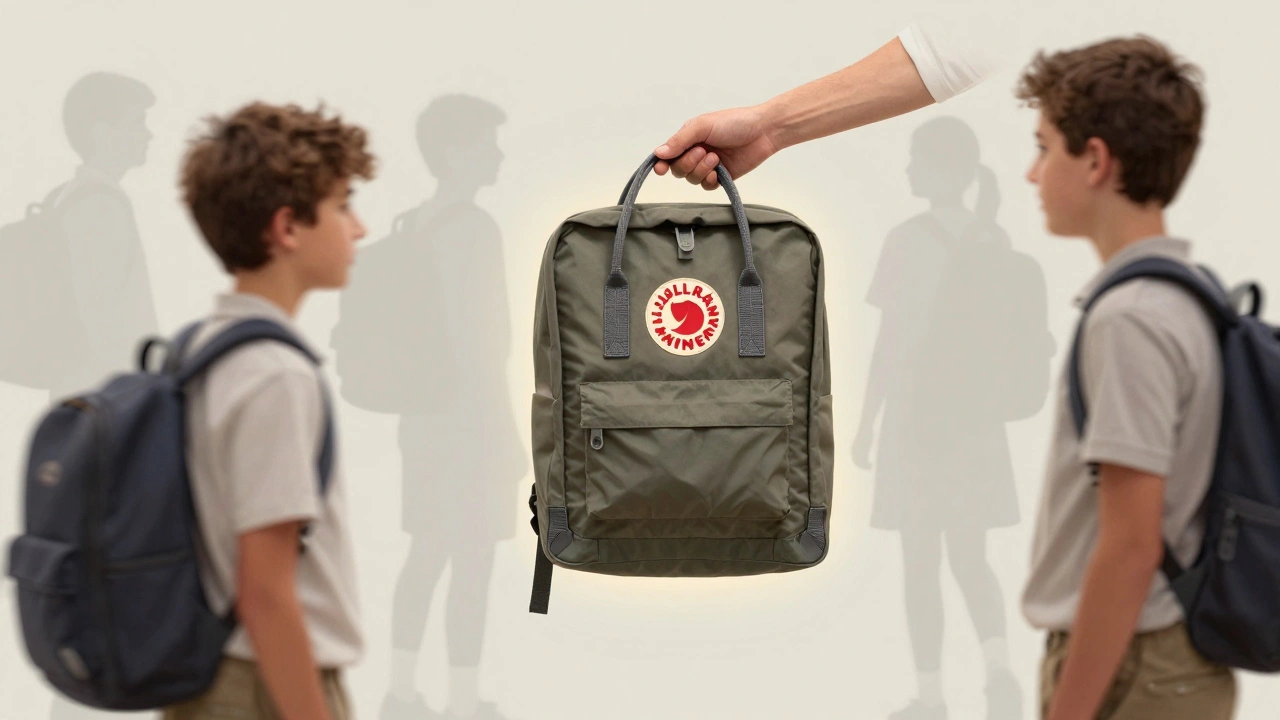
Think about it. The first Kånken users were kids in the 1980s. Now, those kids are parents. And guess what? They’re buying the same backpack for their own children. It’s not nostalgia - it’s experience. They know what breaks. They know what lasts. They’ve seen the $20 backpacks that fall apart after two months. They’ve watched their kids cry over lost homework because a zipper gave out.
The Kånken isn’t marketed to teens. It’s marketed to people who remember what it’s like to carry too much, too often. That’s why it’s popular. It’s not about fashion. It’s about function that endures.
It’s Not the Only Option - But It’s the One That Stays
There are plenty of other durable backpacks out there. Herschel, JanSport, Deuter, Osprey. Some have better padding. Some have more pockets. But none have the same quiet legacy. The Kånken doesn’t need to be the best. It just needs to be reliable. And for a high school student who’s juggling homework, sports, part-time jobs, and social life - reliability is the most valuable feature of all.
So why are Fjällräven backpacks so popular? Because they don’t promise the world. They just deliver what matters: a bag that won’t quit.
Are Fjällräven backpacks worth the price for high school students?
Yes, if you want one backpack that lasts through multiple school years. At $79, it’s more expensive than most school backpacks, but it lasts 3-5 years - often longer. Buying a $25 backpack every year adds up to more than $100 in just three years. The Kånken pays for itself by outlasting cheaper options.
Do Fjällräven backpacks have laptop compartments?
The classic Kånken doesn’t have a padded laptop sleeve. But Fjällräven now offers the Kånken Laptop, which includes a 15-inch padded compartment and a zippered front pocket for accessories. If your school requires a laptop daily, this version is the better pick.
Can you wash a Fjällräven backpack?
Yes. Hand wash with mild soap and cold water. Don’t put it in the washing machine or dryer. Let it air dry. The Vinylon F fabric resists stains and dries quickly. Most spills wipe off with a damp cloth - no deep cleaning needed.
Why do so many high schools have students with Kånken backpacks?
It’s not because of school rules or marketing. It’s because the Kånken works. It’s light, durable, simple, and holds everything most students need daily. Teachers notice it too - fewer broken zippers mean fewer lost assignments. Parents appreciate the low maintenance. Students like that it doesn’t look childish or overly trendy.
Is the Fjällräven Kånken too small for high school?
It’s medium-sized - 16 x 11.8 x 5.5 inches. That’s enough for a 13-inch laptop, a notebook, a couple of textbooks, and lunch. It’s not meant for full-day gear like a 17-inch laptop, a full locker load, or sports equipment. Most students use it for class-to-class carry and leave heavier items in lockers. If you need more space, consider the Kånken Backpack (larger version) or a different brand.
If you’re shopping for a backpack that won’t give out by Thanksgiving, the Fjällräven Kånken is still the quiet favorite - not because it’s flashy, but because it just keeps showing up.