Why Parental Involvement in High Schools Makes a Real Difference
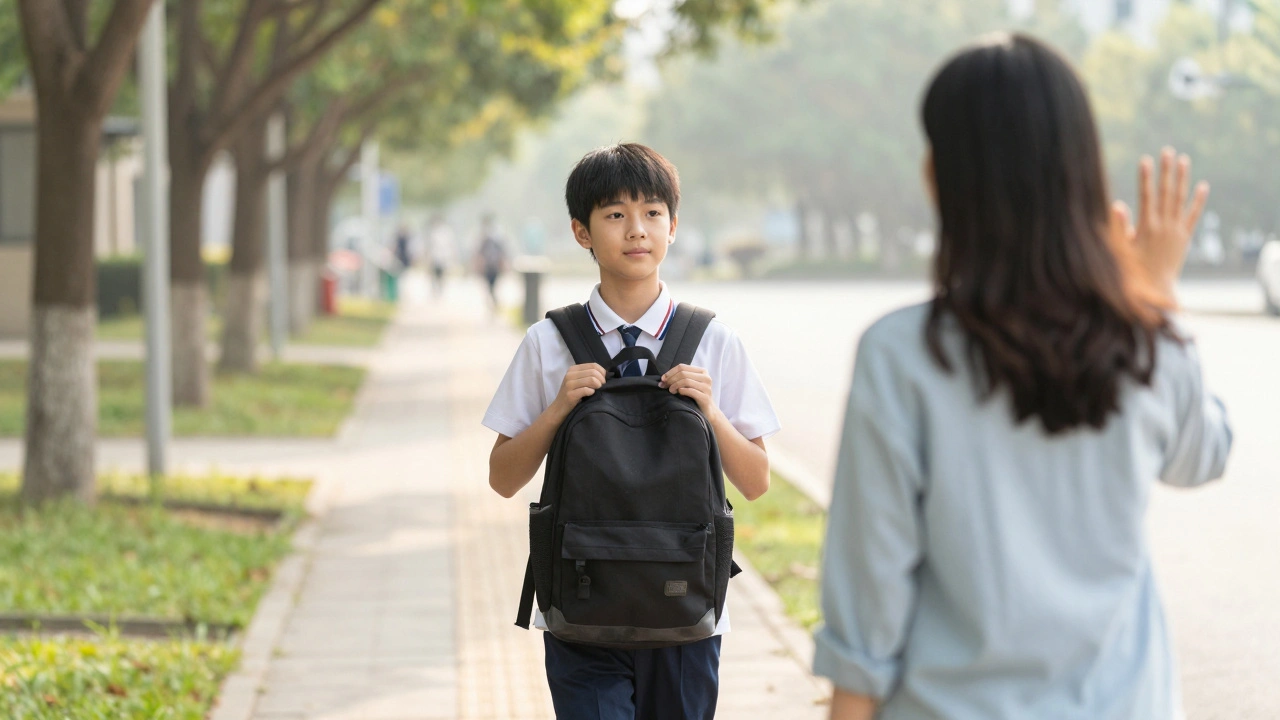
When students walk into high school, they’re not just carrying backpacks and textbooks-they’re carrying their home life too. Too often, schools act like islands, separate from the family. But the truth is simple: when parents show up, students do better. Not just in grades, but in attendance, behavior, and even long-term confidence. It’s not about helping with homework every night. It’s about being present in ways that matter.
Parental Involvement Isn’t Just About Showing Up at Meetings
Many parents think involvement means attending PTA meetings or volunteering for bake sales. Those things help, sure. But real involvement goes deeper. It’s asking your teen what they learned today. It’s knowing their teacher’s name. It’s checking in on assignments before they’re due-not because you’re micromanaging, but because you care enough to notice.
A 2023 study by the National Center for Education Statistics found that students with engaged parents were 40% more likely to earn a B or higher in core subjects. That’s not because parents did the work. It’s because students felt watched, supported, and accountable. They knew someone at home cared about their progress.
How Schools See Parental Involvement-And Why It Matters
Teachers don’t expect parents to be educators. They expect them to be partners. When a parent emails a teacher to say, “My child mentioned struggling with algebra-can we talk?” that message changes everything. It tells the teacher: this student has someone rooting for them. That’s powerful.
High schools with strong parent engagement programs report fewer disciplinary incidents. Attendance improves. College application rates go up. It’s not magic. It’s connection. When families and schools communicate regularly, students don’t fall through the cracks. They’re seen.
What Parental Involvement Looks Like in Real Life
Not every family has time for school events. That’s okay. Real involvement adapts to real life.
- Setting a quiet homework hour-even if you can’t help with the math, being home and available matters.
- Asking, “What’s something you’re proud of this week?” instead of “What’s your grade?”
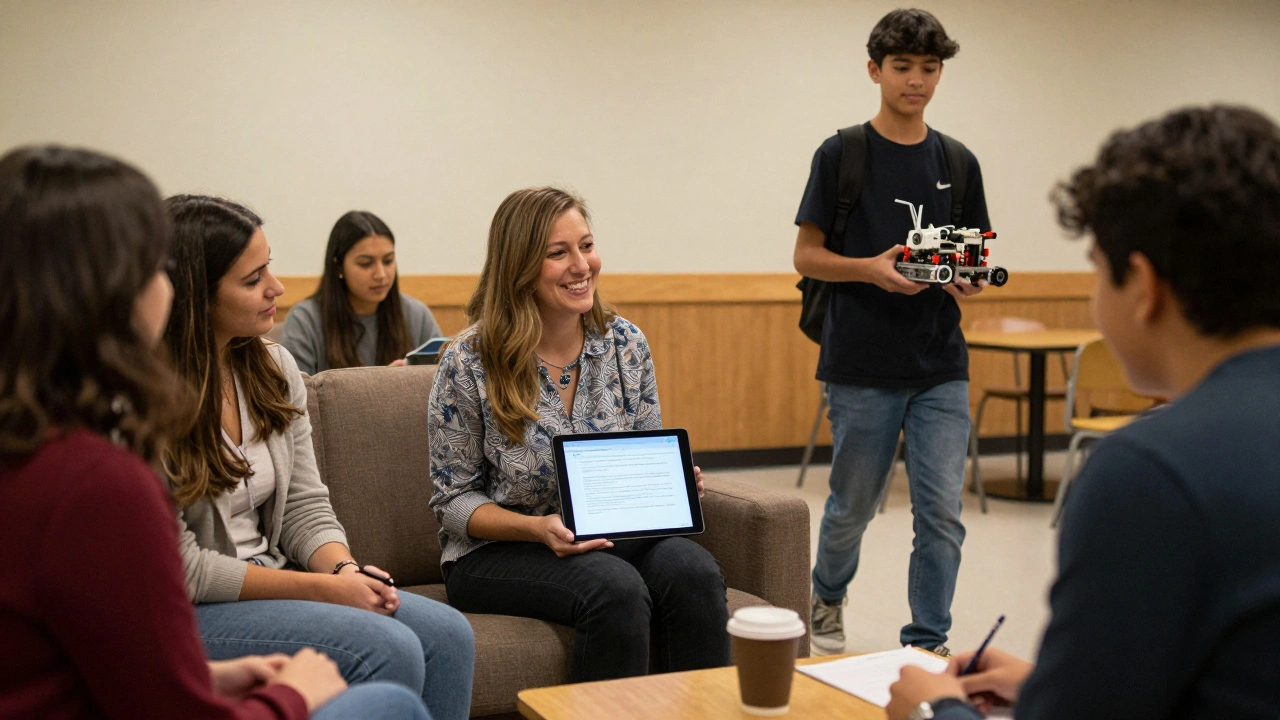
- Attending one school event a semester, even if it’s just the choir concert or the robotics demo.
- Signing up for a text-based school update system. Many districts now send weekly reminders about deadlines and upcoming tests.
- Knowing your child’s schedule. If they have a science project due Friday, don’t wait until Thursday night to ask about it.
These aren’t grand gestures. They’re small, consistent actions that add up. A 2024 survey of 1,200 Chicago-area high school students showed that 78% felt more motivated when their parents asked about school-even if they didn’t get detailed answers.
Why Some Parents Stay Away-And How to Bridge the Gap
Not everyone feels welcome in schools. Some parents had bad experiences themselves. Others work two jobs. Some don’t speak English well. Some think their kid is “too old” for parental involvement.
Here’s the truth: high school isn’t too old. It’s when they need you most.
When schools make it easy, parents show up. Schools that offer translation services, evening events, or virtual check-ins see higher participation. One school in Aurora, Illinois, started sending short video messages from teachers every Friday. Parents could reply with a voice note. Participation jumped by 65% in one semester.
It’s not about fixing what’s broken. It’s about building bridges where they’re missing.
The Ripple Effect: Beyond Grades
Parental involvement doesn’t just boost test scores. It changes how students see themselves.
Teens who feel supported at home are more likely to:
- Apply to college
- Stay in school through graduation
- Seek help when they’re struggling
- Develop healthier relationships with authority figures
- Report feeling less anxious about the future
One student in Evanston told her counselor, “My mom never went to college, but she comes to every parent-teacher conference. I know she believes I can do it. That’s why I keep trying.” That’s the kind of impact no report card can measure.

What Schools Can Do to Help Parents Get Involved
It’s not just on parents. Schools have to make it easy.
Effective schools:
- Send clear, simple updates-not just grades, but behavior notes, project deadlines, and upcoming events
- Offer multiple ways to connect: text, email, phone, app notifications
- Train staff to welcome all families, regardless of background or language
- Host events at flexible times-weekends, evenings, even lunch hours
- Share stories of other families’ involvement, not just academic wins
When schools treat parents as allies instead of bystanders, everyone benefits.
It’s Never Too Late to Start
Maybe your child is already in 11th grade. Maybe you haven’t been to a single school event since freshman year. That doesn’t mean it’s too late.
Start small. Send a quick text to your child’s teacher: “Hi, I’m trying to be more involved. Can you tell me one thing my child is doing well?” That one message can open a door.
High school is a turning point. It’s where kids decide if they believe in their own potential. When parents show up-even in quiet, simple ways-they tell their kids: you matter. And that’s the most important grade of all.
Is parental involvement really that important in high school?
Yes. Research consistently shows that students with involved parents have higher GPAs, better attendance, and are more likely to graduate and go to college. It’s not about doing their homework-it’s about showing up, asking questions, and making it clear that education matters at home.
What if I don’t speak English well?
Many schools now offer translation services for parent-teacher conferences, emails, and school notices. Ask for help. Even sending a short note in your native language can be enough to start a conversation. Schools are required to provide language access under federal law.
My teen doesn’t want me involved. What should I do?
Respect their need for independence, but stay connected in quiet ways. Instead of asking about grades, ask what they enjoyed in class today. Show up for one event they care about-even if it’s not academic. Let them see you care about their world, not just their report card.
Can working parents still be involved?
Absolutely. Involvement isn’t about time-it’s about consistency. Send a quick text after work. Check the school app for updates. Attend a virtual meeting during lunch. Even one meaningful interaction a week makes a difference. Schools are increasingly offering flexible options for busy families.
Does parental involvement help with college applications?
Yes. Students with engaged parents are more likely to research colleges, complete applications on time, and write stronger essays because they’ve had ongoing conversations about goals and future plans. Parents don’t need to write the essays-they just need to ask the right questions.
James Boggs
December 15, 2025 AT 05:29Parental involvement isn't about control. It's about consistency. A simple "How was your day?" at dinner does more than any PTA meeting ever could.
Jen Kay
December 16, 2025 AT 19:08Oh sure, let’s pretend every parent has the luxury of asking about algebra after a 12-hour shift at the factory. Real talk: schools need to stop blaming families for systemic failures.
Michael Thomas
December 17, 2025 AT 12:27America’s decline started when we stopped expecting kids to earn their grades. Parents shouldn’t be cheerleaders-they should be enforcers.
Abert Canada
December 18, 2025 AT 00:14Here in Canada, we call this "community-based learning." It’s not rocket science. When kids know someone at home gives a damn, they show up. Even if that "someone" is just sitting quietly while they do homework.
Xavier Lévesque
December 19, 2025 AT 14:04So we’re now treating parents like babysitters for homework? Cute. The real issue is schools that don’t adapt to modern life. My kid’s teacher sent a PDF. I replied with a voice note. We’re good.
Thabo mangena
December 20, 2025 AT 11:36In South Africa, we say: "A child who is seen is a child who grows." This is not American exceptionalism. This is human truth. Schools that ignore families are ignoring the foundation.
Karl Fisher
December 21, 2025 AT 03:50Let’s be real-this whole article is just a fancy ad for school districts trying to justify their budgets. "Oh no, the kids aren’t thriving? Must be the parents!" Meanwhile, class sizes are 40 and counselors have 800 students.
Buddy Faith
December 21, 2025 AT 20:16schools are failing kids and now they want moms to do their job? lol
Scott Perlman
December 22, 2025 AT 03:08My dad never checked my grades. But he always made sure I had a clean shirt and a hot breakfast. That’s involvement. Simple. Real.
Sandi Johnson
December 22, 2025 AT 12:25Oh so now we’re assigning emotional labor to parents? Great. Next they’ll ask us to grade the essays too.
Eva Monhaut
December 24, 2025 AT 01:17I used to think "being involved" meant organizing bake sales. Then my daughter told me she just wanted me to sit with her while she cried over her algebra test. I didn’t fix it. I just held her. That’s the part no report card captures.
mark nine
December 24, 2025 AT 02:52My kid’s school sends a text every Friday with one thing he did well. I reply with a meme. He rolls his eyes. But he saves the texts. That’s the connection.
Tony Smith
December 26, 2025 AT 02:36It is imperative to acknowledge that parental engagement, when structured with cultural sensitivity and institutional support, yields statistically significant improvements in academic resilience. The data is unequivocal.
Rakesh Kumar
December 27, 2025 AT 15:32In India, we say "guru-shishya parampara"-teacher-student lineage. But what if the teacher is alone? The family must be the first teacher. Even if you can’t solve the math, sit with them. That’s the lesson.
Bill Castanier
December 29, 2025 AT 01:49Minor punctuation note: "It’s never too late to start"-correctly uses the contraction. Many still write "its" here. Small thing. But matters.