How Many Hours Is High School a Day? A Realistic Look at the Schedule
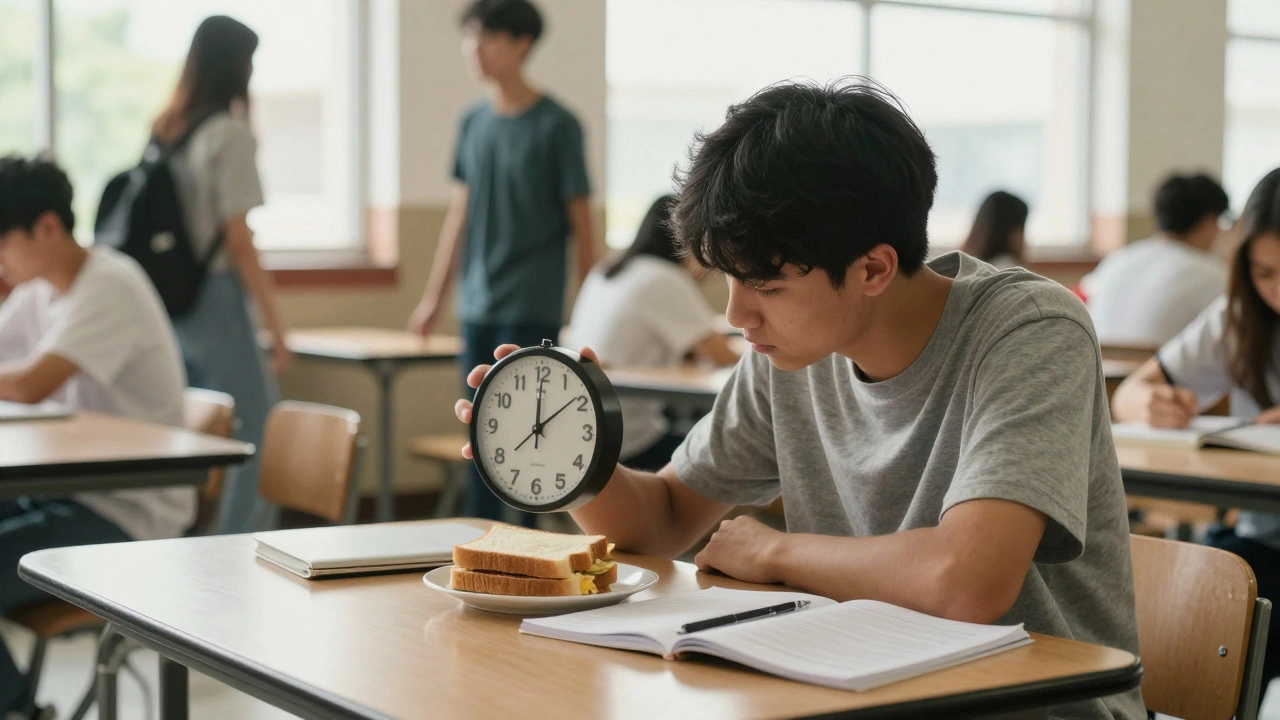
Most people assume high school lasts eight hours a day because that’s what the clock says. But the truth? You’re not actually in class for that long. If you’re trying to plan your study time, manage your energy, or just figure out how much of your day is really spent learning, you need to know what’s actually happening between the bell rings.
What a typical high school day looks like
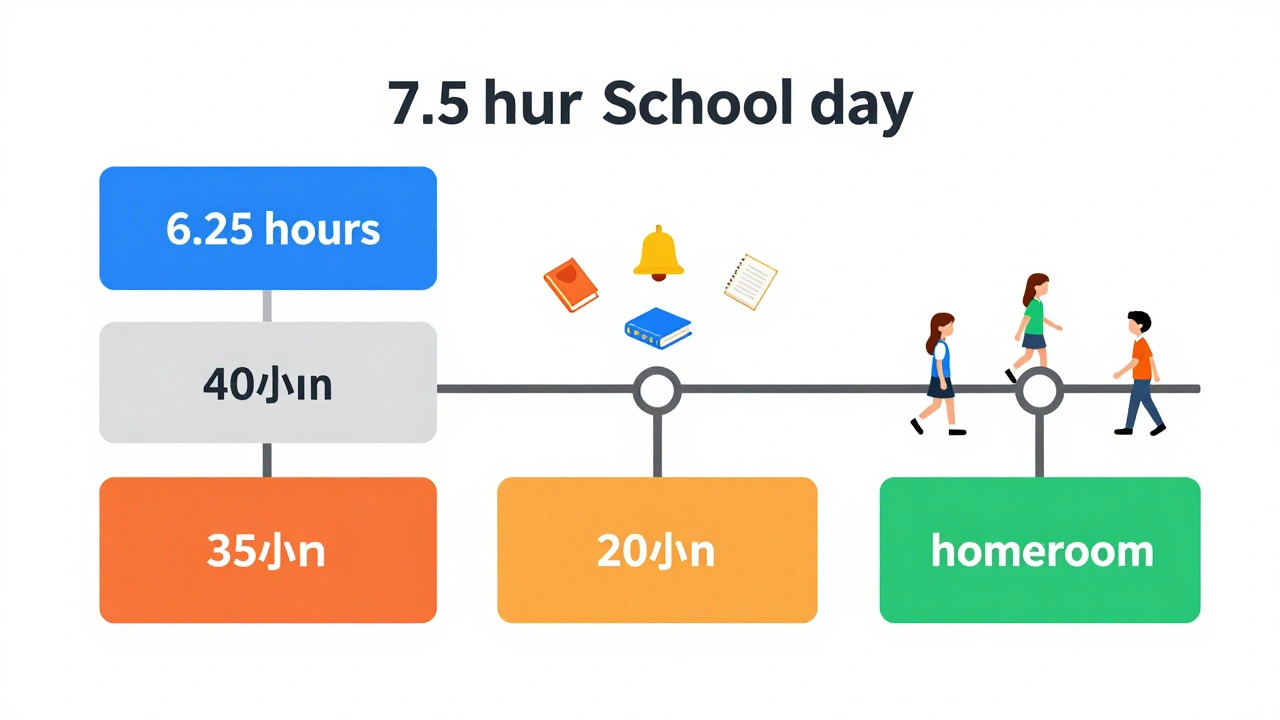
In most U.S. public high schools, the school day runs from about 7:30 a.m. to 3:00 p.m. That’s roughly seven and a half hours total. But here’s the catch: not all of that is class time. You’ve got passing periods, lunch, homeroom, and sometimes advisory or study halls built in. On average, students spend between 6 and 6.5 hours in actual instructional time each day.
Here’s how it breaks down in a standard six-period day:
- Homeroom or advisory - 15 to 20 minutes
- Period 1 - 50 minutes
- Period 2 - 50 minutes
- Period 3 - 50 minutes
- Lunch - 30 to 45 minutes
- Period 4 - 50 minutes
- Period 5 - 50 minutes
- Period 6 - 50 minutes
- Dismissal - immediate after last period
That’s 50 minutes × 6 = 300 minutes of class time. Add 20 minutes for homeroom. Subtract 40 minutes for lunch and 15 minutes for passing between classes (about 2-3 minutes per transition × 7 transitions). You’re left with about 6 hours and 15 minutes of actual learning.
Why the difference matters
If you think you’re in school for seven or eight hours, you might expect to do seven hours of homework. That’s not realistic. Most students get 1.5 to 2.5 hours of homework a night. That’s because the school day isn’t packed with nonstop instruction. Teachers need time to explain concepts, manage behavior, hand out materials, and deal with tech issues. There’s also downtime built in - waiting for the next class, standing in line for the bathroom, or just zoning out for a few minutes between bell rings.
But here’s what most students don’t realize: those extra hours aren’t wasted. They’re the structure that keeps things running. Passing periods give you time to reset. Lunch isn’t just eating - it’s social recovery. Advisory periods help with college planning, mental health check-ins, or club sign-ups. These aren’t filler - they’re part of the system that makes high school work.
How schedules vary by state and school type
Not every high school follows the same pattern. In some districts, especially in the Midwest and Northeast, you’ll find block scheduling. That means four 90-minute classes per day, alternating every other day. In that case, you’re still spending about 6 hours in class - just in fewer, longer blocks. It changes how you study. Instead of reviewing math every day, you might have two full days to forget what you learned before the next class.
Some charter schools or magnet programs run longer days - up to 8 hours - but they often include after-school tutoring, labs, or internships. These extra hours are usually mandatory and tied to specific programs, not the standard curriculum.
Private schools vary even more. A prep school in Massachusetts might start at 8 a.m. and end at 4 p.m., with mandatory study halls after dinner. Meanwhile, a rural school in Montana might end at 2:30 p.m. because buses have long routes and staff are limited.
How much time do you actually spend learning?
Let’s be honest - not every minute of class is productive. Teachers estimate that students are actively engaged in learning for about 60-70% of instructional time. That means if you’re in class for 6 hours, you’re truly focused for maybe 3.5 to 4.2 hours.
Why? Because of distractions, transitions, administrative tasks, and the fact that teenagers aren’t wired for six straight hours of attention. One 2023 study from the University of Michigan tracked student attention spans during a typical day. They found that students were off-task during 28% of class time - mostly in the last 20 minutes of each period. That’s not laziness. That’s how the brain works.
So if you’re trying to estimate how much time you need to study outside of school, don’t multiply your school hours by two. Start with 1.5 hours of homework, then adjust based on your workload. Honors or AP students might hit 3 hours on heavy nights, but that’s the exception, not the rule.
What this means for your study plan
Knowing the real length of your school day helps you plan better. If you think you’re in school for eight hours, you might feel guilty for not studying more. But you’re already doing a full-time job - just not one that’s 100% focused on academics.
Here’s what works:
- Use your lunch break or free period to review notes - even 15 minutes helps.
- Don’t wait until 10 p.m. to start homework. Start right after dinner while your brain is still in school mode.
- Break big assignments into chunks. If you have a research paper due in two weeks, aim for 30 minutes a day instead of 5 hours the night before.
- Protect your sleep. High school is exhausting. If you’re getting less than 7 hours of sleep, your brain can’t retain what you learned during the day - no matter how long you study.
What about extracurriculars and sports?
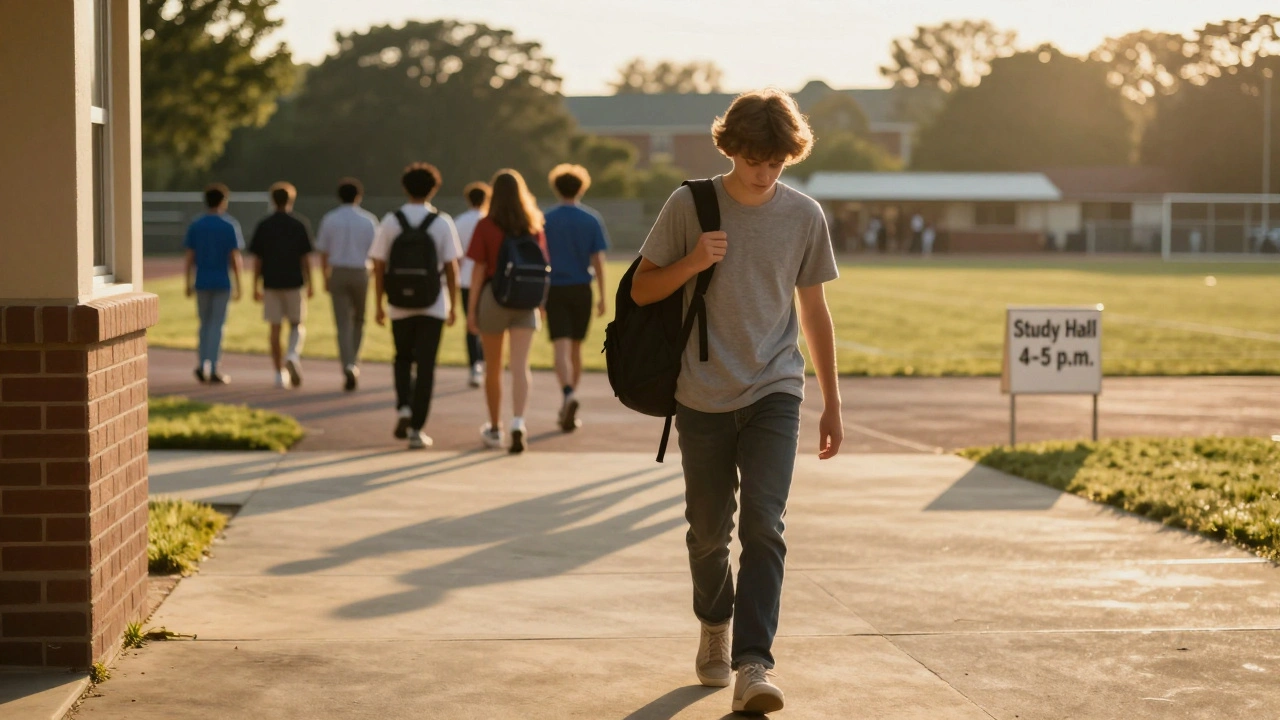
If you’re in band, football, debate, or robotics, your day is longer. Practices often start right after school and run until 5:30 or 6 p.m. Add travel time, and you’re looking at 10-12 hours of structured time daily.
That’s why student-athletes often struggle with homework. They’re not lazy - they’re stretched thin. The best ones use planners religiously, prioritize sleep, and communicate early with teachers when deadlines clash with games. Schools with strong athletic programs usually have academic advisors assigned to teams. Ask for help. You’re not alone.
Final takeaway: It’s not about how long you’re there - it’s about how you use your time
High school isn’t about clocking hours. It’s about using the time you have wisely. You don’t need to be in class for eight hours to succeed. You need to be focused during the six you’re actually learning. You don’t need to do six hours of homework. You need to do the right homework, at the right time, with enough rest to remember it.
So next time someone asks, ‘How long is your school day?’ - don’t just say ‘seven hours.’ Say, ‘I’m in class for about six hours, and I use the rest to breathe, eat, and plan how I’m going to learn.’ That’s the real high school schedule.
Is 7 hours of school too much for a teenager?
Seven hours of total school time is standard in the U.S. and aligns with child development guidelines. The American Academy of Pediatrics recommends high schools start no earlier than 8:30 a.m. to support teen sleep needs. While the day feels long, the actual instructional time is closer to 6 hours. What matters more than length is quality - well-structured days with breaks, movement, and student support make the time effective.
Do all high schools have the same schedule?
No. Most use a traditional six-period day, but many switch to block scheduling (four 90-minute classes). Some schools have A/B days, where you alternate classes. Private and charter schools often have longer days with mandatory study halls or labs. Rural schools may end earlier due to transportation limits. Always check your school’s official bell schedule - it’s usually posted online or in the student handbook.
How many hours should I study outside of school?
A good rule of thumb is 10 minutes of homework per grade level. So a 10th grader should aim for about 100 minutes (1 hour 40 minutes) per night. But that’s an average. Honors or AP students may need 2-3 hours on heavy nights. The key isn’t total hours - it’s consistency. Studying 30 minutes every night beats cramming 3 hours once a week.
Why do I feel so tired after school if I’m only in class for 6 hours?
High school is mentally draining because it’s not just about learning - it’s about navigating social pressure, managing multiple subjects, switching focus every 50 minutes, and staying alert during transitions. Plus, most teens don’t get enough sleep. Your brain is working overtime to process information, regulate emotions, and stay organized. Feeling tired isn’t laziness - it’s normal. Prioritizing sleep, eating well, and taking short breaks can help.
Can I make up missed class time by studying more at home?
You can catch up on content, but not on the full experience. Class isn’t just about lectures - it’s about asking questions in real time, seeing demos, working in groups, and getting immediate feedback. If you miss a day, review notes, watch teacher-recorded videos (if available), and talk to classmates. But don’t expect home study to replace the interactive part of learning. Attendance matters - even if you think you can just ‘study harder’ later.
Vishal Bharadwaj
December 8, 2025 AT 01:22bro the whole post is wrong lol. in my school we got 8 hours of class, no lunch break, and we start at 6am. you think 6 hours is standard? nah. in india we do 9 hours with 20min tea break. u just dont know how real schools work. also why u subtract passing time? that’s when u learn the most - gossip, memes, who’s dating who. u forgot the real curriculum.
anoushka singh
December 8, 2025 AT 06:24imagine being this serious about school hours 😭 i literally nap during homeroom and call it ‘mental reset’. also why is lunch 45 mins? in my school we eat in 12 minutes while running to the next class. why are we pretending this is a spa day?
Jitendra Singh
December 9, 2025 AT 09:54valid points all around. i think the real issue isn’t how long school is, but how little we’re taught to manage our own time. i used to think i needed 4 hours of homework, but once i started using free periods to review, i cut it to 45 mins. the system’s flawed, but you can still hack it.
Madhuri Pujari
December 10, 2025 AT 12:21Oh. My. GOD. You actually think 6 hours is ‘real’ instructional time? Let me break it down for you: 1. Teachers waste 20% of class time on ‘classroom management’ - which is just yelling at kids for breathing too loud. 2. ‘Passing periods’? More like ‘chaos corridors’ where kids steal each other’s snacks and spread rumors. 3. And you call lunch ‘social recovery’? It’s where kids cry in the bathroom because their Instagram post got 3 likes. You’re romanticizing a prison with better snacks.
Sandeepan Gupta
December 11, 2025 AT 00:20Good breakdown. One thing you missed: the real learning happens in the 5 minutes after class ends, when you ask the teacher a question they didn’t have time to answer. Also, if you’re doing 10 minutes per grade level, that’s 100 minutes for 10th grade - but if you’re in AP Bio, that’s a lie. I’d say 2 hours is the new normal for serious students. Just make sure you’re reviewing, not just doing. And sleep - always sleep. Your brain isn’t a hard drive you can overwrite.
Tarun nahata
December 12, 2025 AT 12:13Y’all are overcomplicating this like it’s rocket science. School ain’t about clocking hours - it’s about surviving the chaos with your dignity intact. I used to think I had to grind 5 hours a night. Then I realized: if I just focus during class, skip the drama, and nap on the bus home, I get more done with half the stress. Life’s not a spreadsheet. It’s a messy, loud, glitter-covered train wreck - and you’re the conductor. Own it.
Aryan Jain
December 13, 2025 AT 12:06THEY’RE LYING TO YOU. 6 hours? That’s what they WANT you to think. The real truth? The school day is a psyop. They keep you there 7.5 hours so you’re too tired to question the system. The ‘advisory’ periods? That’s when they plant the curriculum. Lunch? Surveillance. Passing periods? Mind control through social pressure. They don’t want you to learn - they want you to obey. Wake up. The bell isn’t a schedule - it’s a leash.
Agni Saucedo Medel
December 15, 2025 AT 06:35thank you for writing this 💖 i’ve been telling my friends for months that school isn’t 8 hours of learning - it’s 6 hours of chaos with 2 hours of emotional labor. i use my free period to text my mom and cry. then i study. it’s not perfect, but it’s mine. you’re not alone.
ANAND BHUSHAN
December 17, 2025 AT 06:05yeah whatever. i just show up, do the work, and leave. no need to overthink it.