Cross-Cultural Learning in High School: What It Really Means for Students
When students engage in cross-cultural learning, the process of gaining understanding and respect for cultural differences through direct experience and structured education. It's not just about learning facts about other countries—it's about seeing the world through someone else’s eyes, whether that’s a classmate from a different background, a book written abroad, or a project that connects you to a community halfway across the globe. This kind of learning happens every day in high schools that value inclusion, not just as a policy, but as a practice.
Cultural awareness, the ability to recognize and appreciate differences in values, communication styles, and traditions across groups is the foundation. You don’t need to travel overseas to build it. A student who listens to a peer explain why their family celebrates a holiday differently, or who reads a novel from a non-Western perspective in English class, is already doing it. Schools that run student-led cultural fairs, host exchange programs, or include diverse voices in their curriculum are creating spaces where inclusive high schools, environments designed so every student feels seen, respected, and empowered regardless of background become more than just a goal—they become reality.
What makes cross-cultural learning stick isn’t a single assembly or a poster on the wall. It’s the quiet moments: a student asking why their friend doesn’t eat certain foods, a teacher correcting a stereotype during discussion, or a club that invites students to share traditions from home. These actions build empathy, reduce bias, and prepare students for college, careers, and life in a world where collaboration across cultures is no longer optional—it’s expected.
And it’s not just about diversity in race or nationality. Cultural learning includes understanding differences in socioeconomic background, ability, religion, and even how people communicate. A student who grows up in a rural town might learn just as much from a classmate who moved from a big city as they would from someone who immigrated. The key is openness—not perfection.
You’ll find this theme running through many of the posts below. From how guided notes help students from different learning backgrounds stay on track, to how clear backpacks spark conversations about privacy and belonging, to how schools are building inclusive environments that let every student thrive—these aren’t random topics. They’re all pieces of the same puzzle: how high school can be a place where students don’t just learn subjects, but learn how to live with and alongside people who are different from them.
What follows isn’t a list of theory or abstract ideas. It’s real examples from real classrooms and real students. You’ll see how small changes in teaching, policy, and daily interaction add up to something bigger: a generation better equipped to understand, connect, and lead in a world that’s more connected than ever.
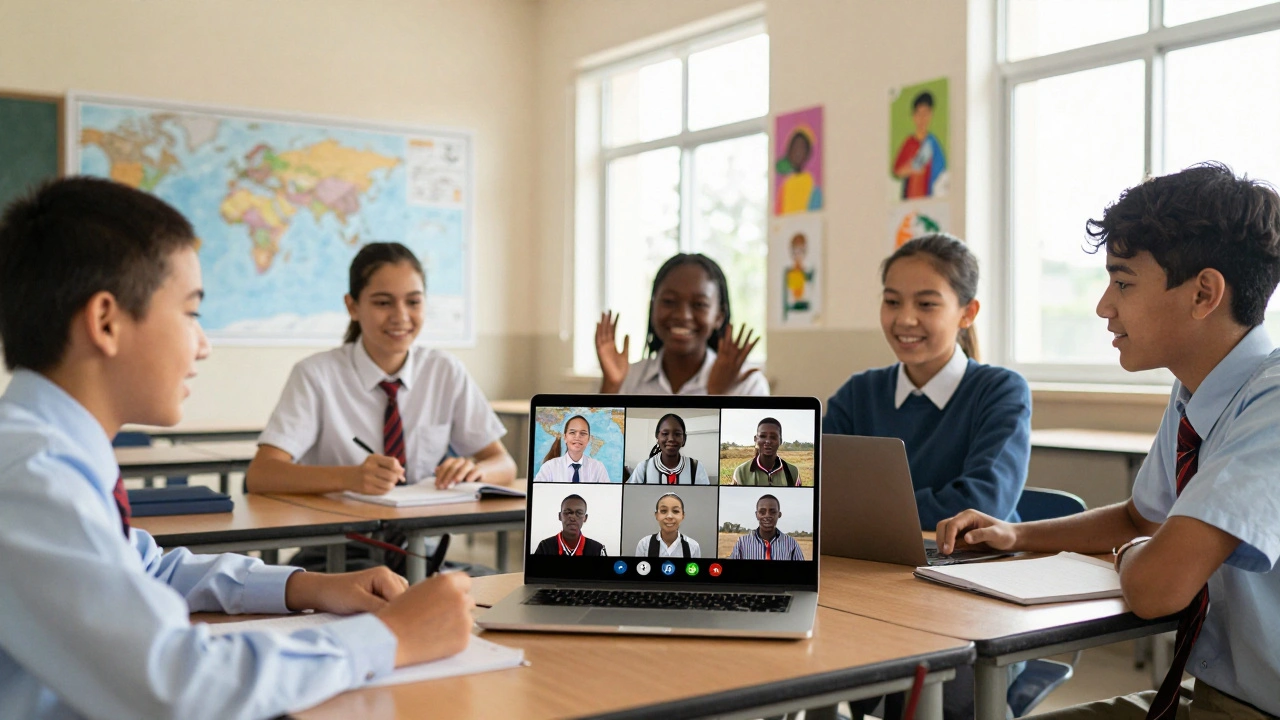
High schools are reshaping education to teach students how to think globally-not just academically, but ethically and empathetically. Through real-world projects, virtual exchanges, and culturally rich curricula, they’re preparing young people for a connected world.
- Read More