Global Citizenship in High School: What It Really Means and How Students Live It
When we talk about global citizenship, the idea that young people are part of a shared human community with responsibilities beyond their own borders. Also known as international mindedness, it’s not about memorizing flags or reciting UN declarations—it’s about seeing how your choices, big or small, connect to people and places far away. This isn’t a class you take once and forget. It’s woven into how students talk about climate change, how they push for fair school policies, or how they use social media to support causes they care about.
Real global awareness, the ability to recognize how local actions have global effects, from the clothes you wear to the food you eat shows up in high schools where students learn why their school’s aluminum cans get recycled into products overseas, or why a protest in another country gets shared across their Instagram feeds. It’s not just geography class—it’s when a student realizes that a factory in Bangladesh makes the hoodie they wear every day, and that they have a voice in demanding better labor practices. That’s civic education, learning how to engage with systems of power to create change, not just passively absorb information in action. And it’s not always formal. Sometimes it’s a student starting a food drive for refugees, or organizing a school-wide discussion on digital privacy after learning how data is collected across borders.
student activism, young people taking organized action to demand justice, equity, or environmental protection is one of the clearest signs of global citizenship in action today. You see it in students who walk out for climate strikes, who petition their school to drop single-use plastics, or who start clubs that raise money for clean water projects in other countries. These aren’t just hobbies—they’re training grounds for lifelong engagement. And schools that support this kind of work don’t just get better test scores—they build students who know how to lead, collaborate, and think critically about power, privilege, and responsibility.
Global citizenship doesn’t mean you have to travel the world. It means you understand that your classroom, your town, and your screen are all part of something bigger. The posts below show how high school students are already doing this—through guided reading that tackles international news, through projects that cut school waste and link to global sustainability goals, through debates that turn political awareness into real action. You’ll see how schools are quietly reshaping what success looks like—not just by grades, but by how much students care about the world beyond their own backyard.
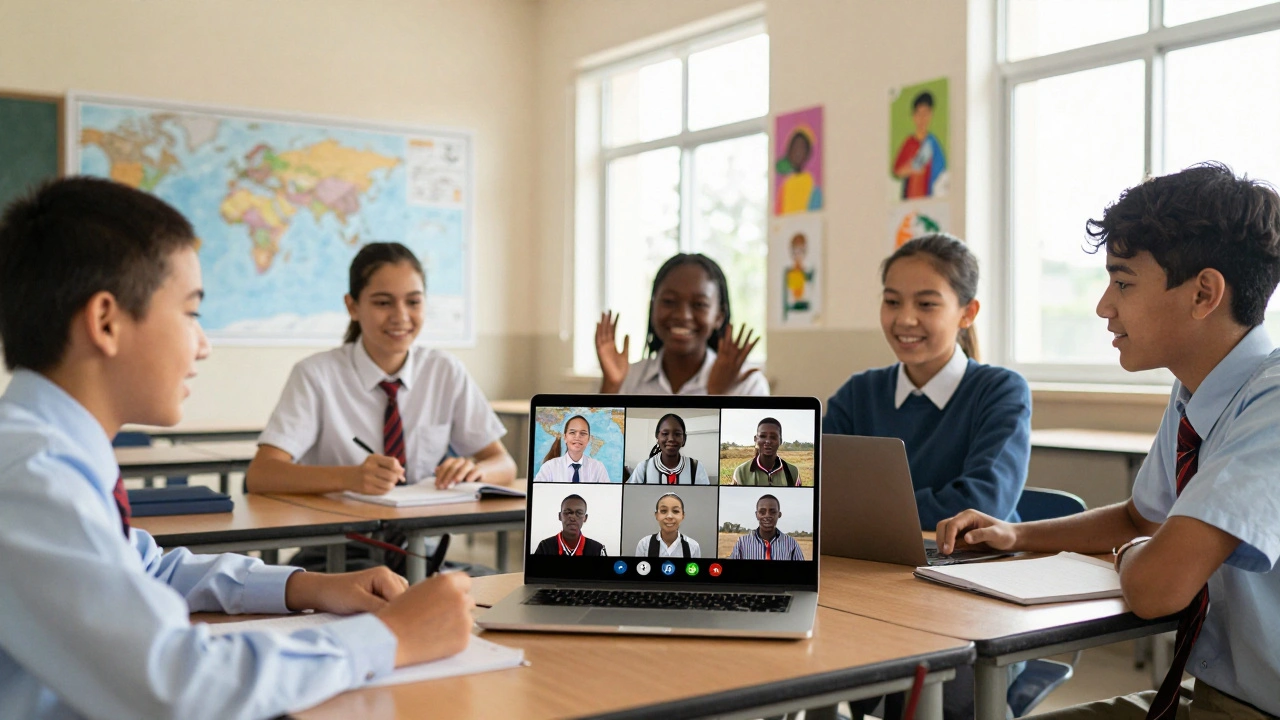
High schools are reshaping education to teach students how to think globally-not just academically, but ethically and empathetically. Through real-world projects, virtual exchanges, and culturally rich curricula, they’re preparing young people for a connected world.
- Read More