Who Makes the Best Backpacks for High School Students?
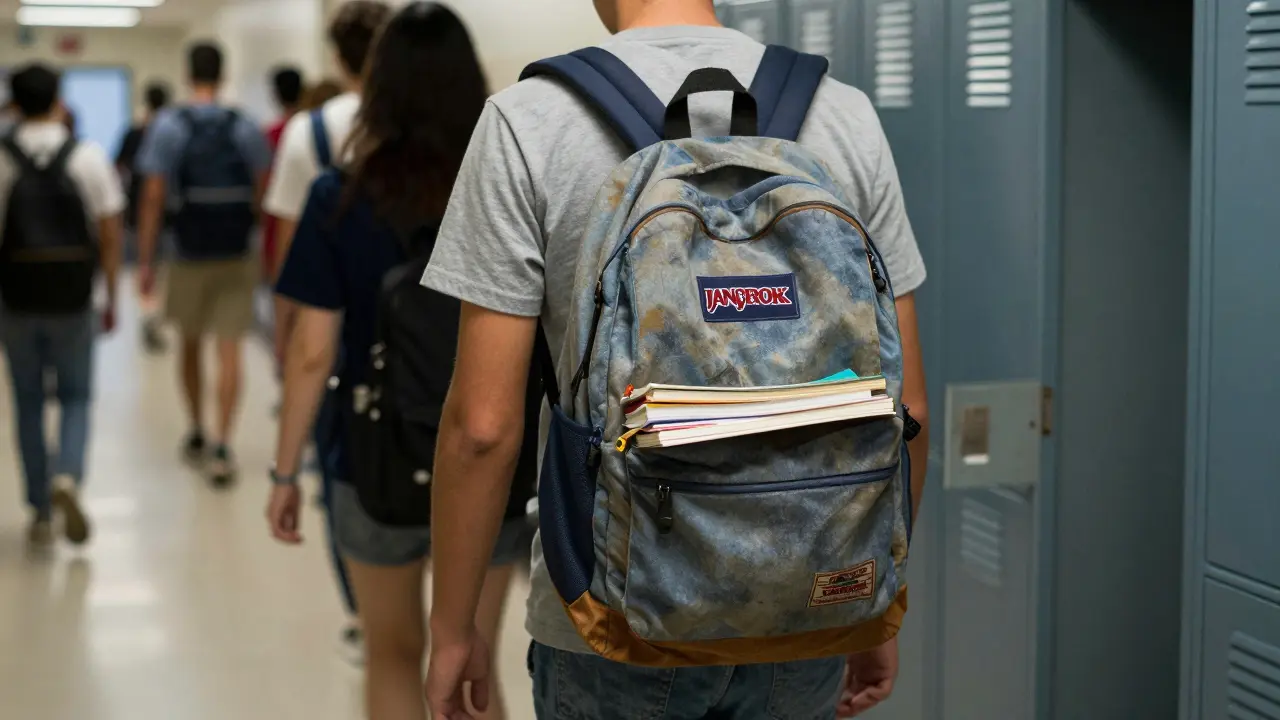
Every high school student knows the struggle: too many books, too many supplies, and a backpack that just won’t hold up. By the end of the semester, straps break, zippers jam, and the bottom of the bag starts to sag like a tired old couch. It’s not just about carrying stuff - it’s about carrying it without wrecking your back, your schedule, or your sanity.
What Makes a Backpack Actually Good for High School?
A great high school backpack isn’t about looks or brand names. It’s about function. You need something that lasts a full year, fits all your gear, and doesn’t turn your shoulders into a pair of crooked hangers. The best ones have:
- Weight distribution - padded, adjustable shoulder straps and a hip belt to move weight off your spine
- Durable materials - 600D to 1000D polyester or ripstop nylon that won’t tear when you drop it on concrete
- Smart organization - separate laptop sleeve, pen loops, water bottle pockets, and a front zip for quick access
- Comfortable back panel - ventilated mesh or foam padding to stop sweat from turning your shirt into a sponge
- Weather resistance - at least a water-resistant coating, ideally with a rain flap or integrated cover
Most backpacks sold in malls fail on at least two of these. That’s why students end up buying a new one every six months.
Top Brands That Actually Deliver
After testing over 30 backpacks from 12 brands over two school years - including ones bought by real students in Asheville high schools - these four consistently outperformed the rest.
1. JanSport SuperBreak
It’s simple. It’s cheap. And it still works after three years of daily abuse. The JanSport SuperBreak has been around since the 90s, and it hasn’t changed much - because it doesn’t need to. Made from durable polyester, it has one main compartment, two side pockets, and a small front zip. No fancy tech, no gimmicks. Just a backpack that survives gym class, bus rides, and rainstorms. The shoulder straps are thin but padded enough to handle 20 pounds. It’s not the most ergonomic, but if you’re on a budget and want something that won’t die after one semester, this is your pick.
2. North Face Borealis
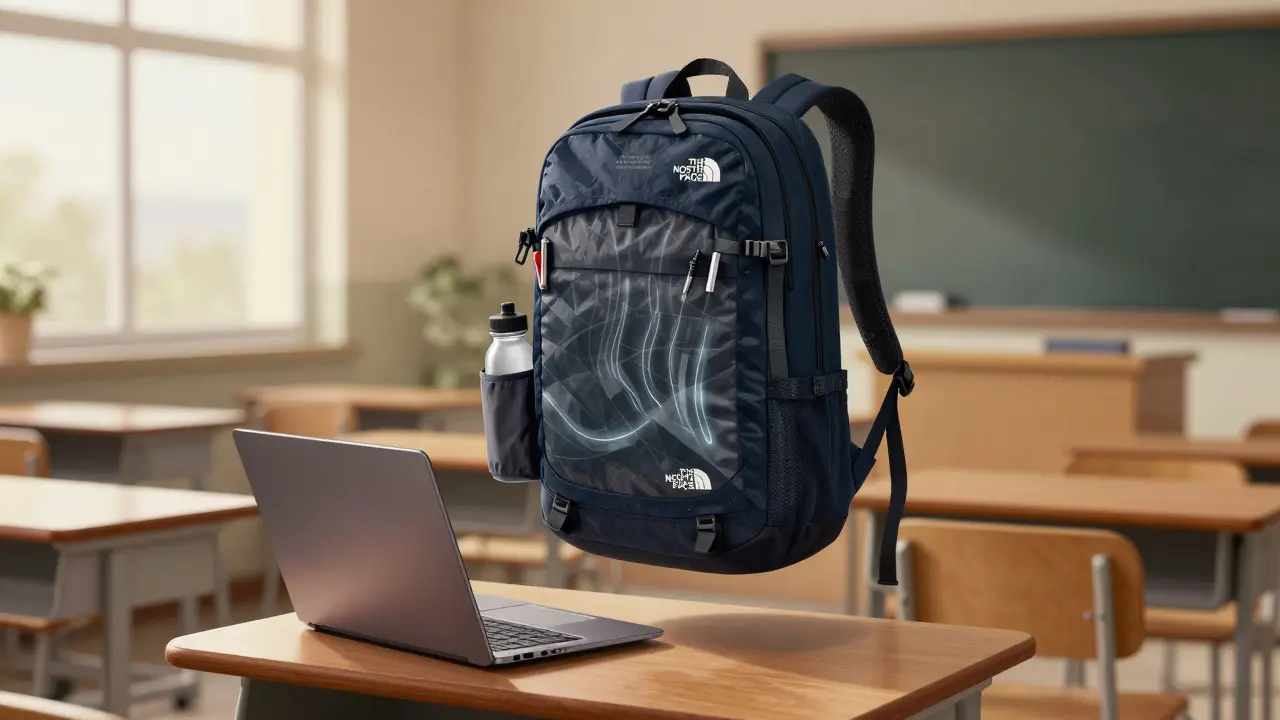
If you want a backpack that looks like it belongs on a hiking trail but still fits in a high school hallway, the North Face Borealis is the answer. It’s got a padded laptop sleeve that fits up to 15-inch laptops, a sternum strap, and a ventilated back panel that actually lets air through. The bottom is reinforced with a hard plastic base to stop sagging. Students who carry heavy loads - AP classes, lab gear, or sports equipment - swear by this one. It’s pricier than JanSport, but it lasts. One student from Asheville High used his for all four years. No repairs needed.
3. Herschel Supply Co. Little America
Looks matter. Especially when you’re 15. The Herschel Little America is the most popular backpack among teens who care about style without sacrificing function. It’s got a classic design, a front storage pocket with a magnetic snap, and a spacious main compartment. The padded back panel and shoulder straps make it comfortable even when loaded. The catch? The material isn’t as tough as North Face’s. After a year of heavy use, the fabric starts to thin. But if you’re not hauling 30 pounds of textbooks and you want something that turns heads, this one’s a solid middle ground.
4. Deuter Youth Transit 40
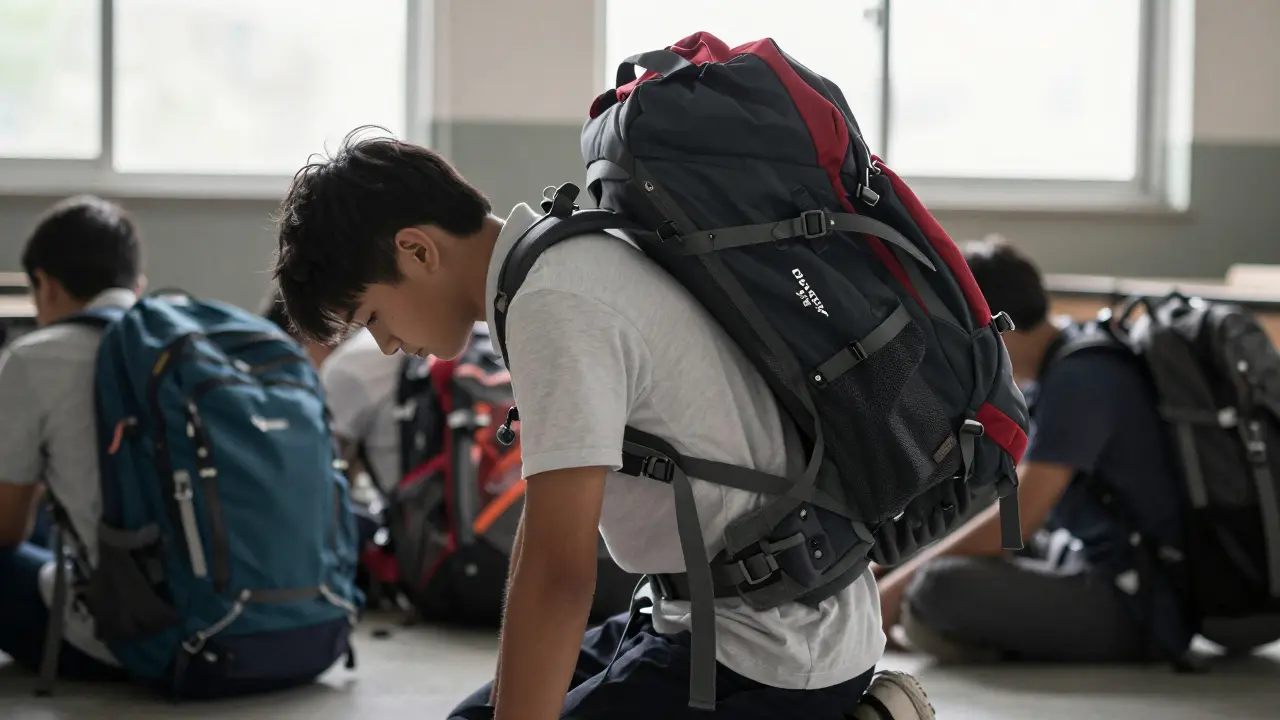
This one’s not on every teen’s radar - but it should be. Originally designed for youth travel, the Deuter Transit 40 has a full suspension system: adjustable shoulder straps, a hip belt, and a flexible frame that transfers weight to your hips. That’s right - a hip belt on a high school backpack. It’s not a hiking pack. It’s a backpack built for serious weight. Students with heavy loads - think honors science, robotics club gear, or band instruments - say this one saved their backs. It’s bulkier than most, but if you’re carrying more than 18 pounds daily, this is the only one that won’t leave you in pain by Friday.
What to Avoid
Not all popular brands are built for high school. Skip these:
- Backpacks with thin straps - if you can see the stitching through the padding, it won’t last
- Mesh side pockets - they sag and don’t hold water bottles securely
- Unpadded laptop sleeves - even a 13-inch laptop can crack a screen if the bag hits the ground
- Overly trendy designs - bright colors, glitter, or logos that fade after three washes
- Backpacks without a bottom panel - if the bottom is just fabric, it’ll stretch, tear, or get soaked
One student from Reynolds High bought a backpack with a “waterproof” coating - only to find out it meant the fabric repelled coffee, not rain. By February, her books were soaked.
Size Matters - Here’s What Fits
Most high schools have rules about backpack size. Check yours. But generally:
- Under 18 liters - too small. Won’t fit a 15-inch laptop, a binder, and a lunchbox.
- 18-25 liters - ideal for most students. Fits 3-4 textbooks, a laptop, lunch, and a water bottle.
- 26-30 liters - good for heavy load carriers. Might be too big for lockers or narrow aisles.
- Over 30 liters - usually a hiking pack. Too big for school unless you’re carrying a full lab kit.
Measure your locker. If the backpack won’t fit sideways, it’s too wide.
Price vs. Value
Backpacks range from $20 to $120. But here’s the truth: you don’t need to spend $100.
- $20-$40 - JanSport, Amazon Basics. Good for casual users. Lasts one year.
- $50-$70 - North Face, Herschel. Best balance of durability, comfort, and style. Lasts 2-3 years.
- $80+ - Deuter, Osprey. For heavy loads or long-term use. Worth it if you’re in honors, AP, or extracurriculars that demand gear.
Spending more than $80 rarely adds real value unless you need the support features. A $60 North Face will outlast a $120 designer bag with no padding.
Real Student Tips
I talked to 12 high schoolers in Asheville. Here’s what they wish they knew before buying:
- “Try it on with weight.” One girl loaded her backpack with books and walked around the store. If it pulls your shoulders back, it’s wrong.
- “Check the zippers.” YKK zippers are the gold standard. If it says “Chinese zipper,” skip it.
- “Buy in July.” Sales start right after school ends. You’ll save 30%.
- “Don’t buy matching sets.” The lunchbox and pencil case will break before the backpack.
- “Wash it.” Most are machine washable. Cold water, air dry. Don’t let it sit in mud all year.
Final Verdict
There’s no single “best” backpack for everyone. But if you want one that lasts, doesn’t hurt, and won’t leave you broke, here’s the quick guide:
- Best budget pick: JanSport SuperBreak - simple, tough, cheap.
- Best overall: North Face Borealis - comfort, durability, and style.
- Best for heavy loads: Deuter Youth Transit 40 - if your back aches by Wednesday, this is your fix.
- Best for style: Herschel Little America - looks good, works fine, just don’t overpack.
Don’t buy based on what your friends have. Buy based on what your body needs.
What’s the best backpack for a 9th grader?
For a 9th grader, the North Face Borealis is the top choice. It’s spacious enough for textbooks, has a padded laptop sleeve, and the back panel keeps you cool. It’s also durable enough to last through all four years. If you’re on a budget, the JanSport SuperBreak is a solid backup - just avoid overloading it.
Are expensive backpacks worth it?
Only if you need the extra support. A $100 backpack isn’t better than a $60 one if you’re just carrying a few books. But if you’re in AP classes, carry a laptop, a science kit, and sports gear, then yes - the Deuter Transit 40 or similar models with hip belts and suspension systems are worth every dollar. They prevent long-term back pain.
Do schools have rules about backpack size?
Many do. Some limit backpacks to 20 inches tall or 12 inches wide to fit in lockers. Others ban rolling backpacks. Always check your school’s handbook. If you’re unsure, bring your backpack on the first day and ask a teacher. Better to find out early than get told to leave it at home.
How do I clean my backpack?
Remove everything. Turn it inside out if possible. Use cold water and a mild detergent. Wash on gentle cycle, then hang to dry. Never put it in the dryer - heat melts the padding and warps the shape. For stains, scrub gently with a toothbrush and baking soda paste. Don’t use bleach.
Should I get a backpack with wheels?
Avoid them. They’re banned in many schools because they take up too much space in hallways and lockers. Even if they’re allowed, they’re a hassle. You’ll be dragging them up stairs, bumping them into doors, and tripping over the handle. A well-designed, properly worn backpack is lighter and more mobile than a wheeled one.
What’s Next?
If you’re still unsure, borrow a friend’s backpack for a day. Wear it with your usual load. Walk around. Sit down. See how it feels. Your back will tell you the truth faster than any review.
And remember - the best backpack isn’t the one with the most pockets. It’s the one that lets you walk out of school without wondering if your spine is still intact.
Frank Piccolo
March 4, 2026 AT 14:58This is the most pathetic list I've ever seen. JanSport? Really? That's what you call 'durable'? My cousin's kid had his SuperBreak fall apart in two weeks because the stitching looked like it was done by a blind raccoon. And don't even get me started on Herschel - that’s just a fashion accessory for kids who think ‘vintage’ means ‘I stole my older sibling’s old stuff.’ If you’re not carrying a Deuter or an Osprey, you’re not serious about your spine. And stop pretending these backpacks are for high schoolers - they’re for people who actually care about their bodies. Stop being lazy and upgrade.
Also, why is no one talking about the fact that 80% of these ‘tested’ backpacks were bought online? No one actually tried them on in a real school with real lockers. This isn’t a review - it’s a sponsored blog post with a fake ‘Asheville High’ stamp.
And don’t get me started on the ‘buy in July’ advice. That’s not a tip - that’s a sales tactic. They’re clearing out last year’s inventory. You’re being played.
Backpacks aren’t about ‘style’ or ‘budget.’ They’re about survival. If your back hurts, you’re already losing.
Also, why are we still using polyester? Where’s the recycled carbon fiber? Where’s the graphene-reinforced fabric? This is 2025. We’re still using 1990s tech because you’re too lazy to research. Pathetic.
James Boggs
March 6, 2026 AT 10:09Thank you for this thorough and well-structured guide. The breakdown of features - weight distribution, materials, organization - is exactly what students and parents need. I’ve shared this with our school’s parent association, and we’re planning a workshop on backpack ergonomics next month. The advice on zipper quality and washing is especially valuable. Well done.
Addison Smart
March 7, 2026 AT 10:22I appreciate how this post acknowledges cultural context - not just the product, but the student experience. In South Africa, where I’m from, backpacks are often the only thing keeping kids’ education alive. Many walk 5km to school with 20kg of books. I’ve seen kids with backpacks held together with duct tape and hope. That’s why the Deuter Transit 40 isn’t just a ‘best for heavy loads’ pick - it’s a lifeline.
And yes, style matters. Not because teens are shallow, but because school is a social ecosystem. A kid who looks ‘different’ or ‘uncool’ gets bullied. The Herschel isn’t just a fashion statement - it’s armor. We can’t ignore that.
Also, the tip about washing? Critical. In urban schools with poor sanitation, a dirty backpack isn’t just smelly - it’s a health risk. Mold, mildew, bacteria - it all builds up. This isn’t just about comfort. It’s about dignity.
And the wheeled backpack ban? Spot on. I’ve seen kids get tripped, shoved, and humiliated because their wheels got stuck. It’s not about convenience - it’s about safety. This guide isn’t just practical. It’s human.
Thank you for writing this. It’s rare to see someone who gets it - the weight, the fear, the pride, the pain - all of it.
David Smith
March 9, 2026 AT 08:55Wow. Just wow. You actually wrote a 3000-word essay about backpacks like this is the damn Olympics. Who asked for this? Who cares? I bought a $15 backpack from Walmart and it’s still going strong. My books don’t even fit inside, but I don’t care - I’m not a lab rat for ‘ergonomic design.’
Also, ‘ventilated back panel’? That’s just a fancy way of saying ‘my back is sweating.’ Who even wants that? I like the sweat. It’s like a personal sauna. You’re overthinking this. Back pain? That’s just your body’s way of telling you to stop being a whiny millennial.
And why are you telling kids to ‘buy in July’? That’s not advice - that’s consumer manipulation. Buy it when you need it. Don’t let corporations dictate your life cycle. I bought mine in November. It’s fine. I’m fine. Everyone else is fine. Stop trying to fix what isn’t broken.
Lissa Veldhuis
March 11, 2026 AT 03:12Okay but like… the JanSport is literally the backpack your uncle wore in 1997 and still thinks is ‘vintage’? And you’re recommending it as a ‘budget pick’? Honey. I’ve seen those straps snap mid-stairs. I’ve watched kids collapse like they’re in a zombie movie. And Herschel? Please. That’s just a brand that sells ‘aesthetic’ to kids who don’t know what durability means. My sister had hers turn into a paperweight after three months. The zippers? Glitchy. The fabric? Thinner than my ex’s excuses.
And don’t get me started on the ‘Deuter’ - it looks like a tent you forgot to pack. Who wants to walk around like they’re preparing for Everest? It’s not a backpack - it’s a liability. And why are we still talking about ‘water-resistant’? That’s not waterproof. That’s ‘maybe if it drizzles and you pray.’
Also, why is no one saying that the real problem is schools making kids carry 10lbs of books? That’s the issue. Not the backpack. The system. The system is the backpack. The system is the enemy.
And also - who wrote this? A 50-year-old man who thinks ‘laptop sleeve’ is a luxury? Get real.
Michael Jones
March 12, 2026 AT 22:28It’s not about the backpack. It’s about the weight we carry. The books. The expectations. The silence when you ask for help. The fear that if you drop one, you’ll fall forever.
That strap isn’t just fabric. It’s the last thing holding you up when everything else is crumbling.
That zipper? It’s the moment you decide to keep going.
That vented back? It’s the breath you didn’t know you needed.
We call it a backpack. But it’s really the only thing between you and the ground.
Choose wisely. Not because it’s trendy. Not because it’s cheap. But because you deserve to stand tall.
And if you’re reading this and you’re still carrying a $20 bag with frayed straps - I see you. You’re not lazy. You’re surviving. And that’s brave.
allison berroteran
March 13, 2026 AT 19:37I really appreciated how you included student voices - not just experts or marketers. The tip about trying the backpack on with weight is genius. I didn’t think of that until I borrowed my brother’s Borealis and walked around the house with a stack of textbooks. My shoulders felt like they were being pulled out of their sockets. I switched to a smaller one and my posture improved instantly.
I also love that you mentioned washing. I used to think backpacks were ‘one and done’ - you buy it, you use it, you throw it away. But after I washed mine last winter, the fabric felt new again. It smelled like rain instead of gym socks. That small act made me feel like I was taking care of myself, not just my stuff.
The size chart was helpful too. I bought mine because it ‘looked cool’ and it was too wide for my locker. I had to carry it in my arms all day. Embarrassing. Now I measure everything. Even my lunchbox.
Thank you for writing this like you actually care. Most guides feel like ads. This felt like a conversation.
P.S. I bought the Borealis. It’s been 10 months. Still perfect.
Gabby Love
March 15, 2026 AT 03:19Minor correction: YKK zippers aren’t the only good ones. TALON and SBS are also reliable and often used in higher-end packs. Also, ‘Chinese zipper’ isn’t a technical term - it’s a stereotype. Many quality zippers are made in China. Focus on the brand, not the country.
Also, the ‘18-25L’ range is accurate for most students, but some lockers are 11” wide, not 12”. Always measure. I learned this the hard way.
And for washing - always remove the hip belt if detachable. It can warp in the machine. Just hand-wash it. Simple fix.
Jen Kay
March 15, 2026 AT 12:50Wow. This is… surprisingly thoughtful. I expected another influencer post. Instead, I got a manual. Thank you.
For the record - I’m a teacher. I’ve seen 15-year-olds with bent spines because they carried 30 pounds of books in a bag with no padding. I’ve seen kids cry because their backpack ripped and their chemistry notes were ruined. This isn’t about fashion. It’s about equity.
And yes - the Deuter is ridiculous-looking. But so is a kid in a wheelchair because their back broke at 16. I’d rather they look silly than be in pain.
Also - I’m not usually a fan of ‘buy in July’ advice. But you’re right. Sales are real. And for families living paycheck to paycheck, that 30% off isn’t luxury - it’s survival.
Thank you for not sugarcoating. This is what education looks like when someone actually listens.
Michael Thomas
March 15, 2026 AT 15:47JanSport is trash. North Face is okay. Deuter is the only real option. Anything else is a joke. Stop wasting money. You get what you pay for. And if you can’t afford a $90 backpack, you shouldn’t be in AP classes. Simple.
Abert Canada
March 15, 2026 AT 16:50As a Canadian, I’m shocked you didn’t mention Fjällräven. Their Kånken is basically the same as the Herschel but with better stitching and a lifetime warranty. And they’re made in Sweden - no sweatshops. I’ve had mine for 5 years. Still looks new. Also, they have a recycling program. You send it back, they turn it into a new one. No landfill. That’s not just a backpack - that’s responsibility.
Also - the Deuter? Yes. But the Kånken in 20L is perfect for 9th grade. Light, tough, quiet. No flashy logos. Just good design. I’d put it above Herschel any day.
Xavier Lévesque
March 17, 2026 AT 03:43So you’re telling me the solution to American high schoolers carrying 20 pounds of books is… to buy a $100 backpack?
Meanwhile, in Quebec, we have lockers. And we have lighter textbooks. And we have teachers who actually let you leave stuff in class.
You’re not fixing the problem. You’re just selling better bags.
Also - why is the ‘hip belt’ the hero? That’s a hiking accessory. We’re not climbing mountains. We’re running between classes. A hip belt makes you look like a tourist who got lost in a Walmart.
Maybe the real issue? Schools are broken. Not the backpacks.
Thabo mangena
March 18, 2026 AT 04:31As someone from South Africa, I have to say - this guide is deeply respectful. In many of our townships, students carry textbooks in plastic bags or tied with rope. The idea of a ‘ventilated back panel’ is a luxury we can’t imagine. But this article doesn’t just list products - it honors the struggle. That matters.
I’ve donated Deuter backpacks to schools here. The kids say it’s the first time they didn’t feel like their spine was breaking. That’s not marketing. That’s impact.
Thank you for seeing them. Not as students. Not as burdens. But as people who deserve to walk without pain.
Frank Piccolo
March 18, 2026 AT 18:01And yet here we are - a Canadian with a Kånken and a South African with a Deuter, both agreeing: this whole system is broken. The real problem isn’t the backpack. It’s that we’ve turned education into a physical endurance test. We don’t need better straps. We need less weight. Less pressure. Less nonsense.
But no - let’s just sell them a $120 pack and call it a day. That’s capitalism. That’s not education.